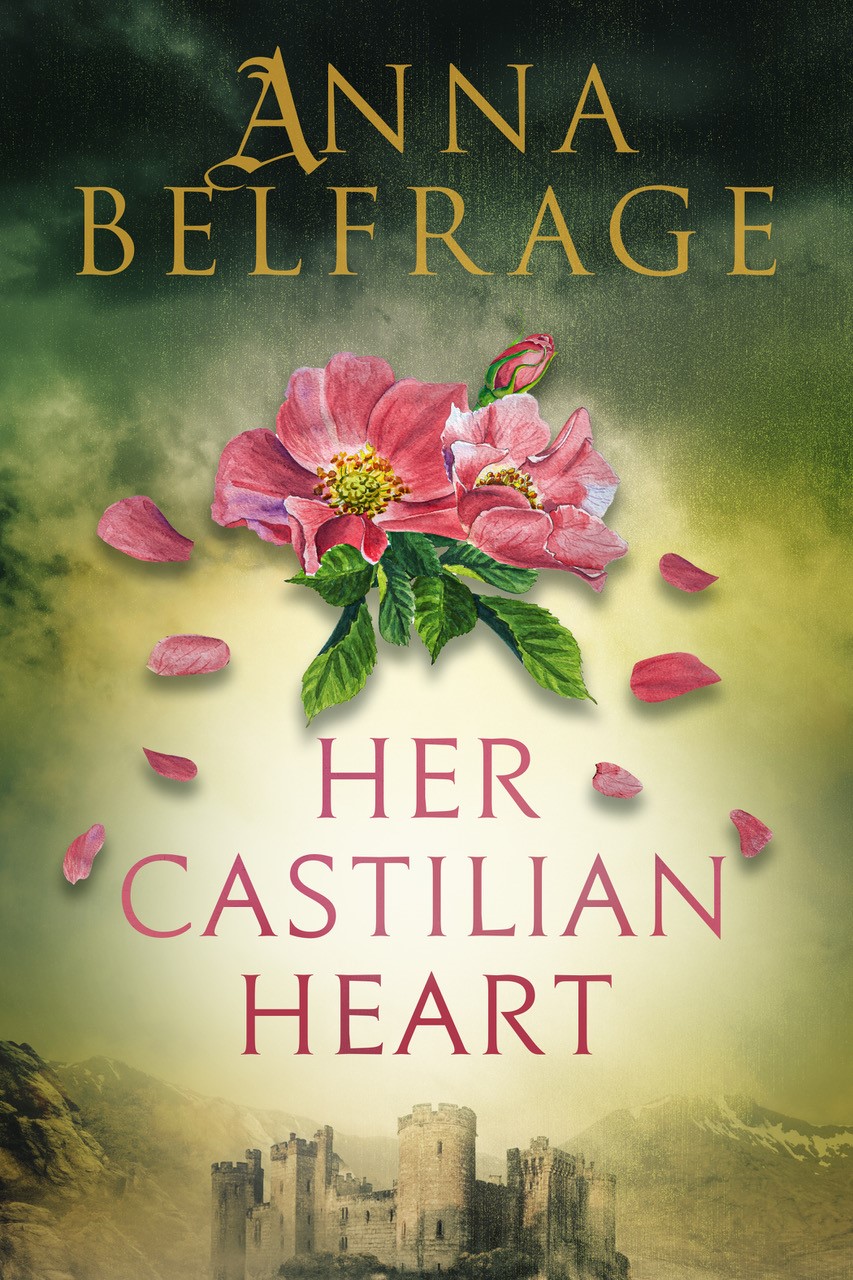

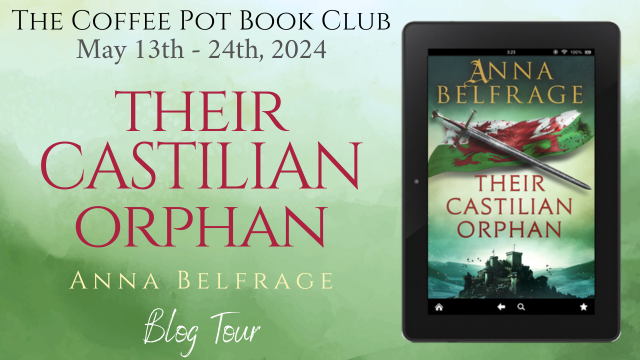
Today, I’m welcoming Anna Belfrage and her new book, Their Castilian Orphan, to the blog with an excerpt #blogtour #historicalfiction #historicalromance #blogtour

Here’s an excerpt from Their Castilian Orphan

In which Lionel—still hurting after having been told everything he though he knew about his parentage is a lie—and Noor reconcile

Noor had only visited the huge abbey church once before. As she recalled, it had been full of pilgrims and clerics, the sour scent of sweat and grime mingling with that of incense. She’d been too uncomfortable by the press of people to truly take in the magnificence of this huge space consecrated to God, but today, as she followed Father Alain in, the church was relatively empty. It was an hour or so after prime, and she was out of breath after hurrying after the priest, who’d appeared at their little inn, insisting she accompany him.

Despite the early hour, Robert and his men had already left for Clerkenwell. Elena was still asleep on the pallet in the room she shared with Noor and Robert, but Noor herself had been up since dawn, unable to sleep. All night, Lionel’s words had gnawed at her, and even if Robert was probably right when he said the lad did not mean them—not really—they still hurt. They hurt even more when she considered that they were still lying to him, still denying him his true lineage. But to tell him was impossible, for his sake as well as theirs. 

“Beautiful, isn’t it?” Father Alain murmured beside her, and she bit back an annoyed remark along the lines that she had other matters preying on her mind—far more important matters. But she reluctantly agreed he was right, amazed by the vivid colours that wound their way up the wooden screens that portioned off the various chapels, the statues in red and blue and gold. She craned her head back to study the ceiling so high up above, and from beyond the rood screen came the sound of singing. 

Robes swished as a group of priests passed by. A couple of women stood close together and prayed, and Noor bent her head and clasped her hands. Dearest Lord, keep Lionel safe. Safe from his true past, safe from too much suffering and pain. Help him find his way; help him know that he is so, so loved. 

Father Alain’s touch on her arm brought her out of her fervent praying. 

“He’s over there,” he said, dipping his head to gesture to a small shape that sat hunched in a corner, knees to his chest. “He was here when I came for prime. I think he has slept as badly as you have.” He gave her a smile. “Go on. He needs his mother.”

“He told me yesterday that I am not his mother.”

Father Alain brushed her cheek. “Of course you are. You have loved him and cared for him since he was a swaddled babe. Who else deserves to be called his mother? Those words, he said them in anger—and he regrets them.”

“Did he say as much?”

“Nay. But it suffices to look at him, don’t you think?” 

Noor approached Lionel hesitantly. Once she reached him, she crouched before him, only to realise he was fast asleep, his face streaked with tear tracks. As she’d done so many times in his life, she adjusted his coif, cupping his cheek in the process. Still the downy cheek of a young lad, but when he opened his eyes, he looked far too weary for a lad not yet twelve.

“I am sorry,” he said hoarsely.

“So am I.” She slid down to sit on the floor beside him, ignoring the disapproving tsk from a passing priest. “But it was never my intention to cause you pain. All I wanted was to keep you safe—and with me.” 

He nodded. “What was he like, my father?”

She frowned. “Dark hair, dark eyes, shorter than Robert and slim rather than stout. Strong shoulders, though. You could see he was a man accustomed to handling weapons.” 

“Do I look like him?”

She studied him. “Maybe. I never knew him as a lad—truth is, I didn’t know him at all. He just rode into Orton Manor and asked me to take care of you.”

“Why?”

Noor sighed. “I do not know. There was so much upheaval at the time: Robert was God knows where helping the king finalise his conquest, there was falling out among the Welsh, far too many Marcher lords eager to claim more land from the defeated Welsh. A veritable quagmire, and I think your father found it hard to navigate through such turbulent times.”

“Do you believe he fought against the English?” 

She knew he had. Fought and lost and died so, so bravely that distant day in Shrewsbury. 

“I do not know,” she lied. Holy Mother, save her soul! But this lie was for Lionel’s sake, not hers. “I think that had he been fighting against the English, he’d have left you with his Welsh kin. Instead, he left—” 

“Kin? You were his kin?”

“His very distant, very English kin,” she replied drily. “My grandmother was Welsh,” she offered. 

“So you are my kin as well,” Lionel said, leaning against her. She wrapped an arm round his shoulders.

“I am.”

They sat like that for a while until Lionel began fidgeting. “I must get back,” he muttered. “Wilbur will be most displeased with me for slipping out as I did.” He exhaled. “He’ll likely belt me.”

Noor shot to her feet. “What? Do you want me to talk to him?”

Lionel looked horrified. “No! I can take it. Besides, Wilbur isn’t like Ambrose.”

“How so?” Father Alain asked, rising from where he’d been sunk in his own private devotions.

“Ambrose liked to hurt. Wilbur doesn’t.” Lionel shrugged.

Together, they made for the western doors. When they were some yards away, a clerk came scurrying from the direction of the choir, his sandals clacking on the stone floor. Noor had an impression of someone of a height with her and very thin, his face angular and dominated by shrewd eyes under heavy brows. 

The man hurried by. Lionel grabbed hold of Noor’s kirtle. “That’s him,” he hissed. “That’s Humphrey!”

He’d not kept his voice down. The clerk turned, frowning at Lionel before glancing at Noor. He paled, even more so when he caught sight of Father Alain. With a little yelp, he took to his feet, leaping like a hunted hart towards the door.

“Well,” Father Alain said. “That was unfortunate.” 

“Do you think he’ll flee?” Noor asked. 

“I hope he does, for his sake. I hope he isn’t foolish enough to mention to his lord and master that we might know who he is.” Father Alain looked grim. 

“Why would that be foolish?” Lionel asked.

“Eustace might be displeased,” Noor said lightly. “He expects Humphrey to keep to the shadows.” She ushered Lionel outside. “You hurry back to Wilbur and apologise profoundly. Tell him your foster mother desired your companionship for prime.”

Lionel nodded and trotted off.

“And Lionel,” she called, causing him to stop. She caught up with him. “Stay well away from Eustace—and Humphrey. Promise.”
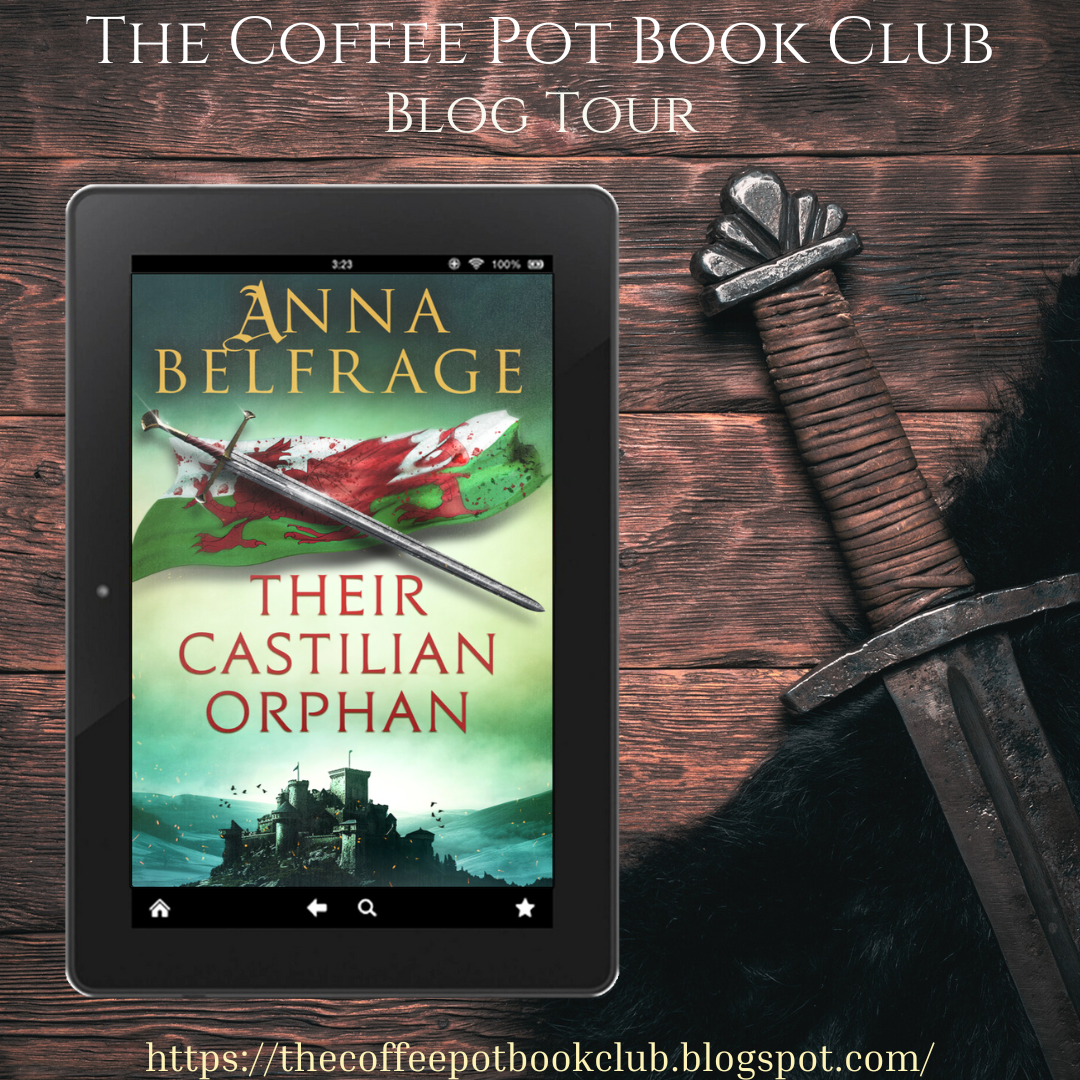
Here’s the blurb

It is 1294 and Eustace de Lamont is back in England after five years in exile. He will stop at nothing to ruin Robert FitzStephan and his wife, Noor d’Outremer.

Robert’s half brother, Eustace de Lamont, has not mellowed during his absence. He is more ruthless than ever, and this time he targets Robert’s and Noor’s foster son, Lionel.

Lionel is serving King Edward as a page when Eustace appears at court. Not only does Lionel become the horrified witness to Eustace’s violent streak, Eustace also starts voicing his suspicions about Lionel’s parentage. The truth about Lionel’s heritage is explosive—should King Edward find out, all would be lost for Robert and Noor.

In October of 1294, Wales rises in rebellion. Robert must leave his family unprotected to fight the Welsh rebels on the king’s behalf, comforted only by the fact that Eustace too is called to fight.

Except that Eustace has no intention of allowing his duty to his king—or a mere rebellion—come between him and his desire to destroy Robert FitzStephan . . .
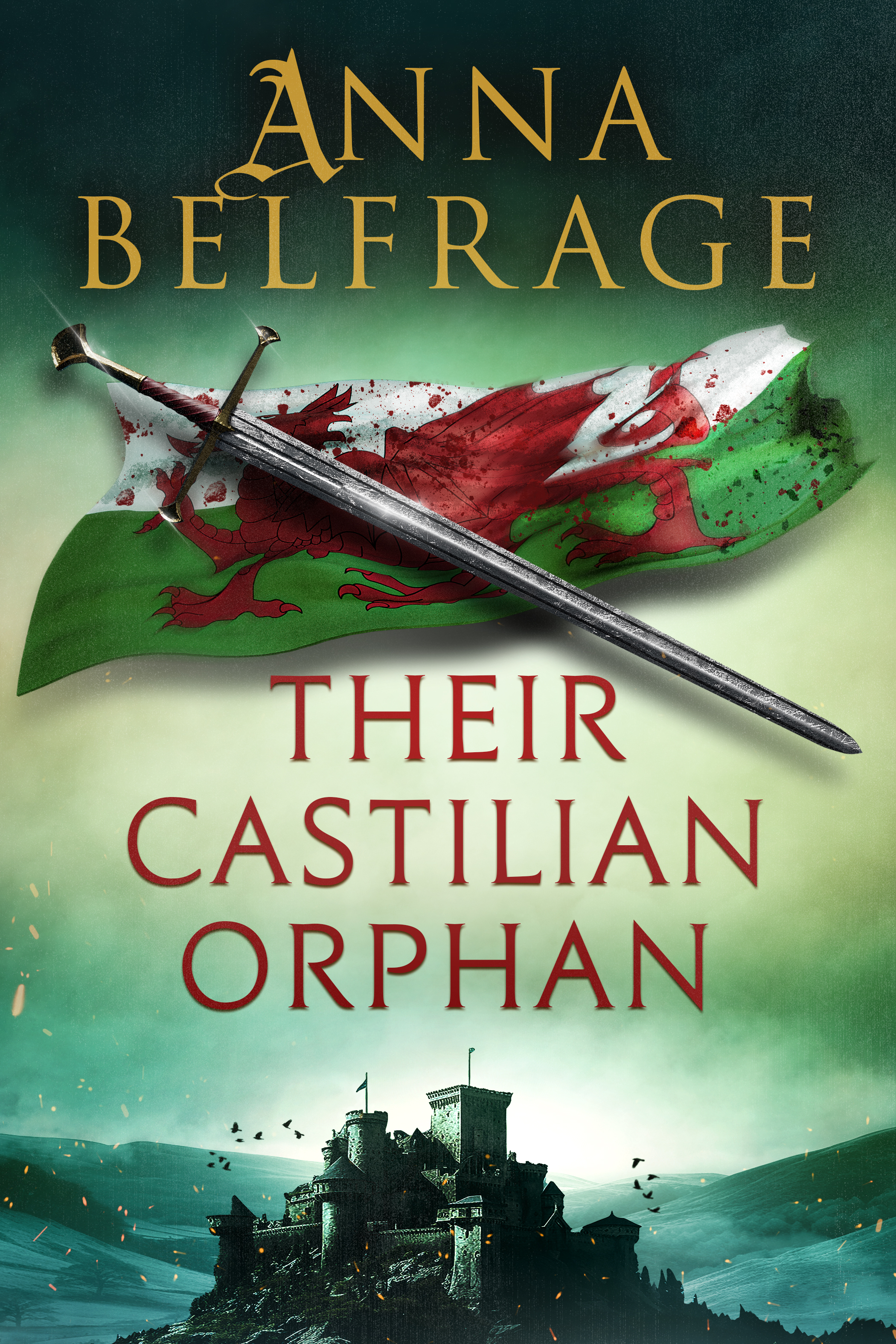
Buy Links 

This title is available to read on #KindleUnlimited.

Universal buy link: https://mybook.to/TCO

Meet the author

Had Anna been allowed to choose, she’d have become a time-traveller. As this was impossible, she became a financial professional with three absorbing interests: history, romance and writing. Anna has authored the acclaimed time travelling series The Graham Saga, set in 17th century Scotland and Maryland, as well as the equally acclaimed medieval series The King’s Greatest Enemy which is set in 14th century England. Anna has just released the final instalment, Their Castilian Orphan, in her other medieval series, The Castilian Saga ,which is set against the conquest of Wales. She has recently released Times of Turmoil, a sequel to her time travel romance, The Whirlpools of Timeand is now considering just how to wiggle out of setting the next book in that series in Peter the Great’s Russia, as her characters are demanding. . .

All of Anna’s books have been awarded the IndieBRAG Medallion, she has several Historical Novel Society Editor’s Choices, and one of her books won the HNS Indie Award in 2015. She is also the proud recipient of various Reader’s Favorite medals as well as having won various Gold, Silver and Bronze Coffee Pot Book Club awards.

“A master storyteller” 

“This is what all historical fiction should be like. Superb.”

Find out more about Anna, her books and enjoy her eclectic historical blog on her website, www.annabelfrage.com  

Sign up to Anna’s newsletter to keep up with new releases, give-ways and other fun stuff: http://eepurl.com/cjgatT

Connect with the author

Website: www.annabelfrage.com

Twitter: https://twitter.com/abelfrageauthor

Bluesky: https://bsky.app/profile/abelfrageauthor.bsky.social

Facebook: https://www.facebook.com/annabelfrageauthor

Instagram: https://instagram.com/annabelfrageauthor

Book Bub: https://www.bookbub.com/profile/anna-belfrage

Amazon Author Page: http://Author.to/ABG

Goodreads: https://www.goodreads.com/author/show/6449528.Anna_Belfrage
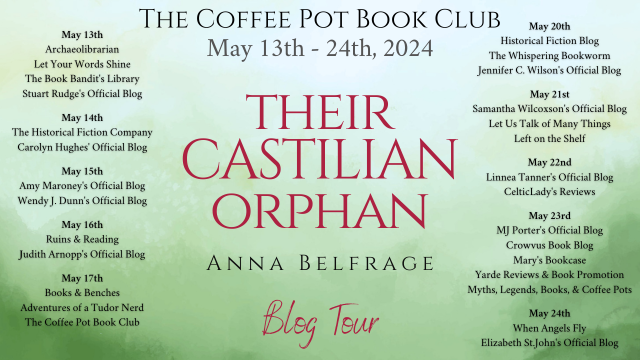
Follow Their Castilian Orphan blog tour with The Coffee Pot Book Club

I’m delighted to welcome Anna Belfrage to the blog with a guest post about her new book, Times of Turmoil #AmericanColonialHistory #timetravel #historicalfiction #historicalromance

I’m delighted to welcome Anna Belfrage to the blog with a post about her main characters.

When loving came with severe restrictions – of anti-miscegenation laws in Colonial America

In 1967, the Supreme Court of the United States unanimously concluded that state laws forbidding interracial relations were in breach of the 14th amendment to the Constitution. Mildred and Richard Loving no longer needed to worry they’d be fined or incarcerated for loving each other. 1967. Not that long ago, is it?

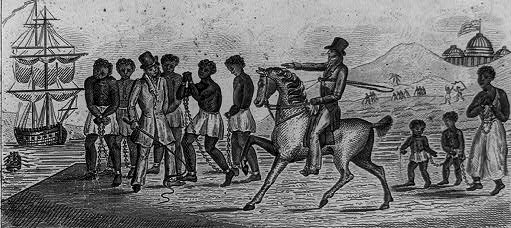
Anti-miscegenation laws were adopted by several of the British American Colonies. First in Maryland, then in Virginia, and subsequently in several others. The laws were harsh and had as their purpose to ensure the races were kept “separate”—well, beyond the obvious intermingling that occurred when a white slave owner decided to sleep with his black slave. Not that much of a problem according to the legislators, as any child born to a slave was automatically defined as a slave. Initially, the laws forbade marriage between a white person and an enslaved or indentured person of colour – probably because this would cause confusion as to the legal status of the unfree person and encroach on the property rights of said unfree person’s “owner”. Over time, the laws were expanded to include any person of colour, free or not. In some states, the laws were extremely detailed, forbidding not only relations between white and black, white and coloured, but also between black and Native American.

Obviously, these laws reflect the biases of a slave-based economy. If, on the one hand, you were arguing that people of colour were less equal than a white person—so much less equal, in fact, that it was perfectly okay to enslave them—it would be difficult to, on the other hand, welcome a person of colour as your equal in the salons of society. Not even a free person of colour could/should be treated as an equal. Yes, they were no longer slaves, but they were definitely “lesser”. 

I had never fully immersed myself in researching this dark side of history until I ended up with a woman of colour as my protagonist. Initially, I didn’t even reflect on the fact that Erin Barnes was of mixed race. Yes, I’d given her a half Afghani, half British grandmother, and yes, said lady was very much in love with her black US Army  veteran, but I found that aspect of Erin relatively unimportant. I was far more interested in her pursuit of justice for her murdered grandmother and her determination to use all her investigative skills to achieve this, despite the obvious risks to herself. 

“You did not notice how beautiful she is?” Duncan asks, sounding shocked. “You didn’t see that her skin is like molten syrup, her hair a cloud of darkest gold?” 
Umm . . . No, I didn’t. Not really. And obviously, Duncan is biased—he has been since he first saw Erin. 

Frankly, it wasn’t until Duncan and Erin ended up in 1715 that it struck me just how difficult life would be for her in this new time. Duncan, of course, immediately realised this, and did what he could to protect her—namely marry her. Fortunately for him, at the time they were in London, where there were no legal prohibitions to wedding someone of a different colour. There were, however, societal reservations, but Duncan didn’t much care. 

After a sequence of adventures, my couple returned to Maryland—briefly. Soon enough, Duncan realised that even with the protection of his name and wealth—and that of his powerful friends—Annapolis would never tolerate this union between a white man and a woman of colour. So they moved north, to Pennsylvania.

What exactly was a white man risking by marrying a woman of colour? Well, if a white man had sexual relations with a free woman of colour (note that it was okay for a slave owner to have sexual relations with an enslaved woman of colour) and chose to live with her, they could both be indentured for decades. Should he be foolish enough to marry her, indentureship converted to enslavement—for both of them. And not necessarily together. 

Despite these frightening consequences, there are documented cases of people still choosing to marry the person they loved, no matter the colour of their skin. In one of the more well-known cases, an Irish girl named Nell Butler fell in love with and married a black slave, known only as Negro Charles. She thereby became the property of her hubby’s owner, as did all their future children. 

As made obvious already in the opening paragraph, anti-miscegenation laws were to remain in existence in many of the US states well into the twentieth century. And throughout all those years of prohibition, as regular as clockwork, cases would crop up where people loved so hard they were willing to face the consequences. It if wasn’t so very, very sad, it would almost be romantic. 

Moving Erin and Duncan to Pennsylvania only bought them a few years of grace: in 1725 the colony of Pennsylvania pushed through their own anti-miscegenation laws. My imaginary couple must now find a new home, but sadly I suspect that wherever they go in the early 18th century they will be met by gasps and avid curiosity. A woman of colour—no matter how beautiful—did not belong with a successful white man. Not, at least, as his wife. 

“Pah!” Duncan says, drawing Erin close enough to give her a resounding kiss. “What do I care what others think?”

It is not quite as easy for Erin to be dismissive of the opprobrium she so often faces. But she tries, putting on a brave face while swallowing whispered insults and insinuations. But now and then, the independent, modern Erin just can’t hold back—which at times leads to very, very difficult situations! 

Thank you for sharing such an interesting post. I imagine your characters have a few tough moments to survive.

Here’s the blurb:

It is 1718 and Duncan Melville and his time traveller wife, Erin, are concentrating on building a peaceful existence for themselves and their twin daughters. Difficult to do, when they are beleaguered by enemies.

Erin Melville is not about to stand to the side and watch as a child is abused—which is how she makes deadly enemies of Hyland Nelson and his family.

Then there’s that ghost from their past, Armand Joseph Chardon, a person they were certain was dead. Apparently not. Monsieur Chardon wants revenge and his sons are tasked with making Duncan—and his wife—pay. 

Things aren’t helped by the arrival of Duncan’s cousin, fleeing her abusive husband. Or the reappearance of Nicholas Farrell in their lives, as much of a warped bully now as he was when he almost beat Duncan to death years ago. Plus, their safety is constantly threatened as Erin is a woman of colour in a time and place where that could mean ostracism, enslavement or even death.

Will Duncan and Erin ever achieve their simple wish – to live and love free from fear of those who wish to destroy them?

Buy Links: 

This title is available on #KindleUnlimited.

Universal link: 

Amazon USAmazon UKAmazon CAAmazon AU: 

Meet the author

Had Anna been allowed to choose, she’d have become a time-traveller. As this was impossible, she became a financial professional with two absorbing interests: history and writing. Anna has authored the acclaimed time travelling series The Graham Saga, set in 17th century Scotland and Maryland, as well as the equally acclaimed medieval series The King’s Greatest Enemy which is set in 14th century England.  

Anna has also published The Wanderer, a fast-paced contemporary romantic suspense trilogy with paranormal and time-slip ingredients. 

More recently, Anna has been hard at work with her Castilian series. The first book, His Castilian Hawk, published in 2020, is set against the complications of Edward I’s invasion of Wales, His Castilian Hawk is a story of loyalty, integrity—and love. In the second instalment, The Castilian Pomegranate, we travel with the protagonists to the complex political world of medieval Spain, while the third, Her Castilian Heart, finds our protagonists back in England—not necessarily any safer than the wilds of Spain! The fourth book, Their Castilian Orphan, is scheduled for early 2024.

Anna has recently released Times of Turmoil, the sequel to her 2021 release, The Whirlpools of Time. Here she returns to the world of time travel. Where The Whirlpools of Time had Duncan and the somewhat reluctant time-traveller Erin navigating the complexities of the first Jacobean rebellion in Scotland, in Times of Turmoil our protagonists are in Colonial Pennsylvania, hoping for a peaceful existence. Not about to happen—not in one of Anna’s books!  

All of Anna’s books have been awarded the IndieBRAG Medallion, she has several Historical Novel Society Editor’s Choices, and one of her books won the HNS Indie Award in 2015. She is also the proud recipient of various Reader’s Favorite medals as well as having won various Gold, Silver and Bronze Coffee Pot Book Club awards.

Find out more about Anna, her books and enjoy her eclectic historical blog on her website, www.annabelfrage.com  

Connect with the author

WebsiteTwitterFacebook

InstagramBook Bub

Amazon Author Page:   or  http://amazon.com/author/anna_belfrage 

Goodreads

Follow the Times of Turmoil blog tour with The Coffee Pot Book Club

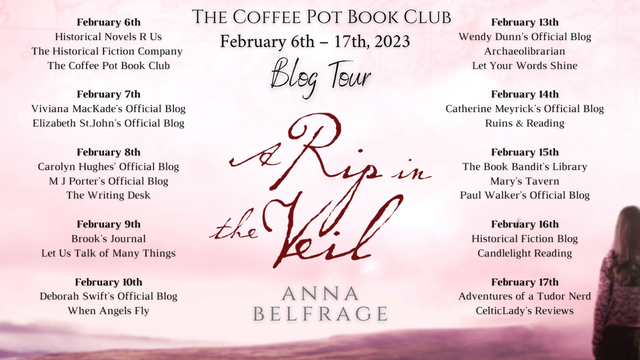
I’m absolutely delighted to share a fabulous post about dressing for success in the 17th century by author, Anna Belfrage, who had to find out all sorts of undergarment related information for A Rip in The Veil #HistoricalFiction #TimeTravelRomance #BlogTour #TheCoffeePotBookClub

Today, I’m absolutely delighted to share a fabulous post from Anna Belfrage about dressing in the seventeenth century. It will make you giggle, I promise.

Dressing for success in the seventeenth century

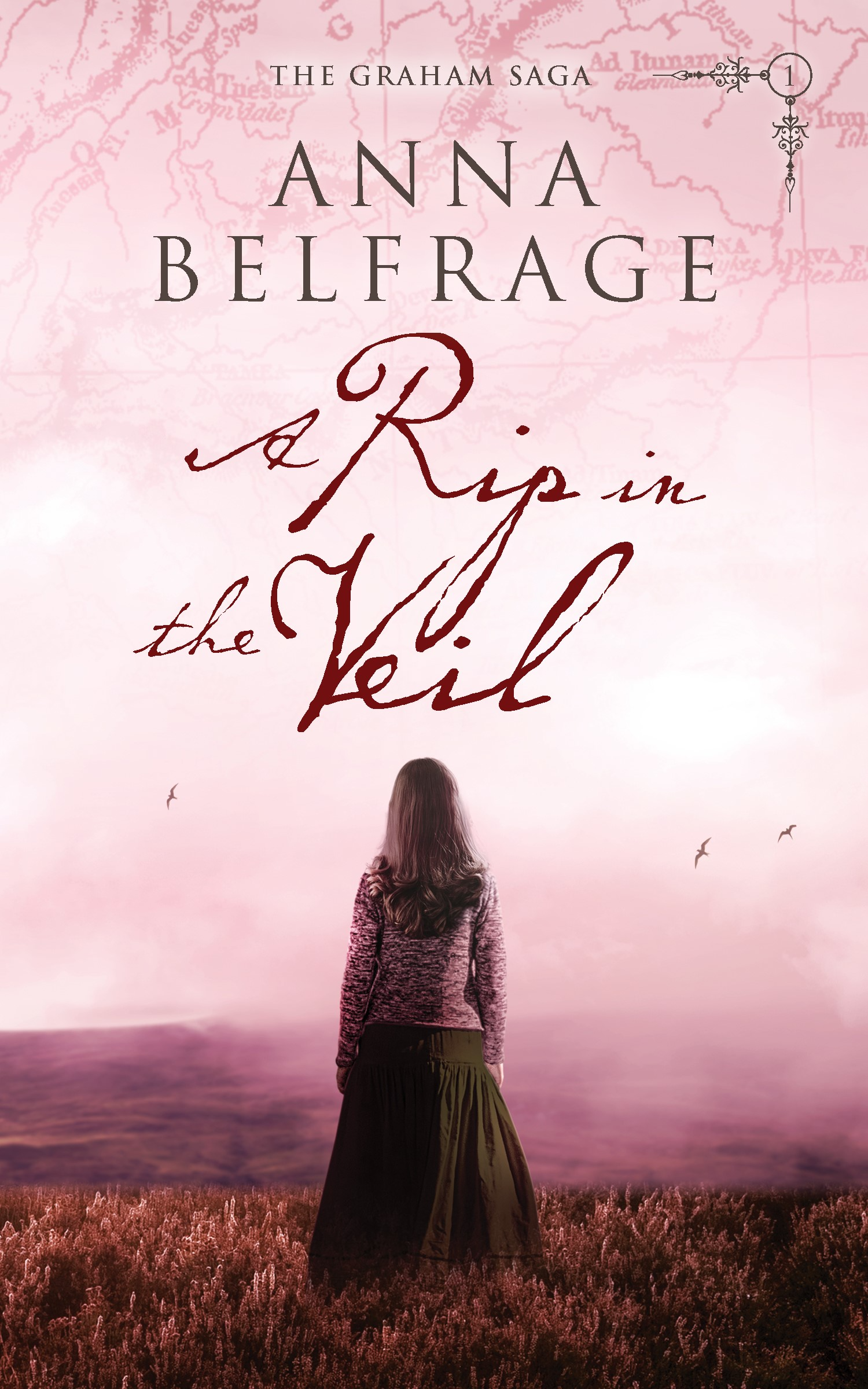
In a A Rip in the Veil—the first book in The Graham Saga—the unfortunate (or not, depending how one sees it) Alex Lind has the misfortune of falling three centuries backwards in time to land at the feet of Matthew Graham. Matthew Graham is a devout Presbyterian who has fought in the Commonwealth armies in the Civil War. To Alex, he is initially very strange. Heck, the entire situation is strange: no, wait—it’s impossible! 

Matthew is as taken aback as Alex is—perhaps even more, as the only explanation to her sudden appearance in his life must be magic. Or? Besides, what is the woman wearing? Those tight, tight breeches she calls ‘djeens” showcase her every curve, as do her other garments. No, had she been his woman, he’d never have allowed her to set a foot outside dressed like that, all of her exposed, like. 

Alex quickly realises that in this new time she has to adapt. ASAP. And one of the first things she must embrace is an entire new wardrobe. “Yay me,” she mutters as she shakes out shift and petticoats and heavy skirts and bodice and. . .

I must admit that I wasn’t entirely thrilled when Alex landed in 1658. The seventeenth century is not my sartorial favourite – especially when it comes to male fashion. 

This period dress thing is difficult.

First of all, as the writer of historical fiction it is important to understand what people wore, who wore what and how it was worn. In some cases it’s straightforward: stockings cover your feet and the nether part of your legs no matter if you live in the twentieth century or the fifteenth. But take that rather ugly male adornment that Henry VIII was so proud of flaunting – the codpiece – and I am somewhat stumped. How did it work? ( Okay, so I’ve looked this up; strings, buttons or hooks kept this decorative little (hmm) flap of fabric in place.)

Secondly, it helps if the writer in question finds the period attire alluring in some way or other. It’s difficult to write convincingly about handsome men in codpieces and padded breeches when all you see in your head is something resembling a man in a huge diaper.

Finally, there must be a familiarity with how people dress and undress. “He told her to turn around and zipped up her gown,” is not a good description of the intimacy between man and wife in the fourteenth century. (BTW, the modern zipper owes a lot to Swedish inventor Gideon Sundback. It’s nice to know us Swedes have contributed to human development: dynamite, zippers, gauge blocks, the AGA cooker.) Having exploring male fingers encountering panties in the sixteenth century is also something of an anachronism, and should the dashing regency rake pulls down his boxers you’re not reading historical fiction, you’re reading about a masquerade.

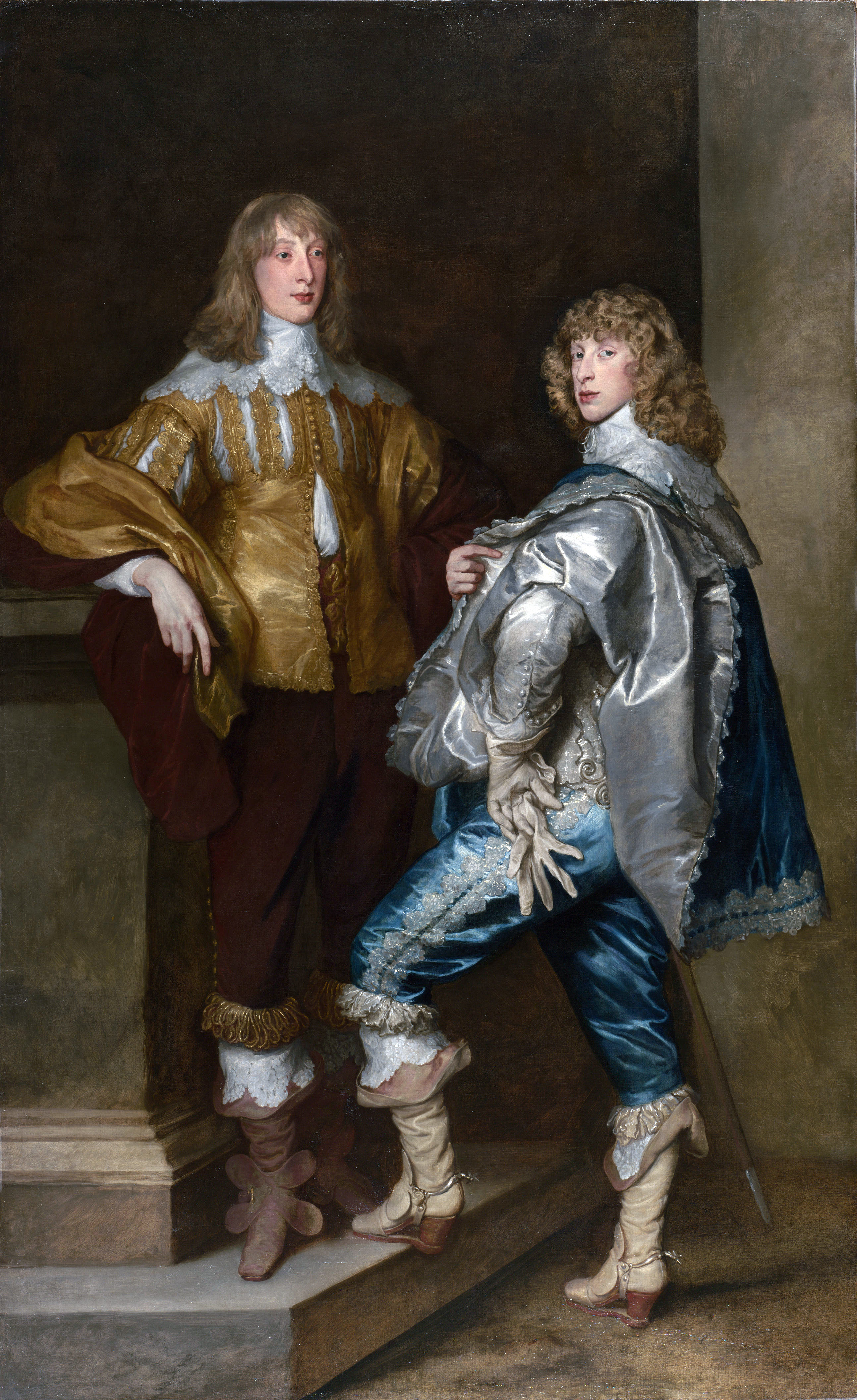
To avoid such gaffes, I’ve spent a lot of time researching the period and have accordingly done my fair share of staring at what few clothes survive from the seventeenth century—like James II’s elegant attire exhibited in the Victoria & Albert museum. Okay, so that is later in the century, but all that lace, all those embroideries, and that gigantic wig! Plus, the high heels on the shoes. . . Nope, not at all my cup of tea. 

Earlier in the 1600s, men wore wide breeches, sashes, lace, ribbons—like these young and elegant Stuart brothers in Van Dyke’s portrait. 

To the seventeenth century young girl, they were likely delectable. To Alex, not so much. She’d be hard put not to laugh her head off. So it is fortunate that when she first meets Matthew, he is in a ragged shirt and equally ragged breeches, fleeing from pursuing soldiers. It is also fortunate that Matthew would no more adorn himself with ribbons than he would dance attendance on the king—he is a man of Parliamentarian convictions. No, Matthew wears plain and well-made clothes, now and then adorned with a ruffled cuff or an elegant collar.  

Obviously, Matthew expects this new female companion of his to dress sedately, which is how Alex finds herself obliged to re-learn just how to dress.

In the seventeenth century, there were no bras, no panties. Instead, the undergarment is a shapeless elongated linen shirt that comes to just below the knees. This shift is worn over stockings that come to just above the knee and are fastened by garters.
“I can help you with those,” Matthew suggests, and there is a twinkle in his eyes as he helps Alex fasten the stockings with pink ribbons. Just because he doesn’t wear ribbons, it doesn’t mean she can’t, he says. In fact, he rather likes the fact that she is wearing them—and that he tied them into place. 
Over the shift—which also doubles as nightgown—Alex now dons a corset. 
“Ugh!” she groans as she tightens into place. The corset she has ties in front—only people who can afford a ladies maid have corsets that tie in the back. She has to struggle a bit to get it to sit right, and then there are the petticoats, tied into place at her waist and falling to mid-calf. Only the very, very rich have garments that fall all the way to the floor. Most women have skirts high enough to allow them to work and walk without dragging the hem in the dirt. 

“Here.” Matthew hands her the heavy skirts. And yes, they are heavy, making it hard to, for example, run. Or jump a fence. Once Alex has stepped into them, he helps her tighten them into place. A bodice, a shawl to cover what may remain exposed of her chest and then Matthew holds out a cap.
“No way!” She backs away, staring at the embroidered linen coif. 
“You must cover your hair,” he says.
She refuses. 
There is a slight. . . er . . . argument. Things end in a compromise: she will not cover her hair indoors, but otherwise she will either wear a coif or a hat. Matthew would prefer both, but he is pragmatic enough to realise this isn’t a battle he will win. Besides, Alex is having to handle a lot of change as it is.
“Tell me about it,” she mutters. She isn’t overly impressed with the food. Or the lack of chocolate. Or of tea. “I thought they had tea in the seventeenth century,” she groans. 
“They do,” I tell her, “but it is very, very expensive.” 
“Oh.” She gnaws her lip, her shoulders slumping. Which is probably why Matthew expends a ridiculous amount on a ridiculous small quantity of tea next time he goes to Edinburgh, pleased by the way she lights up from within when he hands the precious package over. 

Over time, Alex will become accustomed to her new clothes, even if she will quite often think longingly of jeans and sweatshirts, of Converse and shop-bought socks. (She hates to knit) 

But while she adapts to her new life on the outside, she remains a woman of modern conviction and outlook, which will now and then cause her quite some problems in her new time. It is fortunate that she has Matthew to guide her. On the other hand, there will be countless of occasions when Matthew will owe his life and sanity to her, the strange lass he found concussed and burned on an empty Scottish moor. Two halves made whole are my Alex and Matthew, no matter such details as sartorial arguments!

Thank you so much for such a fabulous post. I just can’t imagine all the lace:)

Here’s the blurb

On a muggy August day in 2002 Alex Lind disappears. On an equally stifling August day in 1658, Matthew Graham finds her on a Scottish moor.  Life will never be the same for Alex – or for Matthew. 

Alexandra Lind is thrown three centuries backwards in time to land at the feet of escaped convict Matthew Graham. 

Matthew doesn’t know what to make of this strange woman who has seemingly fallen from the skies—what is she, a witch? 

Alex is convinced the tall, gaunt man is some sort of hermit, an oddball, but she quickly realises the odd one out is she, not he. 

Catapulted from a life of modern comfort, Alex grapples with her new existence, further complicated by the dawning realization that someone from her time has followed her here—and not exactly to extend a helping hand. 

Potential compensation for this brutal shift in fate comes in the shape of Matthew, a man she should never have met, not when she was born three centuries after him. But Matthew comes with baggage of his own and on occasion his past threatens them both. At times Alex finds it all excessively exciting, longing for the structured life she used to have. 

How will she ever get back? And more importantly, does she really want to?

Buy Links

This title is available to read on #KindleUnlimited.

Universal Link

Amazon UKAmazon USAmazon CAAmazon AU

Meet the author

Had Anna been allowed to choose, she’d have become a time-traveller. As this was impossible, she became a financial professional with two absorbing interests: history and writing. Anna has authored the acclaimed time travelling series The Graham Saga, set in 17th century Scotland and Maryland, as well as the equally acclaimed medieval series The King’s Greatest Enemy which is set in 14th century England.  

Anna has also published The Wanderer, a fast-paced contemporary romantic suspense trilogy with paranormal and time-slip ingredients. 

Her Castilian Heart is the third in her “Castilian” series, a stand-alone sequel to her September 2020 release, His Castilian Hawk. Set against the complications of Edward I’s invasion of Wales, His Castilian Hawk is a story of loyalty, integrity—and love. In the second instalment, The Castilian Pomegranate, we travel with the protagonists to the complex political world of medieval Spain. This latest release finds our protagonists back in England—not necessarily any safer than the wilds of Spain!

Anna has also authored The Whirlpools of Time in which she returns to the world of time travel. Join Duncan and the somewhat reluctant time-traveller Erin on their adventures through the Scottish Highlands just as the first Jacobite rebellion is about to explode! 

All of Anna’s books have been awarded the IndieBRAG Medallion, she has several Historical Novel Society Editor’s Choices, and one of her books won the HNS Indie Award in 2015. She is also the proud recipient of various Reader’s Favorite medals as well as having won various Gold, Silver and Bronze Coffee Pot Book Club awards.

Find out more about Anna, her books and enjoy her eclectic historical blog on her website, www.annabelfrage.com  

Connect with Anna:

WebsiteTwitterFacebookInstagram

Book BubAmazon Author PageGoodreads

Follow the A Rip in The Veil blog tour with The Coffee Pot Book Club

I’m delighted to welcome Anna Belfrage and her new book, Her Castilian Heart, to the blog  #BlogTour #CoffeePotBookClub #medievalfiction #HistoricalFiction #HistoricalRomance #MedievalEngland #blogpost

I’m delighted to welcome Anna to the blog, and she’s written a fabulous post about her historical research.

Those unruly Welsh – a post about those that would not give up

Some years ago, I published His Castilian Hawk, where the story is set against the backdrop of Edward I’s conquest of Wales in 1282-83. Some may think that after Dafydd ap Gruffyd was executed in late 1283, Wales was permanently cowed, bowing its neck abjectly before its new overlord. Not at all like in Scotland, where the Scots just wouldn’t give up, no matter what Edward I threw at them.

Hmm. I dare say those medieval Welshmen would snort—rather loudly—at the notion that they somehow lacked in bravery. Also, one must keep in mind that the English king could command vastly more men than the Welsh could. Plus, Wales was not a cohesive unit as Scotland was. No, Wales was subdivided into various little principalities, and since the death of Llewellyn Fawr in 1240 no one had really managed to unite all Wales again. Also, large chunks of Wales had been under English control for yonks, ruled over by the so called Marcher Lords. 

So it was a fragmented people who were invaded by the English in 1282-83, and in some places people didn’t overly care who sat in the nearby castle. Besides, many Welshmen had no reason to risk their neck for Llywellyn ap Gruffyd or his brother as they were princes of Gwynedd, not of Wales. But that does not mean the Welsh had rolled over and given up. In fact, there’d be a sequence of rebellions—of varying size—over the years. What all those rebellions have in common is that they failed, even if the impressive Owain Glyndwr in the early 15th century came close to success.

In my latest release, Her Castilian Heart, the adventures and misfortunes that beset my fictional protagonists, Robert FitzStephan and his wife Noor, are to some extent set against the backdrop of another Welsh rebellion, that of Rhys ap Maredudd.

Rhys was a member of the royal house of Deheubarth, a principality in mid Wales. Deheubarth and Gwynedd were traditional enemies, so when Dafydd ap Gruffyd prodded his older brother into rebellion in 1282, Rhys sided with the English. Actually, already in the Anglo-Welsh wars of 1276-77, Rhys submitted to England, hoping that by doing so he’d be able to keep his lands—and regain the impressive Dinefwr Castle, the traditional seat of the princes of Deheubarth. 

In the aftermath of the 1282-83 conquest, Rhys was rewarded for his loyalty with more land.
“And Dinefwr?” he asked. 
King Edward likely raised an eyebrow. No way was he about to return such an impressive castle to a Welsh princeling. Instead, he forced Rhys to sign a quitclaim, effectively handing over “his” castle permanently to the English king. Rhys may not have liked this, but he seems to have swallowed his disappointment and instead focussed his attention on fortifying his remaining castle of note, Dryslwyn.

But it must have rankled, losing Dinefwr. Also, Rhys seems to have been under the impression that he’d been promised Dinefwr if he rode with the English against his fellow Welshmen. Whatever the case, in 1287, Rhys rebelled.

He had some initial success, but King Edward’s appointed regent, Edmund of Cornwall (the king himself was in Gascony) acted with speed, assembling a huge host that marched into Wales. By October, the rebellion had effectively been stamped out until all that was left was a core of determined men besieged at Dryslwyn. This was when King Edward’s interest in siege machines came in handy: soon enough several huge trebuchets began bombarding Dryslwyn’s walls with projectiles. In all that upheaval, Rhys managed to slip away. 

For some weeks, things were quiet, but in mid-November Rhys popped up again, urging his fellow Welshmen to join his rebellion. A new, much smaller force was assembled to sort things out—one in which I’ve included Robert FitzStephan and his friend, Roger Mortimer. Rhys took refuge in yet another castle, this time the triangular-shaped Newydd Emlyn.

The English packed together their siege weapons, loaded them onto carts, requisitioned forty oxen and hauled them all the way up to Newydd Emlyn. Ten days of siege and the English won—but the elusive Rhys had managed to slip away. Again.

For the coming four years, he somehow managed to stay hidden. Some people think he may have escaped to Ireland, but if he had, one wonders why he came back only to be captured. In 1291, Rhys ap Maredudd was executed in York, far from the land of his birth. His son and namesake was to spend the coming fifty years in prison. 

Rhys was not the last Welshman to rebel against Edward. Some years later, the fires of rebellion would yet again threaten Edward’s iron hold on this his newest dominion—but of that I will write in the next book in the series! 

Thank you so much for sharing such a fascinating post. Good luck with your new book and with writing the next one.

Here’s the blurb:

Blood is not always thicker than water…

At times a common bloodline is something of a curse—or so Robert FitzStephan discovers when he realises his half-brother, Eustace de Lamont, wants to kill him.   

A murderous and greedy brother isn’t Robert’s only challenge.  He and his wife, Noor, also have to handle their infected relationship with a mightily displeased Queen Eleanor—all because of their mysterious little foundling whom they refuse to abandon or allow the queen to lock away. 

Eustace is persistent. When Robert’s life hangs in the balance, it falls to Noor to do whatever it takes to rip them free from the toothy jaws of fate. Noor may be a woman, but weak she is not, and in her chest beats a heart as brave and ferocious as that of a lioness. But will her courage be enough to see them safe? 

Trigger Warnings:
There is some sexual (consensual) content. Also some violence

Buy Links: 

Available on Kindle Unlimited

Universal Link : http://myBook.to/HEART

Amazon UK: Amazon USAmazon CAAmazon AU

Meet the author

Had Anna been allowed to choose, she’d have become a time-traveller. As this was impossible, she became a financial professional with two absorbing interests: history and writing. Anna has authored the acclaimed time travelling series The Graham Saga, set in 17th century Scotland and Maryland, as well as the equally acclaimed medieval series The King’s Greatest Enemy which is set in 14th century England.  

Anna has also published The Wanderer, a fast-paced contemporary romantic suspense trilogy with paranormal and time-slip ingredients. 

Her Castilian Heart is the third in her “Castilian” series, a stand-alone sequel to her September 2020 release, His Castilian Hawk. Set against the complications of Edward I’s invasion of Wales, His Castilian Hawk is a story of loyalty, integrity—and love. In the second instalment, The Castilian Pomegranate, we travel with the protagonists to the complex political world of medieval Spain. This latest release finds our protagonists back in England—not necessarily any safer than the wilds of Spain!

Anna has also authored The Whirlpools of Time in which she returns to the world of time travel. Join Duncan and the somewhat reluctant time-traveller Erin on their adventures through the Scottish Highlands just as the first Jacobite rebellion is about to explode! 

All of Anna’s books have been awarded the IndieBRAG Medallion, she has several Historical Novel Society Editor’s Choices, and one of her books won the HNS Indie Award in 2015. She is also the proud recipient of various Reader’s Favorite medals as well as having won various Gold, Silver and Bronze Coffee Pot Book Club awards.

Find out more about Anna, her books and enjoy her eclectic historical blog on her website, www.annabelfrage.com  

Connect with Anna

WebsiteTwitterFacebook

InstagramBookBubAmazon Author PageGoodreads

Follow the Her Castilian Heart blog tour with The Coffee Pot Book Club