Blog Posts from MJ Porter, author and reviewer

I’m delighted to be reviewing Murder on the Menu by Katie Marsh #cosycrime #newrelease #blogtour

Here’s the blurb

Since Amber started the Bad Girls’ Detective Agency, she’s been feeling the pressure. So – when she and her best friends win a trip to a new luxury castle retreat on a remote island – she hopes it will be a chance to relax in style.

The girls are all excited to experience world-famous chef Valerie la Fontaine’s tasting menu. 

But none of them expect there to be another dish being served that weekend: revenge. And when Valerie is found dead inside a locked room in a tower, the Bad Girls know this is a case that only they can solve…

Hilarious and gripping mystery – perfect for fans of The Thursday Murder ClubThe Traitors, and How to Kill Men and Get Away With It.

Image showing the cover for Murder on the Menu by Katie Marsh

Purchase Link

https://mybook.to/OnTheMenu

Cover image forMurder on the Menu by Katie Marsh

My Review

Murder on the Menu is the third book in the Bad Girls Detective Agency series, and I’ve also read the previous two. (Check out the reviews for How Not to Murder Your Ex and Murder on the Dancefloor)

This time, our trio are off to an island retreat to sample some delicious food. However, the weather is appalling, and no sooner have they arrived than they discover they’re trapped on the island. Things only get worse when a murder takes place.

This third outing with the Bad Girls Detective Agency took a little while to get going, but then it was quite a swift read. The mystery revealed itself well, and the lack of mobile technology to help our detectives added a good dynamic to the tale as it eas time to get back to some more basic detecting.

A solid read for the trio from the Bad Girls Detective Agency. What will they get up to next?

Meet the author

Katie Marsh wrote five bestselling, uplifting women’s fiction novels before turning to cosy crime for Boldwood. Previously published by Hodder, the first in her new crime series  How Not To Murder Your Ex, following the fortunes of the Bad Girls Detective Agency, will be published in December 2023.

Connect with the author 

Facebook  Twitter 

Instagram  Newsletter Sign Up

Blog banner forMurder on the Menu by Katie Marsh showing the names of the blog hosts, for the blog tour orgaised by Rachel's Random Resources

I’m delighted to be sharing my review for Dashiki: A Cozy Mystery by Florence Wetzel #blogtour

Here’s the blurb

A cozy mystery with a dash of romance set in the vibrant world of jazz.

During an interview with reclusive jazz singer Betty Brown, journalist Virginia Farrell is shown priceless tapes from the iconic 1957 Thelonious Monk-John Coltrane gig at the Five Spot. When Betty is found murdered, Virginia is determined to recover the tapes and uncover the truth behind Betty’s death.

In the spirit of Nancy Drew, Virginia teams up with her six-foot blonde roommate to investigate the various suspects. Detective Robert Smith from the Hoboken Police Department joins the case, quickly becoming absorbed by an unsolved murder possibly linked to Betty Brown’s death, as well as an undeniable attraction to Virginia.

Dashiki is a cozy mystery laced with romance, immersing readers in the captivating world of jazz, where musicians, journalists, scholars, and enthusiasts intersect in an entertaining whodunit.

Purchase Links

https://www.amazon.com/dp/B0DS1R2KNQ/

https://www.amazon.co.uk/dp/B0DS1R2KNQ/

My Review

Dashiki is a delightful, cosy mystery set in the early 2000s in the vibrant jazz world of New York. I am not a fan of jazz (sorry), but that didn’t stop me from thoroughly enjoying this mystery and being entirely enthralled as our detective, Robert Smith, and amateur sleuth, Virginia, endeavour to discover who was responsible for the murder of Betty Brown, while both harbouring doubts about the other.

The plotting of the mystery is excellent, and I didn’t work out who the real culprit was, which always pleases me. Too many clues and it feels too easy. Dashiki had just the right amount to keep me guessing while reading but not enough that it was self-evident who our murderer was.

I thoroughly enjoyed this mystery. The cast was fabulously eclectic, and the story is dotted with humour, which I also always very much enjoy. Fans of cosy mysteries will surely enjoy Dashiki as much as I did.

Meet the author

Florence Wetzel was born 1962 in Brooklyn, NY. Her novels include the thriller The Woman Who Went Overboard and the Swedish mystery The Grand Man. She has also authored horror short stories, a book of poems and memoir essays, and co-authored jazz clarinettist Perry Robinson’s autobiography. In July 2024, she published Sara My Sara: A Memoir of Friendship and Loss.

Author photo of Florence Wetzel, author of Dashiki

Giveaway to Win a Paperback copy of Dashiki by Florence Wetzel (Open to UK / US / Canada only)

http://www.rafflecopter.com/rafl/display/33c69494603/?

*Terms and Conditions –UK / US & Canada entries welcome.  Please enter using the Rafflecopter box below.  The winner will be selected at random via Rafflecopter from all valid entries and will be notified by Twitter and/or email. If no response is received within 7 days then Rachel’s Random Resources reserves the right to select an alternative winner. Open to all entrants aged 18 or over.  Any personal data given as part of the competition entry is used for this purpose only and will not be shared with third parties, with the exception of the winners’ information. This will passed to the giveaway organiser and used only for fulfilment of the prize, after which time Rachel’s Random Resources will delete the data.  I am not responsible for despatch or delivery of the prize.

Blog tour banner for Dashiki showing the names of the blog hosts. Blogtour arranged y Rachel's Random Resources

I’m delighted to welcome Mercedes Rochelle and her The Plantagenet Legacy to the blog with an excerpt #HenryIV #Plantagenet #Lancaster #Medieval #BlogTour #TheCoffeePotBookClub 

I’m delighted to welcome Mercedes Rochelle to the blog with an excerpt from The Accursed King.

MURDER OF THE DUKE OF ORLÉANS

It was St. Clement’s day, 23 November. Isabeau of Bavaria, the Queen of France was ill and in mourning for her twelfth child, who died at birth ten days before. Louis hoped to cheer her up by arranging a supper at her Hôtel Barbette in the Rue du Temple. A merry party gathered, with all the most fashionable cavaliers and dames, who diverted the queen with pleasantries and songs of love. Despite herself, Isabeau smiled and engaged in a little wordplay, trying to forget her unhappiness for a few hours. 

Around nine o’clock, a messenger was admitted. Louis recognized him; his name was Courteheuse, one of the king’s valets. He bowed to the queen and then turned to the duke who was sitting beside her.

“Monsieur le Duc d’Orléans, I come from his Majesty. He requests your presence at once at St. Pol to discuss most urgent business.”

“Ah, Madame la Reine, I must go.” Kissing the queen’s hand, Louis rose immediately. 

Outside the room, two of his squires waited for him. “The king commands,” the duke said, reaching for his black furred cloak. “We must go quickly.” Not pausing for an answer, Louis made his way outside and waited while his squires brought up one horse for the both of them and his own palfrey. He looked up, noticing the sky was overcast. It was very dark and the streets were already deserted. 

“There you are. Good. Let us go.” He mounted and started off at a fast walk, his squires behind him. Three valets carrying torches followed, but they were on foot and had trouble keeping up. The buildings were shuttered for the night and only an occasional sliver of light from barred windows lit the street. Louis didn’t mind. As they rode down the Rue Vielle du Temple, he was fiddling with his gloves and humming to himself.  

They came to a place where the road widened around a well in the centre. Without warning eight muffled men sprung out from the shadows and ran at him. Thinking they were thieves, Louis shouted, “I am the Duke of Orléans!”

“That’s who we are looking for,” yelled one of them, and struck with an axe, severing Louis’s bridle hand. The duke shrieked, and another man slammed an axe into the back of his head. They pulled Louis from his horse and a third axe cleft his skull to the teeth, spilling his brains over the frozen paving stones. 

The squires’ horse sidestepped, shied and bolted. The valets carrying the torches stopped when they reached the opening and two of them turned away and ran. The third dashed forward, pushing aside one of the attackers and threw himself onto the duke, not realizing he was too late. He vainly tried to protect his master but found himself in dire trouble, for by now the murderers were stabbing again and again with their daggers.

“Murder! Murder!” shrieked a witness from a window overhead. 

“Shut up, you damned woman!” yelled one of the murderers. “Shut up!”

Frightened for a moment, the woman withdrew. The attackers heaved the valet aside and dragged the mangled duke over to the well, propping him up against the stones. His head lolled to one side. They picked up the still-burning torch and brought it closer to make sure he was truly dead. 

At that moment, a burly man in a red hood came out of the house across the street, known as the Hôtel de l’Image de Notre Dame. He raised an axe one more time and brought it down on the duke’s head. “Give me that torch,” he growled. “Let’s go! He’s dead.”

The murderers were interrupted by a clatter at the end of the street; the squires, having gained control of their horse returned with the duke’s palfrey. They assumed he had fallen off. 

The man in the red hood stepped forward. “Be gone! Or you shall share his fate.” He pointed to the dead man.

Terrified, they turned and fled, crying out, “Murder! Murder!”

Their task finished, the red-hooded man threw his torch into the Hôtel, setting it on fire. They all fled down the Rue des Blancs Manteaux, scattering caltrops on the ground to deter anyone from giving chase. At the same time, the woman started screaming “Murder” again, and the poor valet lay on the ground, crying, “My master! My Lord!” Soon his voice failed and he, too, was gone. 

Image showing the covers for The Usuper King and The Accursed King by Mercedes Rochelle.

Here’s the blurb for The Usurper King

From Outlaw to Usurper, Henry Bolingbroke fought one rebellion after another.


First, he led his own uprising. Then he captured a forsaken king. Henry had no intention of taking the crown for himself; it was given to him by popular acclaim. Alas, it didn’t take long to realize that that having the kingship was much less rewarding than striving for it. Only three months after his coronation, Henry IV had to face a rebellion led by Richard’s disgruntled favorites. Repressive measures led to more discontent. His own supporters turned against him, demanding more than he could give. The haughty Percies precipitated the Battle of Shrewsbury which nearly cost him the throne—and his life.


To make matters worse, even after Richard II’s funeral, the deposed monarch was rumored to be in Scotland, planning his return. The king just wouldn’t stay down and malcontents wanted him back.

Book cover for The Usurper King by Mercedes Rochelle

Purchase Link

The Usurper King


Here’s the blurb for The Accursed King

What happens when a king loses his prowess?

The day Henry IV could finally declare he had vanquished his enemies, he threw it all away with an infamous deed. No English king had executed an archbishop before. And divine judgment was quick to follow. Many thought he was struck with leprosy—God’s greatest punishment for sinners. From that point on, Henry’s health was cursed and he fought doggedly on as his body continued to betray him—reducing this once great warrior to an invalid.

Fortunately for England, his heir was ready and eager to take over. But Henry wasn’t willing to relinquish what he had worked so hard to preserve. No one was going to take away his royal prerogative—not even Prince Hal. But Henry didn’t count on Hal’s dauntless nature, which threatened to tear the royal family apart.

Book cover for The Accursed King by Mercedes Rochelle

Purchase Link

The Accursed King

These titles are available to read on #KindleUnlimited


Meet the Author

Mercedes Rochelle is an ardent lover of medieval history, and has channeled this interest into fiction writing. Her first four books cover eleventh-century Britain and events surrounding the Norman Conquest of England. The next series is called “The Plantagenet Legacy” and begins with the reign of Richard II.

She also writes a blog: www.HistoricalBritainBlog.com to explore the history behind the story. Born in St. Louis, MO, she received by BA in Literature at the Univ. of Missouri St.Louis in 1979 then moved to New York in 1982 while in her mid-20s to “see the world”. The search hasn’t ended!

Today she lives in Sergeantsville, NJ with her husband in a log home they had built themselves.

Connect with the Author

Website: Blog: BookBub:

Banner showing the blog hosts for the Plentagenet Legacy Series: Henry Iv written by Mercedes Rochelle and arranged by The Coffee Pot Book Club
Follow Plantagenet Legacy Series blog tour with The Coffee Pot Book Club

I’m reviewing Death in the Hills by Kate Wells, a fabulous contemporary mystery set in the Malvern Hills #mystery #newrelease #blogtour

Here’s the blurb

This is no peaceful walk in the countryside…

When Jude Gray and DI Binnie Khatri join a local walking group, their expectations for a peaceful outing to the Malvern Hills takes a grim turn. Arguments abound, and the hike ends in tragedy when one of the walkers is found dead in her car.

Initially ruled as an accident, Jude’s instincts tell her there’s more to the story.

As Jude and Binnie dig deeper, they uncover tensions and secrets within the group. From hidden affairs to longstanding rivalries, it becomes clear this death was no accident.

With each revelation, the danger grows. Can Jude and Binnie unravel the mystery before the killer strikes again?

A gripping addition to the Malvern Farm Mystery series, perfect for fans of Frances Evesham, Merryn Allingham, and Faith Martin.

Cover image for Death in the Hills by Kate Wells

Purchase Link

https://mybook.to/DeathHills

Cover image for Death in the Hills by Kate Wells

My Review

Death in the Hills is the fourth book in the Malvern Farm Mysteries. I’ve read three of them.

It’s a welcome return to Jude Gray and her busy farming life and family, but no sooner have we enjoyed a countryside walk than tragedy strikes. As always, Jude is suspicious, and she’s right to be suspicious as she begins to uncover some of the secrets among the members of the walking group she’s joined.

These mysteries are really solid reads. The plot is very well defined and developed, and readers know they’re going to get a surprise along the way—one that has been well-signposted if only we follow the right clues (which I didn’t—I was very convinced the solution was different from the one we got). 

Death in the Hills is a welcome addition to this thoroughly well-written series, and I’m really pleased that at least four more books will be published.

Meet the author

Kate Wells is the author of a number of well-reviewed books for children, and is now writing a new cosy crime series set in the Malvern hills, inspired by the farm where she grew up. 

Connect with Kate

Newsletter Sign Up 

BookBub

Details of the blog hosts for the Death in the Hills blog tour organised by Rachel's Random Resources

I’m delighted to welcome E.J. McKenna and her new book, No Good Deeds, to the blog #NoGoodDeeds #HistoricalFiction #FeministWestern #BlogTour #TheCoffeePotBookClub

I’m delighted to welcome E.j. McKenna and her new book, No Good Deeds, to the blog with an excerpt.

Excerpt

“You know what I want beyond all else in this world? Four walls and a roof. All my own. Don’t even need another room.” She gave an embarrassed laugh. “I know it’s simple, but I ain’t never had that. It’d be out of town, but not too far out, maybe close to a river, I dunno. I’d be a Bounty Hunter or a Trapper or somethin’, to pay any costs I have. And I’d live off the land, all quiet like.”

Blurb

Annie Schaeffer is no stranger to violence. Born of an outlaw father, she was sold to a traveling show at the age of six, now finally escaping as an adult.

On the run and wounded, she finds an unlikely ally In Nathan Healey – a member of the Needham Boys gang.

As she earns her place among the outlaws, Annie’s survival hinges on her lethal skills and growing bond with Nathan.

Nate’s moral compass shifts with his circumstances, especially when those he loves are involved. Upon meeting Annie, he finds himself drawn to a woman determined to live differently to the expectations others place upon her; to live freely and fairly. The way he has always wanted.

Annie’s quest for independence takes a dark turn as the gang begins to collapse. Betrayal runs deep, and the cost of trust is high.

No Good Deeds is a gripping tale of resilience and retribution in the untamed West, where loyalty is fleeting and justice is won at the barrel of a gun. Annie Schaeffer’s story is one of fierce determination, as she battles her past and the outlaws who seek to control her fate.

Buy Link

Universal Link:

Meet the Author

E.J. McKennais a freelance writer in the UK with a great interest in American History, and a degree in English and American Literature with Creative Writing from the University of Kent.

At the end of 2023, she co-created a creative writing app for people of all ages to improve their writing skills in a fun, relaxed environment.

Born and raised in the UK, but a lover of traveling, she has a fascination with all social history across different countries and cultures. One of her favourite historical periods is the Victorian era, especially with United States history.

“The juxtaposition between the established countries of Europe, and the new world of America is fascinating to me. So many people trying to survive harsh frontier life, while trying to continue the uptight decorum of Victorian society.”

A huge advocate for feminism and human equity, her writing centres around determined female protagonists in traditionally male roles, tackling the perceptions of women in history. Her strong female protagonists go out of their way to change their society’s expectations for the fairer.

Connect with the Author

Website:

Follow the No Good Deeds blog tour with The Coffee Pot Book Club

I’m delighted to welcome Helen Hollick and her book, Harold The King, to the blog #1066 #BattleOfHastings #NormanConquest #AngloSaxon #EnglishHistory #PublicationSilverAnniversary #BlogTour #BookBlast #TheCoffeePotBookClub 

I’m delighted to welcome Helen Hollick and her book, Harold The King (UK)/ I Am The Chosen King (USA/Canada), to the blog.

Blurb

First published in 2000 – Celebrating a Silver Anniversary!

The events that led to the Battle of Hastings and the Norman Conquest of England in 1066 – told from the English point of view.

Two men. One crown.

England, 1044. Harold Godwinesson, a young, respected earl, falls in love with an ordinary but beautiful woman. In Normandy, William, the bastard son of a duke, falls in love with power.

In 1066 England falls vulnerable to the fate of these two men: one, chosen to be a king, the other, determined to take, by force, what he desires. Risking his life to defend his kingdom from foreign invasion, Harold II led his army into the great Battle of Hastings in October 1066 with all the honour and dignity that history remembers of its fallen heroes.

In this beautifully crafted tale, USA Today bestselling author Helen Hollick sets aside the propaganda of the Norman Conquest and brings to life the English version of the story of the man who was the last Anglo-Saxon king, revealing his tender love, determination and proud loyalty, all to be shattered by the desire for a crown – by one who had no right to wear it.

Praise for Helen Hollick

“Helen Hollick has it all! She tells a great story, gets her history right, and writes consistently readable books”

~ Bernard Cornwell

“A novel of enormous emotional power”

~ Elizabeth Chadwick

“Thanks to Hollick’s masterful storytelling, Harold’s nobility and heroism enthral to the point of engendering hope for a different ending…Joggles a cast of characters and a bloody, tangled plot with great skill”

~ Publisher’s Weekly

“Don’t miss Helen Hollick’s colourful recreation of the events leading up to the Norman Conquest.”

~ Daily Mail

“An epic re-telling of the Norman Conquest”

~ The Lady

“If only all historical fiction could be this good”

~ Historical Novel Society Review

Buy Link

Universal Link:

This title is available on #KindleUnlimited, except in US & Canada

Meet the Author

First accepted for traditional publication in 1993, Helen became a USA Today Bestseller with her historical novel, The Forever Queen (titled A Hollow Crown in the UK) with the sequel, Harold the King (US: I Am The Chosen King) being novels that explore the events that led to the Battle of Hastings in 1066. Her Pendragon’s Banner Trilogy is a fifth-century version of the Arthurian legend, and she writes a nautical adventure/supernatural series, The Sea Witch Voyages. She has also branched out into the quick read novella, ‘Cosy Mystery’ genre with her Jan Christopher Mysteries, set in the 1970s, with the first in the series, A Mirror Murder incorporating her, often hilarious, memories of working as a library assistant. The fifth in the series, A Memory Of Murder, was published in May 2024.

Her non-fiction books are Pirates: Truth and Tales and Life of A Smuggler. She is currently writing about the ghosts of North Devon, and Jamaica Gold for her Sea Witch Voyages.

Recognised by her stylish hats, Helen tries to attend book-related events as a chance to meet her readers and social-media followers, but her ‘wonky eyesight’ as she describes her condition of Glaucoma, and severe arthritis is now a little prohibitive for travel.

She lives with her family in an eighteenth-century farmhouse in North Devon with their dogs and cats, while on the farm there are showjumper horses, fat Exmoor ponies, an elderly Welsh pony, geese, ducks and hens. And several resident ghosts.

Connect with the Author

Website: Blog: Newsletter:

Follow Harold The King blog tour with The Coffee Pot Book Club

I’m delighted to be taking part in the cover reveal for Somewhere in Hollywood by Lisa Czarina Michaud #coverreveal

Here’s the blurb

Welcome to the bouncy castle of Los Angeles in 2004. At the dawn of social media, Carla and Pete embark on a quest for meaning in a city where dreams often fade into the smog. They came for indie rock stardom, only to find themselves sidelined by life’s realities and their own emotional limitations. Carla experiences the true meaning of monotony as a TV extra, while Pete, wrestling with societal views on bisexuality, answers phones. Despite their mutual affection, Carla feels rejected, while Pete, secretly grappling with his identity, shies away from intimacy.

Their world, filled with vinyl records, a spirited cat named Joni, and an eccentric Hollywood landlady, offers fleeting moments of deep connection. But the arrival of a charismatic stranger disrupts their fragile status quo, forcing them to confront faded ambitions and the true nature of their relationship.

With the pop culture eye of Bret Easton Ellis and lyrical longing of Just Kids by Patti Smith, Somewhere in Hollywood explores the tight-rope walk of personal growth and relationship dynamics, capturing the soul of a generation in search of itself and the relentless pursuit of something more.

Cover for Somewhere in Hollywood by Lisa Czarina Michaud

Pre-order Links

UK – https://www.amazon.co.uk/Somewhere-Hollywood-Lisa-Czarina-Michaud-ebook/dp/B0DKKNFDML

US – https://www.amazon.com/Somewhere-Hollywood-Lisa-Czarina-Michaud-ebook/dp/B0DKKNFDML

Publication Date: 6th February 2025

Meet the author

Lisa C. Michaud is the author of “Slanted and Disenchanted.” Her writing has been featured in xojane, Narratively, and several indie zines. She resides with her family and cat just outside Paris, where she collects vinyl while penning her next narrative.

Author Lisa Czarina Michaud

Connect with the author

Somewhere in Hollywood cover reveal banner

It’s happy release day to Betrayal of Mercia, so I’m sharing a post about the maps in the book (and the maps)

Here’s the blurb

A King in crisis, a Queen on trial, a Kingdom’s survival hangs in the balance.

Londonia, AD835
The deadly conspiracy against the children of Ealdorman Coenwulf is to be resolved. Those involved have been unmasked and arrested. But will justice prevail?

While the court convenes to determine the conspirator’s fate, King Wiglaf’s position is precarious. His wife, Queen Cynethryth, has been implicated in the plot and while Wiglaf must remain impartial, enemies of the Mercia still conspire to prevent the full truth from ever being known.

As Merica weeps from the betrayal of those close to the King, the greedy eyes of Lord Æthelwulf, King Ecgberht of Wessex’s son, pivot once more towards Mercia. He will stop at nothing to accomplish his goal of ending Mercia’s ruling bloodline.

Mercia once more stands poised to be invaded, but this time not by the Viking raiders they so fear.

Can Icel and his fellow warriors’ triumph as Mercia once more faces betrayal from within?

An action packed, thrilling historical adventure perfect for the fans of Bernard Cornwell and Matthew Harffy

Image showing the cover for Betrayal of Mercia with a sword in the background

Here’s the purchase link (ebook, paperback, hardback and audio)

books2read.com/BetrayalofMercia

Maps

Throughout the series I’ve taken young Icel to some interesting locations, and that means I’ve had to make use of many maps which are recreations of the era, because, alas, we have none from the period. Both maps I’ve had made are relevant to Betrayal of Mercia which largely takes place in London, or Londonia, or Londinium and Lundenwic.

The map of Lundenwic and Londinium, shortened in the books to Londonia, a term more accurately applied to the eighth century and not the ninth, is much simplified and largely shows locations relevant to me and which I need to remember when writing the books. Although, I must confess, I did forget about it in the drafting process and when I found it, I was relieved to discover I hadn’t made THAT many mistakes.

The most important elements to understand are that ‘London’ as we know it didn’t exist at this time. Instead, there were two very distinctive settlements, and they were seperated by the River Fleet, one of London’s ‘lost’ rivers because it’s now subterranean. I think, for me, not being very familiar with London as it is today actually helped. Rather than trying to orientate myself as to what’s there now, I can work the other way round. I sort of know what was and wasn’t there in the ninth century, and then I can try and work out what’s there now:) Honestly, it makes sense to me.

It also helps to remember that despite London now being the capital of England, it wasn’t in the ninth century. Far from it, in fact. There are many good books on London in it’s earliest manifestations. If you’re interested, they are very worth checking out.

Map of Lundenwic and Londonium in the ninth century,

I also have a map of England at this time. This is to help readers (and me) try and get an idea of what settlements were and weren’t there at the time. As I’ve learned, it can be far too easy to just assume the longevity of a location, and then discover it wasn’t there at all, was bigger or even, much smaller than it is now. One of those locations is Wall, close to Lichfield, which was very important during the Roman occupation of Britain, but is now little more than ruins. And it’s far from alone in that.

Map of Early England.

I’ll also be sharing more posts, including one on Mercia’s ‘Bad Queens,’ and one on Crime and Punishment in Saxon England.


Not started the series yet? Check out the series page on my blog.


Check out the blog tour for Betrayal of Mercia

A huge thank you to all the book bloggers and Rachel at Rachel’s Random Resources for organising.

It’s happy release day to Betrayal of Mercia, so I’m sharing a post about Crime and Punishment in Saxon England

Here’s the blurb

A King in crisis, a Queen on trial, a Kingdom’s survival hangs in the balance.

Londonia, AD835
The deadly conspiracy against the children of Ealdorman Coenwulf is to be resolved. Those involved have been unmasked and arrested. But will justice prevail?

While the court convenes to determine the conspirator’s fate, King Wiglaf’s position is precarious. His wife, Queen Cynethryth, has been implicated in the plot and while Wiglaf must remain impartial, enemies of the Mercia still conspire to prevent the full truth from ever being known.

As Merica weeps from the betrayal of those close to the King, the greedy eyes of Lord Æthelwulf, King Ecgberht of Wessex’s son, pivot once more towards Mercia. He will stop at nothing to accomplish his goal of ending Mercia’s ruling bloodline.

Mercia once more stands poised to be invaded, but this time not by the Viking raiders they so fear.

Can Icel and his fellow warriors’ triumph as Mercia once more faces betrayal from within?

An action packed, thrilling historical adventure perfect for the fans of Bernard Cornwell and Matthew Harffy

Image showing the cover for Betrayal of Mercia with a sword in the background

Here’s the purchase link (ebook, paperback, hardback and audio)

books2read.com/BetrayalofMercia

Crime and Punishment in Saxon England

In Betrayal of Mercia, the seventh book in the Eagle of Mercia Chronicles featuring young Icel, I’ve done something that I don’t ‘think’ anyone else has done before. I’ve staged a criminal trial, making Betrayal part court-room drama and part action-thriller (you know Icel is always going to end up in a fight at some point). However, there are odd things about Saxon England that we have no information about – one of them is how often people actually went to church once Christianised, another is exactly how the law was enacted.

This might seem like an odd thing to say. Everyone knows there are surviving law codes from the era, especially from the eleventh century, with the inspiring names of Æthelred I or Cnut II, and indeed, the earliest law code dates back to Ine, in the seventh century, from which we can glean such titles as Wealas or foreigner, but applied to the Welsh, who had different wergild payments and punishment from the Saxons. But, there has long been an argument about how much these law codes reflect practise as opposed to an ideal. And some of the elements we ‘think we know’ turn out to be on much less steady ground. And, at the heart of all this is a problem with our current perceptions of ‘right,’ ‘wrong,’ and ‘justice.’ We ‘appear’ to look at these elements of our current legal system in a way very different to the era. 

When studying what records we do have, we’re greeted with some interesting terms. ‘Thereafter there would be no friendship,’ appears in a charter detailing a land dispute in the later tenth century – between Wynflæd and Leofwine (S1454 from 990 to 992). In this, despite whoever was in the wrong or the right, the decision was made which was something of a compromise – both injured parties had to make concessions. No one truly ‘won’, even though Wynflæd had many who would speak on her behalf, including the king’s mother, and the Archbishop of York, and had appealed directly to the king, Æthelred II, for assistance, only for Leofwine to refuse to attend his summons saying that royal appeals couldn’t precede a regional judgement on the matter.

In the famous case of Lady Eadgifu of Wessex (recorded in charter S1211), the mother of Kings Edmund and Eadwig (who features in the Brunanburh series), her landholdings at Cooling required the intervention of her husband, stepson, son and grandson, in a long-running debacle which was never really resolved until her grandson intervened close to the end of her life. Even though she appears to have held the ‘landboc’ – the title deed for the land – and was a highly regarded member of the royal family, this wasn’t enough to stop counterclaims. In the end, she assigned the land to the Christ Church religious community, and that way, no one actually benefitted apart from the church.

These cases both refer to land disputes, which are one of the larger areas of document survival, along with wills. But what about crimes visited against the king’s mund (both his physical person and his physical kingdom)? Here, we’re again confronted with little knowledge. We know of ealdormen being banished (under Æthelred II) and this attests to another element of the practise of law which is perhaps surprising. There does seem to have been an aversion to capital punishment (as Rabin details in his book mentioned below). And there was also a concern that the right sentence was handed to individuals – it was as bad to incorrectly punish as it was to have committed the crime.

In trying to stage a trial set in the Saxon period (which I now realise was a bit bonkers), I’ve relied heavily on a very short book, Crime and Punishment in Anglo-Saxon England by Andrew Rabin, and also his translations of the Old English Legal Writings by (Archbishop) Wulfstan (from the 1000s), from which I’ve determined how many oath-helpers people must have based on the Mercian Wergild listed within the source documents. This suggests the value placed on individuals – the king, of course, being at the top. Each individual had a wergild value and equally, each individual had a required value for the number of oath-helpers who would stand as surety for them if asked to detail what they had ‘seen and heard’ in a trial situation. The implication being that those who needed the least oath-helpers were more trustworthy than those who needed many – so a king might need no one, after all, he was the king, whereas a warrior might need a few, and a ‘normal’ person might need many.

This feels like a very different world to the one we ‘know,’ where transgressions are punished by custodial sentences and fines and where the burden of proof rests on the shoulders of those prosecuting the alleged offenders.

It has certainly been an interesting experiment, and one I hope readers will enjoy, and more importantly, one which I’ve managed to convey largely ‘correctly.’


I’ll also be sharing more posts, including one on Mercia’s ‘Bad Queens,’ and one on the maps in the books.


Not started the series yet? Check out the series page on my blog.


Check out the blog tour for Betrayal of Mercia

A huge thank you to all the book bloggers and Rachel at Rachel’s Random Resources for organising.

It’s happy release day to Betrayal of Mercia, so I’m sharing a post about Mercia’s alleged ‘Bad Queens.’

Here’s the blurb

A King in crisis, a Queen on trial, a Kingdom’s survival hangs in the balance.

Londonia, AD835
The deadly conspiracy against the children of Ealdorman Coenwulf is to be resolved. Those involved have been unmasked and arrested. But will justice prevail?

While the court convenes to determine the conspirator’s fate, King Wiglaf’s position is precarious. His wife, Queen Cynethryth, has been implicated in the plot and while Wiglaf must remain impartial, enemies of the Mercia still conspire to prevent the full truth from ever being known.

As Merica weeps from the betrayal of those close to the King, the greedy eyes of Lord Æthelwulf, King Ecgberht of Wessex’s son, pivot once more towards Mercia. He will stop at nothing to accomplish his goal of ending Mercia’s ruling bloodline.

Mercia once more stands poised to be invaded, but this time not by the Viking raiders they so fear.

Can Icel and his fellow warriors’ triumph as Mercia once more faces betrayal from within?

An action packed, thrilling historical adventure perfect for the fans of Bernard Cornwell and Matthew Harffy

Image showing the cover for Betrayal of Mercia with a sword in the background

Here’s the purchase link (ebook, paperback, large print, hardback and audio)

books2read.com/BetrayalofMercia

Mercia’s ‘Bad Queens’

There is a scene in Betrayal of Mercia where our favourite healer, Wynflæd, speaks to young Icel about her experiences of ‘bad queens,’ referencing three women in almost living memory deemed as ‘bad’, certainly many years after their deaths, if not quite by the 830s, when the scene takes place. These women were the wife of King Offa, his daughter, Eadburh, and the daughter of King Coenwulf (796-821), Cwenthryth. Indeed, this collection of bad queens, especially the sister of Queen Cynethryth, have been cited as the reason why Wessex was so slow to adopt the term. But, was everything as it appears, or are these reputations a later tradition?

The daughter of King Offa (757-796), Eadburh was married to the king of the West Saxons, Beorhtric. In the words of the later Asser, who wrote at the end of the 890s, she’s accused of poisoning her husband to death while trying to actually poison one of his disloyal followers. Interestingly, the man who became king after Beorhtric was King Ecgberht of Wessex, who features in the Icel stories, and in turn, it was his grandson who commissioned Asser to write his life which tarnishes the reputation of Eadburh. 

Cynethryth, the wife of King Offa, was a powerful woman in her own right, and the only preconquest queen known to have minted coin showing her own name. In later centuries, her name became associated with the murder of a king of the East Angles, and she was involved in a long-running land dispute with the archbishop of Canterbury.

A penny depicting Cynethryth, the wife of King Offa
Classical Numismatic Group, Inc. http://www.cngcoins.com, CC BY-SA 3.0 http://creativecommons.org/licenses/by-sa/3.0/, via Wikimedia Commons

Cwenthryth, the daughter of King Coenwulf, became associated with the murder of her brother, Cynehelm/Kenelm. The later, Anglo-Norman histories inform that.

‘At Winchcombe you will read of the secret martyrdom of Kenelm. He was the son of Cenwulf, [Coenwulf] the Mercia king, who died in the year of grace 819, having reigned for twenty-four years. The martyrdom of his son Kenelm was revealed from heaven to Pope Silvester II at Rome.’p691 Henry, Archdeacon of Huntingdon, Historia Anglorum, The History of the English People

While The Chronicle of John of Worcester extends this recording for  the year, ‘[819] St Cenwulf, king of the Mercians, after a life devoted to good deeds, passed over to the eternal blessedness which is in heaven, and left his 7-year-old son St Kenelm heir of his realm. But when a few months had passed, by the treachery of his own sister Cwenthryth, whose cruel spirit had been roused by an awful lust for power, he was secretly done to death with cruel outrage by Æscberht, his most bloodthirsty tutor, in the shade of a thorn tree in a deserted wood.’ P239-241

Winchcombe Nunnery was founded by Cwenthryth’s father, and the family were therefore invested in the religious establishment, although whether enough to kill one of their own to have him venerated as a saint, does seem doubtful. The identity of St Kenelm is very much contested, although it is believed that Cynehelm did live, and died before his father, which led to Coelwulf, the first of his name, and Coenwulf’s brother, becoming King of Mercia when his brother died..

This is the scene from Betrayal, where Wynflæd shares the gory knowledge she knows, and perhaps, hints at her approval for such strong-minded women that they could become associated with such dark deeds. 

‘Mercia hasn’t fared well with the women wed to their kings.’ A soft cackle. ‘Or the children born between a king and a queen. Wigmund’s merely the most current of many disappointments. Lord Coenwulf there, his father became king because his brother’s daughter killed her brother.’

‘I thought that was a lie,’ I countered.

‘That’s how King Coenwulf had it reported. It was all true though. I didn’t witness it, but I know of others who did.’

‘What, watched her kill her brother?’

‘No, witnessed the king speak of it, to a select few. And before her, Offa’s wife also had blood on her hands, as did Offa’s sister.’

I shuddered at the thought. ‘Why?’

‘A woman must live by her wits, and safeguard her future, for fear she’ll be locked up tight in a nunnery, with no means of engaging with the world at large. Think of Lady Cynehild.’ Wynflæd met my searching gaze then. ‘She remarried, and meddled where she shouldn’t have done. Admittedly, she stopped far short of murdering anyone.’

‘So, the king should have expected this then?’ I was astounded.

‘Maybe. He married her.’ Wynflæd cackled softly. ‘A man may wed a woman for her title, and lands. A woman may divorce a man. But better to have him dead, and then take his place. A grieving woman will have the sympathy of others. A widow has more freedom than a wife.’

‘You almost sound like you approve.’

‘I do not,’ she countered, but her eyes glittered.


Wynflæd is a stalwart of the series, and I was recently inspired to write a short story from her point of view regarding Mercia’s alleged ‘bad queens.’ If you’d like to read it, sign up for my newsletter and I’ll send you a link to download the story. And, you automatically receive a free short story collection as well.


I’ll also be sharing more posts, including one on Saxon Crime and Punishment and one on the maps in the books.


Check out the blog tour for Betrayal of Mercia

A huge thank you to all the book bloggers and Rachel at Rachel’s Random Resources for organising. Some of these amazing people have been with Young Icel throughout the entire series, and I am so grateful they are so keen to read, they sign up for the blog tour:)

Check out the reviews for Betrayal of Mercia

Bookish Jottings

Sharon Beyond the Books

Storied Conversation

David’s Book Blurg

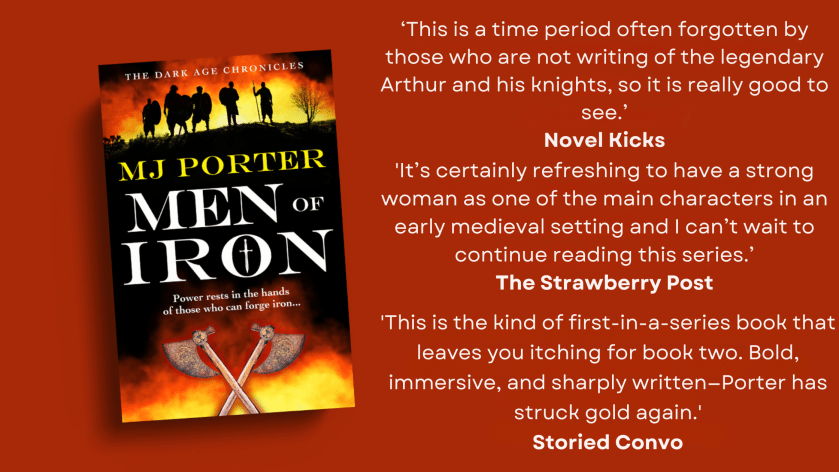
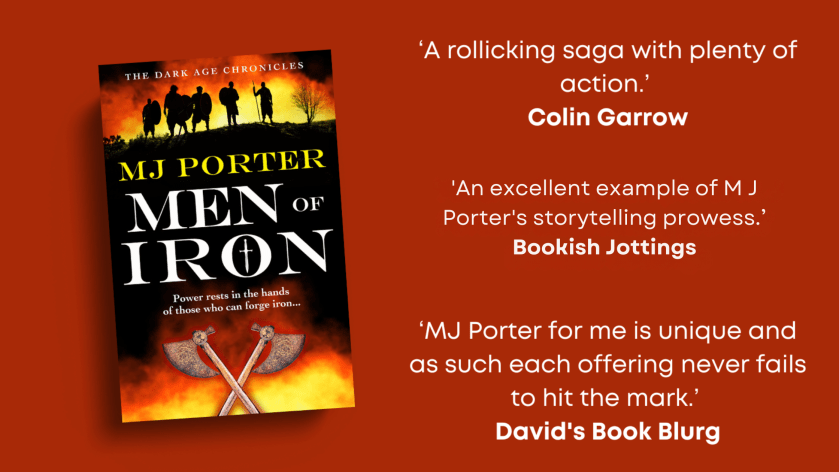
Banner showing3 blogger review quotes from the Betrayal of Mercia blog tour.

Novel Kicks

Ruins & Reading

The Strawberry Post

Aibibyreads

Book banner showing review quotes from the blog tour for Betrayal of Mercia organised by Rachel's Random Resources.

Listen to the audiobook, narrated by Sean Barrett.

Posts

MJ Porter

Author of Saxon historical fiction, 20th-century historical mysteries, and Saxon historical non-fiction. Book reviewer and blog host.

Skip to content ↓