Author of Saxon historical fiction and non-fiction, 20th-century historical mysteries, and Norse-inspired historical romantasy. Book reviewer and blog host.
Author: MJ Porter, author
I'm an author of historical fiction (Early England/Viking and the British Isles as a whole before 1066, as well as five 20th-century mysteries), a non-fiction title about the royal women of tenth-century England, and historical fantasy.
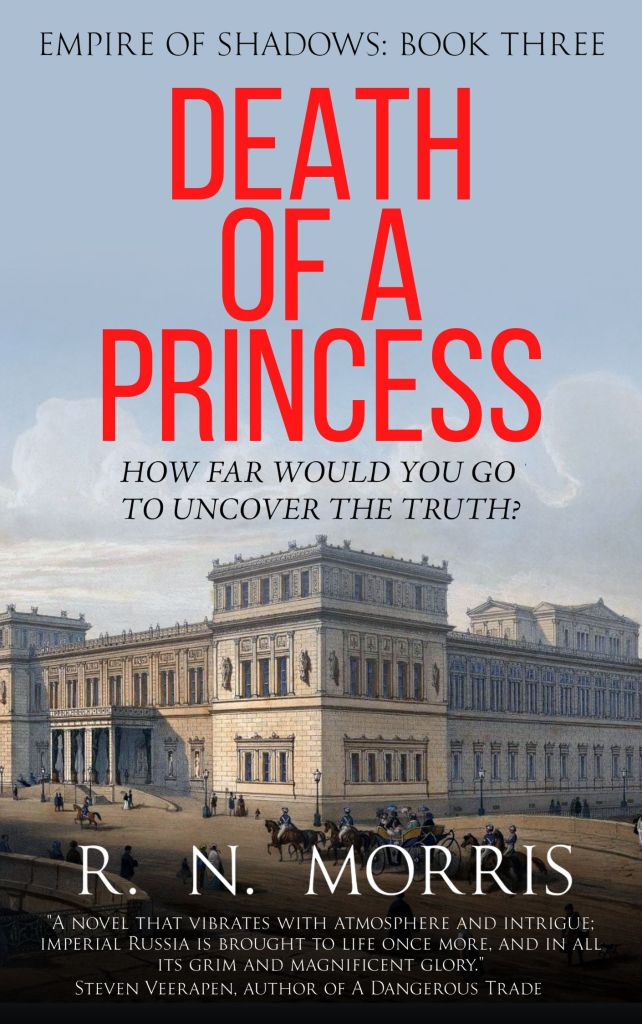
I’m delighted to welcome R.N. Morris and his book, Death of a Princess, Empire of Shadows Book 3, to the blog.
Here’s the blurb
Summer 1880.
Lipetsk, a spa town in Russia.
The elderly and cantankerous Princess Belskaya suffers a violent reaction while taking a mud bath at the famous Lipetsk Sanatorium. Soon after, she dies.
Dr Roldugin, the medical director of the sanatorium, is at a loss to explain the sudden and shocking death.
He points the finger at Anna Zhdanova, a medical assistant who was supervising the princess’s treatment.
Suspicion also falls on the princess’s nephew Belsky, who appears far from grief-stricken at his aunt’s death.
Meanwhile, investigating magistrate Pavel Pavlovich Virginsky arrives in Lipetsk from St Petersburg, seeking treatment after a nervous breakdown.
Against his better judgement, Virginsky is drawn in to the investigation. But is he getting closer to the truth or walking straight into a deadly trap?
This title is available to read on #KindleUnlimited
My Review
Death of a Princess is an intriguing and quite complex mystery set in the 1880s in Russia. It is the third book in the series, and I’ve not read the earlier two, but it didn’t diminish my enjoyment, and readers will easily be able to start with this title.
It has a wide cast of characters and follows them as they interact with one another and resolve other issues before fully resolving how the princess’s death came about.
It feels very ‘Russian.’ All the characters have delightful Russian names and attitudes, and the story well depicts the social structure of society. It’s an engaging read, pulling the reader along with some very tense moments until reaching the grand finale.
I very much enjoyed the mystery and look forward to reading more in the series.
Meet the Author
Roger (R.N) Morris is the author of 18 books, including a quartet of historical crime novels set in St Petersburg featuring Porfiry Petrovich, the investigating magistrate from Dostoevsky’s great novel Crime and Punishment. These were followed by the Silas Quinn series set in London in 1914. He has been shortlisted for the CWA Duncan Lawrie Gold Dagger and the CWA Historical Dagger.
A former advertising copywriter, Roger has written the libretto for an opera, modern retellings of Frankenstein and Macbeth for French school children. He’s also a scriptwriter for an award winning audio producer, working on true crime and history podcasts including The Curious History of your Home.
His work has been published in 16 countries.
Married with two grown-up children, Roger lives in Chichester where he keeps an eye out for seagulls.
In an idyllic Norfolk village, a stunning Roman mosaic floor has been discovered. It’s the archaeological find of the decade – complete with peacock design, intricate patterns and… a dead body?
Georgina Drake is thrilled to photograph the ancient mosaic uncovered at Little Wenborough Manor. But her excitement turns to shock when she finds the lead archaeologist dead on the floor. Instead of ancient secrets, Georgina is soon caught up in a very modern murder.
Comforting the other distressed archaeologists, Georgina discovers this isn’t the first time tragedy has struck this site. Over a century ago, a young Victorian scholar vanished without trace during the original dig, leaving behind a devastated fiancée and a trail of unanswered questions.
As Georgina delves into both mysteries, she discovers surprising connections between past and present. With help from her friends, Georgina pieces together a story of forbidden love, blackmail and betrayal. But someone in the village would prefer these secrets stay buried, and she’ll need all her wits to catch a killer before they strike again…
Perfect for fans of Faith Martin, M.C. Beaton and Midsomer Murders, this charming cozy mystery will have you digging for clues until the very last page.
The Body at the Roman Baths is the first book by the author I’ve read. I was drawn to it because of the title.
Our two main characters are quite fun, but starting with book 5 in a series does mean a lot has gone on that I don’t know about. However, I was happy to accept they were a couple and move on with the resolution to the mystery, or rather the two mysteries.
The two plots are quite fun, drawing together on occasion, and I found the addition of ‘Doris’ to be quite quirky and not at all what I was expecting. It certainly helps solve some of the more difficult parts of solving old crimes.
Overall, it was a fun read. It was a little quirky and a little repetitive in places, and the ending was never really in doubt. Still, Roman-era archaeology and a Victorian mystery—what’s not to love?
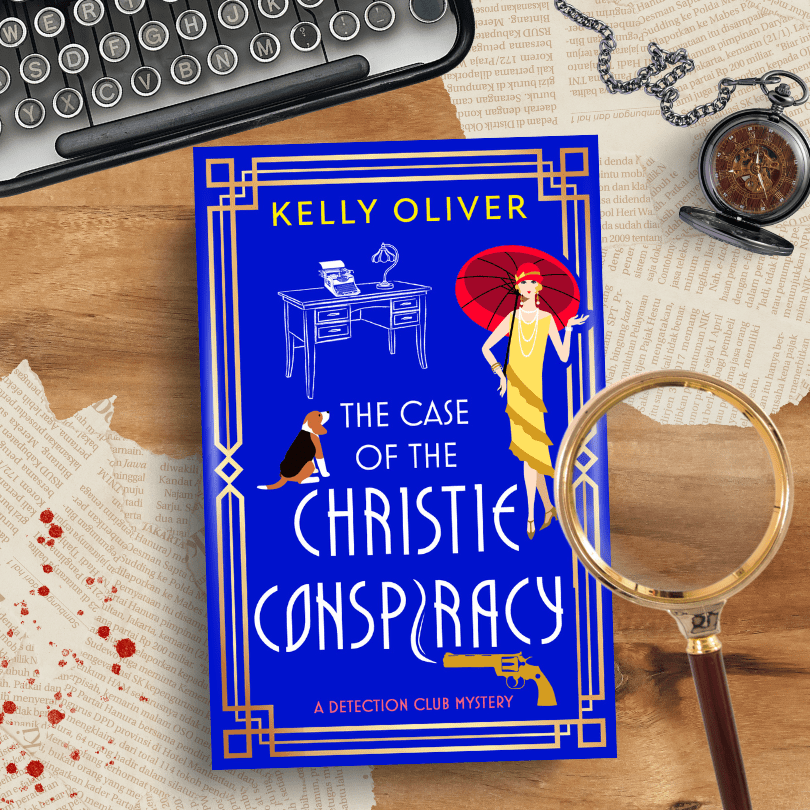
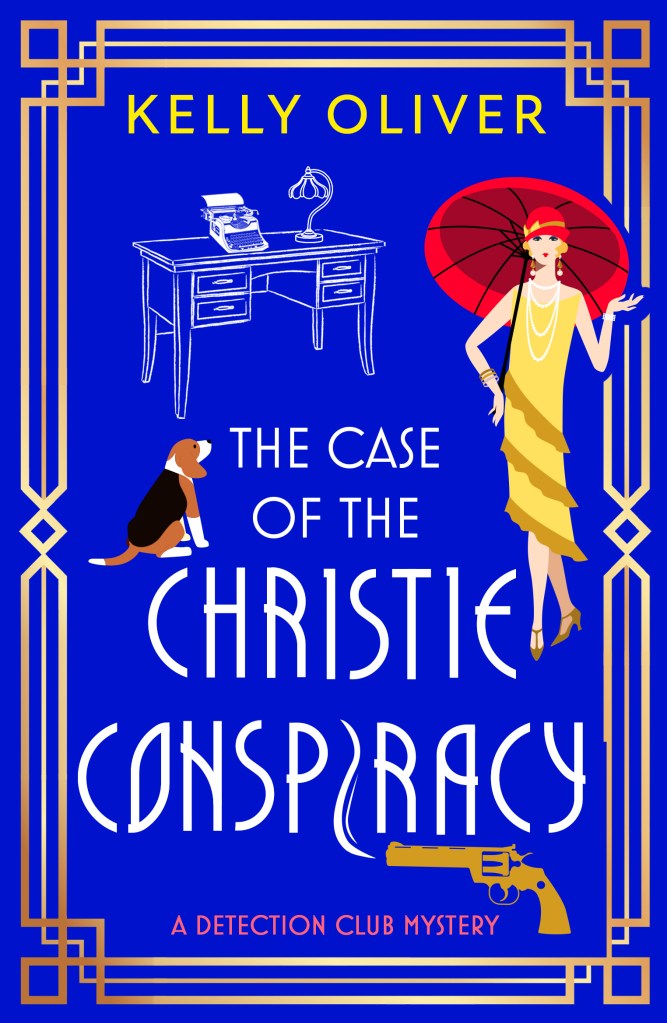
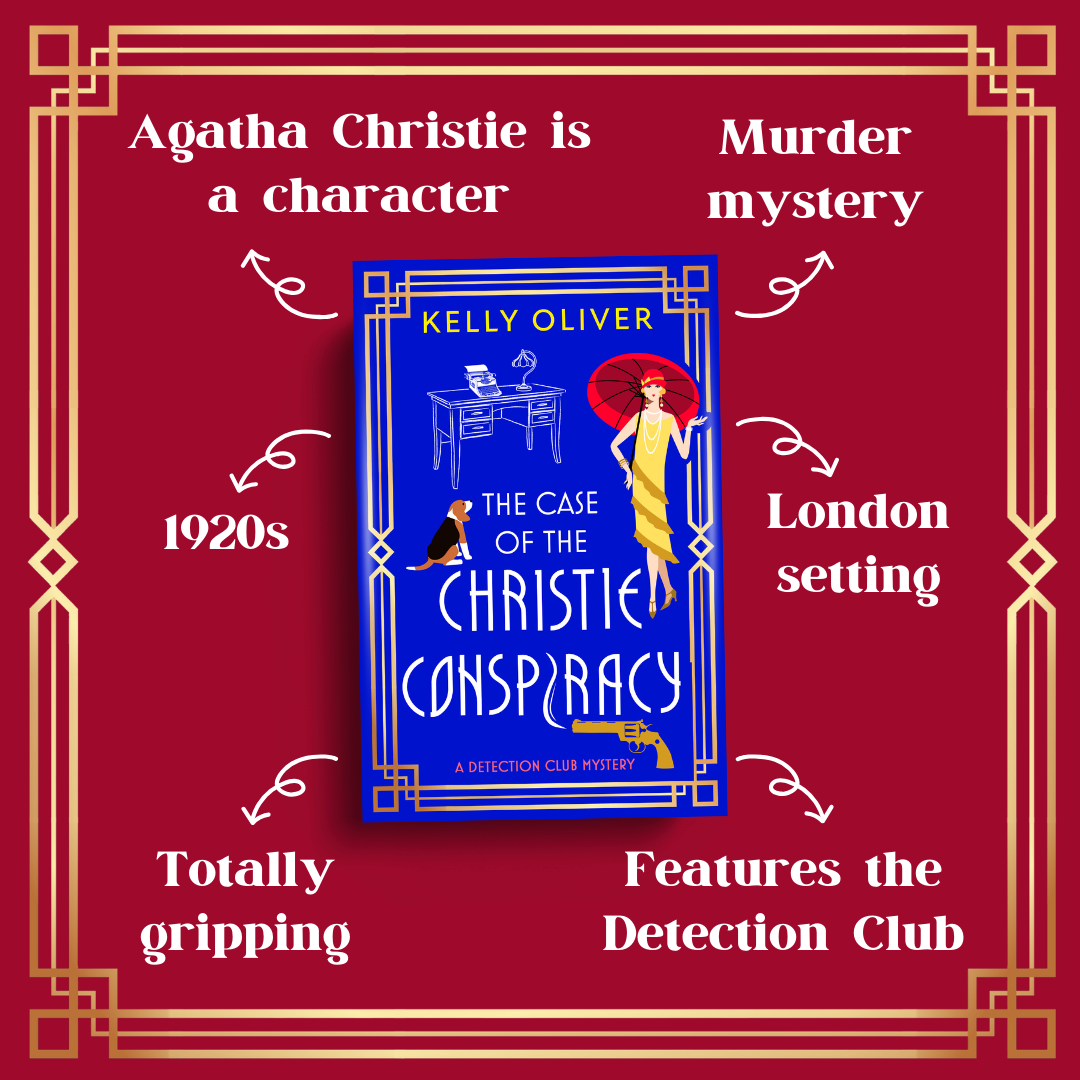
Discover the delightfully gripping new historical mystery series that’s perfect for fans of Helena Dixon, Verity Bright and T E Kinsey.
Agatha Christie is about to embark on a new, gripping murder case. But this time, she’s not the author – she’s a suspect…
1926 – Christie is a darling of the literary circuit and the most desired guest in London’s glittering social scene. She can often be found at meetings of the Detection Club – where mystery writers come together to share ideas, swap secrets and drink copiously. But then a fellow author’s initiation ceremony takes a gruesome turn, and one of the group ends up dead. Now, Agatha is no longer just the creator of great mystery plots – she’s a player in one.
And when Agatha disappears the day after the murder, she’s widely assumed to be guilty. Only Eliza Baker, assistant to the Club’s enigmatic secretary, Dorothy Sayers, is interested in investigating the case. But in a world where murder is the ultimate plot device, can Eliza piece together the evidence and find the killer before it’s too late?
The Case of the Christie Conspiracy is an entertaining and well-plotted Golden Age crime mystery, with the addition of many of our favourite Golden Age Crime authors as suspects.
The set-up for the murder mystery is excellent, and our two main characters, Eliza and Theo, are both fierce chess players (thank goodness I learned a bit about chess last year, although it isn’t necessary) and love solving mysteries. Luckily, one such mystery occurs right before them: the murder of one of the Detection Club writers. Eliza, fiercely independent but with a real soft spot for Theo, determines he can help her solve the puzzle but that it must be a competition, the prize being that he will play her at chess.
What ensues is quite a wonderful tale set during the infamous period of Agatha Christie’s disappearance. Eliza and Theo battle to uncover what happened, employing all their detection skills and occasionally getting a little muddled along the way.
A fabulously entertaining novel. I enjoyed the references to the Fiona Figg series and imagine readers of Kelly Oliver’s books will devour this new endeavour with delight.
Kelly Oliver is the award-winning, bestselling author of three mysteries series: The Jessica James Mysteries, The Pet Detective Mysteries, and the historical cozies The Fiona Figg Mysteries, set in WW1. She is also the Distinguished Professor of Philosophy at Vanderbilt University and lives in Nashville, Tennessee
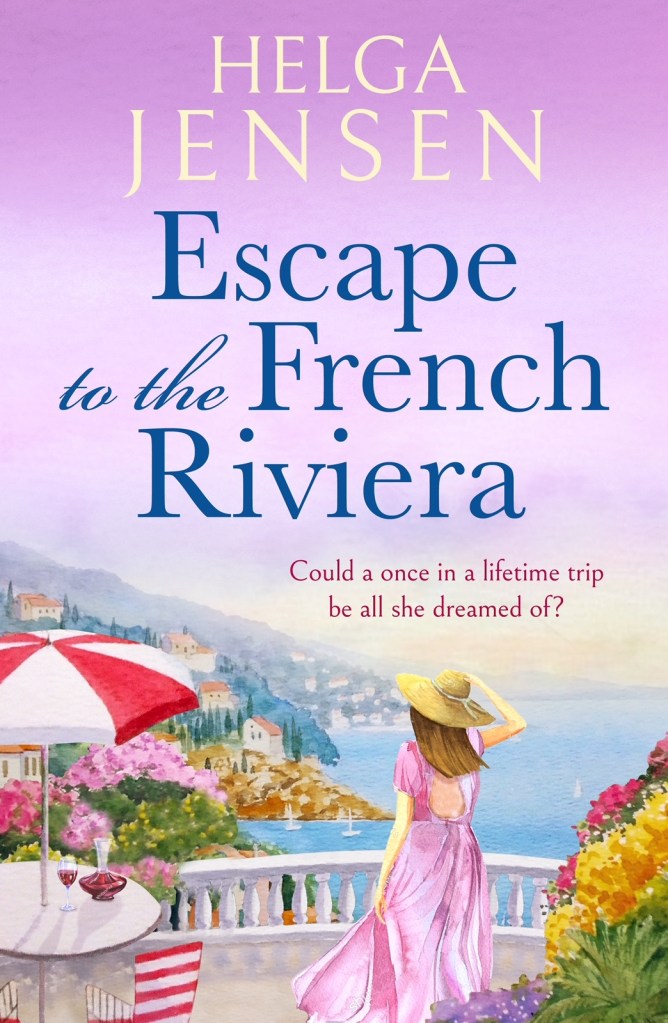
Can Lucy find her second-chance romance in the glamour of the French Riviera?
When aspiring author Lucy attends a rich friend’s 50th birthday party in glamorous Monaco, she has no idea that her life is about to change forever.
Heartsore after a broken marriage, she is not looking for love so when she meets Elias, and he offers to take her sailing on his employer’s boat, she agrees only as research for the book she desperately wants to write. They bond over their adult children – who seem to want to clip their wings and force them into living like pensioners – and the chemistry is undeniable.
But is he all he seems? And is she ready to trust again?
An uplifting, later-in-life romance perfect for fans of Milly Johnson, Jo Thomas and Julie Caplin.
Helga Jensen is an award-winning British/Danish best selling author and journalist. Her debut novel was a winning entry in the 2017 Montegrappa First Fiction competition at Dubai’s Emirates Literary Festival. Her debut was also a contender for the coveted 2021 Joan Hessayon Award for new writers. Helga’s best selling novel, Fly me to Paris, was a finalist for the 2024 Popular Romantic Fiction Award.
Helga holds a BA Hons in English Literature and Creative Writing, along with a Creative Writing MA from Bath Spa University. She is currently finishing a PhD.
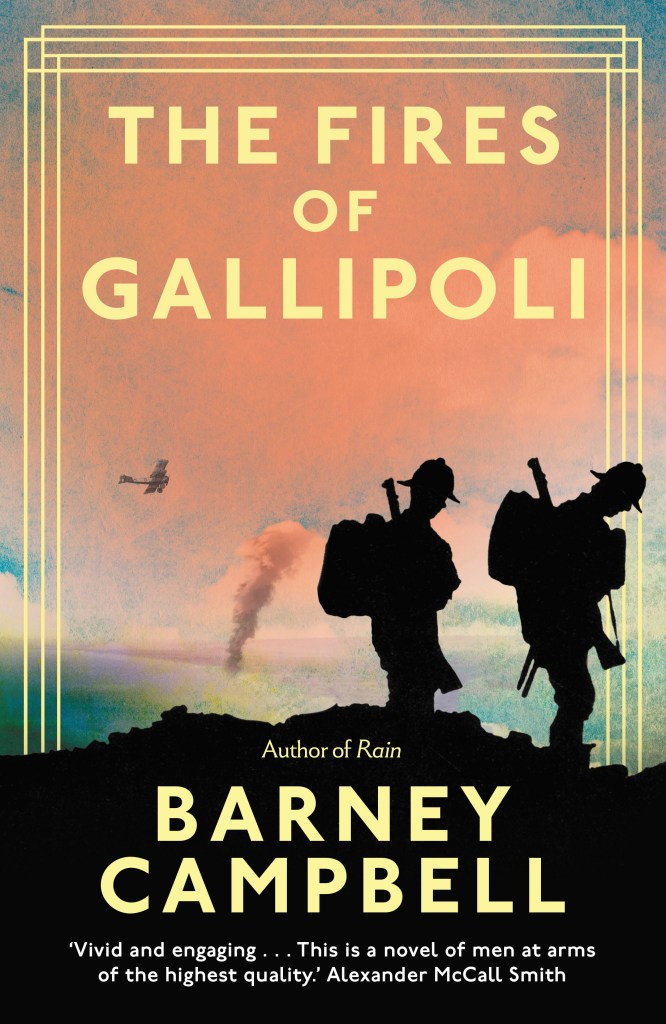
I’m delighted to welcome Barney Campbell and his new book, The Fires of Gallipoli, to the blog with an excerpt.
Excerpt
Edward’s thick jumper proved its mettle and he slept soundly, stirring only around midnight as a snuffling deer broke nearby branches around the edge of the tree. He was awake for a few minutes while memories of nights on the front came to him, staring out into a dark night or peeping fearfully over the parapet when a baleful alabaster shone over the Peninsula in a sniper’s moon. He remembered nights on the line as he and Thorne tried desperately to suppress their chuckles into yelps of breathing. He was sure that he let out a giggle into the night before nothingness then fell over him, dreamless and warm.
He woke with his thighs damp from dew and drew away the groundsheet to see the million droplets on the cow parsley sparkle gold and rainbow colours from the low sun breaching the underside of the tree. A ghostly network of spiders’ webs hung above his head, made fuller by the dew, more ossified. He felt an awful pang, as Thorne stirred beside him, that he wasn’t able to see any of it.
They wormed out from under the tree and creaked limbs back to life, shaking away the residue of sleep and rubbing their sandpaper chins, teeth chattering at the morning’s chill. They got ready to go, the imprint of their bodies in the cow parsley already disappearing as the crushed stalks started to lean up again, and they rejoined the path and carried on.
The route took them over miles of gentle fields and woods, folds in the ground offering one of the most beautiful mornings Edward could remember; folds that, on a battlefield, would become must-take ridges and valleys raked by machine gun fire. Here though was a perfect land, unpoisoned by such snaky heads. The rising sun, still yet to gain its heat, uncovered spring’s half-built hedgerows as nearby woodpeckers saluted their arrival. So infrequent was any sign of habitation, with only a couple of soft yellow stone farmhouses nestling nearly invisibly into their surroundings, that it seemed for a time that they were walking through a zero-humaned world.
They moved so softly, boots tracing their way noiselessly over the grass and the soft earth, that at every wood or new field animals failed to notice them and carried on their activities unalarmed. In one small clump of trees were a cock and hen pheasant, he strutting and boastful with his neck thrust out in grandiose stupidity and she following along behind him picking up the food and grubs that he, in his magnificent self-regard, missed on his morning passeggiata.
Edward stopped for a while to watch them, and then started to describe the scene to Thorne, but not going on as long as he thought he might, seeing writ across his face a sheer exultation in the day and being where they were. Not the sights, of course, but the scents and the touch of the air on his skin seemed to be elevating him to the same sense of contented rapture as Edward felt. The gap between them may not be quite as unbridgeable as he had feared, then. Perhaps.
Here’s the Blurb
The Fires of Gallipoli is a heartbreaking portrayal of friendship forged in the trenches of the First World War.
‘In this vivid and engaging novel of war and friendship, Barney Campbell shows us once again that he is a natural writer. This is a novel of men at arms of the highest quality.’ ~ Alexander McCall Smith
Edward Salter is a shy, reserved lawyer whose life is transformed by the outbreak of war in 1914. On his way to fight in the Gallipoli campaign, he befriends the charming and quietly courageous Theodore Thorne. Together they face the carnage and slaughter, stripped bare to their souls by the hellscape and only sustained by each other and the moments of quiet they catch together.
Thorne becomes the crutch whom Edward relies on throughout the war. When their precious leave from the frontline coincides, Theo invites Edward to his late parents’ idyllic estate in Northamptonshire. Here Edward meets Thorne’s sister Miranda and becomes entranced by her.
Edward escapes the broiling, fetid charnel-house of Gallipoli to work on the staff of Lord Kitchener, then on to the Western Front and post-war espionage in Constantinople. An odd coolness has descended between Edward and Theo. Can their connection and friendship survive the overwhelming sense of loss at the end of the war when everything around them is corrupted and destroyed?
The Fires of Gallipoli is a heartbreaking, sweeping portrayal of friendship and its fragility at the very limits of humanity.
Barney Campbell, author of The Fires of Gallipoli, was brought up in the Scottish Borders and studied Classics at university. He then joined the British Army where he commanded soldiers on a tour of Helmand Province, Afghanistan at the height of the war there.
That experience inspired him to write his first novel Rain, a novel about the war, which was published by Michael Joseph in 2015. The Times called it ‘the greatest book about the experience of soldiering since Robert Graves’s First World War classic Goodbye To All That’.
Barney has walked the length of the Iron Curtain, from Szczecin in Poland to Trieste in Italy. He currently works and lives in London.