

I’m welcoming Eleanor Birney and her new historical mystery, Behind the Green Baize Door, to the blog with a post about about the history behind the novel, #HistoricalFiction #HistoricalMystery #UpmarketFiction #LiteraryMystery #GildedAge #BlogTour #TheCoffeePotBookClub

I’m welcoming Eleanor Birney and her new historical mystery, Behind the Green Baize Door, to the blog with a post about about the history behind the novel #HistoricalFiction #HistoricalMystery #UpmarketFiction #LiteraryMystery #GildedAge #BlogTour #TheCoffeePotBookClub

I’m welcoming Eleanor Birney and her new historical mystery, Behind the Green Baize Door, to the blog with a post about about the history behind the novel

An 1828 Murder Case and the Questions It Left Behind

A guest post by Eleanor Birney, author of The Green Baize Door

I found the case that inspired The Green Baize Door nearly fifteen years ago.

It involved a man accused of murdering an elderly housekeeper. His defense was an unusual one. He admitted that he was a bad man (a liar and a thief), but insisted he was not that sort of bad man (a murderer). That distinction fascinated me, and it still does.

We prefer our stories cleaner than that. Perfectly innocent victims. Completely bad villains. It is more comfortable that way. If a person does something bad enough, it’s easier to believe that any good we thought we saw in them was a lie — a product of their deception — than to imagine that someone might be both good and bad in different measures.

Our preference for neat categories comes up fairly often in my line of work (I’m an attorney). So to see a man in 1828 engaging directly with that moral complexity — and using it as the basis of his defense — was both surprising and intriguing.

And then there was the strangeness of the crime itself: what kind of thief breaks into an otherwise empty mansion, turns the place over, kills an elderly housekeeper then steals from her, leaving behind all the wealth above stairs?

As far as I could determine, no one was ever convicted of the crime. The accused was acquitted, and his speech was so eloquent that the trial was included in collections of “notable cases” for decades after. The mystery was unresolved.

I knew I wanted to write about the case, but I did not know enough about early nineteenth-century England to do it justice. So I moved the murder to my side of the pond.

I chose Philadelphia for a number of reasons. The East coast had more polish than the West at that time, which provided more room for the upstairs/downstairs intrigue at the heart of the story. And the social upheaval at the end of the Victorian era perfectly suited the social and moral tension of the original case.

By 1900, Industrialization had drawn families off farms and into cities. Factory work was replacing inherited trades. Immigration was reshaping neighborhoods and exposing long-standing communities to new languages, religions, and political ideas. And all the while, electricity, steel, and railroads were remaking the physical landscape as quickly as fortunes were being made and lost.

America’s class system was never quite the same as Britain’s, which rested primarily on lineage, but it borrowed heavily from it. Wealth conferred status, and respectability implied virtue. An ideology that contrasted sharply with the men who were celebrated everywhere for clawing their way up to the top, seldom through virtuous dealings. The old belief that privilege reflected moral superiority had not yet disappeared, but it was under heavy siege.

1900 is also only a few years after the landmark Supreme Court decision Plessy v. Ferguson, one of the most disturbing cases in US history. In it, the highest court in the land gave constitutional sanction to racial segregation and reduced identity, and all the benefits and burdens then attendant to it, to fractions and legal classifications.

My main character, Marie Chevalier, lives inside that system.

Though her grandmother is “Colored Creole”, Marie appears “white” and receives the benefit of such. Doors open that would otherwise remain closed. And though her life is hard, the edges are softened. But nothing about that life is simple. Calling herself “colored” would feel dishonest — and disrespectful to those who bear the full weight of racial prejudice. Yet passing as white implies a shame she does not feel, and, worst of all, creates distance from the grandmother she loves and admires. What she gains in access, she risks losing in inheritance: pride, history, connection.

The 1828 case asked whether a man who was not innocent could also not be guilty. The social upheaval of the Gilded Age challenged the presumption that wealth implied virtue. And Plessy asked whether identity could be reduced to a single drop of blood. Each, in its own way, reflects the human instinct to force complex lives into simple, fixed categories.

That is the uneasy historical ground on which The Green Baize Door stands.

The murder at its center is a mystery, yes. But the deeper question is the one that first drew me in: what do we do with people who do not fit the roles society would assign to them?

Perhaps that is why the case stayed with me. Not because the crime was shocking, though it was. Or even because the defense was eloquent, though it certainly was. But because it revealed something uncomfortably familiar: how quickly we allow a single fact to define a life.

One failure becomes character. Socio-economic status assigns identity. And an arbitrary label can dictate how much respect a person deserves.

We do this instinctively. We reduce. We simplify. We decide. And in so doing, we flatten the contradictions that make people interesting — that make life interesting.

In The Green Baize Door, that instinct does more than shape reputations. It hides a killer.

The Green Baize Door by Eleanor Birney is published by Parlor & Dock Press and is available now. For more information, visit eleanorbirney.com.

Here’s the blurb

An atmospheric historical mystery where every character has their own agenda, and their own truth.

In the fashionable mansions on Chestnut Hill, a simple green baize door separates the masters’ world from the servants’. That door is thrown wide when an elderly housekeeper is found brutally murdered on the first day of the new century. Marie Chevalier, the housekeeper’s poor but ambitious granddaughter, and James Lett, the mansion owner’s kind but indolent son, suspect the killer is connected to one of their families—but which one?

From drawing rooms to alleyways, their separate investigations lead them through the sometimes lavish, sometimes brutal, landscape of turn-of-the-century New England. When long-buried secrets begin to unravel the fragile threads that hold both households together, Marie and James must find a way to bridge the gulf between them—if only to prove that the murderer belongs not to their own world, but to that strange and foreign land on the other side of the green baize door.

Inspired by real-life events, The Green Baize Door is a richly layered historical mystery that explores themes of class identity, family loyalty, and the sometimes blurry line between virtue and vice.

Purchase Link

https://books2read.com/u/mBWALv

https://books2read.com/u/mqRkOd

Meet the author

Eleanor Birney writes historical mysteries about class, moral ambiguity, and people who aren’t satisfied with life on their side of the green baize door.

She received a BA in History from UC Berkeley, and works as a legal research attorney, a day job that feeds her love of precision, research, and puzzles.

Growing up in foster care gave her a lifelong fascination with the way society steers people into assigned places—and how some of those people refuse to stay in them.

She lives in Northern California with her family. The Green Baize Door is her debut novel.

www.eleanorbirney.com

https://www.bookbub.com/authors/eleanor-birney

Author Eleanor Birney
Follow The Green Baize Door Blog tour with The Coffee Pot Book Club

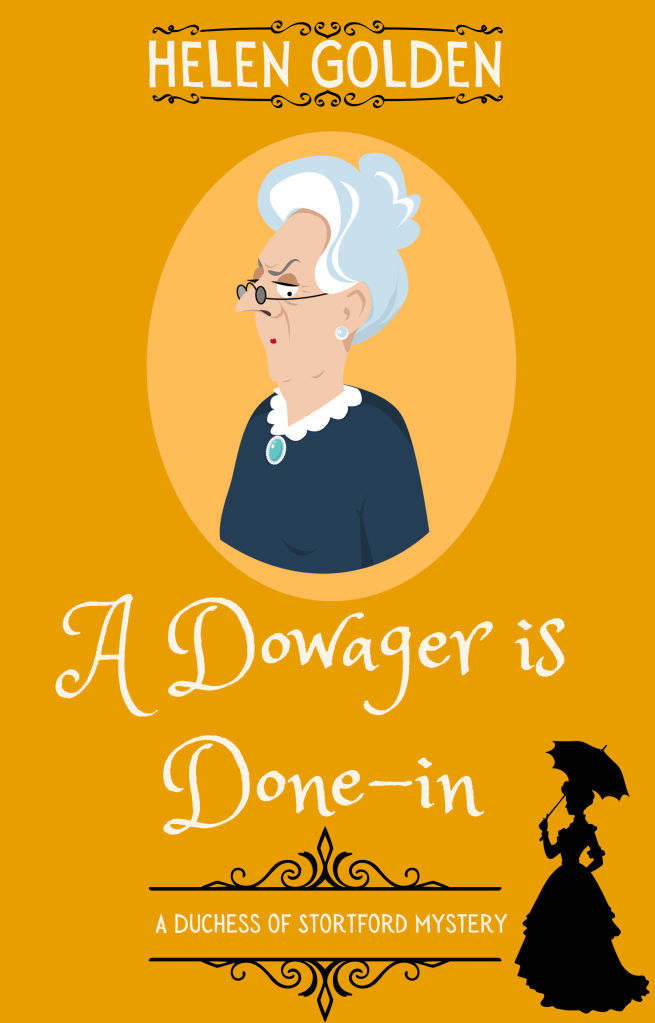
I’m delighted to welcome a returning Helen Golden to the blog with her new book, A Dowager is Done-in #bookreview #historicalmystery #blogtour #avidreader

I’m delighted to welcome a returning Helen Golden to the blog with her new book, A Husband is Hushed Up #bookreview #historicalmystery #blogtour #avidreader @rararesources @rachelsrandomresources @helengoldenauthor

Here’s the blurb

A mysterious summons. A fatal hot chocolate. And a duchess who never expected mourning to be this dreadfully dull.

Hampshire, 1891. Six months into widowhood, Alice, Duchess of Stortford, is restless. Black gowns and seclusion in the country have their limits, so when Clarissa, Dowager Countess of Romley, sends a personal summons asking for her discreet assistance with a troubling matter at Lawrence House, Alice seizes the excuse for a change of scene.

But what begins as a family gathering to welcome home the Dowager’s once-disgraced son ends in shock. Clarissa is discovered dead, her passing swiftly dismissed as a heart attack. Alice knows better. The Dowager had been afraid — and had trusted her to uncover the truth. Someone silenced her, but why? Was it to do with the announcement she made over dinner, or something even more dangerous?

Now everyone in the house is a suspect: the resentful heir, the returning prodigal, the mysterious guest with a too-familiar face. With her sharp-witted maid Maud, steadfast footman George, and her reluctant ally Lord Rushton at her side, Alice must act quickly. If the Dowager was murdered to keep her secrets buried, the killer will not hesitate to strike again.

The Dowager is dead. The clock is ticking. And the duchess is about to discover that country house parties can be murder.

Full of clever twists and a heroine who won’t give up until she finds out the truth, A Dowager is Done-in is the perfect escape for fans of historical mysteries wrapped in wit and warmth.

Purchase Link

https://www.amazon.co.uk/Dowager-Done-Duchess-Stortford-Mystery-ebook/dp/B0FNR838B8/

https://www.amazon.com/Dowager-Done-Duchess-Stortford-Mystery-ebook/dp/B0FNR838B8/

My Review

A Dowager is Done-in is the second full length novel in the Duchess of Stortford cosy historical mystery series.

Some time has gone by since the events of book 1, but Alice is still deemed to be in mourning, so her summons to attend upon Clarissa is met with some uncertainty. Would it be appropriate for her to attend? I think we all know she’ll find her way there, one way or another.

The mystery then unfolds at a fair pace. Who killed Clarissa and why? Alice and her helpers are determined to find out, especially as no one else truly suspects a murder has been committed.

This has all the feels of a classic country house murder mystery, with the rowing family and others with a keen eye to profit from the dowager countess’s will, if only the new will can be found. Alice manages to just about avoid scandal with her investigation, and this was another enjoyable cosy historical mystery.

Check out my reviews for the books in Helen Golden’s Right Royal Mystery series, featuring one of Lady Alice’s descendants.

Spruced Up For Murder

For Richer, For Deader

Not Mushroom For Death

A Dead Herring

A Cocktail to Die For

A Death of Fresh Air

I Kill Always Love You

A Murder Most Wilde

And my review for the prequel in the new historical mystery series, as well as the first full length novel.

An Heir is Misplaced

A Husband is Hushed Up

Meet the author

Helen Golden spins mysteries that are charmingly British, delightfully deadly, and served with a twist of humour.

With quirky characters, clever red herrings, and plots that keep the pages turning, she’s the author of the much-loved A Right Royal Cozy Investigation series, following Lady Beatrice and her friends—including one clever little dog—as they uncover secrets hidden in country houses and royal palaces. Her new historical mystery series, The Duchess of Stortford Mysteries, is set in Victorian England and introduces an equally curious sleuth from Lady Beatrice’s own family tree—where murders are solved over cups of tea, whispered gossip, and overheard conversations in drawing rooms and grand estates.

Helen lives in a quintessential English village in Lincolnshire with her husband, stepdaughter, and a menagerie of pets—including a dog, several cats, a tortoise, and far too many fish.

If you love clever puzzles, charming settings, and sleuths with spark, her books are waiting for you.

Author image for Helen Golden

Connect with the author

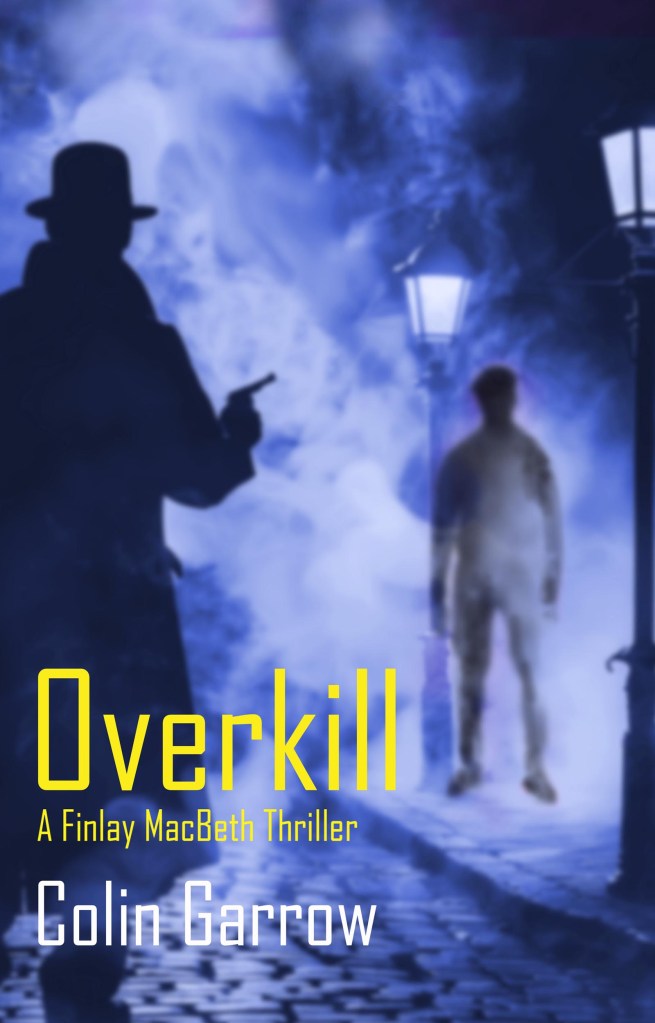
I’m delighted to welcome back Colin Garrow to the blog with a historical crime novel set in Edinburgh #blogtour #histfic #bookreview #mystery

I’m delighted to welcome back Colin Garrow to the blog with a historical crime novel set in Edinburgh #blogtour #histfic #bookreview #mystery

I’m delighted to welcome back Colin Garrow to the blog with a historical crime novel set in Edinburgh #blogtour #histfic #bookreview #mystery

Here’s the blurb

Edinburgh, Christmas Eve, 1936. A gruesome double murder. A white-faced killer. A mysterious stranger…

Still haunted by his recent past, Professor Finlay MacBeth is called in to assist the police following an horrific double murder. Traces of greasepaint and white cotton lead MacBeth and Inspector Callaghan to the Christmas Circus, but while they search for clues, someone else is watching them.

Meanwhile, bent cop Kilmartin still has MacBeth in his sights…In this thriller series set in Edinburgh, Overkill is book #2 in the Finlay MacBeth series.

Purchase Link

Amazon: https://geni.us/q05E

Draf2Digital: https://books2read.com/u/mlBxwW

My Review

Overkill is another success for Colin Garrow. This time we travel to 1936 and a very cold Christmas in Edinburgh. There could certainly be better times for a violent killer to strike than when snow lies thickly on the ground and no one has a decent pair of wellingtons to be found for love nor money.

I love that Colin’s novels are straight to the plot, and also, all plot. There is no time for extraneous activities, and this ensures his books, and I include Overkill in this, are quick reads while being very intriguing. I also appreciated the appearance of some Scottish words and found that they didn’t distract from the story but rather added to it.

I powered through Overkill and very much enjoyed the interplay between the main characters (even though the murders are particularly violent). This isn’t so much a ‘guess the culprit’ but rather a cat and mouse game where we hope the police will get to the killer before he strikes again.

Meet the author

Colin Garrow grew up in a former mining town in Northumberland. He has worked in a plethora of professions including taxi driver, antiques dealer, drama facilitator, theatre director and fish processor, and has occasionally masqueraded as a pirate. 

He has published more than thirty books, and his short stories have appeared in several literary mags, most recently in Witcraft, and Flash Fiction North. Colin lives in a humble cottage in Northeast Scotland where he writes novels, stories, poems and the occasional song.

He also plays several musical instruments and makes rather nice vegan cakes.

Author Colin Garrow

Connect with Colin

Check out my reviews for Colin’s other books

Terminal Black

Crucial Black

The Watson Letters

Blood on the Tyne

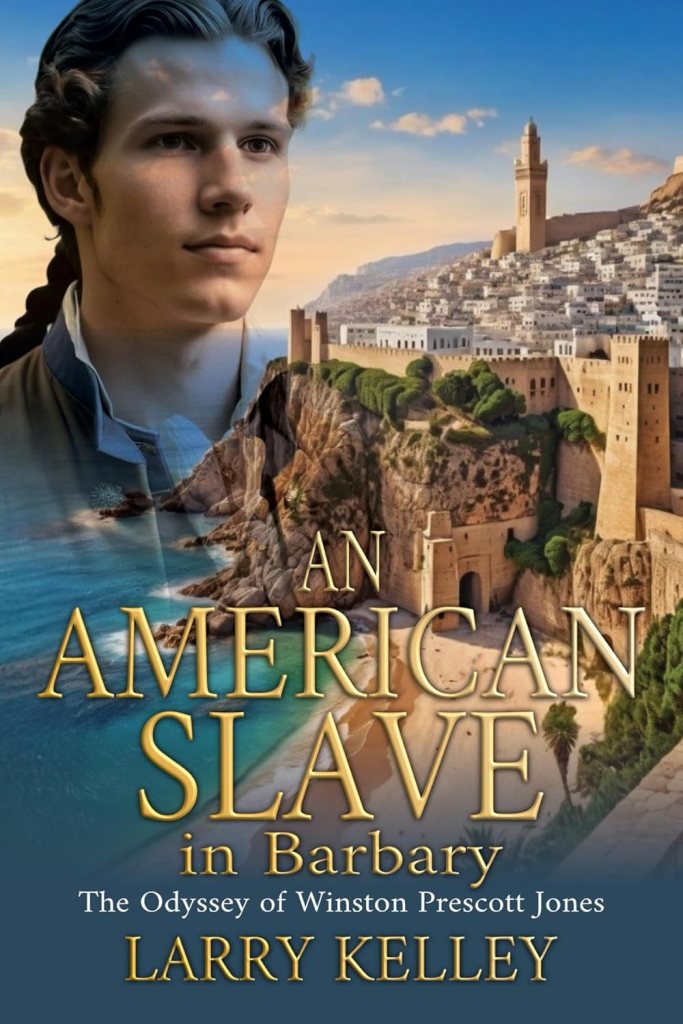
I’m welcoming An American Slave in Barbary – The Odyssey of Winston Prescott Jones by Larry Kelley to the blog #HistoricalFiction #BarbaryCoast #SlaveTrade #AmericanRevolution #BlogTour #TheCoffeePotBookClub

I’m welcoming An American Slave in Barbary – The Odyssey of Winston Prescott Jones by Larry Kelley to the blog #HistoricalFiction #BarbaryCoast #SlaveTrade #AmericanRevolution #BlogTour #TheCoffeePotBookClub
@KelleyComment @cathiedunn
@thecoffeepotbookclub

I’m welcoming An American Slave in Barbary – The Odyssey of Winston Prescott Jones by Larry Kelley to the blog

Here’s an excerpt from An American Slave in Barbary

Now, as the sun lowered in its westward descent toward the Atlantic, my thirst and my need to know if my brother might have survived left me no choice.  I walked out the dunes, across the flat beach, down onto damp sand that descended at a steep angle into the surf.  Without worrying if anyone could see me, I made my way toward Sale. I reasoned that unless, by an unlikely twist of fate, I was found by some friendly villager who wished to take me in and hide me, I would turn myself over to the mercies of the Moroccan authorities of Sale and or their agents, in exchange for a cup of water.

As I reached the portion of the beach near the outskirts of the city, two natives in a horse-drawn cart rode toward me near the waterline. The cart held an unarmed man driving and, next to him, a man armed with a scimitar, pistol, and ammunition belts strapped across his torso.  The cart stopped abruptly in front of me.  The armed man leaped out of the cart and ran toward me with his sword drawn, pointing at me. “Infidel, don’t move! Come here,” he yelled at me in Arabic as he motioned that I move toward the back of his cart.  

As he led me there, I saw in the rear bed two of my shipmates and close friends, Moore and Etheredge. “Jones!” they cried in unison. As I climbed into the back of the cart, they reached out their hands to mine with tears welling up in their eyes.  

My new jailor was remarkably a man I recognized as one who boarded our ship when we were captured in the Mediterranean and was among the pirates who sailed it off into the storm.  As he ran a chain through the ring in my ankle iron, which I still wore from our original capture, I said, “Lads, do you know if my brother, Robbie, made it ashore?”

Their looks told me what I feared had to be true.  They shook their heads while looking down at the floor of the cart.

Here’s the blurb


An American Slave in Barbary: The Odyssey of Winston Prescott Jones is the story of a first-generation American student whose commercial ship is captured in the summer of 1801 by Moslem pirates. He spends the next sixteen years as a captive in Algiers. He rises to become a confidant to the Dey of Algiers, who is desperate to know what made the American shopkeepers and farmers believe they could defeat the British war machine, and how they intended to rule themselves.
 
In the genre created by Homer, it is a tale of suffering, sin, and
redemption, and a young man’s epic journey to regain his freedom.
 

Purchase Link

https://geni.us/cgYHz

Meet the author

Larry Kelley’s life was changed by 9/11. He desperately wanted to find out who these people were who attacked us, what ordinary citizens could do to join the battle, and how those plotting to kill us in future attacks could be defeated.
 
Kelley has written scores of columns on the dangers of Western complacency. In his tenure as a political commentary writer, he has made a significant impact. His feature articles have appeared in the Piedmont Post, the San Francisco Chronicle, Human Events, and Townhall Magazine. Two of his articles were featured on the cover of Townhall Magazine.
 
His first book, Lessons from Fallen Civilizations, is the result of ten years of research. And received critical praise as a saga that begins on the plain of Marathon in 490 BC and whose main character is Western Civilization.


https://www.larrykelley.com

Author Larry Kelley
Follow the An American Slave in Barbary by Larry Kelley blog tour with The Coffee Pot Book Club

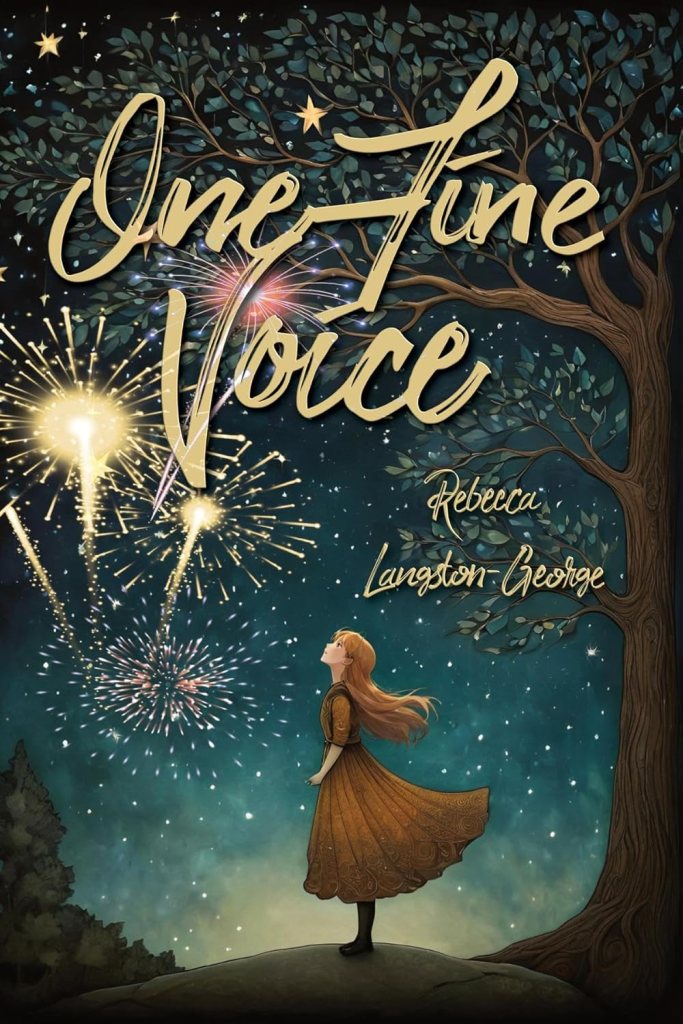
I’m welcoming Rebecca Langston-George to the blog, with her new book, One Fine Voice  #OneFineVoice #HistoricalFiction #MiddleGrade #BlogTour #TheCoffeePotBookClub

I’m welcoming Rebecca Langston-George to the blog, with her new book, One Fine Voice @RebeGeorge @cathiedunn
@rebeccalangstongeorge @thecoffeepotbookclub  #OneFineVoice #HistoricalFiction #MiddleGrade #BlogTour #TheCoffeePotBookClub

I’m welcoming Rebecca Langston-George to the blog, with her new book, One Fine Voice

Here’s an excerpt

Chapter 2

The pianist hit a wrong note in the chorus, causing Mama to wince, just as the church’s back doors wheezed open. A girl with a big blue hair bow in the next pew turned to look at me. Our eyes locked. Then she turned toward the doors behind us. I followed her gaze. That’s when I first saw them.

White robed men wearing pointed hoods paraded up the center aisle. They marched together in pairs until they reached the altar where my daddy had just kneeled; then half went left and half went right, forming a line across the front of the church. Their faces were masked save for the cut-out eye holes. Those sunken, shadowed holes all stared right at me, it seemed, pulling my eyes toward them, locking me in their dark gaze, paralyzing me with their murky eyes. 

I tried to sing. I knew every song in the hymnal by heart. But just like the white masks staring at me I didn’t have a working mouth. I tried to read the words in the hymnal, but I couldn’t tear my eyes away from those blank stares. The one thing in my body that worked was my memory. It jabbed a stick in a deep muddy pool of my mind that usually only bubbled up in my nightmares. 

Four years ago, a winter’s day. A crust of ice crunched underfoot as I walked with my uncle to his barn. A lamb had gotten loose and had frozen to death near the fence. Its white wool stiff with sparkling ice crystals. A black crow was perched atop its head, a dark berry dangling from its beak. The crow flew away, and I saw that the lamb’s eyes had been picked out. Its cold, empty eye sockets stared through me, and I screamed.   

I felt that same urge to scream right then and run clear down the street away from our new church. I even turned my head toward the back door, but something stopped me. The girl—the one with the big blue bow—she was singing, –like she probably did every Sunday. I blinked. I turned my head the other way. Daddy sang along in his strong tenor. Blink. Reverend Dewhurst held his hymnal high and sang toward the ceiling. The pianist plunked on. Mama was the only other one that looked confused. Everyone around us was acting as if nothing unusual was happening, like masked robed men marching into church was perfectly normal. Was this normal for Grayson, Indiana?

Here’s the blurb

All her life, Esther Hopkins has been told she has a mighty fine voice. 

Still, she can’t believe her luck when just days after moving to town she’s invited to sing a solo at the 1923 Independence Day picnic.

But the group sponsoring the picnic is not the benevolent fraternal order they claim to be. Worse, they’ve recruited her father, the town’s freshly ordained Baptist minister, to become their chaplain. 

When they target the immigrant family of her new best friend, Esther must risk her father’s anger, the KKK’s revenge, and her family’s safety to follow her conscience, salvage her friendship, and find the strength to speak truth to power even if it costs all she holds dear.

Triggers: xenophobia, racism

Purchase Link

https://geni.us/BYaF8Z

Meet the author

Rebecca Langston-George is the author of nineteen books for young readers including the globally popular For the Right to Learn: Malala Yousafzai’s Story. Though she’s long been known for nonfiction, One Fine Voice is her first middle grade historical fiction. 

A retired teacher credentialed in both single subject language arts for upper grades and multiple subjects for younger grades, Rebecca is a popular school presenter for all ages, encouraging students to investigate and tap into their personal interests when writing. 

She serves on the board of The California Reading Association and is the Co-Regional Advisor for SCBWI Central-Coastal California, helping other writers achieve their dreams.

She splits her time between California’s scenic coast and its agricultural heartland, writing (and mostly rewriting) at one mile per hour on a treadmill desk. Read more at Rebecca Langston-George | Children’s Book Author.

www.rebeccalangston-george.com

https://www.historiumpress.com/rebecca-langston-george

www.bookbub.com/authors/rebecca-langston-george

Author Rebecca Langston-George
Follow the One Fine Voice by Rebecca Langston-George blog tour with The Coffee Pot Book Club