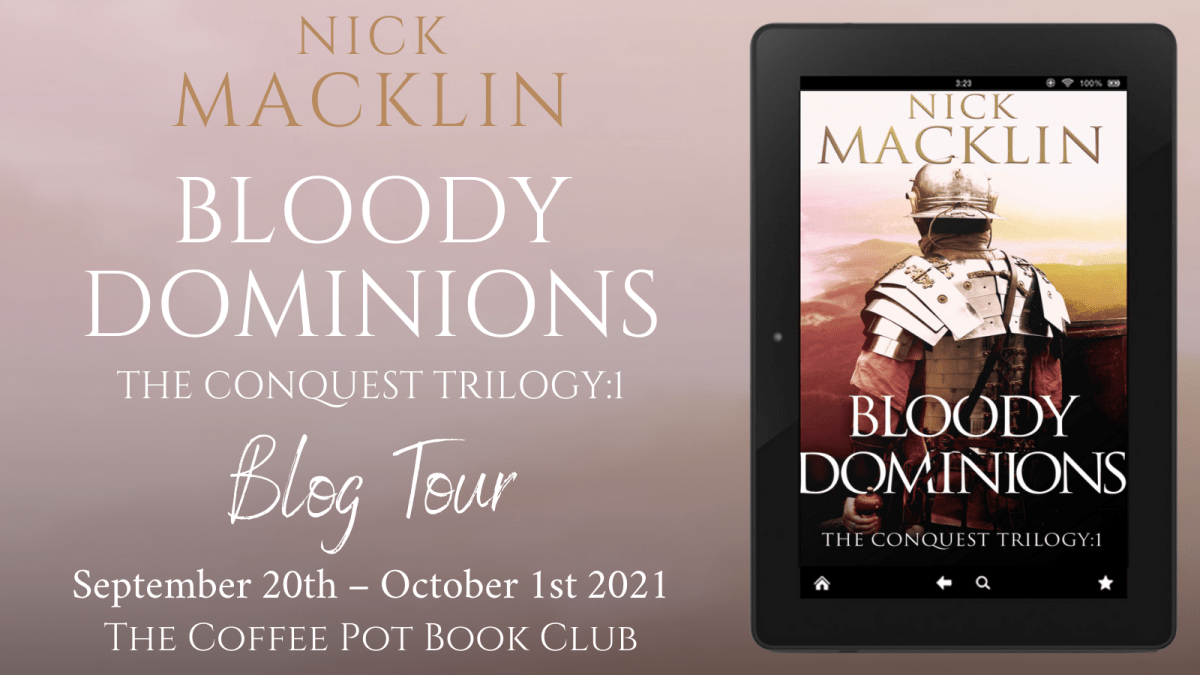
Nick Macklin is sharing some historical research from Bloody Dominions #histfic #historicalfiction #blogtour

Today, I’m delighted to welcome Nick Macklin to the blog to talk about the research he undertook to write his new book, Bloody Dominions.

Your book, Bloody Dominions sounds fascinating. I’ve recently been enjoying a great deal of Roman era historical fiction. As a historian first and foremost, and then a writer, I’m always interested in how people research their historical stories.

Can you explain your research process to me, and give an idea of the resources that you rely on the most (other than your imagination, of course) to bring your historical landscape to life? 

Do you have a ‘go’ to book/resource that you couldn’t write without having to hand, and if so, what is it (if you don’t mind sharing)?

I have always had an interest in the ancient world and especially the Roman empire. I studied history at college, which in addition to satisfying my thirst for knowledge of the past, helped stand me in good stead during the extensive research I conducted whilst writing Bloody Dominions.

I knew when I set out that I wanted to set the story against the backdrop of a significant period in Roman history. I spent some considerable time immersed in the central and university libraries in Exeter, looking to narrow that down to something offering the potential for meaningful character and plot development, that hadn’t already received exhaustive coverage. I eventually settled on Caesar’s tumultuous occupation of Gaul, in part because I was struck by just how heavily the Roman psyche was influenced during this period by the scare they’d received 50 years earlier, when Germanic tribes invaded their territories and defeated their legions. Seeing references to the veterans of that war watching their sons and grandsons enlist for a similar campaign, I started to think about developing that link on both sides of the conflict. The prolonged clash of cultures that spanned 8 years, offered ample opportunity for the kind of dual perspective from which I was hoping to tell the story. Whilst the violent conflict provided a wealth of material to explore the changing fortunes of war and its impact at a personal level. The switching of allegiances; nations fighting for and against Rome, also provided the potential for intriguing plot lines. And so, the idea for the Conquest Trilogy was born.

Fortunately, Caesar was an almost unique example of a great general who was also a prolific writer. His ‘Commentarii de Bello Gallico, ‘Commentary on the Gallic War’ is a first-hand account of his invasion. I was grateful for the many translated versions now available as I have yet to perfect my Latin. One of the things on my to do list. It was important to recognise that this autobiographical account had a political purpose, Caesar’s audience was the Senate and the people of Rome and he wanted to justify his actions, reinforce his reputation and portray himself as a commander of courage, flair and success. As a consequence, I took some of the estimates of enemy warrior and casualty numbers with a pinch of salt but at its heart the Commentary is a straightforward narrative of the campaign Caesar fought in Gaul. As such it was an invaluable resource, providing key details in respect of the order and timing of events, the legions involved, battle plans etc. as well as some of the incredibly useful but more mundane detail that helped me to gain a sense of just how far the legions marched during a campaign season!

Whilst my three protagonists are entirely fictitious, I wanted the framework against which their stories unfold to be entirely accurate from a historical perspective, to feature actual participants in Caesar’s campaign and draw on real events as they occurred. In that respect the Commentaries also offered some intriguing opportunities to weave fact and fiction. For example, Caesar describes an ultimately unsuccessful peace conference between himself and the Germanic King Ariovistus prior to the battle of Vosges in 58 BC. He outlines how Ariovistus insisted that each side should be accompanied by mounted troops. He probably made this a condition because he knew that Caesar’s cavalry was composed mainly of Aeduian horsemen, whose loyalty to Caesar was questionable. Indeed, Caesar may not have trusted them himself. As a ruse Caesar ordered a group of his Gallic auxiliaries to dismount and had legionnaires from the Xth Legion ride in their place and accompany him to the peace conference. The incident earned the Legion its nickname ‘Equestrius’. In Bloody Dominions I took the liberty of having Caesar call for experienced riders to join his guard, hence Atticus’s involvement, a pivotal moment in the novel as this is when he and Allerix meet for the first time. 

Thereafter, as I plotted the journeys of Atticus, Allerix and Epona I consulted a variety of additional book and web-based resources to supplement my knowledge and research particular points of interest. Old enough to remember researching before the web, I never cease to be amazed at the wealth of information available at our fingertips, although I still prefer to do the bulk of my research using physical resources and pen and paper! I did however find the excellent web based military history encyclopaedia, www.HistoryofWar.org particularly helpful when looking to visualise how the battles in which my characters feature played out.

Finally, one of the earliest pieces of research I did when Bloody Dominions was still very much in its infancy, was to complete a ‘field trip’ to Europe. I can’t pretend that this visit was entirely conducted for research purposes, I had always wanted to travel around Europe by train. A nod I suspect to the inter-railing visit I never made as a teenager! However, I did make a number of detours along the way to visit museums, monuments and battlefield sites (wherever possible) in Italy, France, Germany and Belgium. I never get over the sense of standing where so many have gone before, never more so than when standing on the Ponte Pietre Bridge in Verona, recognising that it had been ‘crossed by Caesar and all of the legions travelling to Gaul. Including of course those in the XIIth on their way into the pages of Bloody Dominions. 

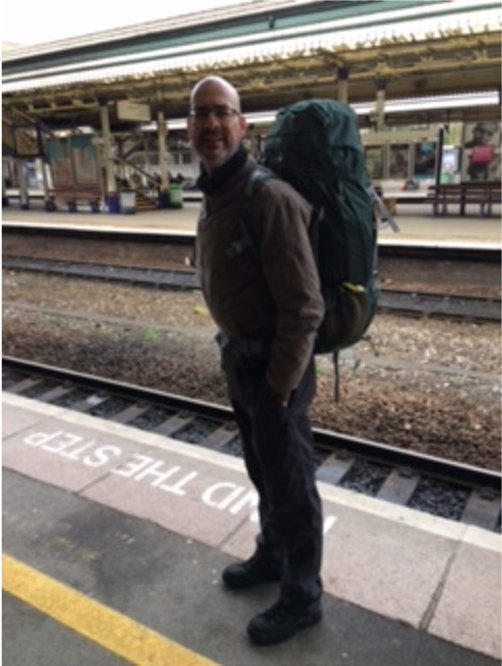
This is me, quite literally at the start of the Bloody Dominions Journey as I prepare to leave Exeter at the start of that European ‘research’ trip: 
Thank you so much for sharing your research journey with me. It sounds fascinating, and I wish you luck with your new book, and the rest of the books in the trilogy.

Intrigued?

Here’s the blurb:

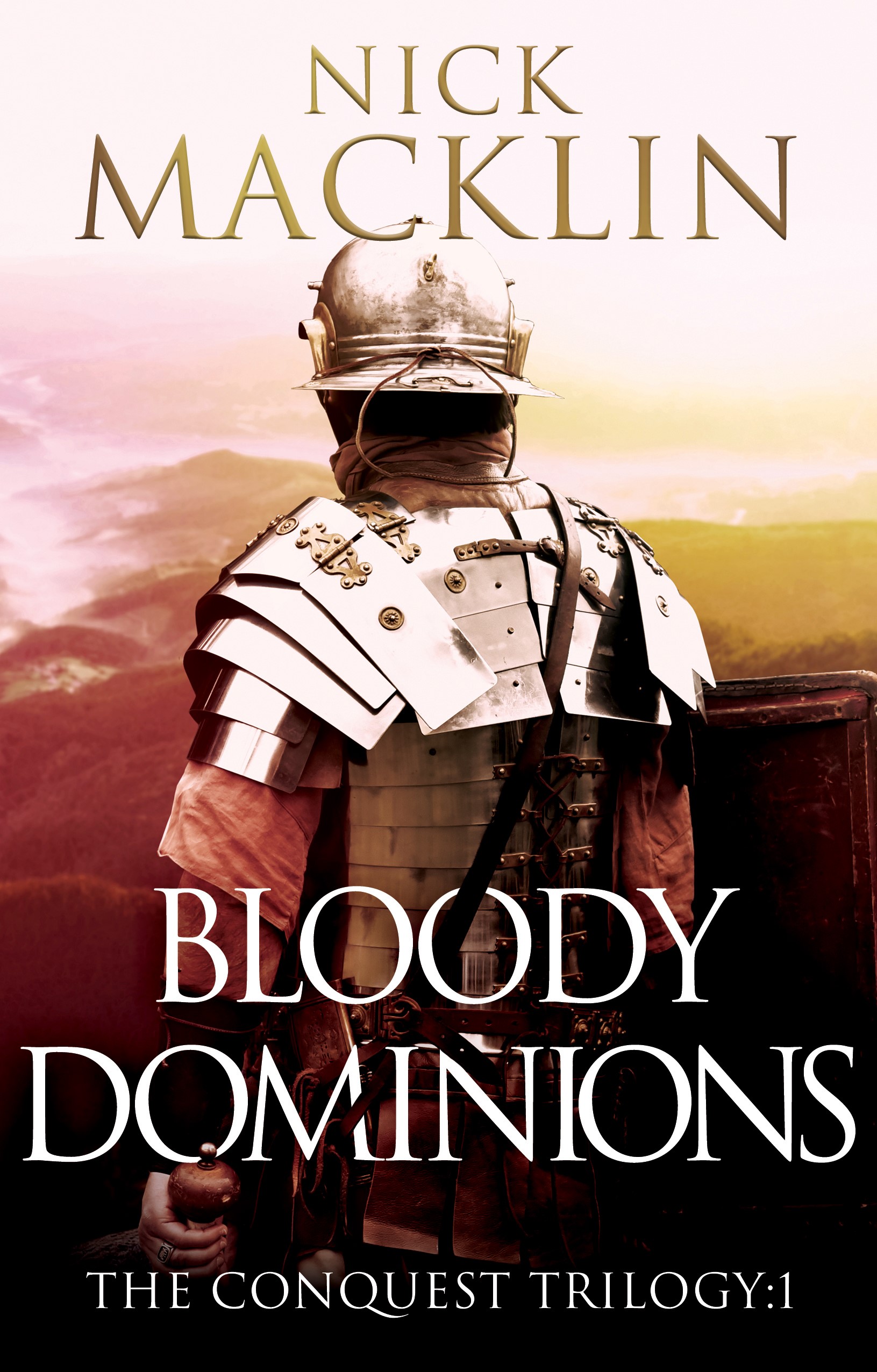
Journey with those at the heart of the conflict as Caesar embarks on the tumultuous conquest of Gaul 58-51 BC. Book One 58-56 BC.

As Caesar’s campaign begins, tests of courage and belief will confront the three protagonists, shaping them as individuals and challenging their views of the world and each other:

Atticus – an impetuous but naturally gifted soldier, whose grandfather served with distinction in the legions;

Allerix – a Chieftain of the Aduatuci, who finds himself fighting both for and against Caesar; and

Epona – a fierce warrior and Allerixs’ adopted sister.

Experiencing the brutalities of conflict and the repercussions of both victory and defeat, Atticus, Allerix and Epona will cross paths repeatedly, their destinies bound together across time, the vast and hostile territories of Gaul and the barriers of fate that have defined them as enemies. In a twist of fate, Atticus and Allerix discover that they share a bond, a secret that nobody could ever foresee…

Trigger Warnings:

Violence, attempted rape.
Universal link

Amazon UKAmazon USAmazon CAAmazon AU

Barnes and NobleWaterstones:  KoboiBooks

Google Play:  WHSmith

Meet the Author

A history graduate, Nick enjoyed developing the skills that would stand him in good stead during the extensive research he conducted prior to writing his novel. Whilst the ancient world unfortunately didn’t feature to any extent in his history degree, (the result of failing miserably to secure the A level grades that would have permitted greater choice) he maintained a lifelong and profound interest in ancient history and especially the Roman Empire, continuing to read avidly as he embarked on a career in HR. Over the next 30 years or so Nick occupied a variety of Senior/Director roles, most recently in the NHS. Unsurprisingly, writing in these roles was largely confined to the prosaic demands of Board papers but Nick never lost the long-harboured belief, motivated by the works of writers such as Robert Fabbri, Robyn Young, Anthony Riches, Simon Scarrow, Matthew Harffy and Giles Kristian, that he too had a story to tell. When he was presented with a window of opportunity c3 years ago he took the decision to place his career on hold and see if he could convert that belief into reality. 

Nick always knew that he wanted to set the novel against the backdrop of a significant event/period in Roman history. Looking to narrow that down to something offering the potential for meaningful character and plot development, but that hadn’t already received exhaustive coverage, he settled on Caesars tumultuous occupation of Gaul. Spanning 8 years, the prolonged clash of cultures offered ample opportunity for the kind of dual perspective from which he was hoping to tell the story, whilst the violent conflict provided a wealth of exciting material to explore the changing fortunes of war and its impact at a personal level. The switching of allegiances, nations fighting for and against Rome also provided the potential for some intriguing plot lines. As his research unfolded, he was also struck by just how heavily the Roman psyche during this period was influenced by the scare they had received 50 years earlier when Germanic tribes invaded their territories and defeated their legions. Seeing references to the veterans of that war watching their sons and grandsons enlist for a similar campaign, he started to think about developing that link on both sides of the conflict. And so, the idea for the Conquest Trilogy was born.

In Bloody Dominions Nick has sought to produce a novel in which unfolding events are experienced and described from the perspective of protagonists on both sides of Caesar’s incursion into Gaul.  Conscious that the role of women in Roman fiction, Boudica aside, is largely confined to spouse, prostitute or slave, Nick wanted to ensure that one of his lead characters was female and a prominent member of the warrior clan of her tribe. The novel is driven by these characters but the framework against which their stories unfold is historically accurate, featuring actual participants in Caesar’s campaign and drawing on real events as they occurred. As such Nick is genuinely excited about his characters and the story they have to tell.

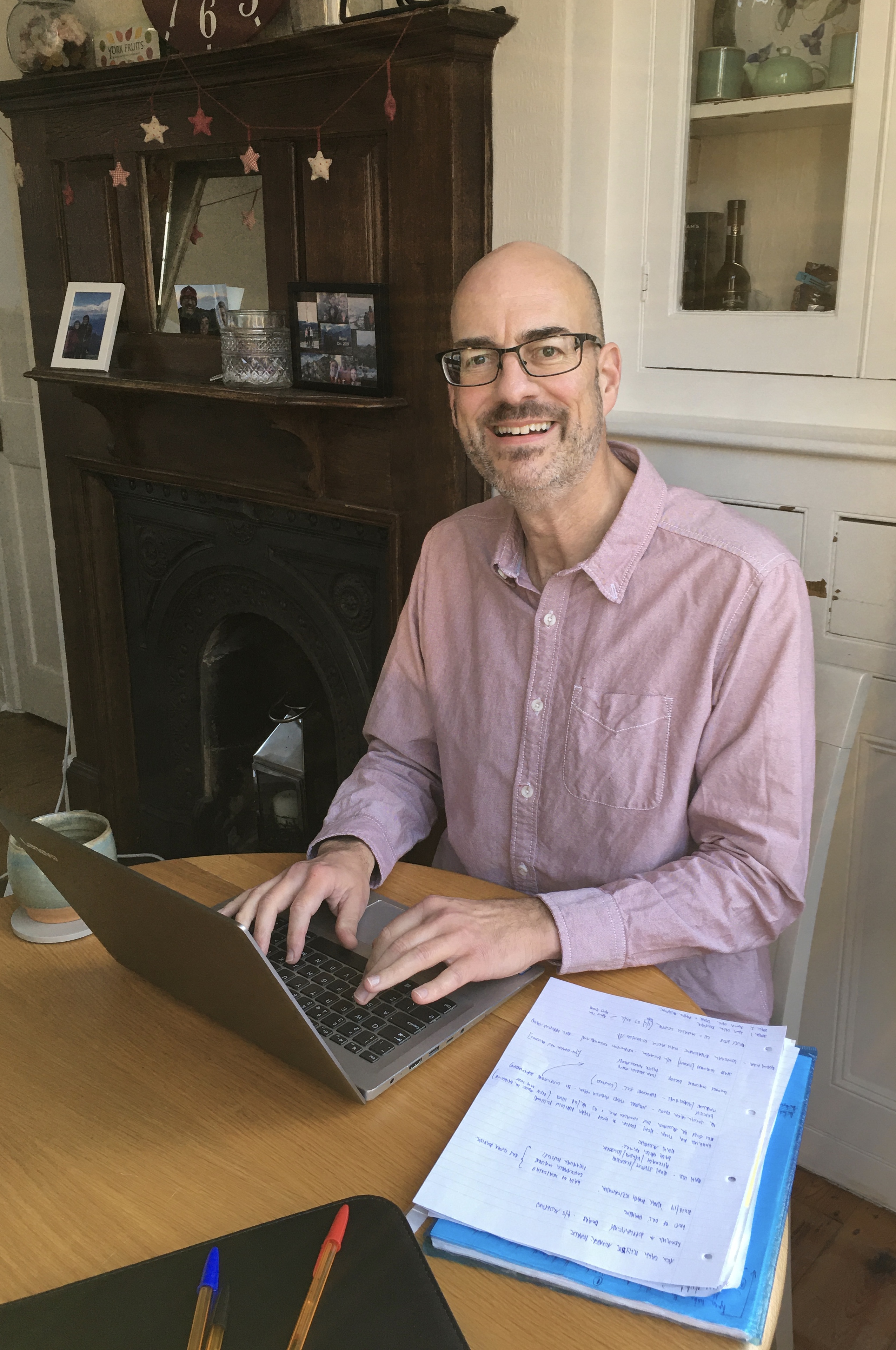
Nick lives in Exeter with his two daughters and is currently juggling work as an Independent HR Consultant with writing the second novel in the Conquest Trilogy, Battle Scars. 
Connect with Nick:

TwitterLinkedInGoodreadsBookBub

Don’t forget to check out the other stops on the Bloody Dominions Blog Tour with The Coffee pot Book Club

Check out the review for The Man Who Died Twice by Richard Osman #Contemporarymystery #Bookreview

Here’s the blurb

It’s the following Thursday.

Elizabeth has received a letter from an old colleague, a man with whom she has a long history. He’s made a big mistake, and he needs her help. His story involves stolen diamonds, a violent mobster, and a very real threat to his life.

As bodies start piling up, Elizabeth enlists Joyce, Ibrahim and Ron in the hunt for a ruthless murderer. And if they find the diamonds too? Well, wouldn’t that be a bonus?

But this time they are up against an enemy who wouldn’t bat an eyelid at knocking off four septuagenarians. Can the Thursday Murder Club find the killer (and the diamonds) before the killer finds them?

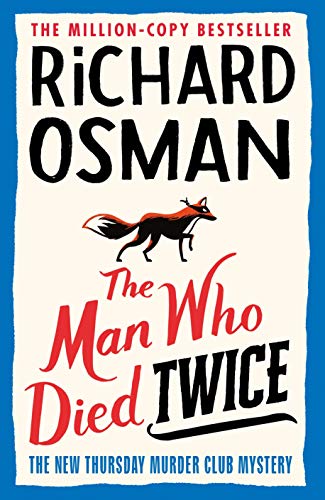
Book cover for The Man Who Died Twice by Richard Osman

My Review

First things first, I’ve not read book 1, but I was curious to see what all the hype was about. It didn’t disappoint, but I did struggle to ‘get into’ the book. There’s some funny tenses and I don’t like books that haven’t decided what tense to write in:) I did get used to it, eventually, but I am curious to know if anyone else felt the same way I did.

The Man Who Died Twice is a well-told modern-day mystery featuring four friends in their 70s as they try and solve three interlinked mysteries surrounding some missing diamonds.

It is a good tale with characters that are well-drawn, although, on occasion, it is the ‘bit’ part players that speak more to the reader. (This may be because it’s a second book and everyone already knows them from book 1).

It is filled with twists and turns, although the reader does get to a part of the mystery long before the characters do, but with a nice little twist at the end.

An engaging story, which I read very quickly.

Check out the review for The Royal Game by Anne O’Brien #histfic #bookreview #Highlyrecommended.

Here’s the blurb

The inspirational story of the Pastons, a family who rose from obscurity to the very heart of Court politics and intrigue during the Wars of the Roses.

England, 1444. Three women challenge the course of history…

King Henry VI’s grip on the crown hangs by a thread as the Wars of the Roses starts to tear England apart. And from the ashes of war, the House of Paston begins its rise to power.

Led by three visionary women, the Pastons are a family from humble peasant beginnings who rely upon cunning, raw ambition, and good fortune in order to survive.

Their ability to plot and scheme sees them overcome imprisonment, violence and betrayal, to eventually secure for their family a castle and a place at the heart of the Yorkist Court. But success breeds jealousy and brings them dangerous enemies…

An inspirational story of courage and resilience, The Royal Game charts the rise of three remarkable women from obscurity to the very heart of Court politics and intrigue.

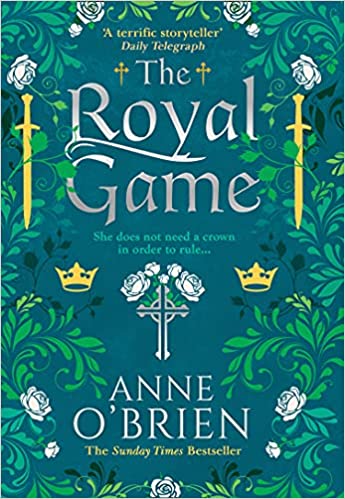
Book cover for The Royal Game by Anne O'Brien

My Review

Anne O’Brien is one of my favourite authors. Every year, I wait with high anticipation to read her newest book and to see which ‘new’ unknown woman of history she’s brought to life for her readers.

With The Royal Game, Anne O’Brien has chosen not a powerful royal/noblewoman but instead three women who hunger to be considered as such. The majority of the story is told from the viewpoint of Margaret Paston, wife to John Paston, as property disputes amongst their landed estates escalate and are resolved only to escalate once more. This might sound a bit boring, but believe me, it’s not. I was shocked, genuinely shocked, by the level of violence that could be brought to bear against rival claimants and the state of lawlessness in East Anglia at the time is flabbergasting. It acts as a perfect way of showing just what the uncertainty of the Wars of the Roses brought about for those lower ‘noble’ families with the ebb and flow of prestige and royal denouncement as in the background, great battles are won and lost, and rival kings fall and rise.

Margaret is a wonderfully independently minded woman, and yet constrained by her position in life, and her sex so she can only do so much when trouble strikes, but she will do it to her upmost.

Alongside Margaret, we meet her sister in law, Eliza, who struggles to find a husband and emerge from beneath her mother’s less than motherly love. She manages to do just that only to find herself facing a life as beset with lawsuits as her brother and sister by marriage.

Our third Paston woman is Anne Haute, a cousin to Elizabeth Woodville. Her voice is that of a noblewoman without the dowry needed to hook herself a wonderful marriage, but who can tout her family connections to gain one.

This book is a stunning read – and more, an easy read – despite the vast number of Johns in it (I’ll leave that for you to discover because wow – that’s a weird thing to have done). I had to force myself to slow down and stop reading because I didn’t want it to be over. Now I have to wait for next year to read the second part of the story.

I highly recommend this book. If you know about the Wars of the Roses, all the better, but if you don’t, it will not lessen your enjoyment of the story of the three Paston women and their troublesome and litigious family at a time of intense political unrest.

Connect with Anne via her website

M C Bunn is sharing some historical research from Where Your Treasure Is #blogtour #historicalresearch #histfic

Today, I’m delighted to welcome M C Bunn to the blog. She’s going to share the secrets of her research with us all.

I’m a story teller first and foremost, not a historian or a trained researcher. While I have a love for history, my college major and master’s degrees are in English. It was a great excuse to read the sorts of books I love. Recently I attended the Historical Novel Society’s North American conference. The conversation rooms on various historical eras and related topics were some of the event’s most exciting offerings because of the participants’ passion for their subjects and their wealth of knowledge. I’d love to contact some of them for more information, especially as I work on my next book, which is set at the end of the Edwardian period and during World War I. 

For advice about how to investigate a historical detail, I turn to knowledgeable friends for help, and librarians are goldmines for resource suggestions. I also do a lot of digging through bibliographies and end notes, and rely on contemporary texts. If they’re nonfiction, as opposed to literary, they’re mostly digital. Annotated books and older dictionaries are quite helpful. I try to avoid slang. It’s interesting how many expressions we use that Victorians didn’t, and vice versa.

My late father’s Clarkson N. Potter Annotated Sherlock Holmes and its notes never fail to lift my spirits when I think about the pitfalls awaiting writers. While Conan Doyle’s plots and dialogue are amazing, he made up London streets and includes all sorts of details in his stories that don’t hold up under the scholar’s close scrutiny. The Potter edition is full of references to research articles by other famous authors and fans that prove how some sort of chemical or cigar ash Holmes describes couldn’t have been used in such and such a way. But those intricacies aren’t the point of what Conan Doyle was doing. At least Dorothy L. Sayers won’t be looking over my shoulder. She minutely read Conan Doyle’s work! In the later drafts of Treasure, I tried to avoid glaring errors and anachronisms, but perhaps the ones that remain will amuse some reader or inspire another writer’s research. 

I didn’t set out to write Where Your Treasure Is. It wasn’t inspired by researching the late-Victorian era, though that’s a time period that has exerted its fascination over me since childhood. Writing the story felt—not exactly like automatic writing, but there was definitely an element of feeling propelled along. There was no outline or notes. It was only after I’d written the entire plot from beginning to end that I added more historical details and checked those that had emerged organically. 

I’d spent some time in London and Norfolk, and studied old and new maps of Treasure’s settings. What surprised me were details that, during the checking process, I thought I’d made up but hadn’t. I attribute some of that to the passage of time and forgetfulness. When you’ve read about a time period for as long as I have, you internalize a great deal. As for other details, I’ve no explanation. 

For instance, Mena House was a name that wouldn’t leave me alone when I wrote about the heroine’s uncle traveling to Egypt. I looked it up and was surprised to find the hotel is famous though it wasn’t mentioned in any of the reading I’d recently completed on Egypt. I ordered several 19th century travel guides to confirm a few more details about the hotel’s history and its golf course. Another eerie instance was the way I imagined the façade of the character George’s Norfolk home, Hereford Hall. In my early twenties I stayed with a family in Norfolk, but we fell out of touch. Several years after I wrote Treasure’s first draft, I learned that one of my host’s sisters had died. Her obituary includes a picture taken in front of a structure that looks almost identical to George’s house. I’d never seen that picture before or visited the place. Believe me or not, but that’s the truth. 

Thank you so much for sharing your research with me today. Good luck with your new book.

Here’s the blurb;

Feisty, independent heiress Winifred de la Coeur has never wanted to live according to someone else’s rules—but even she didn’t plan on falling in love with a bank robber.

Winifred is a wealthy, nontraditional beauty who bridles against the strict rules and conventions of Victorian London society. When she gets caught up in the chaos of a bungled bank robbery, she is thrust unwillingly into an encounter with Court Furor, a reluctant getaway driver and prizefighter.  In the bitter cold of a bleak London winter, sparks fly.

Winifred and Court are two misfits in their own circumscribed worlds—the fashionable beau monde with its rigorously upheld rules, and the gritty demimonde, where survival often means life-or-death choices.

Despite their conflicting backgrounds, they fall desperately in love while acknowledging the impossibility of remaining together. Returning to their own worlds, they try to make peace with their lives until a moment of unrestrained honesty and defiance threatens to topple the deceptions that they have carefully constructed to protect each other.

A story of the overlapping entanglements of Victorian London’s social classes, the strength of family bonds and true friendship, and the power of love to heal a broken spirit.

Buy Links:

Universal Buy Link

Amazon UKAmazon USAmazon CAAmazon AU

Barnes and NobleWaterstones:

KoboPage 158 BooksQuail Ridge BooksIndie Bound

Meet the author

M. C. Bunn grew up in a house full of books, history, and music. “Daddy was a master storyteller. The past was another world, but one that seemed familiar because of him. He read aloud at the table, classics or whatever historical subject interested him. His idea of bedtime stories were passages from Dickens, Twain, and Stevenson. Mama told me I could write whatever I wanted. She put a dictionary in my hands and let me use her typewriter, or watch I, Claudius and Shoulder to Shoulder when they first aired on Masterpiece Theatre. She was the realist. He was the romantic. They were a great team.”

Where Your Treasure Is, a novel set in late-Victorian London and Norfolk, came together after the sudden death of the author’s father. “I’d been teaching high school English for over a decade and had spent the summer cleaning my parents’ house and their offices. It was August, time for classes to begin. The characters emerged out of nowhere, sort of like they knew I needed them. They took over.” 

She had worked on a novella as part of her master’s degree in English years before but set it aside, along with many other stories. “I was also writing songs for the band I’m in and had done a libretto for a sacred piece. All of that was completely different from Where Your Treasure Is. Before her health declined, my mother heard Treasure’s first draft and encouraged me to return to prose. The novel is a nod to all the wonderful books my father read to us, the old movies we stayed up to watch, a thank you to my parents, especially Mama for reminding me that nothing is wasted. Dreams don’t have to die. Neither does love.”  

When M. C. Bunn is not writing, she’s researching or reading. Her idea of a well-appointed room includes multiple bookshelves, a full pot of coffee, and a place to lie down with a big, old book. To further feed her soul, she and her husband take long walks with their dog, Emeril in North Carolina’s woods, or she makes music with friends. 

“I try to remember to look up at the sky and take some time each day to be thankful.” 

Connect with M C Bunn

WebsiteTwitter

Facebook:  InstagramPinterest

BookBubAmazon Author PageGoodreads

Don’t forget to check out the other stops on the Where Your Treasure Is blog tour with The Coffee Pot Book Club