Who were the family of Lady Estrid? #HistFic #non-fiction

Lady Estrid was born into a large and illustrious family with far-reaching influence over Denmark, Sweden, Norway and England.

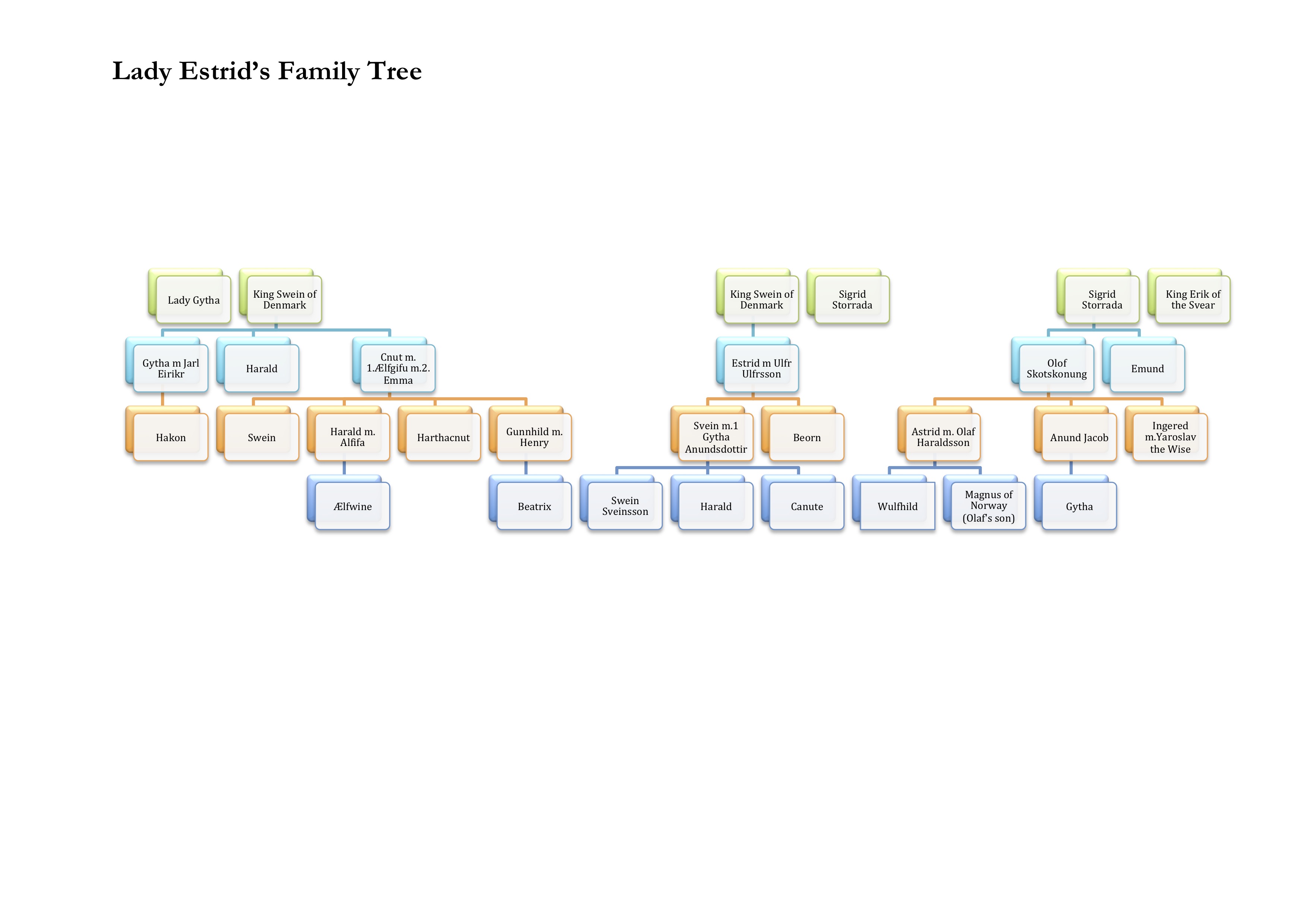
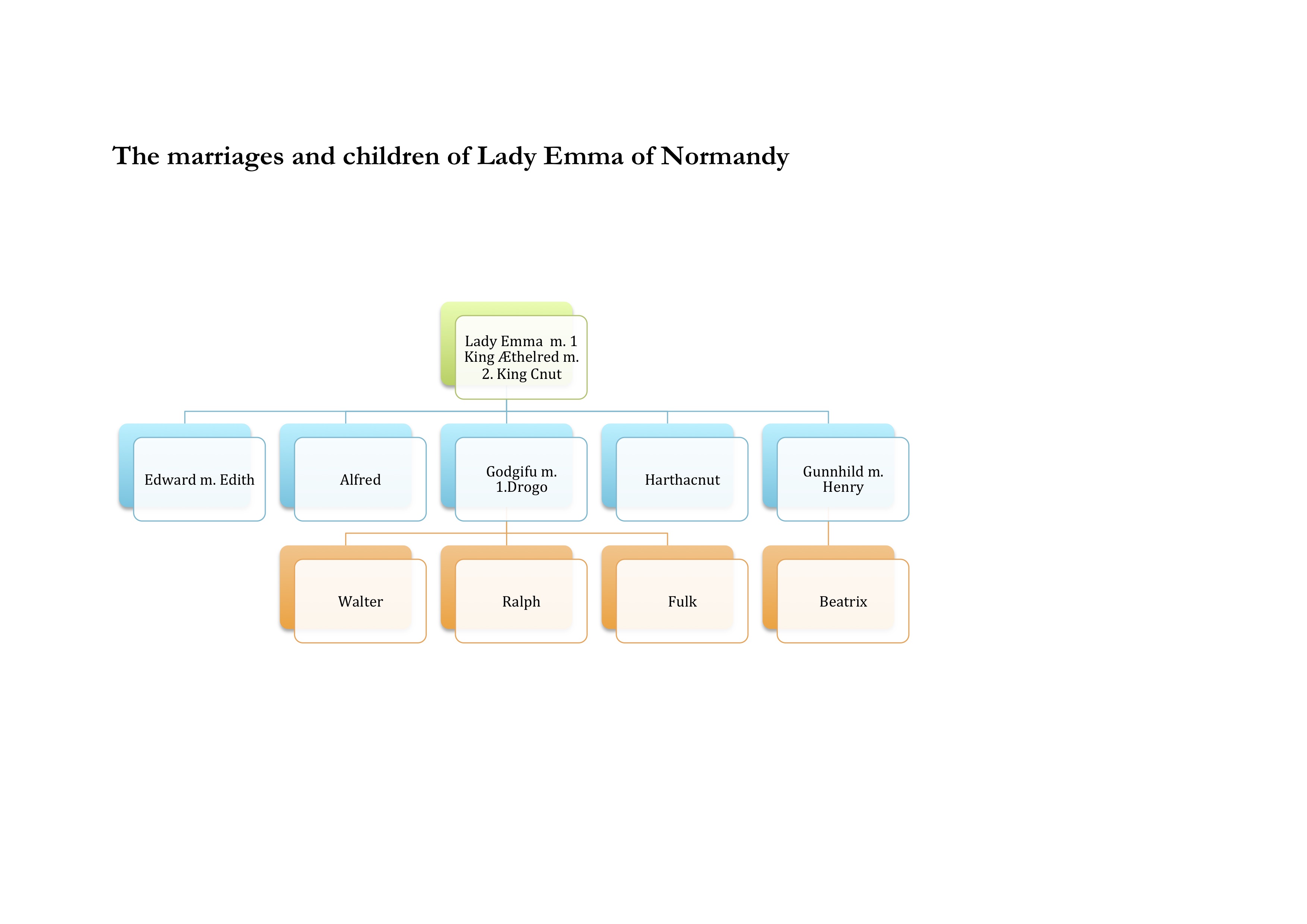
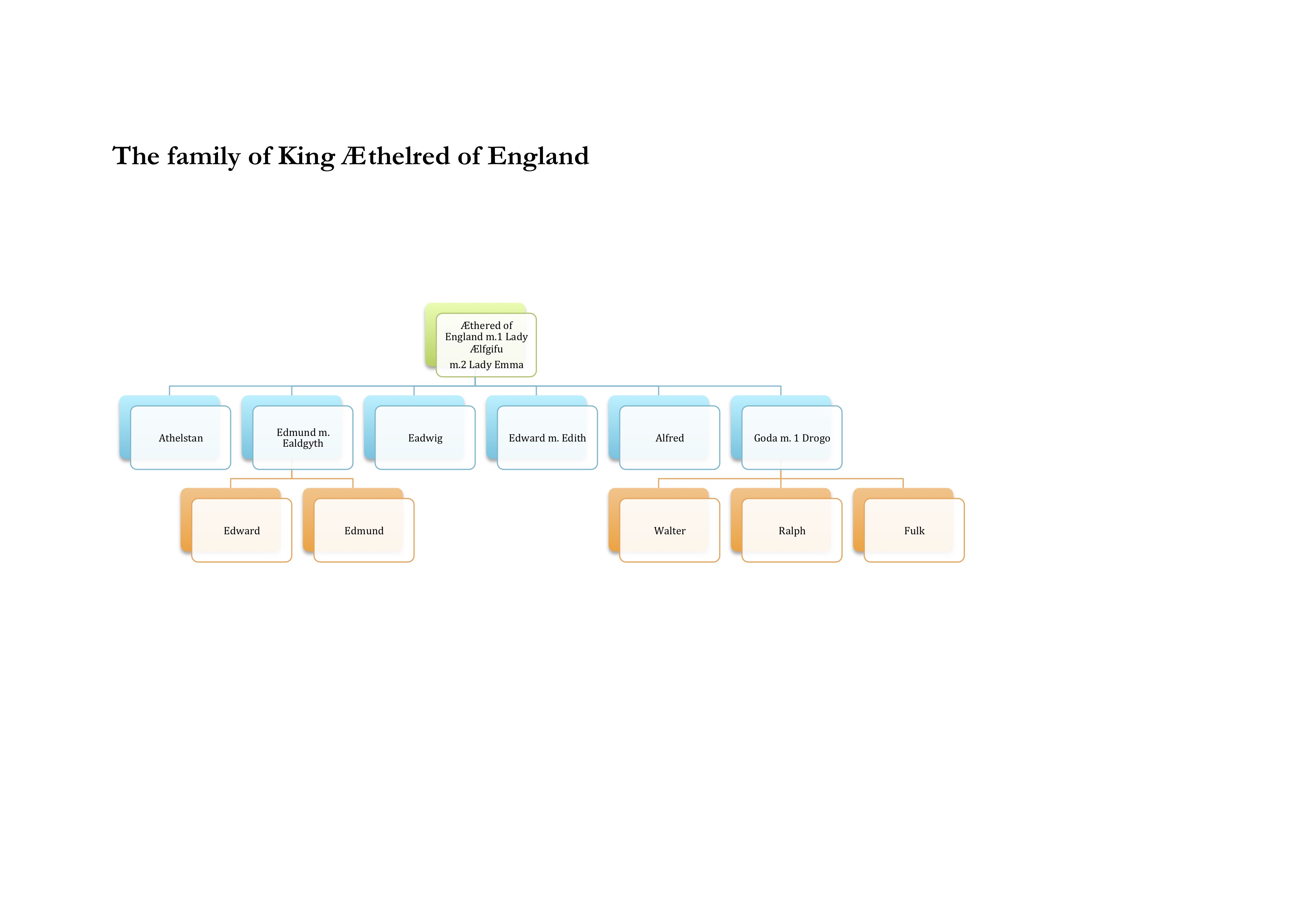
I’ve put together some genealogical tables of the main families to make easier to work out how everyone connected. (You can click on the images to make them bigger).

Due to a lack of information, I have made little mention of the rest of Estrid’s half-sisters, of which she had three or four. I feel it perhaps also helped the story a little – it was complicated enough as it was without giving them the capacity to meddle in affairs in Denmark.

To break it down into more palatable chunks, Lady Estrid’s mother was married twice, once to King Swein of Denmark (second) and also to King Erik of the Svear (first). King Swein was also married twice (in my story at least – as it is debated), to Lady Gytha (who I take to be his first wife) and then to Lady Sigrid (who I take to be his second wife.) Swein was king of Denmark, Erik, king of the Svear (which would become Sweden), and so Sigrid was twice a queen, and she would have expected her children to rule as well, and her grandchildren after her. Sigrid was truly the matriarch of a vast dynasty.

She would have grandchildren who lived their lives in the kingdom of the Rus, in Norway, in England, and Denmark.

And Sigrid wasn’t the only ‘double queen.’ Lady Emma, twice queen of England, was first married to King Æthelred and then to King Cnut, Estrid’s brother.

Not that it’s possible to speak of Lady Emma’s children from her two marriages, without considering the children of her first husband’s first marriage. King Æthelred had many children with his first wife, perhaps as many as nine (again, a matter for debate), the below only shows the children mentioned in Lady Estrid. Readers of The Earls of Mercia series, and the Lady Elfrida books, will have encountered the many daughters, as well as sons.

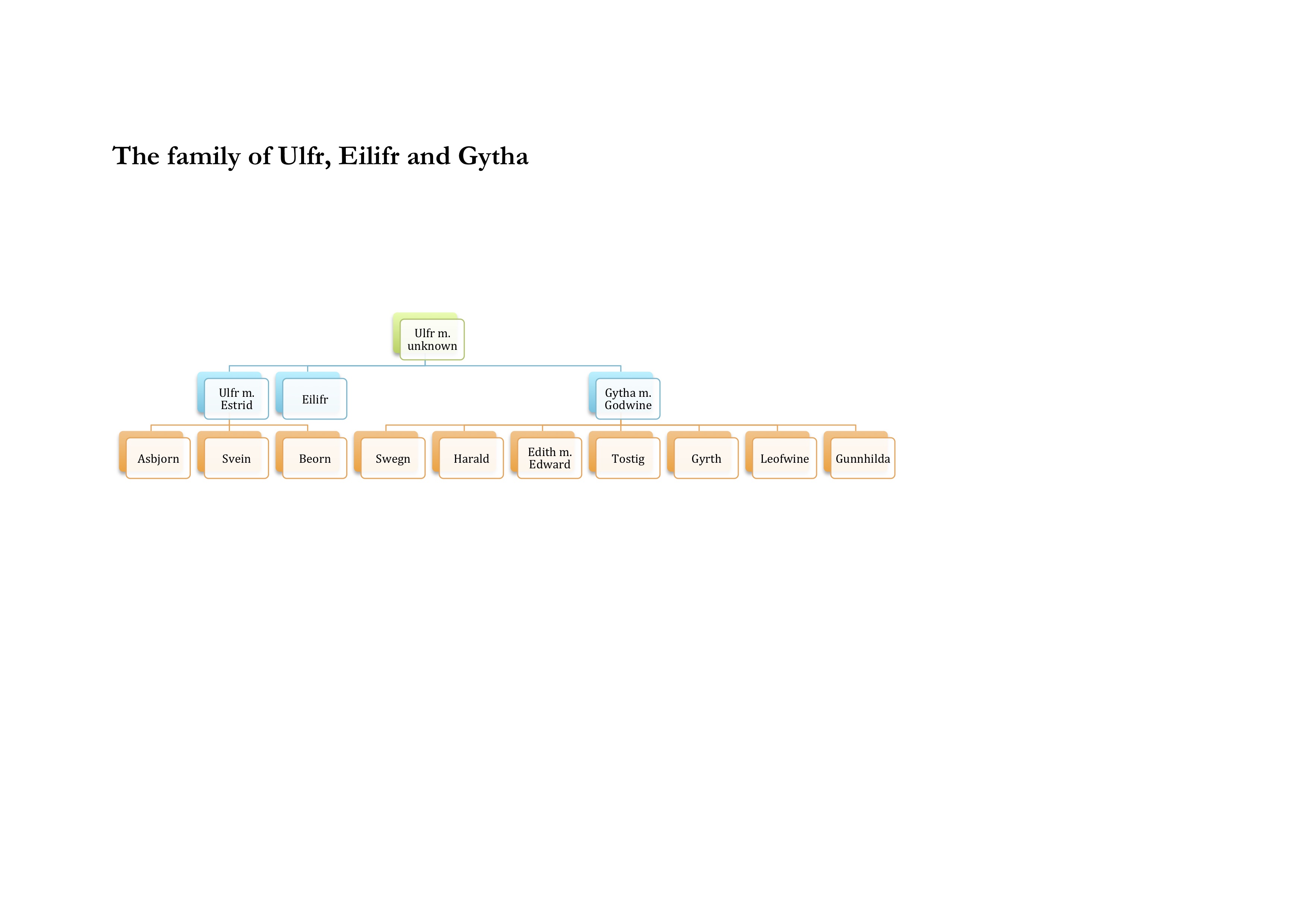
One of the other family’s that had the most impact on Lady Estrid, was that of her third husband, and father of her two sons, Jarl Ulfr.

Ulfr had a brother and a sister, and while little is known about the brother, it is his sister who birthed an extremely illustrious family, through her marriage to Earl Godwine of Wessex. (The family tree doesn’t include all of her children.)

Four such powerful families, all intermarried, make for a heady mix.

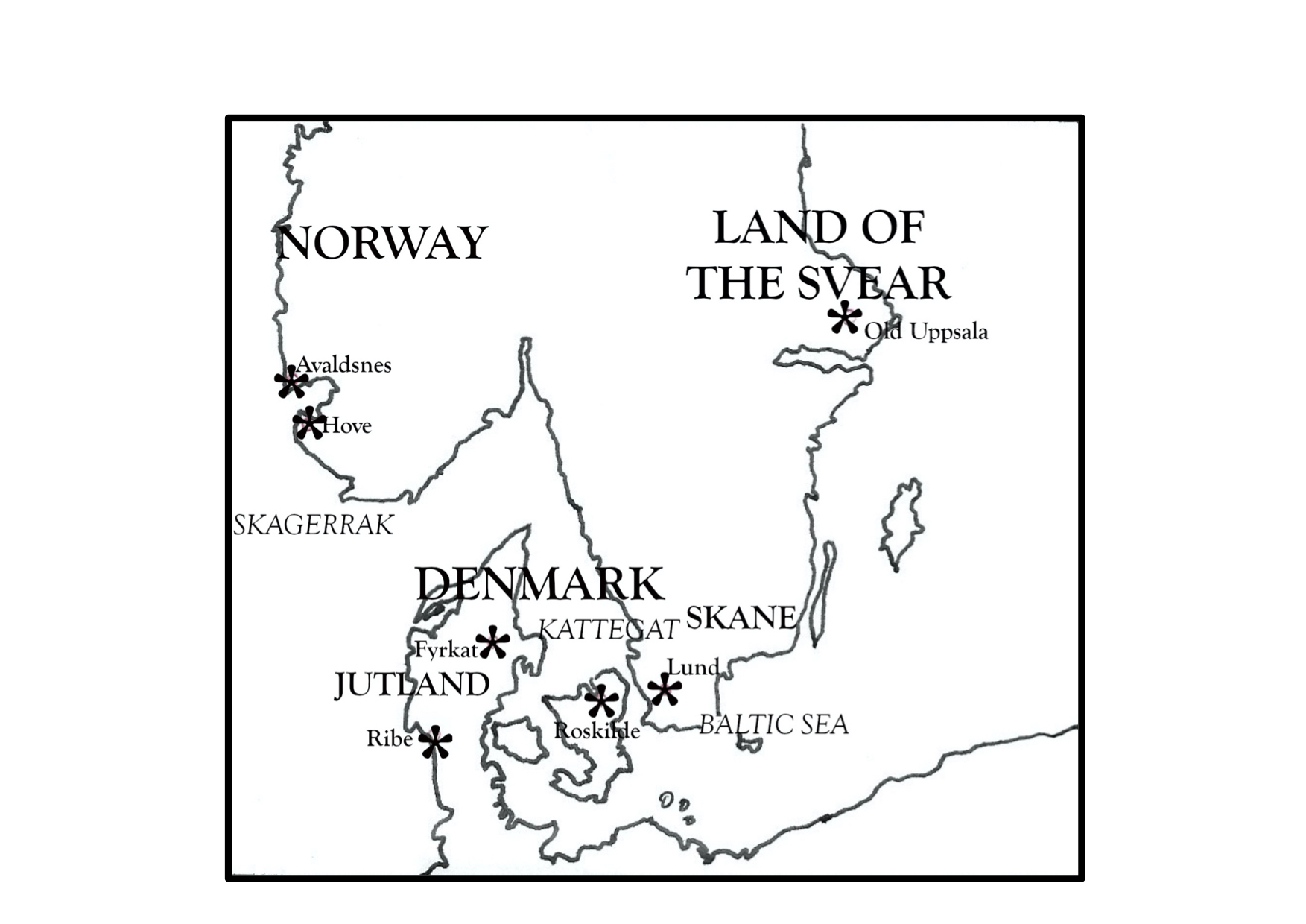
For the modern reader, not only are the family dynamics complicated to understand, but so too is the geography. Sweden was not Sweden as it is today, and the reason I’ve insisted on calling it the Land of the Svear. But equally, Denmark was larger than it’s current geographical extent, covering Skåne, (in modern day Sweden) as well. The map below attempts to make it a little clearer. Norway is perhaps the most recognisable to a modern reader, but even there, there are important difference. King Swein claimed rulership over parts of Norway during his rule, and so too did King Cnut. But, Denmark isn’t the only aggressor, there were rulers in all three kingdoms who wished to increase the land they could control, King Cnut of Denmark, England, Skåne and part of Norway, is merely the most well-known (to an English-speaking historian.)

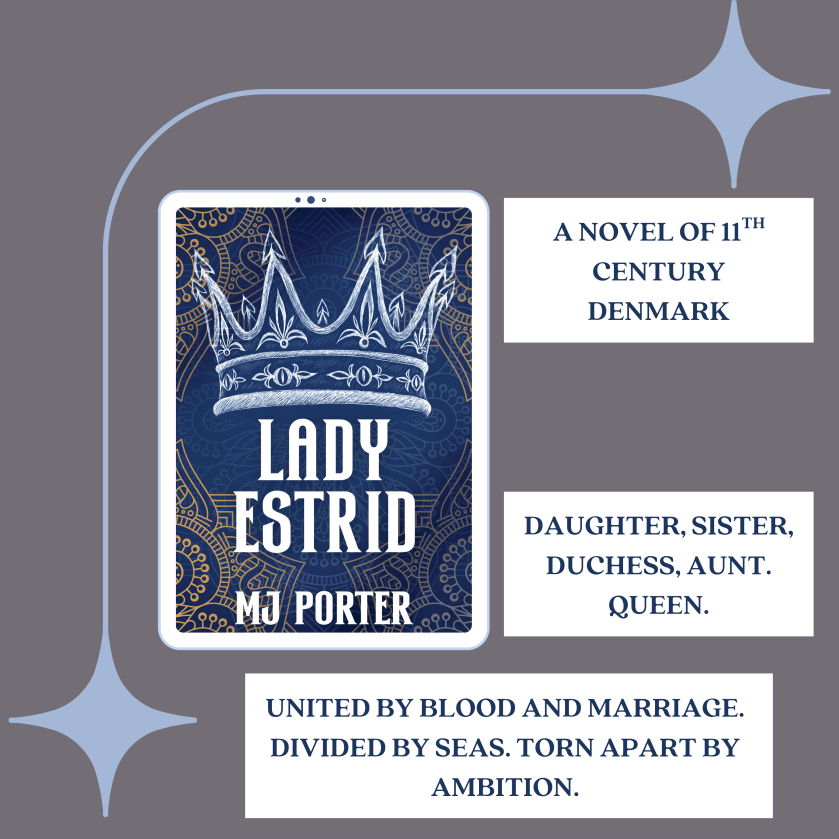
Lady Estrid is available now

Lady Estrid is a standalone novel, but it does incorporate characters and events from The Earls of Mercia series. So, if you’ve not yet read The King’s Brother, it might contain some spoilers, and vice versa.

I have also written about Lady Estrid’s brother, Cnut, and her father, Swein. I classify the books as side stories to the main Earls of Mercia series, but they can all be read as standalones, or as a trilogy about the powerful family.


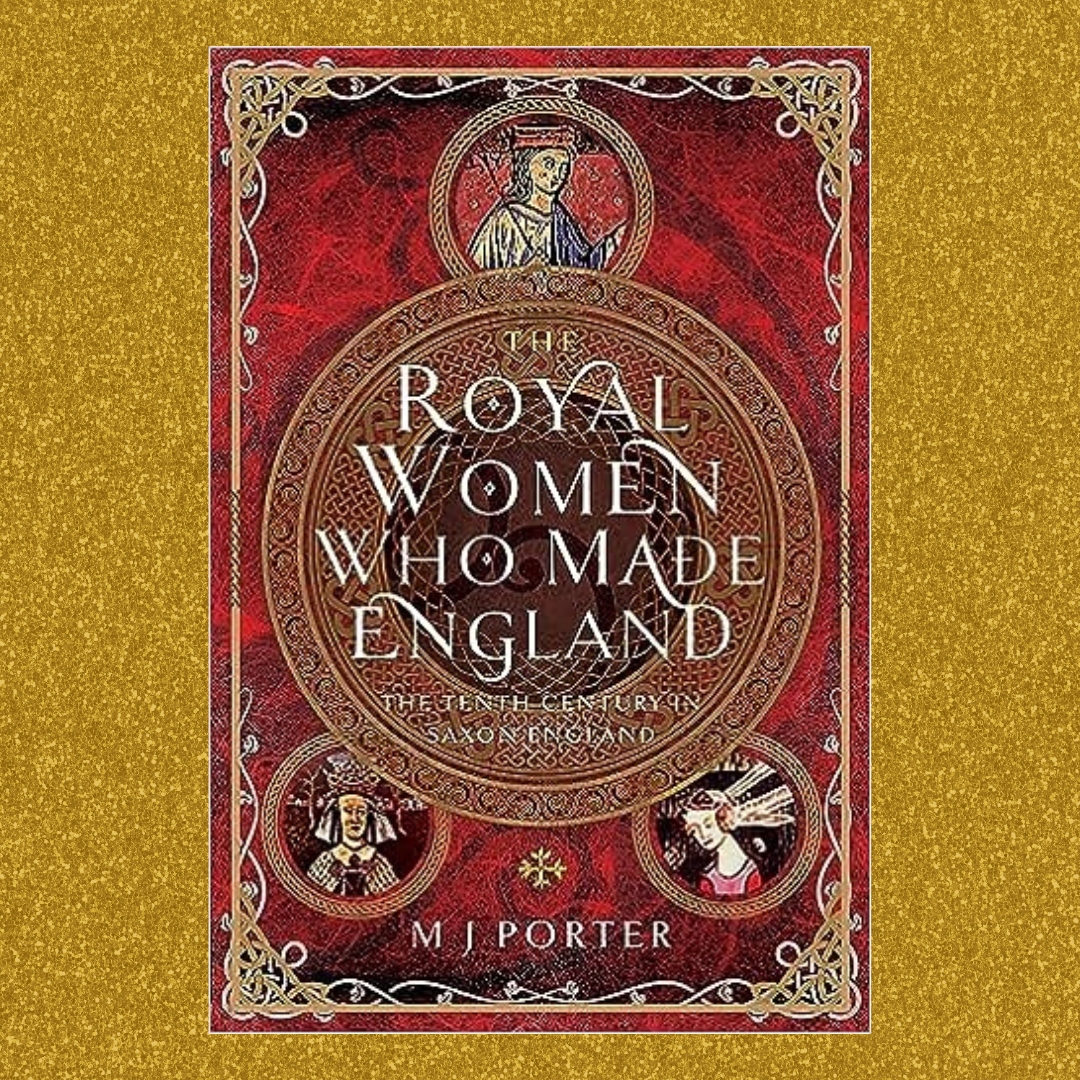
Interested in the unknown women of the tenth and the eleventh century? I’ve written about quite a few of them now. Check out The Tenth Century Series, featuring Lady Ælfwynn, Lady Eadgifu and the daughters of Edward the Elder, and the stories of Lady Elfrida as well as The Royal Women Who Made England.

Posts

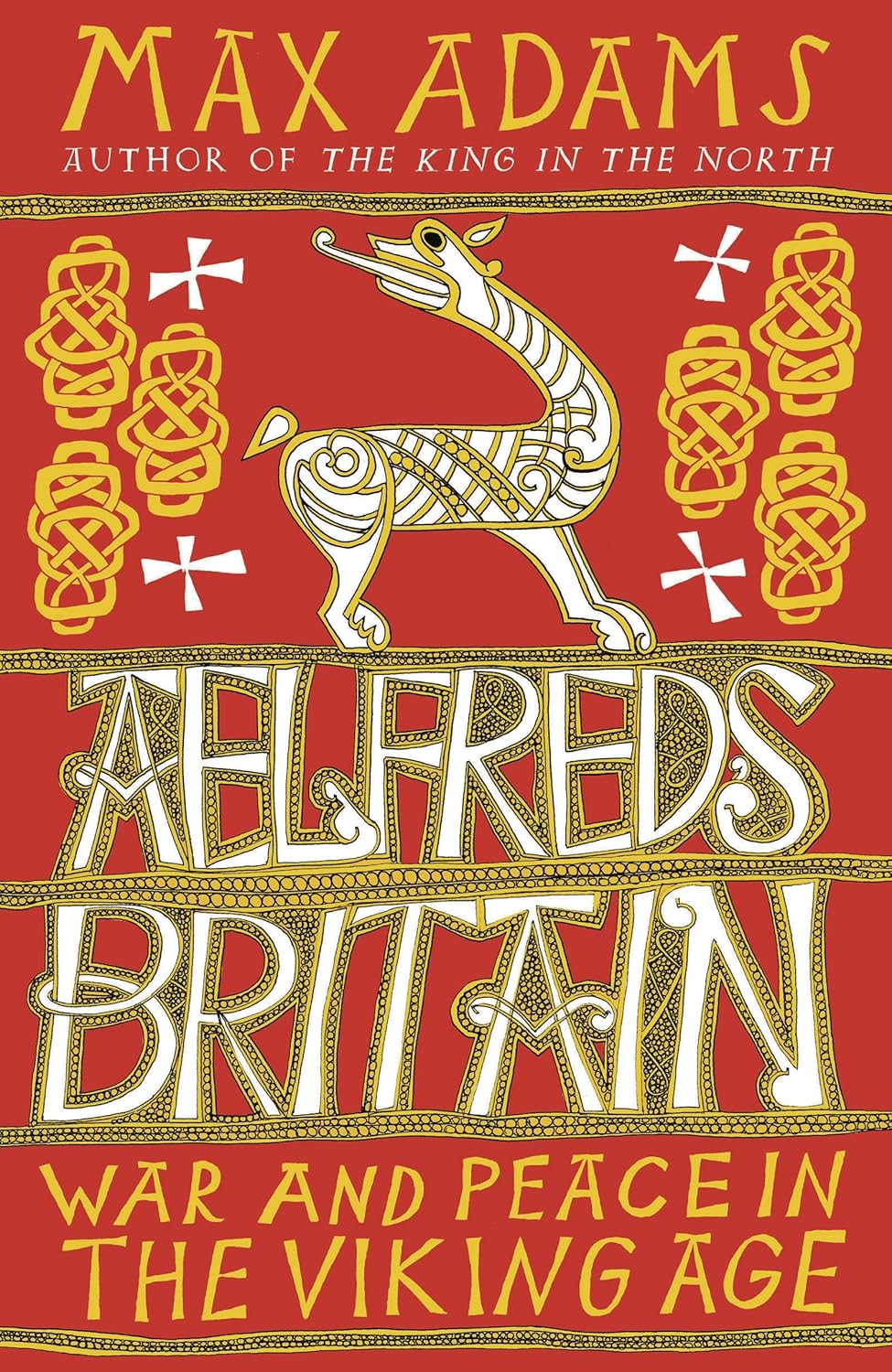
I’m reviewing Ælfred’s Britain by Max Adams #non-fiction #history #bookreview #HighlyRecommended

Here’s the blurb

“In 865, a great Viking army landed in East Anglia, precipitating a series of wars that would last until the middle of the following century. It was in this time of crisis that the modern kingdoms of Britain were born. In their responses to the Viking threat, these kingdoms forged their identities as hybrid cultures: vibrant and entrepreneurial peoples adapting to instability and opportunity.

Traditionally, Ælfred the Great is cast as the central player in the story of Viking Age Britain. But Max Adams, while stressing the genius of Ælfred as war leader, law-giver, and forger of the English nation, has a more nuanced and variegated narrative to relate. The Britain encountered by the Scandinavians of the ninth and tenth centuries was one of regional diversity and self-conscious cultural identities: of Picts, Dál Riatans and Strathclyde Britons; of Bernicians and Deirans, East Anglians, Mercians and West Saxons.”

The cover image for Ælfred's Britain by Max Adams

My Review

Ælfred’s Britain is an excellent book. It does not confine itself to the period of Alfred’s rule but comprehensively offers an account of England from the reign of Alfred’s grandfather to the end of the reign of his youngest grandson (King Eadred) in 955. This makes it much more than a book about Alfred but rather a book about Britain and the Vikings just before, after, and during the First Viking Age.
Instead of focusing on England and the Vikings, the book covers the activities of the Vikings in Ireland, Scotland, England and Wales, in a very similar vein to the wonderful book by Claire Downham ‘Viking Kings of Britain and Ireland: The Dynasty of Ívarr to A.D. 1014’, along the way noting events on the Continent and in the homelands of the Vikings and Danes.
This ia an important development in the history of the period and a step that should have been taken long, long ago. There is little point in knowing events in England in isolation during this period – a wider view point should and must be adopted.
The author also employs an enjoyable and enlightening look at the ‘map’ of Britain – offering something of a handy guide to the various ‘stopping-off’ points available to the men and women from Scandinavia along the coast and riverways.
Some may find the author’s naming conventions a little annoying, but it seems to me that all historians have a preferred naming convention and insist on sticking to it no matter what. It is only a slight bugbear, but that is because I know much of the period well.
This is a far more ‘historical’ book than The King in The North (which I always felt was too much like a travel guide for comfort). Still, it is, at heart, a book by an archaeologist, and this means that archaeology is used to ‘clothe’ the ‘known’ historical facts and vice versa. Yet, and I must applaud this, the author while relying on some slightly dubious ‘primary’ sources, ensures that the reader is aware of this – and the reader would do well to heed the warnings.
Overall, this is a very enjoyable book, filled with fascinating insights. It adopts a view point that has been a long time in being applied to this time period.


Film Review – King Arthur:Legend of the Sword – highly, highly recommended (historical fantasy)

I don’t often offer my opinions on films – as they can be somewhat divisive. However, given the bad press surrounding this film – apparently it’s a flop, I feel compelled to write a little in support of the film as I went to see it and it was massively entertaining and so well done, I think people might need a little nudge in the right direction and a bit of positivity.

Firstly, I am not a huge fan of King Arthur legends – (apart from Sword in the Stone – obviously). I often struggle with the ‘historical placement’ of it all and the huge body of medieval literature and idealism that has affected the original ‘legend’. There is no need to fear on that part in this film. The massively imaginative reimagining of ‘England’ by Guy Ritchie is so vast and encompassing that you can’t help but love it. This is Camelot and Londinium as you’ve probably never seen it before. The landscapes are stunning, the details amazing – even the costumes don’t jar and the music, with its thundering drums, adds to a movie that starts a little slowly for all of 5 minutes, and then just builds and builds until the fantastic conclusion.

If you’re a fan of Guy Ritchie movies everything he’s accomplished since Lock, Stock is there (I am a huge fan of his Sherlock Holmes films because, again, they are so refreshing, and I think the Man from UNCLE is very underrated because it’s so damn stylish). This is Londinium with all the ‘street talk’ of Lock, Stock and the attitude of its characters and their ‘banter’ is up there with the best Sherlock lines. There are some fantastic and quirky camera angles used that really add to the enjoyment of the film – this is a film without dull moments, and I mean none – (unlike Guardians of the Galaxy 2 which was also awesome but has a bit in the middle that’s a bit ‘flat’). It starts, and it rolls and it keeps going.
If you’re a fan of Arthurian Legends then too, this has much to offer. Camelot is there, Uhtred, Vortigern, the Lady of the Lake, Druids and even Merlin gets more than a mention. This is an ‘epic’ England of ‘Arthurian’ times – and if sometimes Ritchie plays a little bit hard and fast with some of the expected storylines, this shouldn’t detract because you’ll be too busy laughing, or watching in amazement with your mouth hanging open!
This is clever, and witty craftsmanship. Having seen a few ‘good’ action films recently, this film suffers from none of their flaws – while it’s as stylistic as Assassin’s Creed and has superb music to accompany it (I felt the music in Assassin’s Creed throbbing through my veins), King Arthur benefits from a plot and story that drives it ever forward. The slightly forced camaraderie of The Great Wall, (which again is a stylistically fantastic film and very well made) has no place in this film – the main stars work so well together that everything feels natural and never forced.

Jude Law is stunningly evil, Charlie Hunnam doesn’t falter once, his delivery is fantastic, and the actress playing the druid is mystical and powerful and beautiful in a mystical way. The supporting cast, which is both vast and small, is filled with familiar faces – it’s good to see the guy from Game of Thrones, the little nod to the BBC Merlin series, and ‘Blue’ is a little gem. The David Beckham cameo didn’t even make me flinch and some might not even recognise him as he delivers his lines in a bluff ‘Londinium’ accent. Eric Bana is exceptionally heroic as Uhtred, and I’m not unconvinced that Jason Statham doesn’t have a cameo as well.

And all this before I even get to the fantastical elements of this historical fantasy (which I’m not spoiling – go and see them) because they are so well done.

For all those fans of Vikings, this is a film for you that doesn’t suffer from the need to drag out storylines for an entire season. For fans of The Last Kingdom – this film will show you how this sort of thing should be done – there’s no half-ass fighting scenes, weak dialogue, or moody ‘elf’ man. The kings and warriors in this don’t pansy around with wooden crosses around their necks, worrying about what ‘their’ God might or might not think about everything that’s going on.

This is a ‘reimagined’ world of epic proportions, and as you might have noticed, I really can’t praise it enough, so put down your latest historical fiction/fantasy novel, and get yourself to the cinema! This is how ‘Arthur’ should be done.

The Legend of Arthur was released in the UK on 21st May 2017.

http://www.imdb.com/title/tt1972591/?ref_=nv_sr_1

Saxon Royal Charters from 1006-1013 #TheEarlsofMercia #histfic #non-fiction

Royal charters from 1006-1013

There are only 8 surviving charters for this period in history. They are from 1007, 1009, 1012 and 1013. It’s said that the missing years are due to interruptions caused by invasions of ‘Viking raiders’. This certainly applies to 1010-11 and 1006 when the Anglo-Saxon Chronicle recounts tales of Viking incursions.


As is so often the case, this lack is frustrating because something monumental seems to happen at the King Æthelred’s court between 1009-1012. For a start, the number of ealdormen begins to increase, and second, the, until then, rigidly enforced precedence of the ealdormen crumbles away, and one ealdorman, Eadric of Mercia, comes out on top and Ælfric of Hampshire (who I imagine as a little doddery by now – but I may be doing him a disservice) seems to fall down the rankings, as does Leofwine of Mercia.


By this stage, it’s assumed that both Eadric and Uhtred of Northumbria (the other ealdorman who rises in precedence during this period) are related to Æthelred as they’ve both married one of his daughters.


But there seems an inherent contradiction in this because whilst the ling may be seen to be rewarding his ealdormen with marriage into his family, his own sons from his first marriage don’t seem to be getting any additional authority. This is slightly speculation on my part, but it seems clear to me that Æthelred preferred his sons-in-law to his own sons. Obviously, he now had two sons by his new wife, Emma of Normandy, and although they were only very young, he may have been trying to ensure their inheritance of the throne over and above their older half-brothers.


I appreciate that this is all speculation from only a handful of charters, but it provides a fascinating insight into the character of Æthelred if he really was so unprepared to give his sons any formal authority. Surely, in his times of trouble, when the Viking raiders attacked relentlessly and he was growing steadily older, it would have been an acceptable use of his older sons to use them as battle commanders?

Certainly, later in the 1010s the sons seem to come into their own, and must have had command and fighting experience somewhere. The king proved to be very resistant to leading his own men into battle (apart from the Battle of Chester in 1000) so I wonder why he wouldn’t chose his elder sons who he hoped would never inherit?


But that’s just my ponderings and something I’m going to explore in The Earls of Mercia Book 3.

Check out The Earls of Mercia series page for more information.

(Please note this is a historic blog post from 2014. I’ve left it in place because it’s kind of interesting to see what I was thinking back then.)

Posts