
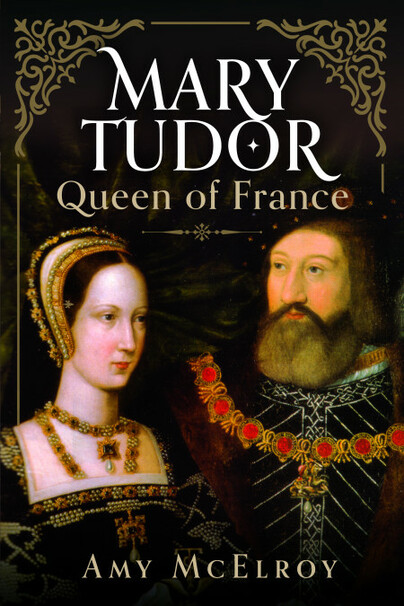
I’m delighted to share my review for Mary Tudor: The French Queen by Amy McElroy #non-fiction #TheTudors

Here’s the blurb

Mary Tudor, Henry VIII’s sister, lived a remarkable life. A princess, duchess and queen, she was known as the English Rose for her beauty. Mary Tudor, Queen of France, aims to explore the life of one of the few who stood up to Henry VIII and lived to tell the tale.

Henry VIII is well known, but his larger-than-life character often overshadows that of his sisters. Mary Tudor was born a princess, married a king and then a duke, and lived an extraordinary life. This book focuses on Mary’s life, her childhood, her relationship with Henry, her marriages and her relationship with her husbands.

Mary grew up in close proximity to Henry, becoming his favourite sister, and later, after her marriage to the French king, she married his best friend, Charles Brandon, 1st Duke of Suffolk. The events impacting the siblings will be reviewed to examine how they may have changed and shaped their relationship.

Purchase Links

Pen and Sword (publisher)

Amazon

My Review

Mary Tudor by Amy McElroy is a fascinating biographical account of the life of Mary, Henry VIII’s sister, and not to be confused with his daughter.

The story is quite remarkable, and while I knew something about her, I didn’t know everything. The chapters, which follow her through the 3 marriage proposals she receives, which result in 2 marriages, are quite astounding. So much time and effort went into trying to wed her to Prince Charles (later Emperor Charles), and then all of a sudden, she married Louis XII of France. I found it most fascinating. If anything, her 2nd marriage seems almost anticlimatic, even though it evidently wasn’t at the time. And, with all we know about Henry and his marital difficulties, Mary appears to have been somewhat serene about everything. I imagine she perhaps had a happier life, if one often troubled by the terrible debt her brother placed upon her (families!).

I really appreciated the author’s desire to keep this narrative to Mary and not to her children and grandchildren. It seems fitting to have a title devoted exclusively to her.

A fine portrayal of Mary’s eventful, if short life, with a lovely writing style.

Meet the author

Amy was born and bred in Liverpool before moving to the Midlands to study criminal justice and eventually becoming a civil servant. She has long been interested in history, reading as much and as often as she could. Her writing journey began with her blog, sharing thoughts on books she had read before developing to writing reviews for Aspects of History. The Lives of Women in the Tudor Era is Amy’s second book. Her first, Educating the Tudors, focused on the educational opportunities of all classes, those who taught them and the pastimes enjoyed by all.
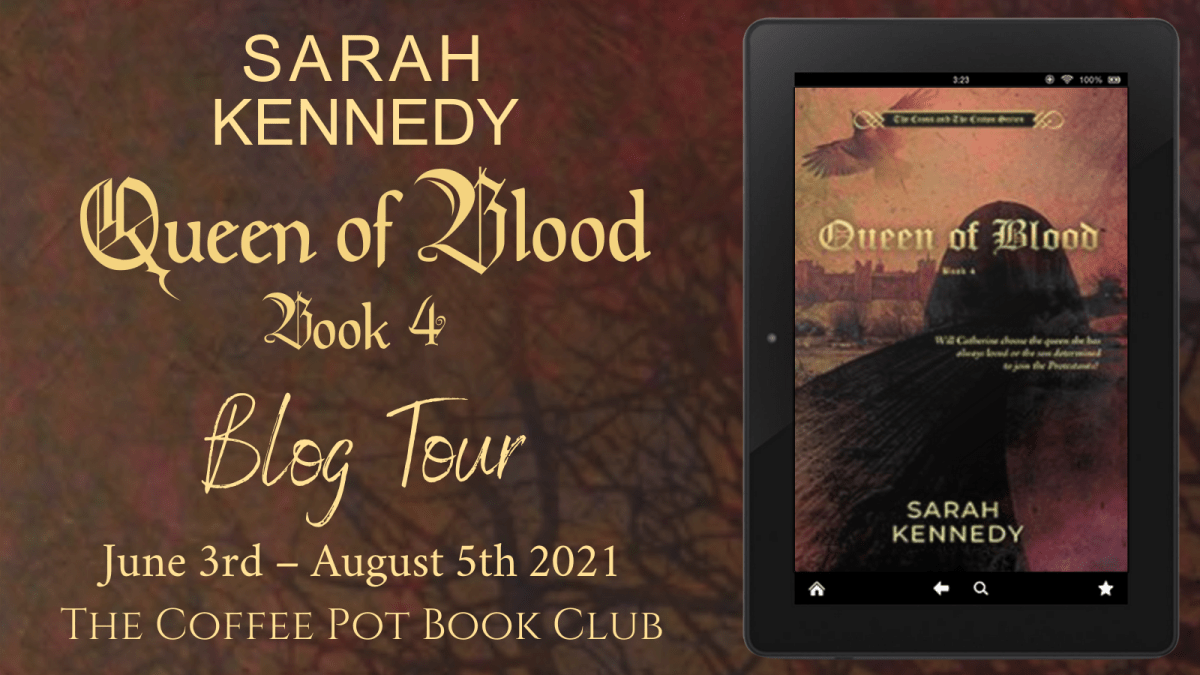
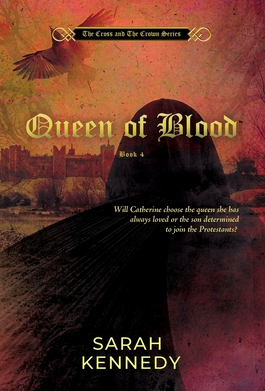
Sarah Kennedy is sharing some historical research from Queen of Blood #blogtour #histfic #historicalresearch

Today I’m delighted to welcome Sarah Kennedy to the blog to answer my questions about her fantastic new book, Queen of Blood.

Your book, Queen of Blood, is set during the tumultuous reign of Mary Tudor, a much maligned character. As a historian first and foremost, and then a writer, I’m always interested in how people research their historical stories.

I’m afraid that I’m rather a magpie in my research—toddling along picking up the shiny bits along the way, not knowing whether I’ll want them later. I spent a long time studying Renaissance literature as a student and then a professor, and when I started my career as a writer I focused on poems. Poems, of course, are much shorter and more focused in their scope than fiction, and, in my historical poems, I was able to use tiny details and idioms that I had picked up mostly unconsciously from reading. As I moved into fiction, I found that those Early Modern cadences of language came to me very easily. I travel (or used to travel!) quite a bit, and part of my research involves going to the kinds of places that I set my fiction in—small towns and villages, castles, stately homes, and museums. I talk to people a lot, and I soak in atmosphere. That’s not the most scholarly way to do research, I realize, but it’s how I work. This probably drives a historian crazy!

Can you explain your research process to me, and give an idea of the resources that you rely on the most (other than your imagination, of course) to bring your historical landscape to life? 

My process is rather sloppy, I’m afraid! I do read history, as anyone who writes historical fiction must, but I find that reading the literature of the period—the poems, plays, stories, and letters—of the period do more to fill in gaps for me. Reading literature also provides me with first-hand knowledge of the words people used, the ways they expressed emotions and beliefs, and how they spelled things. Spelling wasn’t regularized in the English language during the Renaissance, so it’s very interesting for me to see how writers spelled words. I teach Renaissance literature and Shakespeare, so I’m constantly involved with Renaissance language and content.

As I said above, I also feel a strong need to be in physical spaces that I’m writing about. I love Yorkshire, Scotland, and Wales, and those landscapes still speak from their pasts directly into my imagination. London is my favorite city, and I’ve spent many weeks there, wandering the streets. It feels a bit like my second home, though I’ve never actually lived there.

Do you have a ‘go’ to book/resource that you couldn’t write without having to hand, and if so, what is it (if you don’t mind sharing)?

This may sound like a strange choice, but the Collected Works of Shakespeare is probably my go-to text. Shakespeare was brilliant at metaphor and image, but he also used many characters who are not noble or royal—and his ear for speech was unmatched in the period (in my opinion). I can always get my imagination fired up for characters talking by reading Shakespeare. I have to keep in mind as I read that Shakespeare was shameless with the historical record in his history plays. He moved characters around and put them in places that everyone knows they weren’t—and he keeps them alive or kills them off if his story requires it. I try not to take him too much as an example, though the temptation is strong.

If I had to list a second choice (and this might also be odd) it would probably be John Foxe’s Book of Martyrs, just because he has so many stories (many of them highly propagandistic) about the tumultuous period of Mary Tudor’s reign.

Thank you so much for sharing your research with me. It’s fascinating. Good luck with the new book.

Here’s the blurb:

Queen of Blood, Book Four of the Cross and the Crown series, continues the story of Catherine Havens, a former nun in Tudor England. It is now 1553, and Mary Tudor has just been crowned queen of England. Still a Roman Catholic, Mary seeks to return England to its former religion, and Catherine hopes that the country will be at peace under the daughter of Henry VIII. But rebellion is brewing around Thomas Wyatt, the son of a Tudor courtier, and when Catherine’s estranged son suddenly returns from Wittenberg amid circulating rumours about overthrowing the new monarch, Catherine finds herself having to choose between the queen she has always loved and the son who seems determined to join the Protestants who seek to usurp her throne.

Universal Link: 

Amazon UK:  Amazon US: Amazon CA:  Amazon AU

Meet the Author

Sarah Kennedy is the author of the Tudor historical series, The Cross and the Crown, including The AltarpieceCity of LadiesThe King’s Sisters, and Queen of Blood. She has also published a stand-alone contemporary novel, Self-Portrait, with Ghost, as well as seven books of poems.  A professor of English at Mary Baldwin University in Staunton, Virginia, Sarah Kennedy holds a PhD in Renaissance Literature and an MFA in Creative Writing.  She has received grants from both the National Endowment for the Arts, the National Endowment for the Humanities, and the Virginia Commission for the Arts.

Website:  Twitter:  Facebook: 

Amazon Author PageGoodreads: 

Don’t forget to pop by the other stops on the Queen of Blood blog tour with The Coffee Pot Book Club