I’m delighted to share an excerpt from Death and the Poet, a Roman-era historical mystery by Fiona Forsyth HistoricalMystery #RomanHistoricalFiction #AncientRome #Ovid #BlogTour #TheCoffeePotBookClub 

Here’s an exciting excerpt from Death and the Poet

Ovid gives a recital

July 2, or 6 days before the Nones

The recital took place in the late afternoon at the town’s main square on top of the hill overlooking the harbour. Entertainment in Tomis was infrequent and modest, with maybe a serious theatre performance in the spring in honour of Dionysus, and the occasional touring group performing comedies. There were rumours of a gladiator show, once they were a proper province, but for the moment, poetry was exciting enough to a Greek audience and Ovid was, after all, famous. People drifted into the square carrying chairs, stools and even cushions, unpacked their picnics and handed around pitchers of wine. Fabia was invited to sit in a roped-off area, where three rows of chairs had been laid out for special guests. In the central seat was Apollous, that year’s archon, and the members of the Town Council and their wives all lined up to express themselves thrilled to meet Fabia. Nobody was so indelicate as to mention the fact that Ovid was in Tomis because he had no choice.

Settled with an extra shawl because Flora had been certain that she would feel chilly even on a beautiful summer day, Fabia began to enjoy herself. She looked around the crowd, marking off people as Roman, Greek and Dacian, spotting several men with light coloured hair and beards and wearing leggings – surely they must be from the local tribes mentioned by her husband. It was harder to make any judgement on the female population, for every woman was wrapped up in a long dress, just as she was.

The poet first declaimed a well-known passage from his great poem on mythology, the Metamorphoses. He told the story of the god Apollo’s love of the nymph Daphne:

Just as when a careless dawn traveller has swept his torch too close to the stubble left in the field when the wheat is taken, setting the dry hedges on fire – so the god goes up in the flames of love.

Fabia saw the knowing nods as local landowners remembered threats to their own precious crops, and an audible murmur betrayed the audience’s opinion of firebugs.

Ovid then recited a poem Fabia had not heard before, one with a Tomis setting, but without the criticisms she had grown used to. She was pleased. There had been too many “Woe is me!” moments in Ovid’s poetry recently and he needed to acknowledge to this audience how grateful he was to them.

Ovid finished with a passage from the Fasti, an ambitious work which he planned would cover the major religious festivals of Rome. It was serious and noble and a little boring, though Fabia knew from her mother that Ovid’s work on this poem was considered skilful by those who knew about such things. She was amused to hear a young woman nearby whisper, “I thought he was a famous writer of love poetry?”

“Oh my dear,” thought Fabia, “Ovid will not be reciting any of his love poems here. They got him into enough trouble in Rome. I doubt your father would like you hearing about how a Roman lad goes on the prowl through the arcades of the city or lies wailing at the door of his beloved.”

Here’s the blurb

14 AD.

When Dokimos the vegetable seller is found bludgeoned to death in the Black Sea town of Tomis, it’s the most exciting thing to have happened in the region for years. Now reluctantly settled into life in exile, the disgraced Roman poet Ovid helps his friend Avitius to investigate the crime, with the evidence pointing straight at a cuckolded neighbour.


But Ovid is also on edge, waiting for the most momentous death of all. Augustus, the first Emperor of Rome, is nearing his end, and the future of the whole Roman world is uncertain.


Even as far away as Tomis, this political shadow creates tension as the pompous Roman legate Flaccus thinks more of his career than solving a local murder.

Avitius and Ovid become convinced that an injustice has been done in the case of the murdered vegetable seller. But Flaccus continues to turn a deaf ear.


When Ovid’s wife, Fabia, arrives unexpectedly, carrying a cryptic message from the Empress Livia, the poet becomes distracted – and another crime is committed. 

Ovid hopes for a return to Rome – only to discover that he is under threat from an enemy much closer to home.

Triggers: murder, references to slavery, domestic abuse, alcohol, cancer

Buy Link

https://books2read.com/u/brx0WY

This title is available to read on #KindleUnlimited.

Meet the author

Fiona studied Classics at Oxford before teaching it for 25 years. A family move to Qatar gave her the opportunity to write about ancient Rome, and she is now back in the UK, working on her seventh novel.

Author Fiona Forsyth

Connect with the author


Follow the Death and the Poet by Fiona Forsyth blog tour with The Coffee Pot Book Club

Posts

I’m sharing an excerpt from Tangled in Water by Pam Records HistoricalFiction #Prohibition #Mermaid #BlogTour #TheCoffeePotBookClub 

Excerpt

“Hello there, Nattie, honey,” called Mimi in her honey-sweet voice as she popped out of the door behind the curtains. 

Mimi wasn’t much older than the chorus line girls. She was like a big sister, looking out for them, scolding and nagging, doing her part to make the performances alluring. Mimi liked to say “alluring,” and then she would do a mouth pucker and put one hand on her hip and the other in the air with her wrist cocked like she was holding a bunch of potatoes. Nattie only made the mistake of mocking her once. 

Mimi had been a model when she was very young, or so she said. That was hard to imagine. She walked like a penguin on stubby short legs. And she wore glasses, big round frames that made her look like an owl. If Antonio was around, she took them off, an interesting fact to ponder. Just like the come-and-go French accent. Mimi lack conviction. 

The game’s exhausting, isn’t it, Mimi? You have to breathe it, Mimi. Be it. Look at me. I bleed turquoise. Piss magenta. Fart like a flounder.    

Today, Mimi was carrying a stack of costumes over her arm, all neatly repaired, booze stains laundered, ready to be delivered backstage. Nattie could see long white gloves with buttons and black lace and see-through fabrics with tassels and snaps for flinging off and dropping on the stage. 

Ba-da-boom. Hey, baby. 

Sometimes the girls ripped too hard. Or the men.

Ba-da-boom. Take it off, baby.

Snaps had to be reattached, tears stitched up or patched. Mimi, the penguin seamstress, made the inconvenient flaws go away so they could come back again. And again. Maybe she needed stronger thread, maybe wires reinforced with defiance. Or electricity. Wouldn’t that be a hot, sizzling hoot?

“Nattie, have you brushed that hair of yours this week?” asked Mimi, hand on hip, her mouth all puckered. “My God. And to think I have a new crown for you to wear. A gift. Real jewels. And I have to bobby pin it to that rat’s nest?” The woman shook her head. No accent needed for that. 

Here’s the blurb

1932. Natalia is 16 and a bootlegger’s daughter, playing the mermaid mascot on a rundown paddlewheel used to entertain brewers and distributors. 

A sequined costume hides her scarred and misshaped legs, but it can’t cover up the painful memories and suspicions that haunt her. An eccentric healer who treats patients with Old Country tonics, tries to patch wounds, but only adds to the heartache. A fierce storm threatens to destroy everything, including a stash of stolen jewels. 

1941. Prohibition is over, but the same henchmen still run the show. Nattie’s new mermaid act is more revealing, with more at risk. When the dry-docked paddlewheel is bought by the US Navy for training exercises, the pressure escalates further. 

Can Nattie entice a cocky US Navy officer to help her gain access to the ship for one last chance to confront her past, settle scores, and retrieve the hidden loot? Is there a new course ahead?

Buy Links

Ebook

Paperback

Hardcover

Meet the author

Pam and her husband, Mark, recently uprooted from the Midwest to move to Savannah, Georgia, the perfect place for enjoying the beach, historic architecture and Spanish moss. 

She’s recently retired from writing content for software companies and now focuses on writing fiction, camping, and exploring historic cities.

Pam is the author of three historic novels. 

Connect with the author

Follow the Tangled in Water by Pam Records blog tour with The Coffee Pot Book Club

Posts

I’m welcoming the Boy with Wings by Mark Mustian to the blog, with a fab post about historical research LiteraryFiction #HistoricalFiction #BlogTour #TheCoffeePotBookClub

Historical research for BOY WITH WINGS

Boy With Wings is set mostly in northern Florida, where I’ve lived all my life, and as such I had some familiarity with the historical predicate of the story, but not all of it. I knew almost nothing about sideshows, or “freaks,” which necessitated quite a bit of research on the subjects.

People have asked where the idea to write the book came from, and I tell them that perhaps it was from attending the North Florida Fair as a child and seeing “The World’s Smallest Horse” or the “Wild Man from Borneo.” Somewhere along the way I saw the 1932 Tod Browning movie “Freaks,” and this spawned more interest. When I told my agent I was thinking of writing a novel that delved into this area, he asked if I’d read the novel Geek Love, which I hadn’t, and did. This spawned more research.

There are a number of books cataloguing human oddities that were helpful to bring an understanding of this arena, including Freak Babylon by Jack Hunter and American Sideshow by Marc Hartzman. Eventually I found the book Truevine, by Beth Macy, which sets forth the story of the albino brothers sold into the circus who became known as Eko and Iko, billed as sheep-headed wonders from Mars. I learned a lot from these books, including the fact that for some, including Eko and Iko, their lives became perhaps better than if they’d remained at home.

I also discovered the book Freaks, by Leslie Fiedler, an examination of what attracts us psychologically to human oddities, and the documentary “Sideshow: Alive on the Inside,” by Lynn Dougherty. One of the most insightful finds, though, was a biography of a gentleman named Ward Hall, who for fifty years ran sideshows across the United States. After my book was published, I did several appearances with the current sideshow performer Short E. Dangerously, who paid me one of the highest compliments a historical fiction writer can receive when he told me that I “nailed what it was like to be in a sideshow” and asked me about my research. When I told him about the Ward Hall book, he exclaimed: “I knew it! I was in a Ward Hall show for several years!”

I had a little general knowledge of turpentine camps, as I remember as a child passing rows of pine trees with little tin pans affixed to their trunks. The research in this area involved locating pamphlets and books describing such operations, and a visit to the Florida Forest Capital Museum State Park in Perry, Florida, where displays show how turpentine is extracted from trees and distilled.

Some have asked why I set the novel in the 1930s, and what I research I conducted regarding the Great Depression. I wanted the story to take place at a time things were changing, in some ways for the better and others ways not. By the 1930s, sideshows had seen their heyday and were starting to phase out. The South was still segregated, but cracks were beginning to show in that, too. In the book, I have the show admitting Blacks for the first time in an attempt to garner more revenue. I did quite a bit of research on places, events and language of the time, as I wanted the reader to feel like she or he was there, reading old newspapers, seeing small towns and their quaintness and prejudices, experiencing the people and their foibles that are in some ways not unlike those today. That’s to me what the best historical fiction accomplishes, and I hope I’ve come close to achieving it. 

Here’s the blurb

 “A brilliant fever dream of a novel, a haunting coming of age story reminiscent of both Franz Kafka and Charles Dickens.”

~ Chris Bohjalian, #1 New York Times Bestselling Author of The Jackal’s Mistress

*Next Generation Indie Book Awards 2025 First Place Winner*

What does it mean to be different? 

When Johnny Cruel is born with strange appendages on his back in the 1930s South, the locals think he’s a devil. Determined to protect him, his mother fakes his death, and they flee. Thus begins Johnny’s yearslong struggle to find a place he belongs. 

From a turpentine camp of former slaves to a freak show run by a dwarf who calls herself Tiny Tot and on to the Florida capitol building, Johnny finds himself working alongside other outcasts, struggling to answer the question of his existence. Is he a horror, a wonder, or an angel? Should he hide himself to live his life? 

Following Johnny’s journey through love, betrayal, heartbreak, and several murders, Boy With Wings is a story of the sacrifices and freedom inherent in making one’s own special way-and of love and the miracles that give our lives meaning.

Buy Link

https://books2read.com/u/mdxEoR

Meet the author

Mark Mustian is the author of the novels “The Return” and “The Gendarme,” the latter a finalist for the Dayton International Literary Peace Prize and shortlisted for the Saroyan International Award for Writing. It won the Florida Gold Book Award for Fiction and has been published in ten languages. 

The founder of the Word of South Festival of Literature and Music in Tallahassee, Florida, his new novel, “Boy With Wings,” is out in 2025.

Connect with the author

Follow the Boy with Wings Blog Tour with The Coffee Pot Book Club

Posts

I’m delighted to welcome Janet Wertman and her new book, Nothing Proved, to the blog #HistoricalFiction #TudorFiction #ElizabethTudor #BlogTour #TheCoffeePotBookClub

I’m delighted to welcome Janet Wertman and her new book, Nothing Proved, to the blog with a guest post.

Guest Post

Thank you for having me on your blog to talk about my historical research, though I feel a little guilty given how much more information I have available to me than you do! The Tudor Era really marks the beginning of careful documentation of the historical record – and it’s all carefully indexed. The touch of a button opens the records of the Privy Council, writings of ambassadors, details of state trials. I can examine floorplans of castles and paintings of gardens long gone, I can watch videos of hawking parties and court dances, listen to period music played on antique instruments. But that much bounty can actually be overwhelming, so I focus my research in predictable thematic waves to get the narrative where it needs to be.  

As my very first step with a new story, I start with books, or rather, I have always started with books and I am working on a way to do so again. I lost some amazing volumes in the January fires – things like The Social History of Lighting, Lady Hoby’s Diary, Conyers Read’s two-volume biography of William Cecil, and a host of other biographies, all of which told slightly different versions of the history. That’s the toughest part about researching: the inconsistent reports, the unreliable biographers. Of course, that can also be a bit of a hall pass for an author!

Anyway, once I have an idea what my story will be, I start to assemble dates into a detailed timeline, cherry-picking the ones I intend to use or need to keep in mind, and jotting down notes. From that, I outline the actual novel, date-stamped to keep me honest. Then the writing, which sends me down mid-course rabbit holes for scene-level information: the where, the why, the time of day – and an understanding of the relevant political context: that’s where letters come in. Any letter will have something to recommend it, but ambassadors’ letters are usually a goldmine. When I was writing The Boy King, I happened upon one relating how Edward VI plucked a dead falcon as a warning to his Council…yes I used that. Did I know that a similar rumor once surrounded Charles V? Yes, but again, the source gave me a hall pass…

Beyond that comes the truly granular part of the research, taking me back to books and websites and everything in between. The descriptions of Elizabeth’s clothes and dresses were helped along by Queen Elizabeth’s Wardrobe Unlock’d, an amazing resource that assembles inventories of the Wardrobe of the Robes, descriptions of the royal artificers, the different fashion styles and fads, and so much more. Descriptions of small household furnishings were invented with reference to the New Year’s Gift Exchanges 1559-1603, another rabbit hole to mine. Of course, sometimes the warrens are empty. Back in The Path to Somerset, I needed to show Henry closeted at Oatlands after learning about Catherine Howard’s infidelities. I wanted to find the period equivalent of him sitting in his bathrobe eating ice cream from the tub. It was easy enough to find the sumptuary laws that justified a silk night robe with a black jennet lining…but apparently he would have been scooping whale blubber and that would have required too much explanation to use. Instead, I had to simply give him empty wine goblets and a tray of half-eaten food.

I will say, for the early part of Nothing Proved, I run into a bit of your problem (and the problem of any other writer of Saxon England): few sources that mention my main character, and none that really show her interacting with her closest friends…so my initial task was to cross-reference the official records of Elizabeth’s doings with those of the other people in her orbit and come up with the intersections that the story required.  I knew that Robert Dudley was keeper of Somerset House while it was in her use, I knew that William Cecil began to work for her just a month after a significant wedding they both would have attended, and so I was able to capture the depth of their respective relationships. In the end, big and small all come together. That is the beauty of research done right.

Here’s the Blurb

Danger lined her path, but destiny led her to glory…

Elizabeth Tudor learned resilience young. Declared illegitimate after the execution of her mother Anne Boleyn, she bore her precarious position with unshakable grace. But upon the death of her father, King Henry VIII, the vulnerable fourteen-year-old must learn to navigate a world of shifting loyalties, power plays, and betrayal.

After narrowly escaping entanglement in Thomas Seymour’s treason, Elizabeth rebuilds her reputation as the perfect Protestant princess – which puts her in mortal danger when her half-sister Mary becomes Queen and imposes Catholicism on a reluctant land. Elizabeth escapes execution, clawing her way from a Tower cell to exoneration. But even a semblance of favor comes with attempts to exclude her from the throne or steal her rights to it through a forced marriage. 

Elizabeth must outwit her enemies time and again to prove herself worthy of power. The making of one of history’s most iconic monarchs is a gripping tale of survival, fortune, and triumph.

Buy Link

Universal Link:

Meet the Author

By day, Janet Wertman is a freelance grantwriter for impactful nonprofits. By night, she writes critically acclaimed, character-driven historical fiction – indulging a passion for the Tudor era she had harbored since she was eight years old and her parents let her stay up late to watch The Six Wives of Henry VIII and Elizabeth R.

Her Seymour Saga trilogy (Jane the Quene, The Path to Somerset, The Boy King) took her deep into one of the era’s central families – and now her follow-up Regina series explores Elizabeth’s journey from bastard to icon.

Janet also runs a blog (www.janetwertman.com) where she posts interesting takes on the Tudors and what it’s like to write about them.

Connect with the Author
Follow the Nothing Proved blog tour with The Coffee Pot Book Club

I’m delighted to welcome Wendy J.Dunn and her new book, Falling Pomegranate Seeds: The Katherine of Aragon Story, to the blog #HistoricalFiction #TudorFiction #KatherineOfAragon #Duology #BlogTour #TheCoffeePotBookClub

I’m delighted to welcome Wendy J.Dunn and her new book, Falling Pomegranate Seeds: The Katherine of Aragon Story, to the blog with a snippet.

Snippet

Furious, Ahmed bounded up from the cushions and stood over her. “Why doesn’t she write and tell me that now? My father writes to me but my mother, never.”

Beatriz bent towards him. “My prince, your father always writes a message from your mother.”

Sitting again beside her, Ahmed’s lower lip trembled. “A few words – that the king, my father, includes for her.”

Gathering her thoughts, Beatriz gazed at the book on her lap before eyeing Ahmed again. “Your mother would write if she was able. Do not fall into the mistake of believing what you see at Queen Isabel’s court is the same elsewhere. Dear prince, not all women know how to write.”

From The Duty of Daughters

Here’s the Blurb

In the Falling Pomegranate Seeds Duology, readers are transported to the rich historical tapestry of 15th and 16th-century Europe, where the lives of remarkable women unfold against the backdrop of political upheaval and personal struggles.

In the first book, beginning in 1490 Castile, Doña Beatriz Galindo, a passionate and respected scholar, serves as an advisor to Queen Isabel of Castile. Beatriz yearns for a life beyond the constraints imposed on women, desiring to control her own destiny. As she witnesses the Holy War led by Queen Isabel and her husband, King Ferdinand of Aragon, Beatriz dedicates herself to guiding Queen Isabel’s youngest child, Catalina of Aragon, on her own path. Beatriz’s role as a tutor and advisor becomes instrumental in shaping Catalina’s future as she prepares to become England’s queen.

Fast forward to the winter of 1539 in the second book, where María de Salinas, a dear friend and cousin of Catalina (now known as Katherine of Aragon), pens a heartfelt letter to her daughter, the Duchess of Suffolk. Unable to make the journey from her London home due to illness, María shares her life story, intricately woven with her experiences alongside Catalina. Their friendship has endured through exile and tumultuous times. María seeks to shed light for her daughter on the choices she has made in a story exploring themes of friendship, betrayal, hatred, and forgiveness. Through María’s narrative, the eternal question Will love ultimately triumph?

Buy Link

Universal Link

Meet the Author

Wendy J. Dunn is an award-winning Australian writer fascinated by Tudor history – so much so she was not surprised to discover a family connection to the Tudors, not long after the publication of her first Anne Boleyn novel, which narrated the Anne Boleyn story through the eyes of Sir Thomas Wyatt, the elder.

Her family tree reveals the intriguing fact that one of her ancestral families – possibly over three generations – had purchased land from both the Boleyn and Wyatt families to build up their own holdings. It seems very likely Wendy’s ancestors knew the Wyatts and Boleyns personally.

Connect with the Author
Follow the Falling Pomegranate Seeds blog tour with The Coffee Pot Book Club

Posts

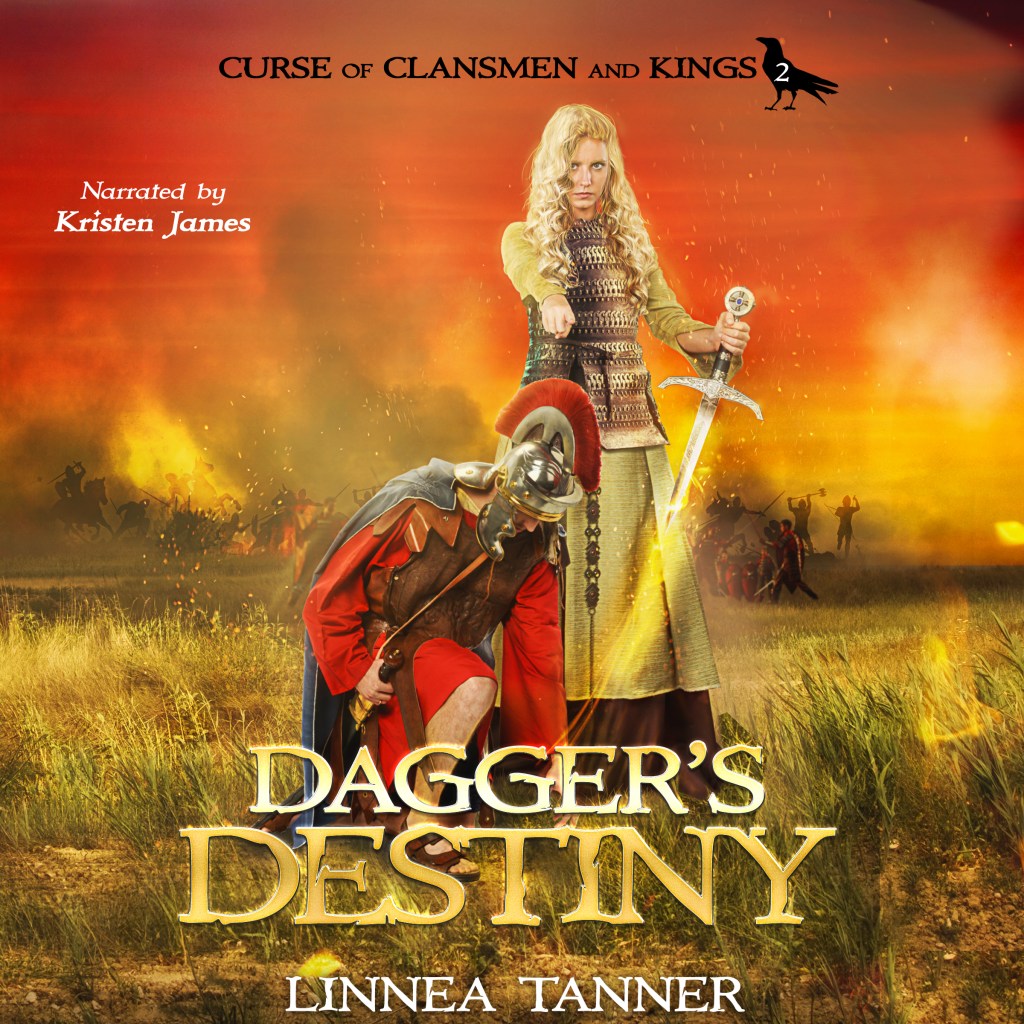
I’m delighted to welcome Linnea Tanner and her audiobook, Apollo’s Raven, to the blog #HistoricalFantasy #HistoricalFiction #Rome #Britannia #CelticMyths #BlogTour #TheCoffeePotBookClub

I’m delighted to welcome Linnea Tanner and her audiobook, Apollo’s Raven, to the blog #HistoricalFantasy #HistoricalFiction #Rome #Britannia #CelticMyths #BlogTour #TheCoffeePotBookClub

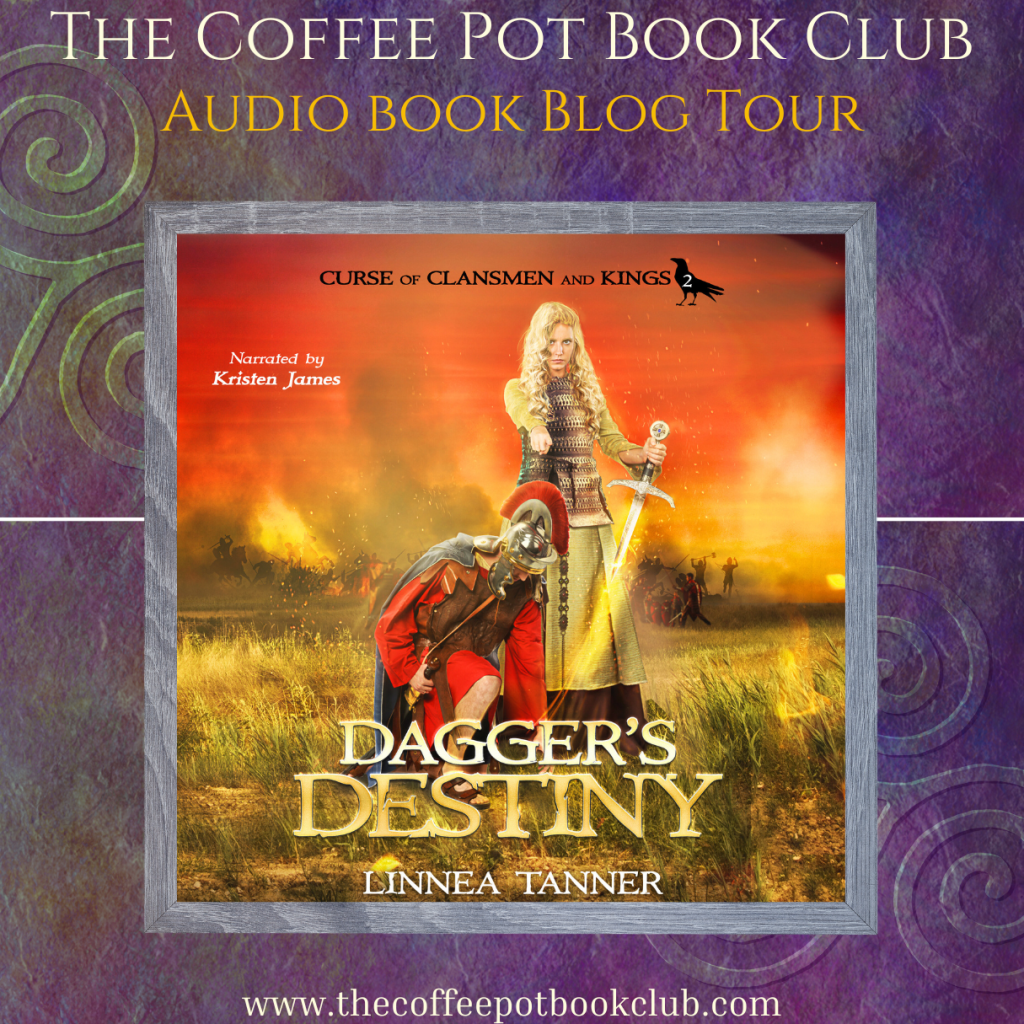
I’m delighted to welcome Linnea Tanner and her audiobook, Apollo’s Raven, Curse of Clansmen and Kings Series, to the blog with a book trailer.

Book Trailer

Here’s the Blurb

A Celtic warrior princess is torn between her forbidden love for the enemy and duty to her people.

AWARD-WINNING APOLLO’S RAVEN sweeps you into an epic Celtic tale of forbidden love, mythological adventure, and political intrigue in Ancient Rome and Britannia. In 24 AD British kings hand-picked by Rome to rule are fighting each other for power. King Amren’s former queen, a powerful Druid, has cast a curse that Blood Wolf and the Raven will rise and destroy him.

The king’s daughter, Catrin, learns to her dismay that she is the Raven and that her banished half-brother is Blood Wolf. Trained as a warrior, Catrin must find a way to break the curse, but she is torn between her forbidden love for her father’s enemy, Marcellus, and loyalty to her people. She must summon the magic of the Ancient Druids to alter the dark prophecy that threatens the fates of everyone in her kingdom.

Will Catrin overcome and eradicate the ancient curse? Will she be able to embrace her forbidden love for Marcellus? Will she cease the war between Blood Wolf and King Amren and save her kingdom?

Praise:

“Mystery and intrigue with each word, Tanner is a master wordsmith. Her vivid imagery and imagination are captured in her story and character development.” ~ The Audiobook Reviewer

” Many surprising twists enrich the historically drawn plot. Points of view shift between different characters effectively, heightening the tension from one moment to the next.” ~ Historical Novel Society Review

Buy Link

Universal Link

Audible US

Audible UK

Audiobook Giveaway (UK Only)

Linnea Tanner is giving away an audiobook copy of Apollo’s Raven to listeners in the UK. Visit the blog tour page and leave a comment to enter the giveaway: https://thecoffeepotbookclub.blogspot.com/2025/04/blog-tour-apollos-raven-audiobook-by-linnea-tanner.html

A winner will be chosen at random and announced after the tour has finished.

Meet the Author

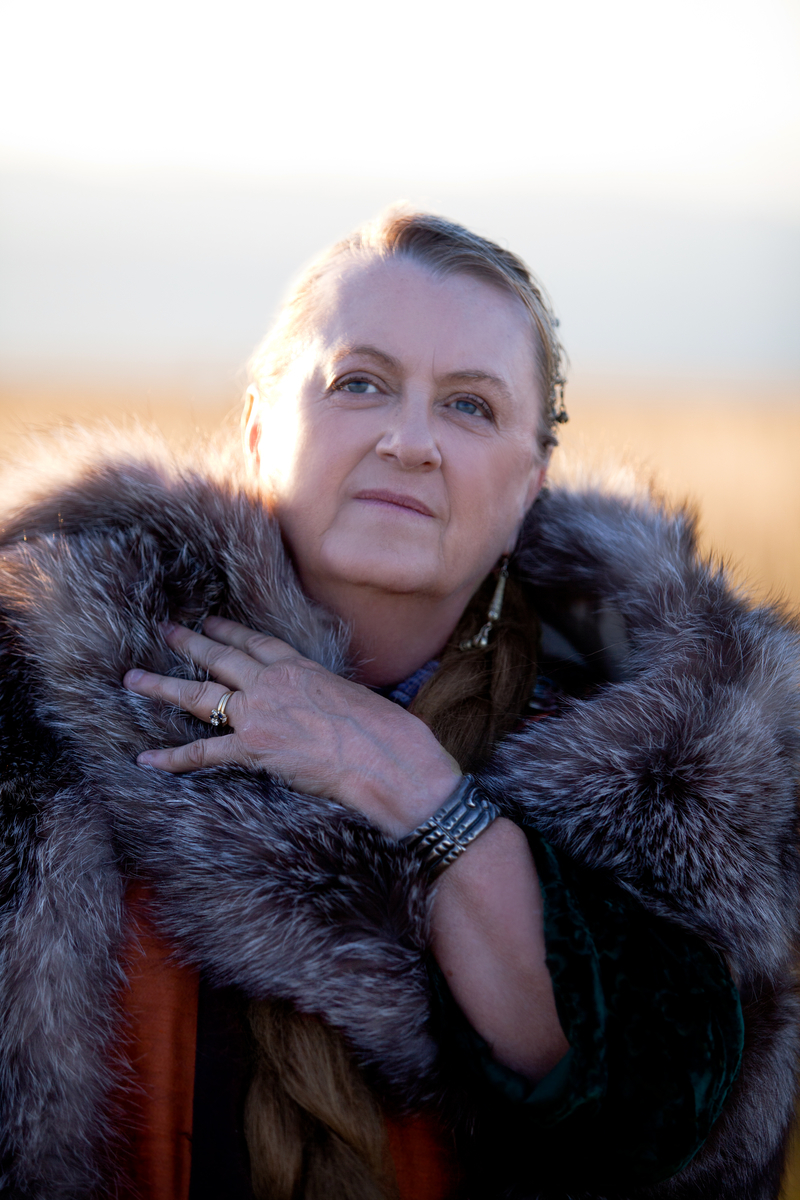
Award-winning author, Linnea Tanner, weaves Celtic tales of love, magical adventure, and political intrigue in Ancient Rome and Britannia. Since childhood, she has passionately read about ancient civilizations and mythology. She is particularly interested in the enigmatic Celts, who were reputed as fierce warriors and mystical Druids.

Linnea has extensively researched ancient and medieval history, mythology, and archaeology and has traveled to sites described within each of her books in the Curse of Clansmen and Kings series. Books released in her series include Apollo’s Raven (Book 1), Dagger’s Destiny (Book 2), Amulet’s Rapture (Book 3), and Skull’s Vengeance (Book 4). She has also released the historical fiction short story Two Faces of Janus.

A Colorado native, Linnea attended the University of Colorado and earned both her bachelor’s and master’s degrees in chemistry. She lives in Fort Collins with her husband and has two children and six grandchildren.

Connect with the Author
Follow the Apollo’s Raven blog tour with The Coffee Pot Book Club

Posts

I’m delighted to welcome Katherine Mezzacappa and her book, The Ballad of Mary Kearney, to the blog #HistoricalFiction #IrishHistory #WomensFiction #BlogTour #TheCoffeePotBookClub

I’m delighted to welcome Katherine Mezzacappa and her book, The Ballad of Mary Kearney, to the blog with an excerpt.

Excerpt

The Revd. Samuels Regrets Much but Tells Only his Diary

20th June 1766

I have this day done myself much harm, more than at other times, and the good Lord knows that I do not use His gifts as I should, but in truth I am much tried.

If I survive what I have done today, I must take this as a lesson and mend my ways.

The little bog-trotter called today with a message from Viscount Kilkeel, which he delivered to Meg as I had said I did not wish to be disturbed. She knows well enough that my company is the decanter and not the preparation of next Sunday’s sermon but as a good wife and obedient to me in all things she says nothing. But this time she taps the study door, and waits so that I may go through the pretence of putting by the claret, opening my books and dipping my quill in the inkstand.

The note, which I hope has not been read by those of the servants who can (which means the Chittleboroughs and that Swiss valet), bids me to receive one of his housemaids and please to instruct her in what is necessary that she should read, write and know her numbers as a good Christian child. Would that I were not the third son I am, and my father a plain English squire in ever reducing circumstances, for he did sire many without the wherewithal to provide elegantly for them. Thus my scholarship was hard-won, long years a servitor waiting at the Tufts’ table. The only living being on this island to know the extent of my humiliations is my poor Meg. Often has she asked me in trembling accents to give her leave to run a little school. Other parsons’ wives do this profitably and wisely, she says. But I have never wished my wife to serve anyone for that to me is too near what I was obliged to do to pay my way. And then comes this missive dashed off by his Lordship that I should letter some hoyden that he drops his breeches for now that there is no Lady Mitchelstown to tail!

So after our meal comes this child, scrubbed to the point of decency, I must say, dropping eyes and curtseys and ‘if it please you, sir’ and all coy manners. “No!” I hurl at her, “it pleases me not, but I must do as I am bid.” Meg comes at the noise but I shoo her away, though I know she stood trembling behind the door throughout. But I did wrong. I visited on that child all my rage and frustration. She merely stood in my path though she did not choose to be there. Does he tup her? I know not. It is none of my business to know. If he does, I should pity her, for no man of her class will want her after, and she shall be consigned to the Magdalen or given up for worse. I do not know how much native wit she might have that would permit her to learn from me, for in truth I gave her no opportunity, railing at her as I did. Nor can she have missed the reek of the claret. If he have ruined her she is sure to tell him all of this. His Lordship may be laughing at my expense even now. And yet, perhaps I have no justification for thinking ill of her. There was none of that tawdry pride of the fallen, none of the base cunning of those who think they have the upper hand for a brief time and so must make much of it. Nay, she cowered before me and took the blows I gave with tears but no protestations. Could she know that as she felt the sting of that crop that it was myself I really wished to punish? If she dissembled she did it so well—no, I believe she did not.

Bless my Meg for coming in as she did. I took myself to the yard and put my head under the pump. The fresh air and sunlight worked on my rage and self loathing, and with the shock of that cold water I found I could no longer contain myself but spewed all I held within over the cobbles. I took the pail and washed it away, and by my exertion, the expulsion of what was poisoning me, and copious draughts of that spring water, I came more or less to myself again, and so am face to face with my foolishness. The realisation that I cannot even hold my drink is itself merely another confirmation of the fact that I am not a gentleman and should not pass for such. And my actions in drink today were those of a lunatic. To think that I was so proud to have obtained this living.

My hope lies now only in poor Meg and her good offices with this child. Later, I went into the parlour and asked her as gently as I was able how she had found her pupil. She needed some encouragement, but I got out of her that the girl was biddable, quick in her wits once her tears were dried, and most desirous of coming here again. And the poor lady’s eyes I saw fill with tears of happiness when I heard myself say to her: “If it pleases you to instruct this girl, then let us consider also your little school.” She deserves some joy after so many years of disappointment that no child of our own ever came to stand at her knee. It seems it may take so little, if today I have really learned to be less proud.

Image: Maghera Church
Maghera Church of Ireland church from the old cemetery
Image: Eric Jones. Wikimedia Commons

Here’s the Blurb

‘I am dead, my Mary; the man who loved you body and soul lies in some dishonorable grave.’ In County Down, Ireland, in 1767, a nobleman secretly marries his servant, in defiance of law, class, and religion. Can their love survive tumultuous times?

‘Honest and intriguing, this gripping saga will transport and inspire you, and it just might break your heart. Highly recommended.’ Historical Novel Society

‘Mezzacappa brings nuance and a great depth of historical knowledge to the cross-class romance between a servant and a nobleman.’ Publishers Weekly.

The Ballad of Mary Kearney is a compelling must-read for anyone interested in Irish history, told through the means of an enduring but ultimately tragic love.

Buy Link

Universal Link

Meet the Author

Katherine Mezzacappa is Irish but currently lives in Carrara, between the Apuan Alps and the Tyrrhenian Sea. She wrote The Ballad of Mary Kearney (Histria) and The Maiden of Florence (Fairlight) under her own name, as well as four historical novels (2020-2023) with Zaffre, writing as Katie Hutton. She also has three contemporary novels with Romaunce Books, under the pen name Kate Zarrelli.

Katherine’s short fiction has been published in journals worldwide. She has in addition published academically in the field of 19th century ephemeral illustrated fiction, and in management theory. She has been awarded competitive residencies by the Irish Writers Centre, the Danish Centre for Writers and Translators and (to come) the Latvian Writers House.

​​Katherine also works as a manuscript assessor and as a reader and judge for an international short story competition. She has in the past been a management consultant, translator, museum curator, library assistant, lecturer in History of Art, sewing machinist and geriatric care assistant. In her spare time she volunteers with a second-hand book charity of which she is a founder member. She is a member of the Society of Authors, the Historical Novel Society, the Irish Writers Centre, the Irish Writers Union, Irish PEN / PEN na hÉireann and the Romantic Novelists Association, and reviews for the Historical Novel Review. She has a first degree in History of Art from UEA, an M.Litt. in Eng. Lit. from Durham and a Masters in Creative Writing from Canterbury Christ Church. She is represented by Annette Green Authors’ Agency.

Connect with the Author
Follow The Ballad of Mary Kearney blog tour with The Coffee Pot Book Club

Check out my review for The Maiden of Florence

Posts

I’m delighted to welcome Andrea Matthews and her book, The Cross of Ciarán, to the blog #TimeslipRomance #HistoricalRomance #CelticRomance #BlogTour #TheCoffeePotBookClub

I’m delighted to welcome Andrea Matthews and her book, The Cross of Ciarán, to the blog.

Here’s the Blurb

When a fifth century pagan priest is unearthed in Ireland fifteen hundred years after being entombed, archaeologist Caitlin O’Connell is convinced it’s the find of the century. The body is in perfect condition, right down to the intricate tattoos adorning the Celt’s skin. In fact, if scientific data hadn’t proved otherwise, she would swear he hadn’t been interred more than a few hours.

Eager to discover more about the mysterious Celt, Caitlin accompanies the body back to the New York museum where she’s employed, but before she has time to study him, the priest disappears without a trace.

Rumors surrounding the event begin to circulate and result in the excavation’s benefactor pulling the plug on the entire expedition. The rumors are not far off the mark though.

After being buried alive for betraying his goddess and his priesthood in the dawning age of Christianity, Ciarán wakes to a strange new world. Alone and frightened in an unforgiving city, he stumbles upon the only thing familiar to him and seeks sanctuary within the church walls. With the help of the parish’s pastor, Father Mike, Ciarán slowly grows accustomed to his surroundings, though he’s plagued by dark dreams and the disturbing sensation that an evil from his past has followed him into the future.

But a more immediate danger lurks on his doorstep. Caitlin is determined to get to the bottom of the mystery concerning her missing Celt, and when she meets her Uncle Mike’s new handyman, Ciarán Donnelly, she’s convinced the handsome Irishman knows more about the theft than he’s letting on.

Yet, even she can’t deny the attraction between them, simmering below the surface and blurring the lines between her personal and professional life.

But will Ciarán’s secrets draw them together or shatter their future forever.

Buy Link

Universal Link:

This title is available to read on #KindleUnlimited

Amazon Series Buy Link:

Meet the Author

Andrea Matthews is the pseudonym for Inez Foster, a historian and librarian who loves to read and write and search around for her roots, genealogical speaking. She has a BA in History and an MLS in Library Science, and enjoys the research almost as much as she does writing the story. In fact, many of her ideas come to her while doing casual research or digging into her family history.

She is the author of the Thunder on the Moor series set on the 16th century Anglo-Scottish Border, and the Cross of Ciaran series, where a fifteen hundred year old Celt finds himself in the twentieth century.

Andrea also writes historical mysteries under the pen name I. M. Foster. Her series A South Shore Mystery is set in the early 1900s on Long Island. She is a member of the Long Island Romance Writers, and the Historical Novel Society.

Connect with the Author
Follow The Cross of Ciaran blog tour with The Coffee Pot Book Club

I’m delighted to welcome Susan Lanigan and her new book, White Feathers, to the blog #HistoricalFiction #IrishHistoricalFiction #saga #BlogTour #TheCoffeePotBookClub

I’m delighted to welcome Susan Lanigan and her new book, White Feathers, to the blog with guest post.

Guest Post

My Research Process

By Susan Lanigan

When I was constructing the narrative of White Feathers, I needed an outline, but I was not sure in advance of everything that would occur. The advantage of writing historical fiction is that you can use real events as the vines on the trees which my Tarzan plot could grasp onto and swing to the next tree. So, I looked up various battles of World War I – Loos, the Somme, Neuve-la-Chapelle – and threaded a narrative from them. Like many, I had been captivated by Vera Brittain’s memoir Testament of Youth, and while I think Brittain would probably have been a lot personally, my heart broke for what she endured, how her hope was destroyed and how she carried on regardless after hope was gone.

I owe Brittain a lot for the construction of Eva’s narrative, particularly when she was in Étaples working as a Voluntary Aid Detachment nurse. Brittain’s narrative of that time is captivating and contains so many details. I first learned of the stark tale of the sinking of HMHS Britannic in that book, and then did my own research on the subject. I also read the account of Mary Borden, who writes in a very modernist style. The section in White Feathers where the dying Canadian lieutenant begs for a drink is based on an account in her book The Forbidden Zone.

While my research on the battles was comprehensive, my true experience of researching was coming across random fascinating minutiae and feeling compelled to shoehorn them into the story. The pigeon van was one of these phenomena, discovered while wandering around the Musée de la Grande Guerre, built near Mons, with a monument to mark the battle there. It was the closest the Germans got to Paris. The white feather propaganda was fascinatingly horrifying, and I can only imagine what it was like to see those notices on every corner, how hard it must have been to maintain an ethical stance in the face of overwhelming institutional opposition to it. The priest who oversees the trial and confession of a particular character was a real person, as was the order to which he belonged.

The inevitable problem with research is that you must omit more than you include if you are to have a novel that approaches a publishable wordcount. I could have spent all day talking about the “Little Mother” letter quoted by Robert Graves in Goodbye to All That, or the internecine rivalry of the Pankhurst sisters. But in the end, it’s story that matters; it is the flowing dress with the pleasing detail and the research is the firm undergarment that keeps everything in shape beneath!

Here’s the Blurb

Anti-war and anti-patriarchy without ever saying so – a bravura performance of effortless elegance” – Irish Echo in Australia

SHORTLISTED FOR THE ROMANTIC NOVEL OF THE YEAR AWARD 2015

In 1913, Irish emigrée Eva Downey receives a bequest from an elderly suffragette to attend a finishing school. There she finds friendship and, eventually, love. But when war looms and he refuses to enlist, Eva is under family and social pressure to give the man she loves a white feather of cowardice. The decision she eventually makes will have lasting consequences for her and everyone around her.

Journey with Eva as she battles through a hostile social order and endeavours to resist it at every turn.

Buy Link

Universal Link:

Meet the Author

Susan Lanigan’s first novel White Feathers, a tale of passion, betrayal and war, was selected as one of the final ten in the Irish Writers Centre Novel Fair 2013, and published in 2014 by Brandon Books. The book won critical acclaim and was shortlisted for the UK Romantic Novel of the Year Award in 2015. This edition is a reissue with a new cover and foreword.

Her second novel, Lucia’s War, also concerning WWI as well as race, music and motherhood, was published in June 2020 and has been named as the Coffee Pot Book Club Honourable Mention in the Modern Historical Book of the Year Award.

Susan lives by the sea near Cork, Ireland, with her family.

Connect with the Author
Follow the White Feathers blog tour with The Coffee Pot Book Club

I’m welcoming Chris Bishop and his new book, Oscar’s Tale, to the blog HistoricalFiction #AngloSaxon #Vikings #BlogTour #TheCoffeePotBookClub 

Here’s the blurb

Oscar’s Tale is that of a Saxon boy who sets out to find and rescue his father who has been taken by Viking slavers. 

The story begins in 877, just prior to the Viking attack on Chippenham in which King Alfred was routed. Against this backdrop, Oscar is obliged to set out on his all but impossible quest and quickly becomes embroiled in all that’s going on in Wessex at this turbulent time, culminating in him playing a small but important part in the battle at Edington.

But this is not just a story about blood thirsty battles and fearsome warriors, it’s about a boy struggling to live up to his father’s reputation as a warrior and trying to find his place in a dangerous and uncertain world. For that, he is forced to confront many dangers and earn the respect of others who are far above his station. Along the way he also finds love – albeit at a cost far higher than most would have been willing to pay.

For is it not the wish of every man that his son will achieve more in life than he did?’

Buy Link 

https://books2read.com/u/bwQQ99

Meet the author
Chris was born in London in 1951. After a successful career as a Chartered Surveyor, he retired to concentrate on writing, combining this with his lifelong interest in Anglo Saxon history.

His first novel, Blood and Destiny, was published in 2017 and his second, The Warrior with the Pierced Heart, in 2018 followed by The Final Reckoning in 2019 and Bloodlines in 2020.  Together they form a series entitled The Shadow of the Raven, the fifth and final part of which – The Prodigal Son – was published in 2023.

Chris has published numerous blogs about various aspects of Anglo Saxon history and is a member of the Historical Writers’ Association.

Connect with the author

                

Follow the Oscar’s Tale by Chris Bishop blog tour with The Coffee Pot Book Club
Posts