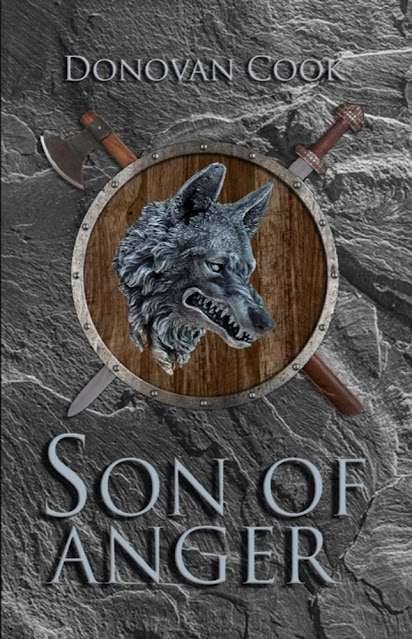
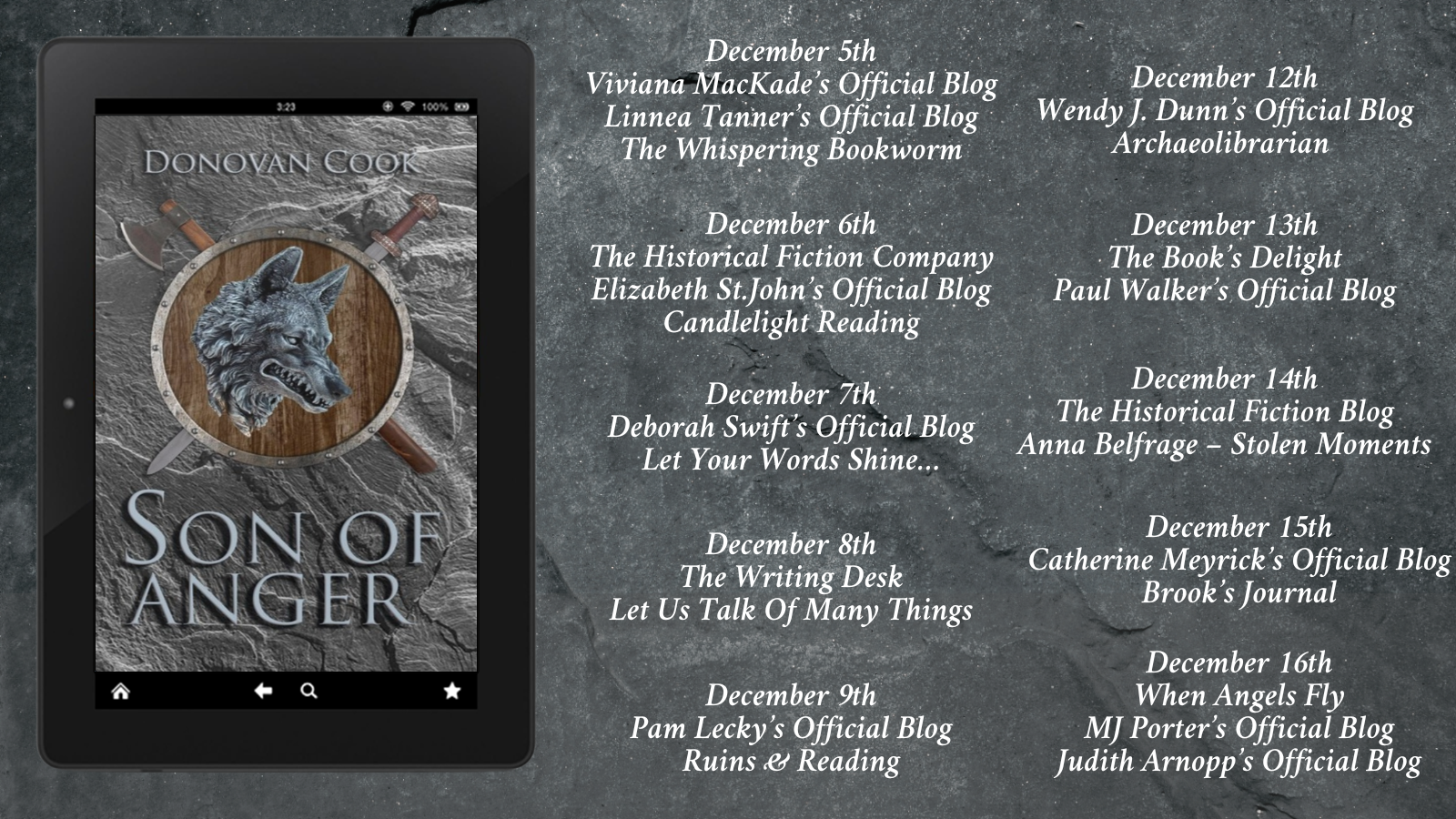
Today, I’m delighted to welcome Donovan Cook and his book, Son of Anger to the blog #blogtour #CoffeePotBookClub

Here’s the blurb:

Ulf is like a storm, slowly building up its power, he grows more dangerous with each passing moment. And like all storms, he will eventually break. When he does, he will destroy everything in his path.

Ulf is one of a long line of famous Norse warriors. His ancestor Tyr was no ordinary man, but the Norse God of War. Ulf, however, knows nothing about being a warrior.

Everything changes when a stranger arrives on Ulf’s small farm in Vikenfjord. The only family he’s ever known are slaughtered and the one reminder of his father is stolen — Ulf’s father’s sword, Ormstunga. Ulf’s destiny is decided.

Are the gods punishing him? All Ulf knows is that he has to avenge his family. He sets off on an adventure that will take him across oceans, into the eye of danger, on a quest to reclaim his family’s honour.

The gods are roused. One warrior can answer to them. The Son of Anger.

My Review

Son of Anger by Donovan Cook is a Viking-era adventure deeply steeped in the ways of the Norse Gods. Ulf is an orphan, angry with his father for putting the life of the local jarl before that of his son. When his uncle, aunt and cousins are slaughtered, and the sword of Ulf’s father is stolen, Ulf is rescued by a shadowy figure living in the woodlands, a man who takes out his appetites on the young mute, Vidar. With his death, Ulf and Vidar forge an alliance which brings them to the attention of the very jarl that Ulf’s father died to protect, garnering a growing reputation for being able to undertake tasks that no man can. There are many who think Ulf responsible for killing his aunt and uncle and their children as they’ve never heard of the warrior who attacked their farm, but Ulf wins the support of the jarl’s son and his wife, and Vidar and Ulf are welcomed into the jarl’s settlement.

This is a story of many people and thoughts, told through the eyes of the large cast, with a heavy emphasis on the religion and beliefs of the Norse; the Gods seem to walk (or rather fly)amongst the cast, influencing what happens to them, and are as contrary as we would expect the Norse Gods to be. There are many stories and legends, all told with a particuarly ‘saga-like’ ability to make even the fantastical seem commonplace and day to day. The Norse respect their Gods but appreciate their unreliability.

There are a number of main characters, Ulf, Snorri, Vidar and Lady Ingibjorg, as well as the jarl himself, and the hirdmen of Snorri. Much is shadows and uncertainty, and through the novel walks an unpleasant, and unsighted character, who has ill will towards Ulf, and is only unmasked during the battle that takes place at the end of the book.

This final battle, in which the true killer of Ulf’s aunt and uncle is the enemy, is a fitting conclusion to this epic Norse tale, which continues in books 2 and 3 in the series.

Buy Links:

This book is available on #KindleUnlimited. 

Universal Link:

Amazon UK: Amazon US: Amazon CA: Amazon AU:

Barnes and Noble:

Meet the Author

Donovan Cook was born in South Africa but raised in England, and currently works as an English tutor. He is the author of the Ormstunga Saga, which includes his debut novel Son of Anger and the follow up, Raid of the Wolves. His novels come from his fascination with the Viking world and Norse Mythology and he hopes that you will enjoy exploring this world as much as he did writing about it. 

When Donovan is not teaching or writing, he can be found reading, watching rugby, or working on DIY projects. Being born in South Africa, he is a massive Springboks fan and rarely misses a match.

Connect with Donovan:

Website: Twitter: Facebook

BookBubAmazon Author Page: Goodreads:
Follow the Son of Anger blog tour with The Coffee Pot Book Club

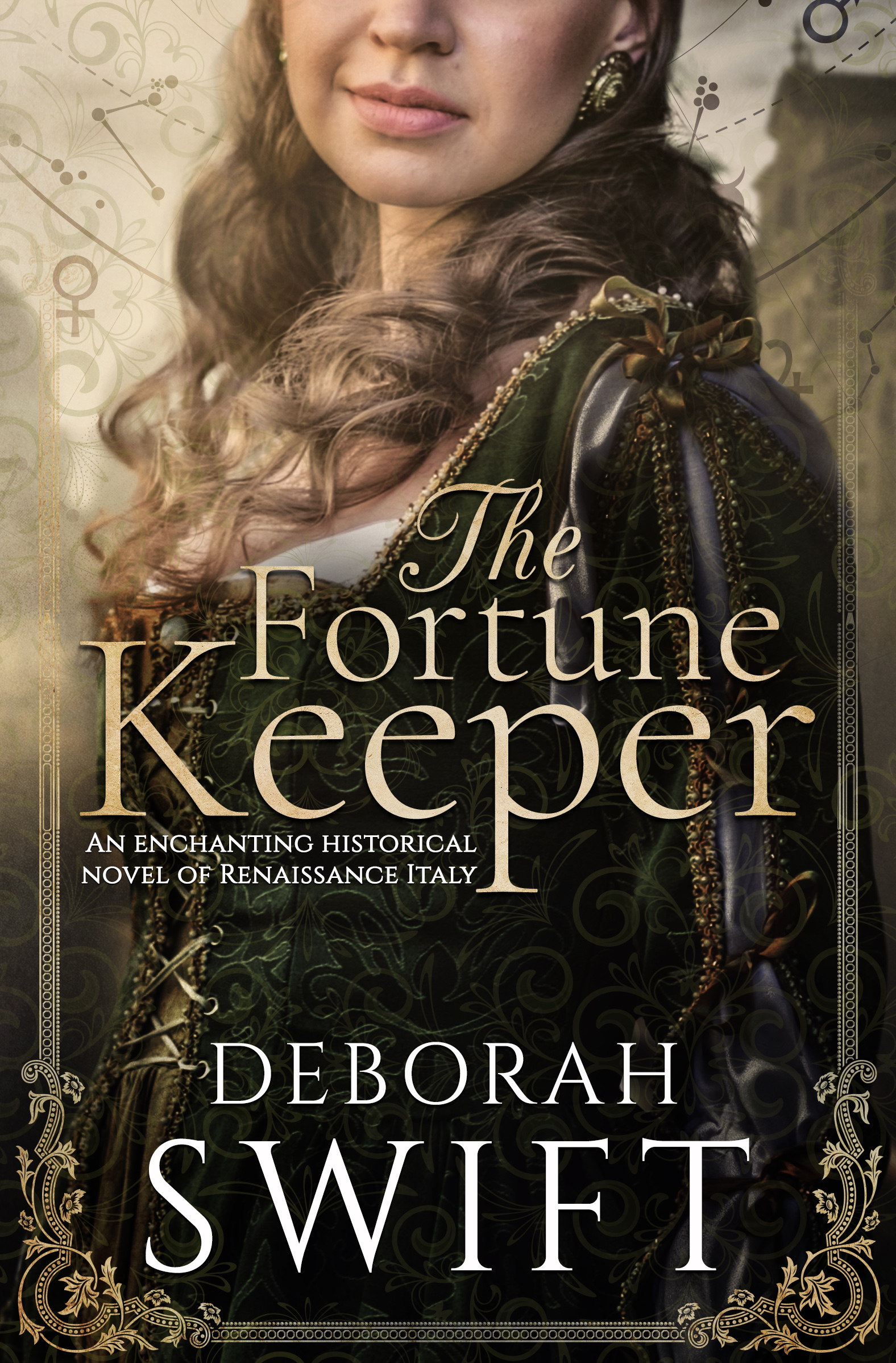
Today, I’m welcoming Deborah Swift and her new book, The Fortune Keeper to the blog with a fabulous post about crime in Renaissance Venice #BlogTour #CoffeePotBookClub #FortuneKeeper #HistoricalFiction

Researching Crime in Renaissance Venice  by Deborah Swift

 https://mybook.to/AquaTofana

One of the things I was aware of as soon as I started this novel, The Fortune Keeper, was that although not a crime novel, it would probably have several murders within its pages. This is because the whole series is about Giulia Tofana, who was renowned for poisoning men in order that their wives could escape marital persecution.

Giulia Tofana became a legend and it is probable that she didn’t poison as many men as the rumours say, and that probably she was blamed for the crimes of others. One of the others suspected of her crimes was her stepdaughter Girolama. As she was to feature in this book, it led me to look into the law in early modern Venice because I knew I would have to be aware of policing, punishment, and the mechanisms of the law.

Miracle of the Holy Cross Accademia – Miracle of the Holy Cross at Rialto by Vittore Carpaccio

Renaissance Robbery

Venice was extremely wealthy in the Renaissance period, and vagabonds and thieves flooded into the city in search of easy pickings. In the picture above you can see the canal thronged with men dressed in rich clothing and ornament. The most common crimes in Venice were burglary and forgery, but it was by no means unusual for there to be murders over money and debts. The punishment for robbery was calculated on the basis of the quantity of property taken. First offenders who stole goods worth less than one lira could get away with a whipping, but woe betide you if you stole something bigger. The penalty was the loss of an eye for goods valued between five to ten lire, and the noose awaited those brave enough to steal something worth more than forty lire. 

Interrogation chambers of the Doge’s Palace

Debt and Death

The law allowed for anyone who was owed more than five lire de piccola to threaten and even kill the debtor in order to recoup their money, putting the onus firmly on the debtor, not the avenger. This tells us that money was the main driving force in Venetian society. But what about armed robbery or assault where no debt was owing? Most assaults were subject to a mere fine of twenty-five lire, or banishment from the city state. If your crime was a crime which drew blood – sanguinem fecerit – then the punishment was up to the judging council.  There was no such thing as ‘innocent until proven guilty’ in Venetian law at that time. Proof was largely circumstantial, and it relied on the judge and jury’s instinct as to the guilt of the person involved. 

Cells of the Doge’s Palace

Renaissance Lawkeepers

The Avogaria di Comun were a group equivalent to lawyers, though non-professional, drawn exclusively from the nobility. They acted as prosecutors for the state, giving evidence and arguing for punishments before the main judicial councils of Venice. Because of their status, their judgements were often influenced by their social position, and the personal axes they had to grind.

Execution and Mutilation

In this period it was still common for mutilations to take place, which had been traditional in medieval times. Cutting out the tongue for heresy, cutting off the thumb or fingers for pilfering. Courtesans regularly had their noses or faces cut. There was also the custom of cutting of the ‘offending’ part – this led to men who were convicted of dabbling in heresy or alchemy, or crimes against the Holy Roman Church having their hand cut off to remove the ‘devil’s instrument’. This kind of public ritual and humiliation was designed to bring public vengeance to the accused person, and to reaffirm the values of the Church or state. The ritual turned the execution into a purification of the city. 

There were in fact few crimes which brought down corporal or capital punishment. The types of corporal punishment used for the crimes of rape and assault were minor by today’s standards. As an example,  for assault, out of 569 cases only fifteen involved mutilation of the criminal; and sixteen more involved some form of corporal discipline. For rape offenses, corporal punishment was even less significant, with twenty cases of discipline and only four of mutilation. 

Palazzo Dario where many murders in the novel unfold

Maintaining law and order

On the streets the main arbiters of law and order were the town guard, the vigili urbani, who acted like our police do now. Their job was to make sure masked men didn’t carry arms, that only noblemen wore swords, and to act as a preventative force as well as policing troublemakers. 

Further up the ladder were the Council of Ten, a kind of secret police force whose job was to maintain order within the city state of Venice. There was not much space in the city gaols of Venice due to the whole nature of its construction. For crimes of fraud, marital dispute, and affray, these men sat in judgement.  It was unfeasible to keep men incarcerated for long because otherwise the gaols would be full of minor offenders. Small fines and short gaol sentences were the usual punishments for common violence in Venice. When the crime crossed the line into something that was considered ‘against God’ or ‘against the reputation of Venice’ then ritual punishment could be relied upon to warn the populace about sinning against these bigger, less personal edifices.

Documents I found helpful in my research:

Law and Punishment in Early Renaissance Venice

Violence in Early Renaissance Venice — Guido Ruggiero

Banditry and Social Identity in the Republic of Venice – Sergio Lavarda

Authority and the Law in Renaissance Venice  — G. Cozzi

BUY THE FORTUNE KEEPER: https://mybook.to/FortuneKeeper

Here’s the blurb

Count your nights by stars, not shadows ~ Italian Proverb

Winter in Renaissance Venice

Mia Caiozzi is determined to discover her destiny by studying the science of astronomy. But her stepmother Giulia forbids her to engage in this occupation, fearing it will lead her into danger. The ideas of Galileo are banned by the Inquisition, so Mia must study in secret.

Giulia’s real name is Giulia Tofana, renowned for her poison Aqua Tofana, and she is in hiding from the Duke de Verdi’s family who are intent on revenge for the death of their brother. Giulia insists Mia should live quietly out of public view. If not, it could threaten them all. But Mia doesn’t understand this, and rebels against Giulia, determined to go her own way.

When the two secret lives collide, it has far-reaching and fatal consequences that will change Mia’s life forever.

Set amongst opulent palazzos and shimmering canals, The Fortune Keeper is the third novel of adventure and romance based on the life and legend of Giulia Tofana, the famous poisoner.

‘Her characters are so real they linger in the mind long after the book is back on the shelf’ – Historical Novel Society

NB This is the third in a series but can stand alone as it features a new protagonist.

Trigger warnings: 

Murder and violence in keeping with the era.

Buy Links

This book is available to read on Kindle Unlimited?

Universal Link: https://books2read.com/u/4EJBOz

Amazon UKAmazon USAmazon CAAmazon AU

Connect with the author

Deborah Swift is a USA TODAY bestselling author who is passionate about the past. Deborah used to be a costume designer for the BBC, before becoming a writer. Now she lives in an old English school house in a village full of 17th Century houses, near the glorious Lake District. She divides her time between writing and teaching. After taking a Masters Degree in Creative Writing, she enjoys mentoring aspiring novelists and has an award-winning historical fiction blog at her website www.deborahswift.com

Deborah loves to write about how extraordinary events in history have transformed the lives of ordinary people, and how the events of the past can live on in her books and still resonate today. 

Recent books include The Poison Keeper, about the Renaissance poisoner Giulia Tofana, which was a winner of the Wishing Shelf Readers Award, and a Coffee Pot Book Club Gold Medal, and The Cipher Room set in WW2 and due for publication by Harper Collins next Spring.

Connect with Deborah:

Twitter  Facebook Website 

Pinterest  Bookbub  Amazon 

Follow The Fortune Keeper blog tour with The Coffee Pot Book Club

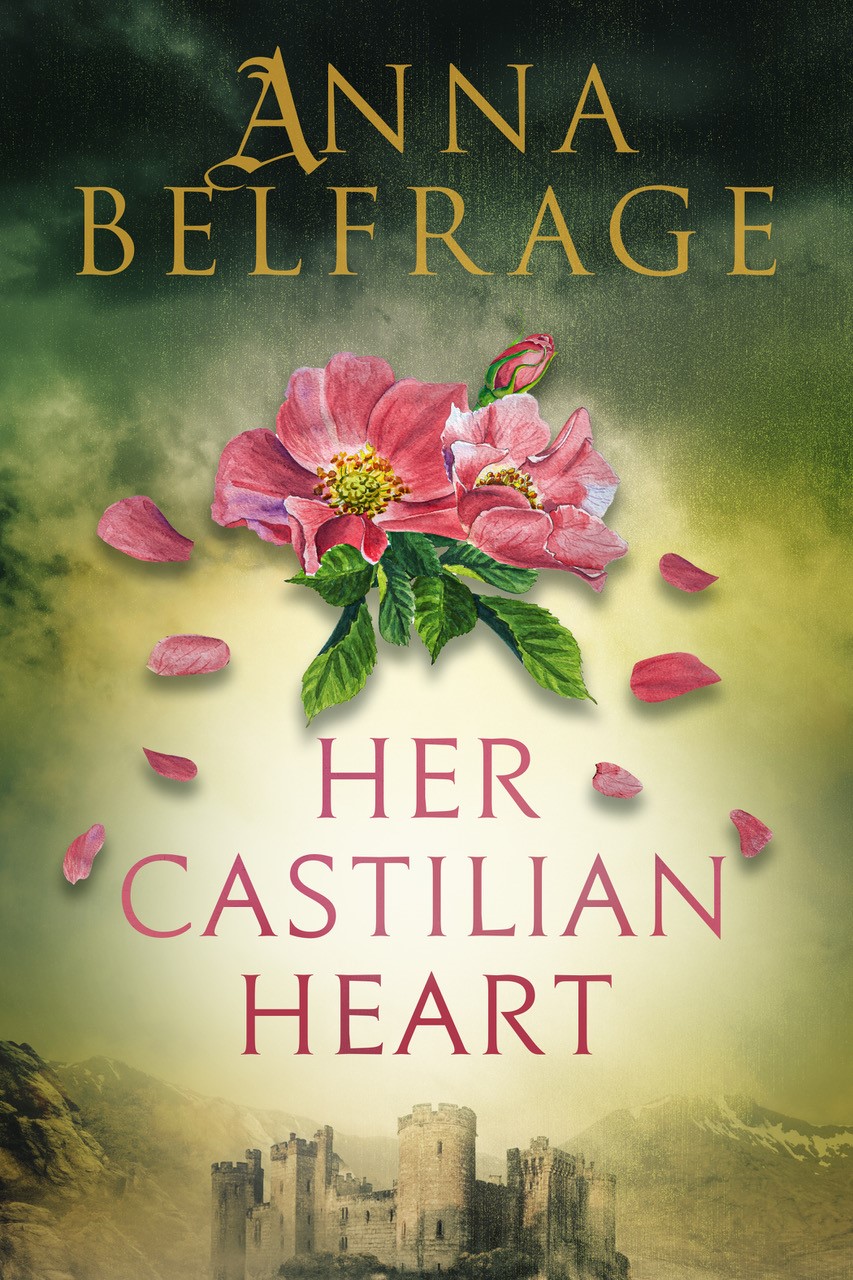
I’m delighted to welcome Anna Belfrage and her new book, Her Castilian Heart, to the blog  #BlogTour #CoffeePotBookClub #medievalfiction #HistoricalFiction #HistoricalRomance #MedievalEngland #blogpost

I’m delighted to welcome Anna to the blog, and she’s written a fabulous post about her historical research.

Those unruly Welsh – a post about those that would not give up

Some years ago, I published His Castilian Hawk, where the story is set against the backdrop of Edward I’s conquest of Wales in 1282-83. Some may think that after Dafydd ap Gruffyd was executed in late 1283, Wales was permanently cowed, bowing its neck abjectly before its new overlord. Not at all like in Scotland, where the Scots just wouldn’t give up, no matter what Edward I threw at them.

Hmm. I dare say those medieval Welshmen would snort—rather loudly—at the notion that they somehow lacked in bravery. Also, one must keep in mind that the English king could command vastly more men than the Welsh could. Plus, Wales was not a cohesive unit as Scotland was. No, Wales was subdivided into various little principalities, and since the death of Llewellyn Fawr in 1240 no one had really managed to unite all Wales again. Also, large chunks of Wales had been under English control for yonks, ruled over by the so called Marcher Lords. 

So it was a fragmented people who were invaded by the English in 1282-83, and in some places people didn’t overly care who sat in the nearby castle. Besides, many Welshmen had no reason to risk their neck for Llywellyn ap Gruffyd or his brother as they were princes of Gwynedd, not of Wales. But that does not mean the Welsh had rolled over and given up. In fact, there’d be a sequence of rebellions—of varying size—over the years. What all those rebellions have in common is that they failed, even if the impressive Owain Glyndwr in the early 15th century came close to success.

In my latest release, Her Castilian Heart, the adventures and misfortunes that beset my fictional protagonists, Robert FitzStephan and his wife Noor, are to some extent set against the backdrop of another Welsh rebellion, that of Rhys ap Maredudd.

Rhys was a member of the royal house of Deheubarth, a principality in mid Wales. Deheubarth and Gwynedd were traditional enemies, so when Dafydd ap Gruffyd prodded his older brother into rebellion in 1282, Rhys sided with the English. Actually, already in the Anglo-Welsh wars of 1276-77, Rhys submitted to England, hoping that by doing so he’d be able to keep his lands—and regain the impressive Dinefwr Castle, the traditional seat of the princes of Deheubarth. 

In the aftermath of the 1282-83 conquest, Rhys was rewarded for his loyalty with more land.
“And Dinefwr?” he asked. 
King Edward likely raised an eyebrow. No way was he about to return such an impressive castle to a Welsh princeling. Instead, he forced Rhys to sign a quitclaim, effectively handing over “his” castle permanently to the English king. Rhys may not have liked this, but he seems to have swallowed his disappointment and instead focussed his attention on fortifying his remaining castle of note, Dryslwyn.

But it must have rankled, losing Dinefwr. Also, Rhys seems to have been under the impression that he’d been promised Dinefwr if he rode with the English against his fellow Welshmen. Whatever the case, in 1287, Rhys rebelled.

He had some initial success, but King Edward’s appointed regent, Edmund of Cornwall (the king himself was in Gascony) acted with speed, assembling a huge host that marched into Wales. By October, the rebellion had effectively been stamped out until all that was left was a core of determined men besieged at Dryslwyn. This was when King Edward’s interest in siege machines came in handy: soon enough several huge trebuchets began bombarding Dryslwyn’s walls with projectiles. In all that upheaval, Rhys managed to slip away. 

For some weeks, things were quiet, but in mid-November Rhys popped up again, urging his fellow Welshmen to join his rebellion. A new, much smaller force was assembled to sort things out—one in which I’ve included Robert FitzStephan and his friend, Roger Mortimer. Rhys took refuge in yet another castle, this time the triangular-shaped Newydd Emlyn.

The English packed together their siege weapons, loaded them onto carts, requisitioned forty oxen and hauled them all the way up to Newydd Emlyn. Ten days of siege and the English won—but the elusive Rhys had managed to slip away. Again.

For the coming four years, he somehow managed to stay hidden. Some people think he may have escaped to Ireland, but if he had, one wonders why he came back only to be captured. In 1291, Rhys ap Maredudd was executed in York, far from the land of his birth. His son and namesake was to spend the coming fifty years in prison. 

Rhys was not the last Welshman to rebel against Edward. Some years later, the fires of rebellion would yet again threaten Edward’s iron hold on this his newest dominion—but of that I will write in the next book in the series! 

Thank you so much for sharing such a fascinating post. Good luck with your new book and with writing the next one.

Here’s the blurb:

Blood is not always thicker than water…

At times a common bloodline is something of a curse—or so Robert FitzStephan discovers when he realises his half-brother, Eustace de Lamont, wants to kill him.   

A murderous and greedy brother isn’t Robert’s only challenge.  He and his wife, Noor, also have to handle their infected relationship with a mightily displeased Queen Eleanor—all because of their mysterious little foundling whom they refuse to abandon or allow the queen to lock away. 

Eustace is persistent. When Robert’s life hangs in the balance, it falls to Noor to do whatever it takes to rip them free from the toothy jaws of fate. Noor may be a woman, but weak she is not, and in her chest beats a heart as brave and ferocious as that of a lioness. But will her courage be enough to see them safe? 

Trigger Warnings:
There is some sexual (consensual) content. Also some violence

Buy Links: 

Available on Kindle Unlimited

Universal Link : http://myBook.to/HEART

Amazon UK: Amazon USAmazon CAAmazon AU

Meet the author

Had Anna been allowed to choose, she’d have become a time-traveller. As this was impossible, she became a financial professional with two absorbing interests: history and writing. Anna has authored the acclaimed time travelling series The Graham Saga, set in 17th century Scotland and Maryland, as well as the equally acclaimed medieval series The King’s Greatest Enemy which is set in 14th century England.  

Anna has also published The Wanderer, a fast-paced contemporary romantic suspense trilogy with paranormal and time-slip ingredients. 

Her Castilian Heart is the third in her “Castilian” series, a stand-alone sequel to her September 2020 release, His Castilian Hawk. Set against the complications of Edward I’s invasion of Wales, His Castilian Hawk is a story of loyalty, integrity—and love. In the second instalment, The Castilian Pomegranate, we travel with the protagonists to the complex political world of medieval Spain. This latest release finds our protagonists back in England—not necessarily any safer than the wilds of Spain!

Anna has also authored The Whirlpools of Time in which she returns to the world of time travel. Join Duncan and the somewhat reluctant time-traveller Erin on their adventures through the Scottish Highlands just as the first Jacobite rebellion is about to explode! 

All of Anna’s books have been awarded the IndieBRAG Medallion, she has several Historical Novel Society Editor’s Choices, and one of her books won the HNS Indie Award in 2015. She is also the proud recipient of various Reader’s Favorite medals as well as having won various Gold, Silver and Bronze Coffee Pot Book Club awards.

Find out more about Anna, her books and enjoy her eclectic historical blog on her website, www.annabelfrage.com  

Connect with Anna

WebsiteTwitterFacebook

InstagramBookBubAmazon Author PageGoodreads

Follow the Her Castilian Heart blog tour with The Coffee Pot Book Club

Today, I’m sharing an exciting post by Michael L. Ross about his new book, The Founding, Book 3 in Across the Divide #historicalfiction #biographicalfiction #BlogTour #TheCoffeePotBookClub

I’m delighted to welcome Michael L. Ross to the blog, with a post about his new book, The Founding.

The Founding follows the earthquake changes that the railroad made to American business and society during the latter half of the nineteenth century. Through the eyes of my fictional characters, Julia and Hiram Johannsen, the railroad itself almost becomes another major character. Julia is the sister of the main character, Will Crump. In order to do an effective job with telling the story of the railroad, I had to research and plot the timeline of the many different railroads that pushed south and west across America during the period 1868-1909. 

The figure of robber baron Jason “Jay” Gould looms over the story, as he went from a tannery business to partner in the Erie Railroad to the major force behind the Union Pacific Railroad. The UP swallowed many other lines in its march to the Pacific Ocean. 

Julia was a businesswoman at a time when it was uncommon, and shepherded the Johannsen steamship line through the Civil War, while Hiram fought for the Federal army in book 1 of the series, The Clouds of War. As The Founding opens, Julia and Hiram’s business is in danger from the encroaching railroads, financed from New York and Europe. They must adapt or perish. 

The Atchison, Topeka, Santa Fe promised a new rail line that could save them. For my research, I delved into the railroad’s history, largely through Keith L. Bryant Jr.’s non-fiction account, History of the Atchison, Topeka, and Santa Fe Railway, and local records in the Newton, Kansas historical society. The ATSF and the Kansas Pacific railroads sought to go through Kansas from east to west, and south through Indian Territory (Oklahoma) to Santa Fe, and California. At every turn, Jay Gould bought up lines and pounced on the business, making it very tough indeed to compete. The Life and Legend of Jay Gould by Maury Klein follows Gould’s life in great detail, chronicling the schemes and deals that made Gould famous and feared. 

The railroad story is a complex one, and many managers came and went. The road to success was complicated by the financial panic of 1873, where many railroads went bankrupt in the aftermath of the Franco-Prussian war. European countries had invested heavily in American railroads via bonds, and the end of the war with German victory brought the collapse of the Jay Cook Company, whose bonds financed railroad expansion. 

Two historical tidbits turned up in research that was of great interest and impacted the book. First, the famous joining of the railroads at Promontory Point, Utah to form the transcontinental railroad wasn’t truly transcontinental at first. It was thought that no one could build a bridge across the Missouri River, and at the time the Golden Spike was driven, the Union Pacific stopped at the river, and picked up on the other side. For a period of time, the locomotives had to be ferried across. Then the Kansas Pacific helped to build the Hannibal Bridge, a unique design that swung a bridge section sideways to allow steamboat river traffic, then back into a contiguous bridge across the river. Without electricity, and using only gravity, gears, and river power, it was a major engineering feat, truly uniting the east and western portions of the United States by rail. 

Second, in Chicago, a man named George Hammond filed a patent for a refrigerated railroad car, in 1868. Within two years, Hammond was selling refrigerated meat to the tune of two million dollars annually. Railroad lines that had invested heavily in stockyards in Chicago and elsewhere were reluctant to adopt the new cars, but progress marched forward as demand for beef in the east increased. In The Founding, Hiram and Julia make use of both of these inventions to outsmart Gould, and in real life, Gould was slow to pick up on them. The refrigerated cars spawned a large meat packing business in Fort Worth, Texas, and with the expansion of the railroad, completely eliminated the need for the cattle drives of western movies. Within a decade, Hammond’s new plant in Omaha, Nebraska, was slaughtering over 100,000 cattle a year and moving a fleet of 800 refrigerator cars. Gustavus Swift improved the design of refrigerated cars.1 During the 1850s, when he was still a teenager, Gustavus F. Swift started to work in the beef business in Massachusetts. In 1875, Swift began buying cattle in Chicago to send to his family’s butcher operations back East. He quickly revolutionized the meat industry by using newly developed refrigerated railcars to ship fresh meat from Chicago to Eastern markets. The company soon set up a national network of branch offices, which allowed it to control the distribution of its meat across the country. By 1886, when the company slaughtered more than 400,000 cattle a year, Swift employed about 1,600 people. Between 1887 and 1892, new packing plants were opened in Kansas City, Omaha, and St. Louis. By the time the founder died in 1903, his company grossed $200 million in annual sales and employed about 23,000 people across the country.2[1]

These inventions allowed our fictional characters to gain capital to beat Gould, temporarily, at his own game. 

As railroads advanced, many new towns were founded. Whether the railroad’s route included a particular town could mean the difference between death and survival for the town. Often towns paid handsome sums to the railroads to influence the route. Dallas paid a large cash bounty to gain three railroad lines running through it, cementing it as a center of Texas commerce. In 1860, Dallas only had 261 people. By 1900, it had 82,726.3

Often the town was required to pay for a depot, as well as show that there would be sufficient freight and passenger traffic to warrant choosing a route through the town. In Nicodemus, the citizens raised $16,000 for a depot, with great hopes. There was lots of politics and influence peddling. 

Lubbock, Texas, the other town in this book, was initially unsuccessful in wooing the railroad. However, with persistence, growth, and the fact that it was racially white, the town fathers, including Will Crump, were successful in the end. 

Image: Public Domain

[1] https://www.saddleandsirloinportraitfoundation.org/post/george-henry-hammond-inducted-in-1953-or-1954

2Encyclopedia of Chicago

Dallas population

Thank you so much for sharing such a fascinating post.

Here’s the blurb:

Two men, two dreams, two new towns on the plains, and a railroad that will determine whether the towns—one black, one white—live or die. 

Will Crump has survived the Civil War, Red Cloud’s War, and the loss of his love, but the search for peace and belonging still eludes him. From Colorado, famed Texas Ranger Charlie Goodnight lures Will to Texas, where he finds new love, but can a Civil War sharpshooter and a Quaker find a compromise to let their love survive? When Will has a chance to join in the founding of a new town, he risks everything—his savings, his family, and his life—but it will all be for nothing if the new railroad passes them by.

Luther has escaped slavery in Kentucky through Albinia, Will’s sister, only to find prejudice rearing its ugly head in Indiana. When the Black Codes are passed, he’s forced to leave and begin a new odyssey. Where can he and his family go to be truly free? Can they start a town owned by blacks, run by blacks, with no one to answer to? But their success will be dependent on the almighty railroad and overcoming bigotry to prove their town deserves the chance to thrive.

Will’s eldest sister, Julia, and her husband, Hiram, are watching the demise of their steamboat business and jump into railroads, but there’s a long black shadow in the form of Jay Gould, the robber baron who ruthlessly swallows any business he considers competition. Can Julia fight the rules against women in business, dodge Gould, and hold her marriage together?

The Founding tells the little-known story of the Exodusters and Nicodemus, the black town on the plains of Kansas, and the parallel story of Will’s founding of Lubbock, Texas, against the background of railroad expansion in America. A family reunited, new love discovered, the quest for freedom, the rise of two towns. In the end, can they reach Across the Great Divide? The Founding is the exciting conclusion to the series.

Praise for The Founding:

“Michael is an excellent storyteller and has done a wonderful job depicting Luther, and the other black characters in this book.  He has done his homework and depicts many historical facts about Nicodemus in a most enlightening and creative way.  It has been a pleasure working with someone who has made a concerted effort to get things right.  

~ Angela Bates

Nicodemus Descendant/Historian

Executive Director

The Nicodemus Historical Society and Museum

Watch the book trailer:

https://www.youtube.com/watch?v=NbVY8_AIpJQ

Buy Links:

Universal Link

Amazon UK: Amazon USAmazon CAAmazon AU

Meet the author

Michael Ross is a lover of history and great stories.

He’s a retired software engineer turned author, with three children, and five grandchildren, living in Newton, Kansas with his wife of 39 years. Michael graduated from Rice University and Portland State University with degrees in German and software engineering. He was part of an MBA program at Boston University. 

Michael was born in Lubbock, Texas, and still loves Texas. He’s written short stories and technical articles in the past, as well as articles for the Texas Historical Society. 

Across the Great Divide now has three novels in the series, “The Clouds of War”, and “The Search”, and the conclusion, “The Founding”.  “The Clouds of War” was an honorable mention for Coffee Pot Book of the Year in 2019, and an Amazon #1 best seller in three categories, along with making the Amazon top 100 paid, reviewed in Publisher’s Weekly. “The Search” won Coffee Pot Cover of the Year in 2020, and Coffee Pot Silver Medal for Book of the Year in 2020, as well as short listed for the Chanticleer International Book Laramie Award. 

Connect with Michael:

WebsiteTwitterFacebook: 

LinkedInInstagram:  

Book Bub: Amazon Author PageGoodreads

Follow the Across the Great Divide blog tour with The Coffee Pot Book Club

Today, I’m delighted to welcome Jane Davis and her new book, Small Eden, to the blog #HistoricalFiction #TheCoffeePotBookClub #BlogTour #blogpost

Today, I’m welcoming Jane Davis to the blog with a fascinating post about her new book, Small Eden.

In England’s Green and Pleasant Land

In Victorian England, Carshalton and nearby Mitcham were known for their physic gardens, where plants were grown for medicinal and cosmetic use. Peppermint, lavender, camomile, aniseed, rhubarb, and liquorice were stable crops but today the name Carshalton is best associated with lavender growing. Of the many lavender farms that used to exist, only two remain. Mayfield Lavender is the larger of the two. In the summer months, people come a long way to see it. https://www.mayfieldlavender.com/

Lavender Fields (copyright, author)

At a time when few women ran their own businesses, I was delighted to stumble across the story of Sarah Sprules. Sarah had worked alongside her father in his physic garden and took over his business after he died. Her produce was known worldwide. Her lavender water won medals at exhibitions in Jamaica and Chicago, but the highest accolade she held was her Royal Warrant to supply lavender oil to Queen Victoria, bestowed on her after the Queen and Princess Louise visited her during August 1886. The royal connection proved especially beneficial as Queen Victoria had so many European relatives. 

But that wasn’t all. it was the discovery that Mitcham was once the opium-growing capital of the UK that made me decide my leading man, Robert Cooke, should be a physic gardener. This chapter has been written out of the history books, but in the nineteenth century, far from having a seedy reputation, opium use was respectable. Queen Victoria’s household ordered opium from the royal apothecary, and Prime Minister William Gladstone is said to have drunk opium tea before important speeches. It was used an anaesthetic, in sedatives, for the relief of headaches, migraines, sciatica, as a cough suppressant, to treat pneumonia, and for the relief of abdominal complaints and women’s cramps.

Mrs Beeton’s famous Book of Household Management recommended that no household should be without a supply of powdered opium and laudanum, and she included a recipe for laudanum. But awareness of its dangers was beginning to spread. 

Opium Poppy or Papaver somniferum, vintage engraved illustration. Trousset encyclopedia (1886 – 1891). (Image licensed to author)

Short Matching Excerpt from Small Eden

It was Freya who first showed him Dr Bull’s Hints to Mothers, a pamphlet highlighting the dangers of opiates in the nursery. Of course he doesn’t agree with the practice of dosing up babies so that they sleep all day, he told his wife, but yes, he’s aware it goes on. Working mothers have little choice but to leave children for hours at a time, so they doctor their gripe-water. And it’s not just the poor. Mothers read the labels that say Infant Preservative and Soothing Syrup. They think that ‘purely herbal’ and ‘natural ingredients’ means that products are safe. Though it was chilling to read about case after case of infant deaths linked to over-use.

As many as a third of infant deaths in industrial cities.

And he, who has buried two sons.

But even Dr Bull didn’t condemn the use of opiates outright. They are medicines, he wrote, and like any medicine, ought to be prepared by pharmacists. The trouble is, Robert told Freya, that until recently any Tom, Dick or Harry could operate a pharmacy. And hasn’t he been vocal in his support for an overhaul of the system?

***

Why did it take so long for opium to be banned?

In the 19th Century, Great Britain fought two wars to crush Chinese efforts to restrict its importation. Why? Because opium was vital to the British economy. And then there was the thorny issue of class. The upper and middle classes saw the heavy use of laudanum among the lower classes as ‘misuse’; however they saw their own use of opiates was seen as necessary, and certainly no more than a ‘habit’. Addiction wasn’t yet recognised. That would come later.

The anti-opium movement

In 1874, a group of Quaker businessmen formed The Society for the Suppression of the Opium Trade. Then in 1888 Benjamin Broomhall formed the Christian Union for the Severance of the British Empire with the Opium Traffic. Together, their efforts ensured that the British public were aware of the anti-opium campaign.

Short Matching Excerpt from Small Eden

“Indulge me if you will while I explain how the Indian trade operates – a system that the House of Commons condemned this April last. The East India Company – with whom I’m sure you are familiar – created the Opium Agency. Two thousand five hundred clerks working from one hundred offices administer the trade. The Agency offers farmers interest-free advances, in return for which they must deliver strict quotas. What’s so wrong with that? you may ask. What is wrong, my friends, is that the very same Agency sets the price farmers are paid for raw opium, and it isn’t enough to cover the cost of rent, manure and irrigation, let alone any labour the farmer needs to hire. And Indian producers don’t have the option of selling to higher bidders. Fail to deliver their allocated quota and they face the destruction of their crops, prosecution and imprisonment. What we have is two thousand five hundred quill-pushers forcing millions of peasants into growing a crop they would be better off without. And this, this, is the Indian Government’s second largest source of revenue. Only land tax brings in more.”

More muttering, louder. The shaking of heads and jowls.

“I propose a motion. That in the opinion of this meeting, traffic in opium is a bountiful source of degradation and a hindrance to the spread of the gospel.” Quakers are not the types to be whipped up into a frenzy of moral indignation, but their agreement is enthusiastic. “Furthermore, I contend that the Indian Government should cease to derive income from its production and sale.”

Robert looks about. Surely he can’t be the only one to wonder what is to replace the income the colonial government derives from opium? Ignoring this – and from a purely selfish perspective, provided discussion is limited to Indian production – his business will be unaffected. Seeing his neighbours raise their hands to vote, Robert lifts his own to half-mast. Beside him, Smithers does likewise.

***

The time comes when Robert Cooke must make a choice. He can either diversify, or he can gamble that the government will ban cheap foreign imports and that the price of domestic produce will rise. Robert Cooke is a risk-taker. He decides to specialise, and that decision will cost him dearly. It may even cost him his family. 

Thank you so much for such a fascinating post. Good luck with your new book.

Here’s the blurb:

A boy with his head in the clouds. A man with a head full of dreams.  

1884. The symptoms of scarlet fever are easily mistaken for teething, as Robert Cooke and his pregnant wife Freya discover at the cost of their two infant sons. Freya immediately isolates for the safety of their unborn child. Cut off from each other, there is no opportunity for husband and wife to teach each other the language of their loss. By the time they meet again, the subject is taboo. But unspoken grief is a dangerous enemy. It bides its time.

A decade later and now a successful businessman, Robert decides to create a pleasure garden in memory of his sons, in the very same place he found refuge as a boy – a disused chalk quarry in Surrey’s Carshalton. But instead of sharing his vision with his wife, he widens the gulf between them by keeping her in the dark. It is another woman who translates his dreams. An obscure yet talented artist called Florence Hoddy, who lives alone with her unmarried brother, painting only what she sees from her window… 

Buy Links:

Universal Link

Amazon UKAmazon USAmazon CAAmazon AU

Barnes and NobleWaterstones:    (POD) / Trade paperback – Waterstones

FoylesKoboiBooksSmashwords:

Meet the author

Hailed by The Bookseller as ‘One to Watch’, Jane Davis writes thought-provoking literary page turners.

She spent her twenties and the first half of her thirties chasing promotions in the business world but, frustrated by the lack of a creative outlet, she turned to writing.

Her first novel, ‘Half-Truths and White Lies’, won a national award established with the aim of finding the next Joanne Harris. Further recognition followed in 2016 with ‘An Unknown Woman’ being named Self-Published Book of the Year by Writing Magazine/the David St John Thomas Charitable Trust, as well as being shortlisted in the IAN Awards, and in 2019 with ‘Smash all the Windows’ winning the inaugural Selfies Book Award. Her novel, ‘At the Stroke of Nine O’Clock’ was featured by The Lady Magazine as one of their favourite books set in the 1950s, selected as a Historical Novel Society Editor’s Choice, and shortlisted for the Selfies Book Awards 2021.

Interested in how people behave under pressure, Jane introduces her characters when they are in highly volatile situations and then, in her words, she throws them to the lions. The themes she explores are diverse, ranging from pioneering female photographers, to relatives seeking justice for the victims of a fictional disaster.

Jane Davis lives in Carshalton, Surrey, in what was originally the ticket office for a Victorian pleasure gardens, known locally as ‘the gingerbread house’. Her house frequently features in her fiction. In fact, she burnt it to the ground in the opening chapter of ‘An Unknown Woman’. In her latest release, Small Eden, she asks the question why one man would choose to open a pleasure gardens at a time when so many others were facing bankruptcy?

When she isn’t writing, you may spot Jane disappearing up the side of a mountain with a camera in hand.

Connect with Jane:

WebsiteTwitterFacebook:  LinkedIn

PinterestBook BubAmazon Author PageGoodreads

Follow the Small Eden blog tour with The Coffee Pot Book Club

Posts

Today I’m welcoming JULIA PRIMA by Alison Morton to the blog #HistoricalFiction #BlogTour #CoffeePotBookClub #BlogPost

I’m delighted to feature JULIA PRIMA by Alison Morton, and she’s written a fabulous post about her book.

The dangers of travelling in the fourth century

Historical fiction at its best transports the reader into another time and place – the heat, fear and smell of battle, the celebration of a marriage where fire flickers nearby when the bride’s hair is arranged with a sharp spear point, or a voyage across a cold featureless sea where you feared might drop off the edge of the world into oblivion.

Style, tone and construction may be radically different, and the settings may be frightening or fascinating, but all good historical fiction conveys the impression of being an eyewitness to what is happening around them as well as how they are acting in that context.

One immediate way of anchoring a book in the past is thinking about how people travelled. We are so used to leaping into the car or catching a train or plane that we forget how completely different journeys were for pre-industrial people.

The concept of distance has changed radically over time. Over much of human history, it was measured in days or weeks taken rather than in land measurement such as miles. Depending on modes of transport available, whether imperial courier’s horse, an ox cart or simple trudging on foot, the perception of distance depended on the state of tracks, paths or roads. 

JULIA PRIMA features a journey on horseback through mountains, transfer on a coastal barge, a voyage on a trading ship, crossing the Apennines on horseback and finally walking through the city of Rome. Each method presents challenges. Horses must be rested and fed regularly. Roman imperial couriers carrying urgent dispatches would change horses at official way stations every 8-10 miles for this reason. Only in Hollywood films and Netflix series can they gallop on and on all day. Saddles at that time had four horns – two back and two front – which held the rider in securely; there were no stirrups. Then there was the question of whether horses were shod or not . . . 

Not all Roman roads were hard metalled and impeccably paved and drained. Primarily, the roads had been built for military use as a quick and efficient means for overland movement of armies and officials. Altogether there were more than 400,000 kilometres (250,000 miles) of roads, of which over 80,500 km (50,000 miles) were stone paved. Many were gravelled, even in towns with some slabbed surfaces in the most important parts such as the forum. Added to these were private roads, rural roads, tracks and link roads. Much more detail here: https://www.alison-morton.com/2020/12/18/on-the-road-to-rome/

Taken together, they allowed the movement of people and goods, and connected isolated communities, helping them to absorb new ideas and influences, sell surplus goods, and buy what they could not produce locally. This trade resulted in an increase of wealth for everyone to a level not seen before and is suggested as a strong reason why many people strove to adopt the lifestyle of their conquerors. 

But towards the end of the fourth century, there were potholes, missing slabs and invasive vegetation as local authorities could not afford their upkeep. Bridges built earlier, especially in the time of Augustus nearly two hundred years earlier, were failing, with parapets missing, holes in the surface and even collapsing completely.

Sailings, even for short passages such as across the Adriatic from Trieste to Ancona, were subject to season, usually May to October, and in the late fourth century, the most fearful danger: pirates. The imperial navy was mostly based in Constantinople by the time of JULIA PRIMA in AD 370 and the few ships still based in Ravenna would not offer comprehensive protection. Storms could bring all sea transport to a grinding halt as could a complete lack of wind. Nevertheless, traders still crossed the water, usually in convoys, and if fortunate escorted by a naval ship which gave an appearance, if not the reality, of protection.

Ferries today such as the cross-Channel ones offer cushioned seating, restaurants, shops and even cabins with ensuite bathrooms. Julia and her companions travel on the hard deck of a merchant ship with whatever shelter and comfort, such as light mattresses, they brought with them. The galley could provide hot water, but you brought your own washing bowl, cups and eating dishes and your own food. Once it set sail, a ship was a self-contained and vulnerable world that was lost to all human contact until it docked again. No ship’s radio, GPS, satellite tracking and communication meant that it could disappear without trace and nobody would know its fate. And news of events, e.g. death of an emperor, would only be available once the ship docked. 

Many travellers stayed with friends, family or trade colleagues. In larger cities and ports, there was a range of possibilities from well-equipped rooms in top class inns to a bed in a shared dormitory, often also shared with travellers of the insect variety!

At the most simple were private houses offering a room in their property for a fee. They could include stabling for animals and supper for their riders. Perhaps an early form of B&B! Travellers would know these houses by a lamp lit over their entrance door. Often this was the only form of hospitality in rural or remote areas.

mansio gave accommodation to official visitors and feeding, watering and stables for their animals. They had to produce a travel document/official chit to show their entitlement to gain access to these government-funded facilities or they were back on the road again. 

Non-official travellers had a choice, depending on the size of their purse and their inclination. Cauponae were often sited near the mansions and performed the same functions at a lower level of comfort. However, they suffered from a bad reputation as they were frequented by thieves and prostitutes. Tabernae provided hospitality for the more discerning traveller. In early days, they were mere houses along the road, but as Rome grew, so did its tabernae, becoming more luxurious. Of course, some did not, but they were generally above the level of the scruffy cauponae. Many cities of today grew up around a taberna complex, such as Rheinzabern in the Rhineland. 

A third system of way stations serviced vehicles and animals: the mutationes (changing stations). In these complexes, the driver could purchase the services of wheelwrights, cartwrights and equarii medici, or vets.  Some hostelries had elements of each type above, so historical fiction writers can often use generic descriptions such as inns or lodgings and vary the description of the accommodation as it suits their story. 

For travellers in the late imperial period, such as Julia in AD 370, the danger from bandits had increased markedly. Some were dispossessed agricultural workers, some escaped slaves, mercenaries for hire or just criminals. As systems dissolved, the military became less visible and finances to fund them ran out, thereby making travelling increasingly dangerous.

Here’s the blurb:

“You should have trusted me. You should have given me a choice.”

AD 370, Roman frontier province of Noricum. Neither wholly married nor wholly divorced, Julia Bacausa is trapped in the power struggle between the Christian church and her pagan ruler father. 

Tribune Lucius Apulius’s career is blighted by his determination to stay faithful to the Roman gods in a Christian empire. Stripped of his command in Britannia, he’s demoted to the backwater of Noricum – and encounters Julia.

Unwittingly, he takes her for a whore. When confronted by who she is, he is overcome with remorse and fear. Despite this disaster, Julia and Lucius are drawn to one another by an irresistible attraction.

But their intensifying bond is broken when Lucius is banished to Rome. Distraught, Julia gambles everything to join him. But a vengeful presence from the past overshadows her perilous journey. Following her heart’s desire brings danger she could never have envisaged…

Buy Links:

Universal Link: https://books2read.com/JULIAPRIMA

Amazon UK:   Amazon USAmazon CAAmazon AU

Barnes and NobleWaterstonesKoboApple

Meet the author:

Alison Morton writes award-winning thrillers featuring tough but compassionate heroines. Her nine-book Roma Nova series is set in an imaginary European country where a remnant of the ancient Roman Empire has survived into the 21stcentury and is ruled by women who face conspiracy, revolution and heartache but with a sharp line in dialogue. 

She blends her fascination for Ancient Rome with six years’ military service and a life of reading crime, historical and thriller fiction. On the way, she collected a BA in modern languages and an MA in history.  

Alison now lives in Poitou in France, the home of Mélisende, the heroine of her latest two contemporary thrillers, Double Identity and Double Pursuit. Oh, and she’s writing the next Roma Nova story.

Connect with Alison

Alison Morton’s World of Thrillers site

Facebook author pageTwitter

Alison’s writing blog:  InstagramGoodreads:  
BookBubAlison’s Amazon pageNewsletter sign-up

Follow the JULIA PRIMA blog tour with The Coffee Pot Book Club

Things what I have written about Saxon England :)

This post is just a quick summary of where you can find a few articles I’ve written in the last few months, in case you’ve missed them (in no particular order).


I wrote a feature for Shepherd about the five books that led to my obsession with Saxon England.

https://shepherd.com/best-books/that-led-to-my-obsession-with-saxon-england


I wrote a feature for The Coffee Pot Book Club about Lady Elfrida, England’s first crowned queen. Is she the stereotypical wicked stepmother?

https://thecoffeepotbookclub.blogspot.com/2022/08/historicalfiction-author-m-j-porter-is.html


And sticking with all things Saxon, I’ve written a piece all about Saxon England for this month’s interactive Historical Times magazine. (this link will take you to the sample – sign up to become a member – the magazines are always stuffed with fabulous content)

https://online.1stflip.com/dssx/3jpe/


And if you’ve not yet read The Last Seven, you can read a short excerpt here, on The Coffee Pot Book Club.

https://thecoffeepotbookclub.blogspot.com/2022/08/have-sneak-peek-between-covers-of-m-j.html


Phew, I hope you find something fun to read. Thank you.

Today, I’m delighted to feature a post from Rachel R. Heil about the inspiration for her new book, Leningrad:The People’s War #blogtour

Today, I’m delighted to welcome Rachel R. Heil to the blog.

Your book, Leningrad, sounds fascinating. Can you share with me the first idea that made you decide to write this story? It might be very different from how the story ended up being, but I am curious if you don’t mind sharing. And, if the story is very different, would you mind sharing the process by which you ended up with your current novel?

The idea for Leningrad: The People’s War came about several years ago after I read another novel that partially takes place during the Siege of Leningrad. The Bronze Horseman by Paullina Simons is one of my favorite books, and the first half of the story takes place during the Siege of Leningrad. While I loved the book, I recall being disappointed that the story switched locations halfway through because I wanted to see what happened to Leningrad and her people following the first winter under siege.

The Siege of Leningrad lasted 872 days, but as I read a few more books set during the blockade I found that most stories ended during the winter of 1941-42, despite the siege lasting to January 1944. While this was mainly because many citizens were evacuated during that winter due to authorities using the frozen Lake Lagoda to help create a passage out of Leningrad, there were still plenty of people left in Leningrad after the winter had ended. Another reason a lot of books only covered the siege through 1942 was that after the war, the Soviet authorities stopped anyone from speaking about the siege with threats of prison sentences. Despite the limited resources and information available I wanted to write a story that followed the whole ordeal from start to finish, and that’s where the first ideas for Leningrad came about. 

IMAGE CREDIT IS FROM WIKIMEDIA COMMONS. PLEASE CAPITON PHOTO “The frozen Lake Lagoda. Known as The Road of Life it soon became the only way to escape encircled Leningrad.”

One thing that struck me about Leningrad and the survivors was how strong they were. Reading several interviews of survivors, I found almost all of them did not pity what they went through but saw it mainly as a challenge they had to get through to go on with their lives. The only regrets they had were that they had lost so many friends and family members and regretted not getting out of the city with those loved ones when they had the chance. To me, that was extraordinary, and I wanted to craft a story that would honor those who went through such an ordeal. 

My initial idea for the story was to focus primarily on the Russian side of the war, told from the perspective of an ordinary Russian family attempting to survive. As I began my research this outline began to change a little bit. In the beginning, I didn’t want any of my characters to become involved in the armed forces or political sphere that governed Leningrad. But as I did more digging, I decided it would significantly add to the story for a character to see how the Soviet government handled the siege. I found that it helped explain a lot of the actions Leningraders did and why the city suffered like it did, mainly due to the poor decisions Soviet leaders made. As a result, I made my main protagonist join a volunteer unit where she finds herself being pulled into the inner circle of the people in charge of defending Leningrad.

IMAGE CREDIT IS FROM WIKIMEDIA COMMONS. “With the end of the siege officials remove the blue signs that warned Leningraders of artillery barrages. In a rare victory for Leningrad survivors after the war the signs were put back up in 1957 to commemorate the siege and remain up in Saint Petersburg today as memorials to the victims. The signs read ‘Citizens! This part of the street is most dangerous during the artillery barrage.’”

The other big change I made was the perspective of the story. Even though one could argue that the story of Leningrad is a purely Russian story, I found the German side to be equally interesting. While there are few accounts from German soldiers who fought on the Leningrad Front, the few that did give their testimonies reveal a group of people who entered the war with the idea that they were liberating the Soviet people but quickly became disillusioned when they realized the human cost of waging such a battle and the persistence of the Soviet people not to give up their city. For many of them, the siege broke their belief in German superiority and that their leaders had made the right decision of waging war with the Soviet Union. With that knowledge I decided to split the narrative equally between the Russians and Germans. 

Looking back, I’m glad I made the decisions I made and that I went away from what I originally outlined. I’m a planner but veering away from that outline turned out to be for the best. My hope is that I crafted a story that honors both the survivors and the victims. 

IMAGE CREDIT IS FROM SERGEY STRUNNIKOV VIA WIKIMEDIA COMMONS. PLEASE CAPITON PHOTO “Fireworks over Leningrad following the end of the siege, 27 January 1944.” 

Thank you so much for sharing. It sounds like you went on a fascinating journey yourself while writing your book. Good luck with it.

Here’s the blurb:

Leningrad, 1941. As Europe crumbles under the German war machine, the people of the Soviet Union watch. There are whispers of war but not loud enough for the civilians of Leningrad to notice. Instead, they keep their heads down and try to avoid the ever-watching eyes of their own oppressive government.

University student Tatiana Ivankova tries to look ahead to the future after a family tragedy that characterizes life under the brutal regime. But, when the rumors that have been circulating the country become a terrifying reality, Tatiana realizes that the greatest fear may not be the enemy but what her fellow citizens are prepared to do to each other to survive. 

As his men plow through the Russian countryside, Heinrich Nottebohm is told to follow orders and ask no questions, even if such commands go against his own principles. His superiors hold over him a past event that continues to destroy him with every day that passes. But, when given the opportunity to take an act of defiance, Heinrich will jump at the chance, ignoring what the end results could be. 

Leningrad: The Peoples War tells the harrowing beginning of a war that forever changed the landscape of a city, told through the eyes of both sides in a tale of courage, love, and sacrifice. 

Buy Links:

This novel is available on #KindleUnlimited.

Universal Link

Amazon UKAmazon USAmazon CAAmazon AU

Meet the author

Rachel R. Heil is a historical fiction writer who always dreamed of being an author. After years of dreaming, she finally decided to turn this dream into a reality with her first novel, and series, Behind the Darkened Glass. Rachel is an avid history fan, primarily focused on twentieth century history and particularly World War Two-era events. In addition to her love for history, Rachel loves following the British Royal Family and traveling the world, which only opens the door to learning more about a country’s history. Rachel resides in Wisconsin.

Connect with Rachel

TwitterFacebookLinkedIn: Instagram

BookBubAmazon Author PageGoodreads

Follow the Leningrad blog tour with The Coffee Pot Book Club

Today, I’m delighted to welcome back Renee Yancy to the blog, with her new book, More Precious Than Gold #blogtour #historicalromance

Welcome back to the blog. I’m excited to hear about the inspiration for your new book, More Precious Than Gold. (Here is the post from last time Renee was on the blog)

The inspiration for More Precious Than Gold came through several different channels. At first, I planned to write a sequel to my first book in the Hearts of Gold series, The Test of Gold. I wanted to continue the saga of Lindy’s family with her daughter, Kitty.

That put me roughly into the time period of 1918.

I also had several readers comment on the original character of Vera Lindenmayer, Kitty’s grandmother, whom I based on the real-life person of Alva Vanderbilt. The same Alva Vanderbilt who forced her daughter to marry the Duke of Marlborough at age 18. They wanted Vera to get her comeuppance!

When I started researching, I came across so much information about WWI and the Pandemic Flu of 1918 that I started thinking of a way my character could get involved. I spent approximately two years researching the pandemic flu.

It was fascinating and horrifying at the same time. Having been an RN for 48 years now, it seemed natural to make my character Kitty a student nurse. After reading the book Bellevue: Three Centuries of Medicine and Mayhem at America’s Most Storied Hospital by David Oshinsky, I knew I wanted to use Bellevue Hospital.

Many things have changed in the last 100 years of nursing, but some things never change and it was great fun to write about Kitty’s adventures as a student nurse before things get grim as the pandemic flu hit New York City.

At times the writing was difficult, as I got to the pandemic flu part. Then, as now, we all know someone who had COVID or had it ourselves. But the flu of 1918 disproportionately affected people in the 20 to 40 age range―people in the prime of their lives, as opposed to the elderly and very young whom the flu usually affects. In New York City alone, over 100,000 children were left orphans. 

So I had to choose which characters in the story would die of the flu. To be realistic, I couldn’t let them all survive. And I had grown so attached to them that I didn’t want any of them to perish. But it had to be done. 

I finished the manuscript for this story in 2017, two years before COVID hit. No one was more surprised than me to find myself in the middle of a modern pandemic. 

Wow. Thank you so much for sharing your inspiration. Isn’t it strange how you spent so long researching the book, and then Covid came along? Good luck with your new release.

Here’s the blurb:

A young woman refuses to become a pawn in her grandmother’s revenge scheme and forgoes a life of wealth and royalty to pursue a nursing career as America enters WWI and the Pandemic Flu of 1918 wreaks havoc in New York City.

Buy Links:
Universal Link:

Amazon UKAmazon USAmazon CA:

Barnes and Noble: KoboApple Books

Meet the Author

Renee Yancy is a history and archaeology nut who works as an RN when she isn’t writing historical fiction or traveling the world to see the exotic places her characters have lived.

A voracious reader as a young girl, she now writes the kind of books she loves to read—stories filled with historical and archaeological detail interwoven with strong characters facing big conflicts. Her goal is to take you on a journey into the past so fascinating that you can’t put the story down. 

When she isn’t writing, Renee can be found in the wilds of Kentucky with her husband and a rescue mutt named Ellie. She loves flea markets and collecting pottery and glass and most anything mid-century modern.

Connect with Renee

WebsiteTwitter

FacebookInstagramPinterest

BookBubAmazon Author PageGoodreads

Follow the More Precious Than Gold blog tour with The Coffee Pot Book Club

Today, I’m excited to share a fab post by Tony Riches about his new book, Raleigh – Tudor Adventurer #BlogTour

Inspiration to write Raleigh – Tudor Adventurer.

Tudor adventurer, courtier, explorer and poet, Sir Walter Raleigh has been called the last true Elizabethan.

This journey began when I was researching for an historical novel about Henry Tudor, who like me was born in the town of Pembroke, Wales. I eventually uncovered enough original material to write three books, with Henry being born in the first, coming of age in the second and becoming King of England in the third. 

The result was my best-selling Tudor Trilogy, and I decided to continue the stories of the Tudors in a continuous line. I also made a conscious decision to tell the stories through those surrounding King Henry VIII and Queen Elizabeth I, so we see different facets of these complex rulers through the eyes of others.

For my Elizabethan series I chose three very different favourites of the queen, who each saw different sides of her personality. Sir Francis Drake showered her with gold and jewels, stolen from the Spanish, in return for the status he longed for. The Earl of Essex was like the errant son she never had, but Raleigh became her protector, Captain of the Guard, and lived to see the last days of the Tudor dynasty.

Many of the things I thought I knew about Walter Raleigh proved to be wrong. Raleigh is credited with introducing the potato and tobacco to Britain, but I’ve seen no evidence for either, or for the popular tale of a servant throwing water over him when he mistook the smoke from Raleigh’s pipe for a fire!

Sir_Walter_Raleigh_being_doused

I followed Raleigh across the Irish Sea to the sleepy harbour at Youghal, where he had a house and became Mayor, as well as to the bustling city of Cork, where he served in the English Army of occupation. I also visited Raleigh’s house at Sherborne in Dorset, which still has many original features.

Sherborne Castle

My research uncovered a comprehensive collection of original letters and poetry written by Raleigh. As well as helping me understand his motivation, and the timeline of complex events, they also gave me a sense of his ‘voice’, and how he spoke to the queen and others of her court.

I relied on the comprehensive records of the Elizabethan Court, which set out events in fascinating detail.  I was also lucky to read ‘A Woman of Noble Wit’, a new novel by Rosemary Griggs, about Raleigh’s mother. This led me to explore Walter Raleigh’s relationship with his father, as well as his mother, an aspect of him largely ignored by historical biographers.

My hope is that Raleigh – Tudor Adventurer will help readers see beyond the myths and half-truths, and have a better understanding of the man who has been called the last true Elizabethan.

Thank you so much for sharing. Your research sounds fabulous, and I too am reading A Woman of Noble Wit. Good luck with the new release.

Here’s the blurb:

Tudor adventurer, courtier, explorer and poet, Sir Walter Raleigh has been called the last true Elizabethan.

He didn’t dance or joust, didn’t come from a noble family, or marry into one. So how did an impoverished law student become a favourite of the queen, and Captain of the Guard?

The story which began with the best-selling Tudor trilogy follows Walter Raleigh from his first days at the Elizabethan Court to the end of the Tudor dynasty.

Buy Links:

Available on #KindleUnlimited.

Universal Link

Amazon UK

Amazon US

Amazon CA

Amazon AU

Meet the author

Tony Riches is a full-time UK author of best-selling historical fiction. He lives in Pembrokeshire, West Wales and is a specialist in the lives of the Tudors. He also runs the popular ‘Stories of the Tudors’ podcast, and posts book reviews, author interviews and guest posts at his blog, The Writing Desk. For more information about Tony’s books please visit his website tonyriches.com and find him on Facebook and Twitter @tonyriches

Connect with Tony:

BlogWebsitePodcastTwitter

FacebookInstagramAmazon Author Page

Follow the blog tour for Raleigh: Tudor Adventurer by Tony Riches with The Coffee Pot Book Club