I’m spotlighting Both Sides of the Pond, My Family’s War: 1933-1946 by Barbara Kent Lawrence #BothSidesOfThePond #HistoricalFiction #WorldWar2History #MyFamilysWar #maineauthor #BlogTour #TheCoffeePotBookClub
I’m spotlighting Both Sides of the Pond, My Family’s War: 1933-1946 by Barbara Kent Lawrence
Here’s the blurb
In January of 1939 when Barbara Greene, a beautiful young British actress, met Joe Kennedy, Jr., son of the American Ambassador, she could not have expected that their relationship would lead to her emigrating to the United States and learning to pilot a plane. Neither could her brother, Kent, have foreseen his bitter retreat from Dunkirk when he left England in January 1940 to fight in France, or his subsequent service on the frontlines in Cornwall, North Africa, Sicily, and Burma.
In this intensively researched war story of the author’s family, we also hear the stories of other ordinary people who survived extraordinary circumstances. Richly illustrated with photographs and documents, “Both Sides of the Pond, My Family’s War: 1933 – 1946” is a captivating book.
Praise for Both Sides of the Pond:
“Author Barbara Kent Lawrence weaves a rich tapestry of the lives of her British mother and uncle from 1933 to 1946, before, during, and just after World War II. … War stories are very personal. This is such a story, and it offers insight into how two young people navigated difficult years that altered the trajectories of the lives they thought they would live. It is a worthy read, written beautifully. Don’t miss it.“ ~ Patricia Walkow, Military Writers Society of America
“I loved this book and couldn’t put it down. History and the complexity of human relationships unfold with uncommon grace.“ ~ Barbara Lazear Ascher, winner, most recently, of Pushcart’s Editors Book Award for Ghosting: A Widow’s Voyage Out.
Dr. Lawrence is the author of many articles and nine books, including an award-winning dissertation about the influence of culture on aspirations in Maine. Her new book, Both Sides of the Pond, My Family’s War: 1933 – 1945, is available in book stores and on amazon.com.
A former professor, she has taught courses in anthropology and sociology, research, and writing non-fiction and memoir. Lawrence grew up in New York City and Washington D.C., then earned a BA in anthropology from Bennington College, an MA in sociology from New York University, and an Ed.D. in Administration, Policy and Planning from Boston University.
In addition to teaching, Lawrence has worked for the Department of Social Services and the Housing Development Administration in New York, directed a small museum in Maine, co-run a brokerage and construction company, consulted for the Rural School and Community Trust and KnowledgeWorks, and started four non-profit organizations supporting the environment and students.
When not working she loves to garden, knit, and go for walks, pastimes she learned from her British mother. She lives in Maine and is working on the third novel in her Islands series.
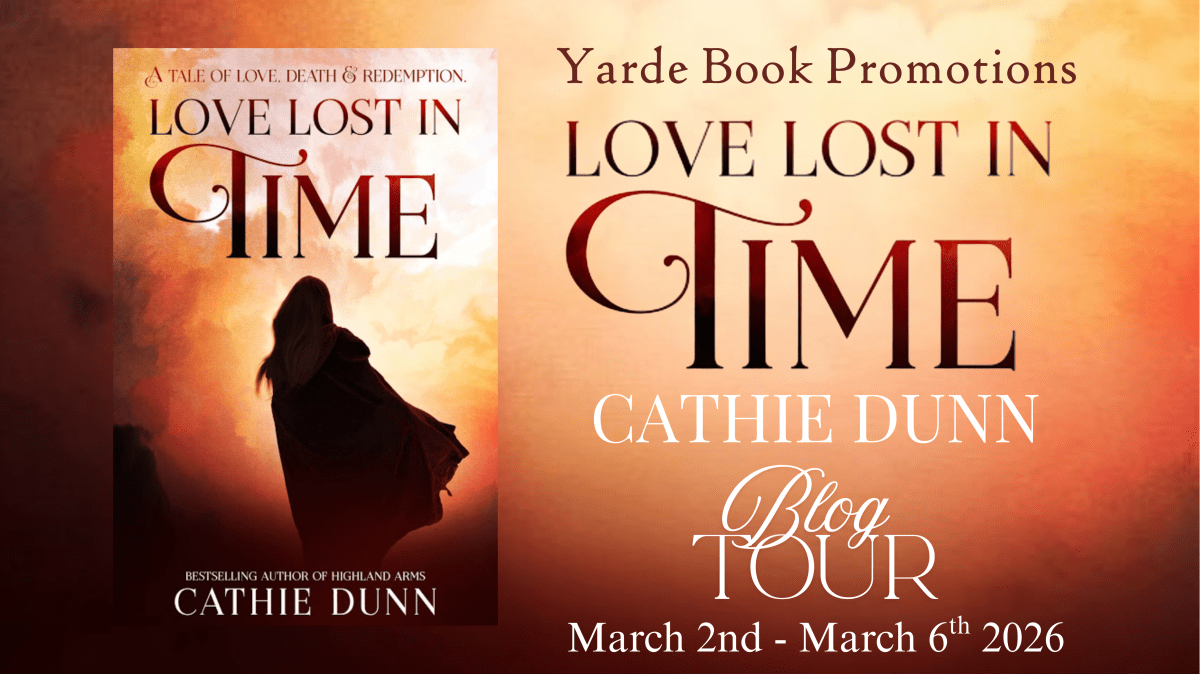
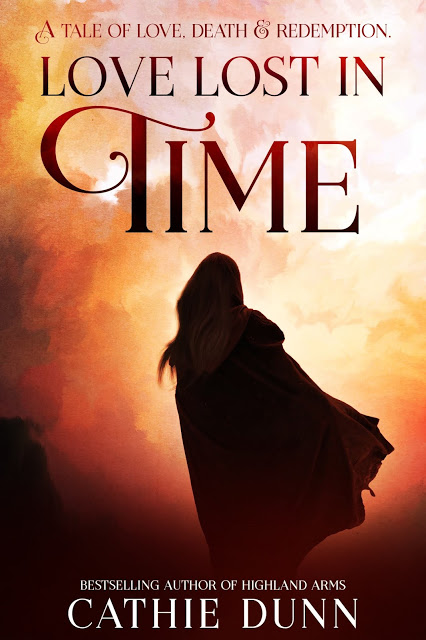
Today, I’m delighted to be reviewing Love Lost in Time by Cathie Dunn, a dual timeline novel #LoveLostInTime #CathieDunn #DualTimeline #WomenAcrossTime#BlogTour #YardeBookPromotions
Today, I’m delighted to be reviewing Love Lost in Time by Cathie Dunn, a dual timeline novel
Here’s the blurb
A reluctant daughter. A dutiful wife. A mystery of the ages.
Languedoc, France, 2018
Historian Madeleine Winters would rather research her next project than rehash the strained relationship she had with her late mother. However, to claim her inheritance, she reluctantly agrees to stay the one year required in her late mother’s French home and begins renovations. But when she’s haunted by a female voice inside the house and tremors emanating from beneath her kitchen floorboards, she’s shocked to discover ancient human bones.
The Mediterranean coast, AD 777
Seventeen-year-old Nanthild is wise enough to know her place. Hiding her Pagan wisdom and dutifully accepting her political marriage, she’s surprised when she falls for her Christian husband, the Count of Carcassonne. But she struggles to keep her forbidden religious beliefs and her healing skills secret while her spouse goes off to fight in a terrible, bloody war.
As Maddie settles into her rustic village life, she becomes obsessed with unraveling the mysterious history buried in her new home. And when Nanthild is caught in the snare of an envious man, she’s terrified she’ll never embrace her beloved again.
Can two women torn apart by centuries help each other finally find peace?
Love Lost in Time is a vivid standalone historical fiction novel for fans of epoch-spanning enigmas. If you like dark mysteries, romantic connections, and hints of the paranormal, then you’ll adore Cathie Dunn’s tale of redemption and self-discovery.
Any Triggers: Implied attack on a female character. Some minor fighting scenes.
Praise
“From the richness of Charlemagne’s court and the regret of a daughter, as she stands over her mother’s grave, to the realisation of an enemy and a skeleton under the kitchen floor, Love Lost in Time: A Tale of Love, Death and Redemption by Cathie Dunn is the unforgettable story that traverses two very different times.”
The Coffee Pot Book Club, 5* Editorial Review
“The narrative is ripe with emotions as two independent women are pulled in unexpected directions… Both landscapes are beautifully penned for readers to easily get lost in. Additionally, the storylines are engaging, and each helped bring a satisfying conclusion to the other. An enjoyable tale about love, sacrifice, and self-discovery.”
Historical Novel Society
“The historical details are beautiful, and a book which could easily feel oppressively sad is cleverly lightened with the use of romance and a satisfying ending. Well written and easy to read, the historical side may be a little more compelling, but the contemporary details add a layer that cannot be ignored!”
In’DTale Magazine
“In Love Lost in Time, Ms Dunn creates a fascinating balance between a tragic love story set in the Visigoth empire of the eighth century, and a very modern historian on a quest to find her own personal history in picturesque Languedoc…
Thoroughly researched and beautifully told, both stories complement each other in narrative power and colourful scene-setting; and in the dual narrative the main characters are compelling – each a product of destiny and following their fate, regardless of the cost. Fans of Kate Mosse will relish this book…”
Love Lost in Time is an engaging dual time line novel, set in almost contemporary France, and also in the late 700s, a time not many authors dare to write about because it’s so confusing for the reader (and complex). Cathie manages to evoke this period fabulously by making her main character, Nanthild, a woman of her time, while allowing events to take place largely externally to her. We know there’s war but we don’t have to get bogged down in all the politics of the era. We simply know it is a perilous time. A few main players drive the narrative and drive it very well indeed.
I also found the near-contemporary element of the novel satisfying (as a whole I don’t like dual timelines) and I was as caught up in what was happening to Maddie as I was with Nanthild’s storyline, even though as the two storylines started to converge, it became clear not all was going to go well for Nanthild.
A thoroughly engrossing novel and one I’m so pleased I decided to read.
Cathie is an Amazon-bestselling author of historical fiction, dual-timeline, mystery, and romance. She loves to infuse her stories with a strong sense of place and time, combined with a dark secret or mystery – and a touch of romance. Often, you can find her deep down the rabbit hole of historical research…
In addition, she is also a historical fiction book promoter with The Coffee Pot Book Club, a novel-writing tutor, and a keen reviewer on her blog, Ruins & Reading.
After having lived in Scotland for almost two decades, Cathie is now enjoying the sunshine in the south of France with her husband, and her rescued pets, Ellie Dog & Charlie Cat.
She is a member of the Historical Novel Society, the Richard III Society, the Alliance of Independent Authors, and the Romantic Novelists’ Association.
I’m welcoming Eleanor Birney and her new historical mystery, Behind the Green Baize Door, to the blog with a post about about the history behind the novel #HistoricalFiction #HistoricalMystery #UpmarketFiction #LiteraryMystery #GildedAge #BlogTour #TheCoffeePotBookClub
I’m welcoming Eleanor Birney and her new historical mystery, Behind the Green Baize Door, to the blog with a post about about the history behind the novel
An 1828 Murder Case and the Questions It Left Behind
A guest post by Eleanor Birney, author of The Green Baize Door
I found the case that inspired The Green Baize Door nearly fifteen years ago.
It involved a man accused of murdering an elderly housekeeper. His defense was an unusual one. He admitted that he was a bad man (a liar and a thief), but insisted he was not that sort of bad man (a murderer). That distinction fascinated me, and it still does.
We prefer our stories cleaner than that. Perfectly innocent victims. Completely bad villains. It is more comfortable that way. If a person does something bad enough, it’s easier to believe that any good we thought we saw in them was a lie — a product of their deception — than to imagine that someone might be both good and bad in different measures.
Our preference for neat categories comes up fairly often in my line of work (I’m an attorney). So to see a man in 1828 engaging directly with that moral complexity — and using it as the basis of his defense — was both surprising and intriguing.
And then there was the strangeness of the crime itself: what kind of thief breaks into an otherwise empty mansion, turns the place over, kills an elderly housekeeper then steals from her, leaving behind all the wealth above stairs?
As far as I could determine, no one was ever convicted of the crime. The accused was acquitted, and his speech was so eloquent that the trial was included in collections of “notable cases” for decades after. The mystery was unresolved.
I knew I wanted to write about the case, but I did not know enough about early nineteenth-century England to do it justice. So I moved the murder to my side of the pond.
I chose Philadelphia for a number of reasons. The East coast had more polish than the West at that time, which provided more room for the upstairs/downstairs intrigue at the heart of the story. And the social upheaval at the end of the Victorian era perfectly suited the social and moral tension of the original case.
By 1900, Industrialization had drawn families off farms and into cities. Factory work was replacing inherited trades. Immigration was reshaping neighborhoods and exposing long-standing communities to new languages, religions, and political ideas. And all the while, electricity, steel, and railroads were remaking the physical landscape as quickly as fortunes were being made and lost.
America’s class system was never quite the same as Britain’s, which rested primarily on lineage, but it borrowed heavily from it. Wealth conferred status, and respectability implied virtue. An ideology that contrasted sharply with the men who were celebrated everywhere for clawing their way up to the top, seldom through virtuous dealings. The old belief that privilege reflected moral superiority had not yet disappeared, but it was under heavy siege.
1900 is also only a few years after the landmark Supreme Court decision Plessy v. Ferguson, one of the most disturbing cases in US history. In it, the highest court in the land gave constitutional sanction to racial segregation and reduced identity, and all the benefits and burdens then attendant to it, to fractions and legal classifications.
My main character, Marie Chevalier, lives inside that system.
Though her grandmother is “Colored Creole”, Marie appears “white” and receives the benefit of such. Doors open that would otherwise remain closed. And though her life is hard, the edges are softened. But nothing about that life is simple. Calling herself “colored” would feel dishonest — and disrespectful to those who bear the full weight of racial prejudice. Yet passing as white implies a shame she does not feel, and, worst of all, creates distance from the grandmother she loves and admires. What she gains in access, she risks losing in inheritance: pride, history, connection.
The 1828 case asked whether a man who was not innocent could also not be guilty. The social upheaval of the Gilded Age challenged the presumption that wealth implied virtue. And Plessy asked whether identity could be reduced to a single drop of blood. Each, in its own way, reflects the human instinct to force complex lives into simple, fixed categories.
That is the uneasy historical ground on which The Green Baize Door stands.
The murder at its center is a mystery, yes. But the deeper question is the one that first drew me in: what do we do with people who do not fit the roles society would assign to them?
Perhaps that is why the case stayed with me. Not because the crime was shocking, though it was. Or even because the defense was eloquent, though it certainly was. But because it revealed something uncomfortably familiar: how quickly we allow a single fact to define a life.
One failure becomes character. Socio-economic status assigns identity. And an arbitrary label can dictate how much respect a person deserves.
We do this instinctively. We reduce. We simplify. We decide. And in so doing, we flatten the contradictions that make people interesting — that make life interesting.
In The Green Baize Door, that instinct does more than shape reputations. It hides a killer.
The Green Baize Door by Eleanor Birney is published by Parlor & Dock Press and is available now. For more information, visiteleanorbirney.com.
Here’s the blurb
An atmospheric historical mystery where every character has their own agenda, and their own truth.
In the fashionable mansions on Chestnut Hill, a simple green baize door separates the masters’ world from the servants’. That door is thrown wide when an elderly housekeeper is found brutally murdered on the first day of the new century. Marie Chevalier, the housekeeper’s poor but ambitious granddaughter, and James Lett, the mansion owner’s kind but indolent son, suspect the killer is connected to one of their families—but which one?
From drawing rooms to alleyways, their separate investigations lead them through the sometimes lavish, sometimes brutal, landscape of turn-of-the-century New England. When long-buried secrets begin to unravel the fragile threads that hold both households together, Marie and James must find a way to bridge the gulf between them—if only to prove that the murderer belongs not to their own world, but to that strange and foreign land on the other side of the green baize door.
Inspired by real-life events, The Green Baize Door is a richly layered historical mystery that explores themes of class identity, family loyalty, and the sometimes blurry line between virtue and vice.
Eleanor Birney writes historical mysteries about class, moral ambiguity, and people who aren’t satisfied with life on their side of the green baize door.
She received a BA in History from UC Berkeley, and works as a legal research attorney, a day job that feeds her love of precision, research, and puzzles.
Growing up in foster care gave her a lifelong fascination with the way society steers people into assigned places—and how some of those people refuse to stay in them.
She lives in Northern California with her family. The Green Baize Door is her debut novel.
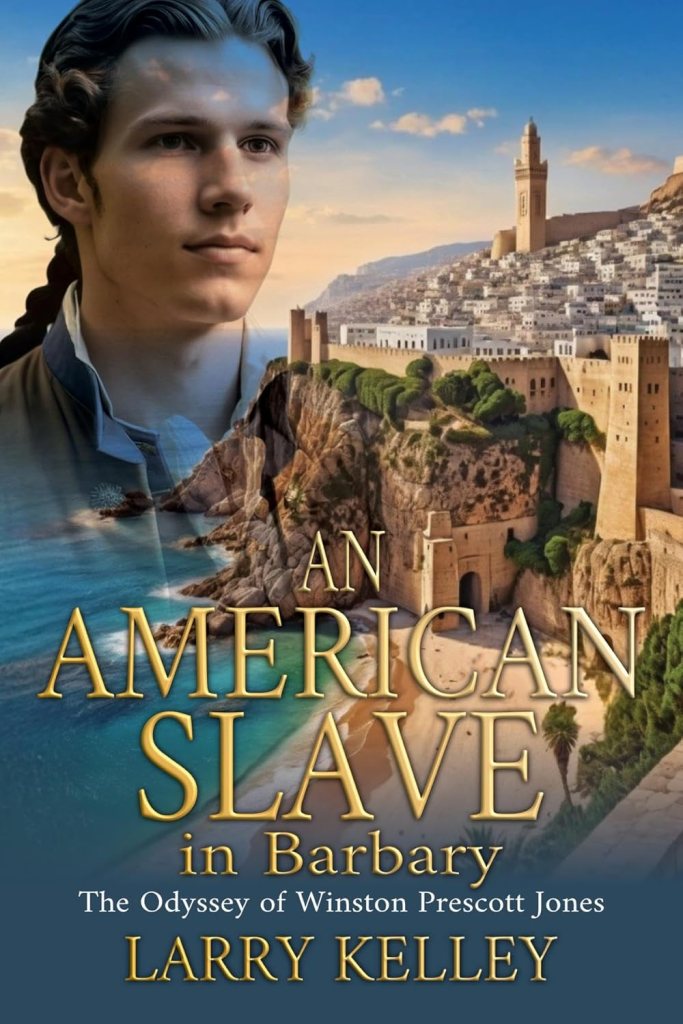
I’m welcoming An American Slave in Barbary – The Odyssey of Winston Prescott Jones by Larry Kelley to the blog #HistoricalFiction #BarbaryCoast #SlaveTrade #AmericanRevolution #BlogTour #TheCoffeePotBookClub
@KelleyComment @cathiedunn
@thecoffeepotbookclub
I’m welcoming An American Slave in Barbary – The Odyssey of Winston Prescott Jones by Larry Kelley to the blog
Here’s an excerpt from An American Slave in Barbary
Now, as the sun lowered in its westward descent toward the Atlantic, my thirst and my need to know if my brother might have survived left me no choice. I walked out the dunes, across the flat beach, down onto damp sand that descended at a steep angle into the surf. Without worrying if anyone could see me, I made my way toward Sale. I reasoned that unless, by an unlikely twist of fate, I was found by some friendly villager who wished to take me in and hide me, I would turn myself over to the mercies of the Moroccan authorities of Sale and or their agents, in exchange for a cup of water.
As I reached the portion of the beach near the outskirts of the city, two natives in a horse-drawn cart rode toward me near the waterline. The cart held an unarmed man driving and, next to him, a man armed with a scimitar, pistol, and ammunition belts strapped across his torso. The cart stopped abruptly in front of me. The armed man leaped out of the cart and ran toward me with his sword drawn, pointing at me. “Infidel, don’t move! Come here,” he yelled at me in Arabic as he motioned that I move toward the back of his cart.
As he led me there, I saw in the rear bed two of my shipmates and close friends, Moore and Etheredge. “Jones!” they cried in unison. As I climbed into the back of the cart, they reached out their hands to mine with tears welling up in their eyes.
My new jailor was remarkably a man I recognized as one who boarded our ship when we were captured in the Mediterranean and was among the pirates who sailed it off into the storm. As he ran a chain through the ring in my ankle iron, which I still wore from our original capture, I said, “Lads, do you know if my brother, Robbie, made it ashore?”
Their looks told me what I feared had to be true. They shook their heads while looking down at the floor of the cart.
Here’s the blurb
An American Slave in Barbary: The Odyssey of Winston Prescott Jones is the story of a first-generation American student whose commercial ship is captured in the summer of 1801 by Moslem pirates. He spends the next sixteen years as a captive in Algiers. He rises to become a confidant to the Dey of Algiers, who is desperate to know what made the American shopkeepers and farmers believe they could defeat the British war machine, and how they intended to rule themselves.
In the genre created by Homer, it is a tale of suffering, sin, and redemption, and a young man’s epic journey to regain his freedom.
Larry Kelley’s life was changed by 9/11. He desperately wanted to find out who these people were who attacked us, what ordinary citizens could do to join the battle, and how those plotting to kill us in future attacks could be defeated.
Kelley has written scores of columns on the dangers of Western complacency. In his tenure as a political commentary writer, he has made a significant impact. His feature articles have appeared in the Piedmont Post, the San Francisco Chronicle, Human Events, and Townhall Magazine. Two of his articles were featured on the cover of Townhall Magazine.
His first book, Lessons from Fallen Civilizations, is the result of ten years of research. And received critical praise as a saga that begins on the plain of Marathon in 490 BC and whose main character is Western Civilization.
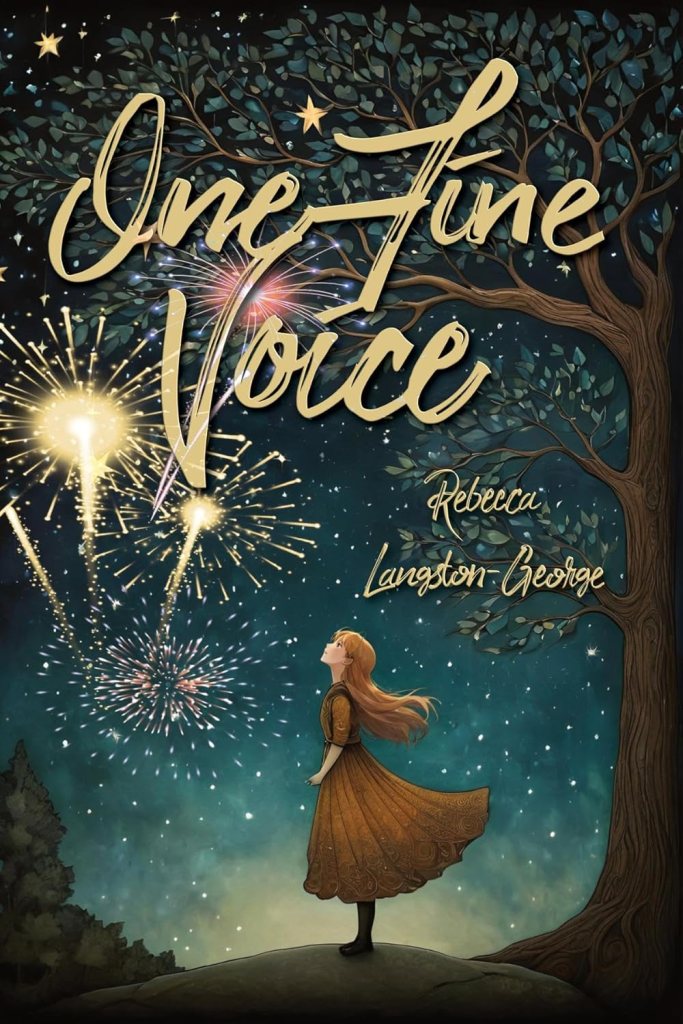
I’m welcoming Rebecca Langston-George to the blog, with her new book, One Fine Voice @RebeGeorge @cathiedunn
@rebeccalangstongeorge @thecoffeepotbookclub #OneFineVoice #HistoricalFiction #MiddleGrade #BlogTour #TheCoffeePotBookClub
I’m welcoming Rebecca Langston-George to the blog, with her new book, One Fine Voice
Here’s an excerpt
Chapter 2
The pianist hit a wrong note in the chorus, causing Mama to wince, just as the church’s back doors wheezed open. A girl with a big blue hair bow in the next pew turned to look at me. Our eyes locked. Then she turned toward the doors behind us. I followed her gaze. That’s when I first saw them.
White robed men wearing pointed hoods paraded up the center aisle. They marched together in pairs until they reached the altar where my daddy had just kneeled; then half went left and half went right, forming a line across the front of the church. Their faces were masked save for the cut-out eye holes. Those sunken, shadowed holes all stared right at me, it seemed, pulling my eyes toward them, locking me in their dark gaze, paralyzing me with their murky eyes.
I tried to sing. I knew every song in the hymnal by heart. But just like the white masks staring at me I didn’t have a working mouth. I tried to read the words in the hymnal, but I couldn’t tear my eyes away from those blank stares. The one thing in my body that worked was my memory. It jabbed a stick in a deep muddy pool of my mind that usually only bubbled up in my nightmares.
Four years ago, a winter’s day. A crust of ice crunched underfoot as I walked with my uncle to his barn. A lamb had gotten loose and had frozen to death near the fence. Its white wool stiff with sparkling ice crystals. A black crow was perched atop its head, a dark berry dangling from its beak. The crow flew away, and I saw that the lamb’s eyes had been picked out. Its cold, empty eye sockets stared through me, and I screamed.
I felt that same urge to scream right then and run clear down the street away from our new church. I even turned my head toward the back door, but something stopped me. The girl—the one with the big blue bow—she was singing, –like she probably did every Sunday. I blinked. I turned my head the other way. Daddy sang along in his strong tenor. Blink. Reverend Dewhurst held his hymnal high and sang toward the ceiling. The pianist plunked on. Mama was the only other one that looked confused. Everyone around us was acting as if nothing unusual was happening, like masked robed men marching into church was perfectly normal. Was this normal for Grayson, Indiana?
Here’s the blurb
All her life, Esther Hopkins has been told she has a mighty fine voice.
Still, she can’t believe her luck when just days after moving to town she’s invited to sing a solo at the 1923 Independence Day picnic.
But the group sponsoring the picnic is not the benevolent fraternal order they claim to be. Worse, they’ve recruited her father, the town’s freshly ordained Baptist minister, to become their chaplain.
When they target the immigrant family of her new best friend, Esther must risk her father’s anger, the KKK’s revenge, and her family’s safety to follow her conscience, salvage her friendship, and find the strength to speak truth to power even if it costs all she holds dear.
Rebecca Langston-George is the author of nineteen books for young readers including the globally popular For the Right to Learn: Malala Yousafzai’s Story. Though she’s long been known for nonfiction, One Fine Voice is her first middle grade historical fiction.
A retired teacher credentialed in both single subject language arts for upper grades and multiple subjects for younger grades, Rebecca is a popular school presenter for all ages, encouraging students to investigate and tap into their personal interests when writing.
She serves on the board of The California Reading Association and is the Co-Regional Advisor for SCBWI Central-Coastal California, helping other writers achieve their dreams.
She splits her time between California’s scenic coast and its agricultural heartland, writing (and mostly rewriting) at one mile per hour on a treadmill desk. Read more at Rebecca Langston-George | Children’s Book Author.
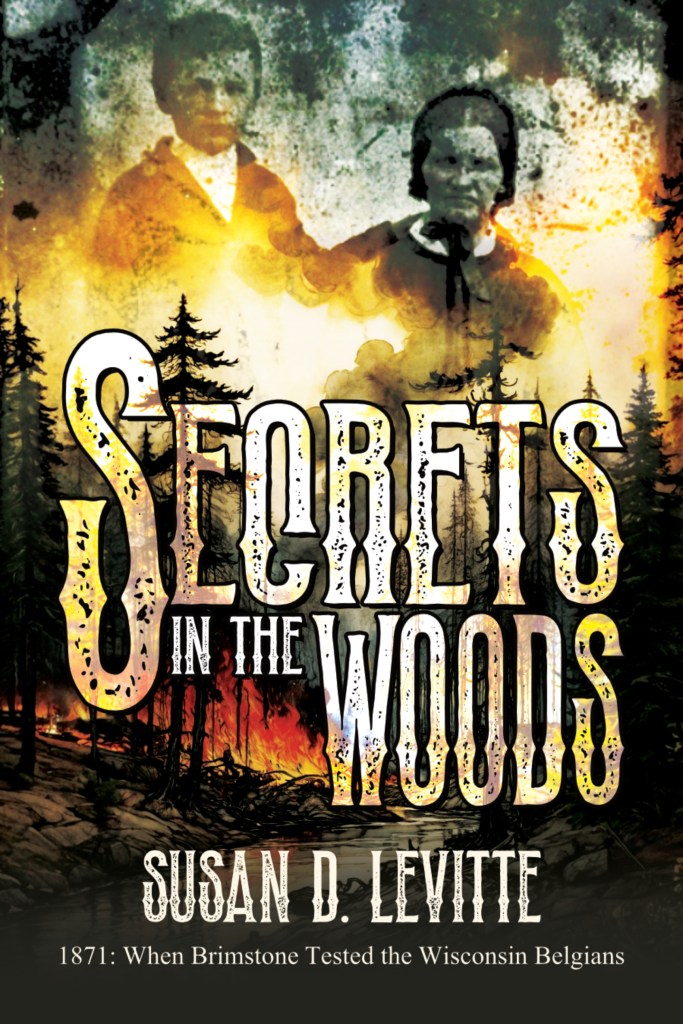
I’m welcoming Susan D Levitte to the blog with an excerpt from her new book, The Secrets in the Woods, 1871Fire #PeshtigoFire #WIHistory #BlogTour #TheCoffeePotBookClub
I’m welcoming Susan D Levitte to the blog with an excerpt from her new book, The Secrets in the Woods
Here’s a snippet
The assignment was going to mark the anniversary of a tragic period in the region’s history. The Peshtigo Fire, or the Great Fire as those on this side of the bay often referred to it, killed at least fifteen hundred white people and countless American Indians in a few hours.
Because it had happened sixty years ago, there were not many people left to tell their stories. Many of those still alive had just been small children at the time, with memories dimmed and shaded by stories they had heard in hushed tones during their lives.
When Edna Mae was told she would be interviewing a woman who had been fifteen when the fire happened…
Here’s the blurb
On October 8, 1871, fire turned night into a living hell.
While Chicago’s blaze claimed the headlines, a fiercer and more devastating inferno swept across Wisconsin’s Green Bay peninsula-obliterating farms, forests, and families in its path.
Here, among immigrant settlers carving new lives from the wilderness, survival came down to split-second choices: to run, to hide, to fight the flames. Mothers shielded children with their bodies, fathers vanished into smoke, and neighbors faced the firestorm with nothing but faith and will.
Inspired by forgotten accounts and newspaper fragments, Secrets in the Woods brings to life the untold human drama of one of America’s most harrowing nights-a story of resilience, loss, and the fragile hope that rises from the ashes.
Triggers: Corporal punishment, spousal abuse, deaths by natural disaster, death in childbirth.
Susan was born and raised as the fifth generation to live on the family land in Northeast North Dakota (nearly Canada). She moved to Wisconsin in 1997, living in Door and Manitowoc County and now resides in the pastoral Kewaunee County. Married to Quentin, they share their home with Olive and Penny, their silly Labrador retrievers, and Gil, their ever-lazy cat.
As a devoted reader of historical fiction and nonfiction, she brings her passion for history and desire to educate readers into her work. With twenty-five years of experience in global advertising and marketing, she holds a master’s degree in communications and currently contributes her expertise to the Green Bay Austin Straubel International Airport.
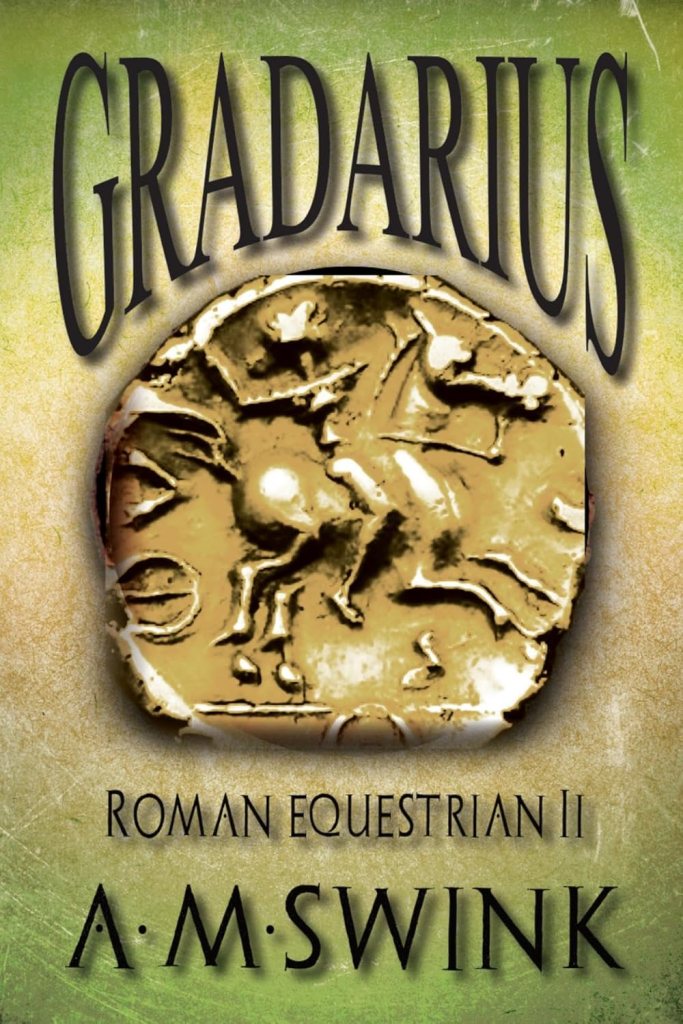
I’m delighted to welcome A.M.Swink and her new book, Gradarius, to the blog with a fab excerpt #romanequestrian #romanequestrianseries #gradarius #ancienthistoricalfiction #romanfiction #equestrianfiction #boudicca
I’m delighted to welcome A.M.Swink and her new book, Gradarius, to the blog with a fab excerpt
Excerpt from Gradarius
The fresh air did little to improve Decimus’s brooding humour. He stalked down the dim street, forcing Luciana to hasten to keep pace. She skirted around a timber drain dividing the roughly cobbled path and followed the centurion’s hulking shadow towards the quay. He turned to avoid the singing and laughter emanating from one of the nearby warehouses and made his way to the bridge spanning the Tamesis. Luciana, catching her breath, halted alongside him.
She gazed at him curiously. Decimus’s flinty blue-green eyes took in the collection of homes and businesses built up on the islands dotting the river’s far side. She touched his arm and felt him stiffen. She lowered her eyes to the bridge and took in the dark waves lapping beneath them.
‘Strange place to build a town,’ he murmured, shaking his head. ‘It’s nothing but a swamp.’
‘The waters here are sacred. Their boundary between the living and the dead is thin.’ Luciana folded her arms, shuddering within the folds of her wolfskin cloak. ‘It is too powerful for any one tribe to claim. But of course, you Romans have the hubris to believe you can.’
Decimus ruefully shook his head. ‘It was just a ford and an earthen fort when I visited last.’
She cocked her head at him. ‘I didn’t know you’d visited Londinium before.’
His expression hardened. ‘During the invasion.’
She heard finality in his tone and let the matter drop. She picked up one of his broad palms in both her own, twining her fingers through his. ‘Has the air cleared your head?’
He didn’t answer, eyes still locked upon the far side of the bridge. His grasp tightened as he squeezed her hands.
She felt the cool breeze whipping up from the quay and rested her head on his shoulder. A few pins fell free of her tresses, dropping into the inky waters below.
‘I’m sure you’d celebrate…if we were to withdraw from Britannia and leave you be,’ he finally said.
She clung tighter to his side and sighed. ‘I wouldn’t be unhappy, if that’s what you mean. Though I wouldn’t have any freedom to enjoy.’ She glanced up at him. ‘I’m your property, remember? I go where you bid me.’
He wound his free arm about her, drawing her into his chest. ‘You know I want nothing more than to go back to Rome.’ A lump rose in his throat. ‘But I can’t go yet. The legions can’t go yet. Not after everything…everything that’s been done.’
She gazed up at him. ‘You realise that everything that’s been done is precisely why we want you to leave?’
He lowered his head, brushing his whiskers against her brow. ‘Do you?’
‘Oh, Decimus.’ She closed her eyes. ‘I don’t know what I want anymore.’
She tore herself away and shuffled along the pier, tightly clasping her cloak to her. The thought of her mother and the Cornovii women huddled in their prison cell sprang to her mind and she shuddered. I have failed them. I’ve already turned traitor…and for what?
The wheel of Taranis burned against her skin. She squeezed her eyes shut. This is Gaius Nerfinius all over again. You’ve learned nothing, Luciana. Nothing. Do you think he loves you? Do you really love him so much that you would throw your freedom away? He is a Roman, after all…
The wind whipped about her, freeing the rest of her locks. They tumbled across her shoulders in a golden cascade, ends pulled like a flag by the gust.
‘Luciana.’
She turned to see Decimus still rooted to his spot, gazing after her. The moon peeked from behind the heavy clouds darkening the sky, illuminating all the emotion in his eyes that his stern face belied. Her pulse quickened, renewing the bond that drew her irresistibly to him. She tucked a fluttering strand behind her ear and smiled. I suppose many have turned traitor for worse.
She took a step towards him, though he stayed her with a hand. ‘Let me watch you a moment longer.’
Luciana straightened, tossing her head. She gazed at the water, letting the wind buffet her about. Decimus slowly walked to her. She glowed under the admiration shining from his eyes.
He tentatively reached out and brushed her cheek. ‘How can you be real?’
She warmed at his touch and stepped into his embrace. She took his grizzled cheeks in her hands and kissed him. Her thumb brushed the angry scar curving out of his beard, ignoring the way he winced and shifted away from her touch. Luciana recaptured his lips, savouring his hot breath and the aroma of spiced stew that clung to him. Decimus responded warmly, pressing her to him and cradling her slim form as it melded into his.
When they finally broke off to catch their breath, Luciana met his eyes. ‘It matters not what policy your emperor decides. For as long as I am yours, I go wherever you go.’
Here’s the blurb
WAR IS ON THE HORIZON
Sworn enemies turned lovers, Decimus and Luciana face new challenges that put their love to the test. Decimus, haunted by his past, struggles with his feelings in the present. Luciana, when confronted with her old friend Boudicca’s struggles, questions which of her loyalties is more important: her loyalty to Decimus, or her loyalty to her people? When sent to investigate a Roman traitor in Decimus’s legion, both will have to decide which side of the coming battle they’ll be on.
Rome and Britannia are hurtling toward a reckoning. Will Decimus and Luciana find a way forward together before war tears them apart?
A.M. Swink, the author of the award-winning Roman Equestrian series, grew up in Dayton, Ohio, obsessed with two things: books and horses. After a childhood of reading, writing, showing, and riding, she moved to Lexington, Kentucky to complete three degrees and work as a college professor of reading and writing.
She’s travelled extensively around Europe, exploring ancient sites and artefacts relating to the Iron Age and Roman era. She is fascinated by our connection to the past and the ancestral tether that draws us back into the mists of time.
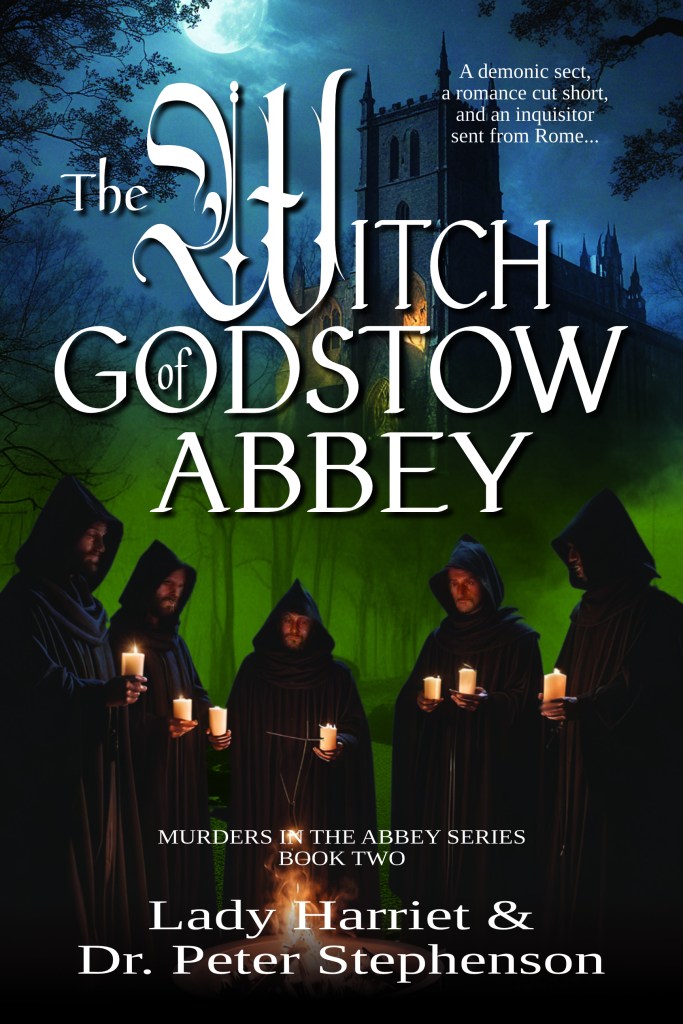
I’m delighted to welcome Harriet Taggart and Peter Stephenson and their book, The Witch of Godstow Abbey, Murders in the Abbey Series, to the blog with an excerpt.
Excerpt
From Chapter 1 – Bones of the Innocent
The autumn sun was starting to set, signaling that it was time to leave the garden, perform their ablutions and go to the chapel for Vespers. But before they could move, Isabel’s voice rang out from the far side of the garden, screaming again and again, “Sister, Sister, come quickly!”
“What on earth is it, child? Are you injured?”
Isabel was breathless. “No, Sister, no. But you must come. Hurry!” And the screaming broke out once more, raw with terror.
Agnes walked rapidly around to the other side, where Isabel was on her hands and knees, a garden claw waving wildly in her hand. There on the ground in front of Isabel, half buried in the soft, freshly-turned earth, were three tiny bodies.
Pale and shaking, Isabel could scarcely speak. She tried to catch her breath, but to no avail. “These are b… b… babies, sister. Wh.. wh… who would kill newborn infants like this?
Here’s the Blurb
A widowed academic investigating strange historical practices gets drawn back in time and into the year 1299 in Oxford. Join a cast of compelling characters-nuns, novices and outsiders-as they battle the forces of darkness. Enter their struggle against evil, clandestine organizations. Join their life-threatening fight to protect each other, be willing to die for each other, and occasionally fall in love.
Will heroic love and righteous pursuit of justice triumph? Will the horror-inducing villain be found out and overthrown? Or will the courageous troop of those fighting for what is good be overpowered and taken captive?
Set in Oxford, England, in the year 1299, a struggle takes place between the sisters of the local convent and a strange, terrifying local evil society. They discover a secret organization of men who perform unspeakable deeds. The lives of several sisters are in danger.
Join Mother Alice, Sister Agnes and Isabel, along with Lady Beatrix and Lady Harriet, as they confront and do battle with an evil, secret society intent on attacking them, taking over the convent and sacrificing a young woman.
If you love stories that keep you turning pages while imparting fascinating accounts of the past, this latest mystery in the “Murders in the Abbey” series will tingle your spine.
Praise for The Witch of Godstow Abbey:
‘Richly atmospheric and quietly gripping, “The Witch of Godstow Abbey” is a worthy addition to your bookshelf.’
Lady Harriet holds the legal title “Lady of the Manor,” as defined under English law, and traces her ancestry to Charlemagne’s royal line.
A lifelong reader and devoted genealogist for nearly fifty years, Harriet has always had a passion for stories, whether they are buried in the past or found in the pages of a good book. She is the co-author of We Are Manx, a self-published family saga that explores her Manx heritage and the history of the Isle of Man in rich detail.
She’s also a photographer who prefers being behind the lens, a word lover addicted to word games, and a fan of wooden jigsaw puzzles. She has traveled extensively, with a deep appreciation for history, diverse cultures, and the unexpected joys that can be found away from home. Her career spanned volunteerism, real estate, and systems administration, but now she happily devotes her time to more creative pursuits.
As she puts it: “I’m old enough for Medicare, but not quite old enough to get a birthday card from King Charles—were I a Brit.”
The Witch of Godstow Abbey, written in partnership with Dr. Peter Stephenson, marks her first (but certainly not last) foray into historical fiction. With photography, she creates books of images; with storytelling, she creates images made of words.
Dr. Peter Stephenson has written or contributed to over twenty books, all but one of which are non-fiction technical books. He has published over 1,000 papers in technical journals, technical trade journals, and peer-reviewed legal journals. One of his peer-reviewed papers has over 15,400 downloads.
In addition to writing, Dr. Stephenson has been playing blues and Americana music for 70 years. It is through that performing, and after earning a PhD from Oxford Brookes University, that he was given the appellation “Doc” by the owner of one of his performance venues.
Having visited Oxford several times and being employed by a UK company in nearby Malvern, it was only natural that he would set his tales in Oxfordshire. His academic experience in Oxford town sealed the deal and resulted in his first historical novel, The Whispering Dead of Rewley Abbey—Book 1 in the “Murders in the Abbey” series—which reached the Amazon Kindle bestseller list and won a Pencraft award for literary excellence in the winter of 2025. He now writes with his collaborator and writing partner, Lady Harriet.
Dr. Stephenson lives with two Savannah cats on a pond in Auburn Hills, Michigan. Starting a “new” career at the age of 80, Doc reckons that he has only about the next 20 years to finish the series and retire – again – perhaps this time to Oxford.
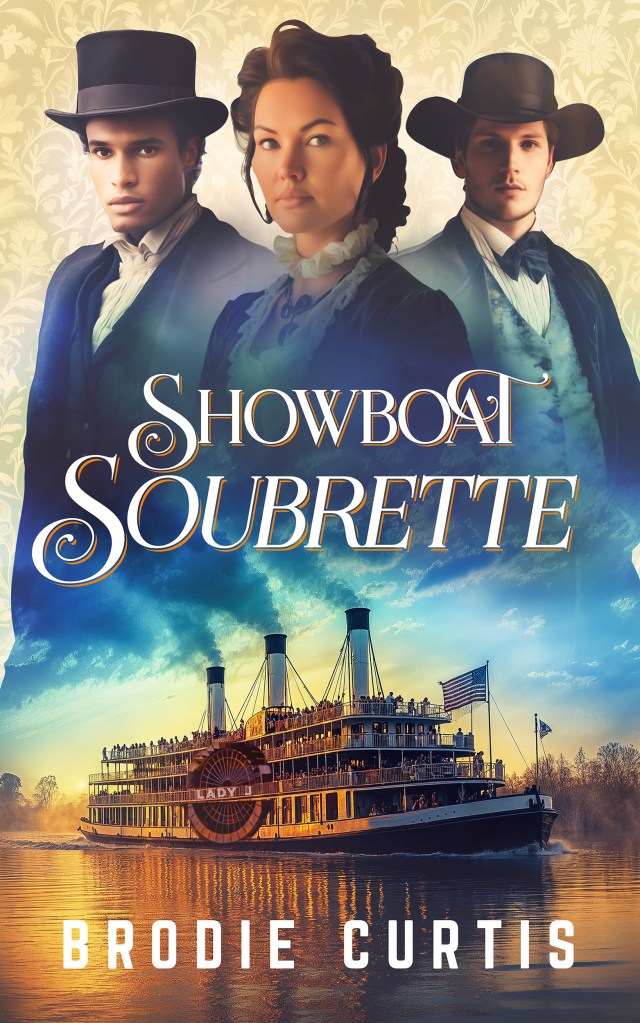
I’m delighted to welcome Brodie Curtis and his book, Showboat Soubrette, to the blog with a guest post.
Guest Post
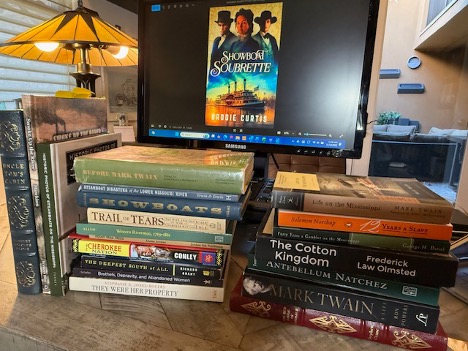
SHOWBOAT SOUBRETTE is my third historical novel set in the riverboat era on the lower Mississippi River prior to the Civil War. To learn about the period, I dug into a variety of research sources that are listed below. I truly got energized to tell my story by taking a drive along the Big Muddy, from Hannibal down to Natchez, stopping frequently at historical sites, and along the river itself. Had to feel it!
Brodie Curtis Looks Upriver from Natchez
UNDERSTANDING THE ANTEBELLUM DEEP SOUTH:
Romanticism of the Antebellum American Deep South could be found in the pageantry of the attire worn by the privileged, and in the heady adornment of passenger-hauling riverboats that paddle-wheeled the Mississippi. But the period exhibited almost unbelievable cruelty in its institution of slavery and in the bigoted attitudes of the times. And in its violence. Perhaps the first title listed below, Olmsted’s The Cotton Kingdom illuminates these contradictions best.
Olmsted, F. (1861). The Cotton Kingdom: A Traveller’s Observations on Cotton and Slavery in the American Slave States 1853-1861.
McDermott, J. (“Edited with an Introduction and Forward”) ( 1968). Before Mark Twain: A Sampler of Old, Old Times on the Mississippi.
Stowe, H.B. (1852). Uncle Tom’s Cabin.
Northup, S. (1853). 12 Years a Slave.
Devol, G. (1894). Forty Years a Gambler on the Mississippi.
Jones-Rogers, S. (2019). They Were Her Property: White Women as Slave Owners in the American South.
James, D.C. (1968). Antebellum Natchez.
Kelleher Schafer, J. (2009). Brothels, Depravity, and Abandoned Women: Illegal Sex in Antebellum New Orleans.
Sharp, A. and Sharp, G. (2009). Antebellum Myths and Folklore: A Search for the Truth.
Grant, R. (2020). The Deepest South of All: True Stories from Natchez, Mississippi.
RIVERBOATS:
Is there a more majestic image than a multi-decked steamboat gliding on the river, smoke billowing from its stacks while water clicks over its paddles? Yet idyllic portraits belied the dangers, from collisions and boiler explosions to snags, sandbars, fire and ice and other in climate conditions. Thousands of boats ended up at the bottom of the river. Mark Twain’s memoir of his cub pilot days and old images in many of the sources below sparked my imagination.
Twain, M. (1883). Life on the Mississippi.
Powers, R. (2005). Mark Twain: A Life.
Brodie Curtis took in the Mark Twain Attractions in Hannibal MO
Shapiro, D. (2009). Historic Photos of Steamboats on the Mississippi.
Graham, P. (1951). Showboats: The History of an American Institution.
Allen, M. (1990). Western Rivermen, 1763-1861: Ohio and Mississippi Boatmen and the Myth of the Alligator Horse.
Lloyd, J. (1855). Lloyd’s Steamboat Directory, and Disasters on the Western Waters.
Hawkins, V. (2016). Smoke up the River: Steamboats and the Arkansas Delta.
Berger Erwin, V. and Erwin, J. (2020). Steamboat Disasters of the Lower Missouri River.
Sandlin, L. (2010). Wicked River: The Mississippi When it Last Ran Wild. Buck, R. (2023). Life on the Mississippi: An Epic American Adventure.
Here’s the Blurb
FROM STAR SHOWBOAT SINGER TO PIRATE PREY ON THE WICKED RIVER!
Showboat singer Stella Parrot’s star rises in the Antebellum South with every sold-out performance along the lower Mississippi River. When a river pirate viciously assaults her, new friends Toby Freeman and John Dee Franklin foil the attack. However, the pirate’s family is bent on revenge.
Stella, Toby, and John Dee escape their riverboat with able assistance from young cub pilot Sam Clemens, only to be pursued by the notorious Burton Gang. As the trio runs for their lives, mortal perils await at every turn: a fierce storm, high-stakes gambling confrontations, deadly combat, and a cotton boat up in flames. Stella, a Cherokee Indian, and Toby, a free Black man, and their friend White man John Dee endure relentless racial prejudices and injustices in the gritty underbelly of the Wicked River while fleeing to New Orleans—where the Burtons will be waiting!
SHOWBOAT SOUBRETTE’s fast-paced lower river adventure chase features romantic showboat scenes and is unsparing in its exploration of the bigoted and sometimes lawless riverboat era.
Praise:
“Captivating characters? A fast-paced storyline? Cameos from historical figures? Brodie Curtis checks all the boxes in his novel set along the Mississippi River on the eve of the Civil War. Well done.”
Tim Wendell, author of CASTRO’s CURVEBALL and REBEL FALLS
“SHOWBOAT SOUBRETTE is a novel that transcends a simple river chase, unfolding instead as a richly textured portrait of time and place where beauty and brutality are forced to coexist. Brodie Curtis has crafted a story that entertains without simplifying, thrills without trivializing, and ultimately delivers a powerful testament to courage and solidarity on the margins of history…For readers who crave historical fiction with pace and teeth, this novel will be a compelling and unforgettable ride.”
THE HISTORICAL FICTION COMPANY
“This was an unputdownable read for me!…It’s an optimistic picture of a shocking time in American history….SHOWBOAT SOUBRETTE is ideal for fans of historical adventure fiction, especially fans of Twain himself and Percival Everett’s JAMES.”
Ruth F. Stevens, author of STAGE SEVEN and THE SOUTH BAY SERIES Books 1 and 2
“Readers of historical fiction will love SHOWBOAT SOUBRETTE…a river adventure down the great Mississippi to New Orleans in the 1850s when racial tension is ripe in the Old South…an adventure worthy of Mark Twain’s pen… Curtis is a master of description and atmosphere.”
Tyler R. Tichelaar, PhD and award-winning author of THE MYSTERIES OF MARQUETTE
“(E)xtensive research draws the reader in and carries them along on this fast-paced adventure, blending interesting historical facts with compelling fictional characters. I thoroughly enjoyed the journey and recommend this voyage down the mighty Mississippi.”
Kris Abel-Helwig, author of THE HERO SERIES and the upcoming RULE OF ODDS.
This title is available to read on #KindleUnlimited
Meet the Author
Raised in the Midwest, Brodie Curtis was educated as a lawyer and left the corporate world to embrace life in Colorado with his wife and two sons.
Curtis is the author of THE FOUR BELLS, a novel of The Great War, which is the product of extensive historical research, including long walks through the fields of Flanders, where much of the book’s action is set. His second novel, ANGELS AND BANDITS, takes his protagonists into The Battle of Britain. Curtis’ third novel is set on a Mississippi Riverboat prior to the Civil War.
A lover of history, particularly American history and the World Wars, Curtis reviews historical fiction for the Historical Novels Review and more than 100 of his published reviews and short takes on historical novels can be found on his website: brodiecurtis.com.
I’m delighted to welcome Heidi Eljarbo and her new book, Whispers in the Snow, Heartwarming Christmas Series, to the blog.
Here’s the Blurb
Of course, a young woman in Norway during the late nineteenth century can be a successful amateur sleuth, and goodness knows, Cornelia’s days are always more exciting when she can devote her time to resolving a local mystery.
Cornelia Gran is a dedicated daughter, friendly and kind; although, she has an exorbitant amount of curiosity. She devours Arthur Conan Doyle’s magazine articles and tries to follow the fictitious Sherlock Holmes’s investigative examples, but her fascination with solving puzzles always gets her into mischief.
Each morning, Cornelia reads the newspaper, looking for a conundrum to solve. Searching for clues—and then chronicling her discoveries—thrills her. She certainly finds those activities more entertaining than taking her grandmother’s advice and attending one Christmas ball after another in search of a husband.
But chaos and danger turn Cornelia’s quiet days upside down when her attempt to find information about the owner of a nearby abandoned cottage takes her into dangerous territory. As winter winds rattle the windows and swirl snowdrifts against the doors, she faces off with a ghost, gets in trouble with the police, and finds herself staring down danger without thinking of the consequences. In the middle of it all, she meets Simon and is captivated by his charm, good looks, and personality.
Meanwhile, a real killer is after her, and he won’t stop until he gets information she doesn’t have! Christmas, with all its cheery festivities, hygge, and family traditions, has never been more threatened. Cornelia must call on all her investigative skills, not only to stop the ruination of her family’s holiday, but also to make certain Simon and his aunt keep what belongs to them. And maybe, just maybe, the amateur sleuth will discover the meaning of true love.
Set in a fictitious town in Norway in 1891, this cozy historical mystery is perfect for those who enjoy curious and determined women sleuths, clean and wholesome romance, and the discovery of buried secrets in an abandoned house.
This title is available to read on #KindleUnlimited
Meet the Author
HEIDI ELJARBO grew up in a home full of books, artwork, and happy creativity. She is the author of historical novels filled with courage, hope, mystery, adventure, and sweet romance during challenging times. She’s been named a master of dual timelines and often writes about strong-willed women of past centuries.
After living in Canada, six US states, Japan, Switzerland, and Austria, Heidi now calls Norway home. She lives with her husband on a charming island and enjoys walking in any kind of weather, hugging her grandchildren, and has a passion for art and history.
Her family’s chosen retreat is a mountain cabin, where they hike in the summer and ski the vast white terrain during winter.
Heidi’s favorites are her family, God’s beautiful nature, and the word whimsical.

















































 MJ Porter