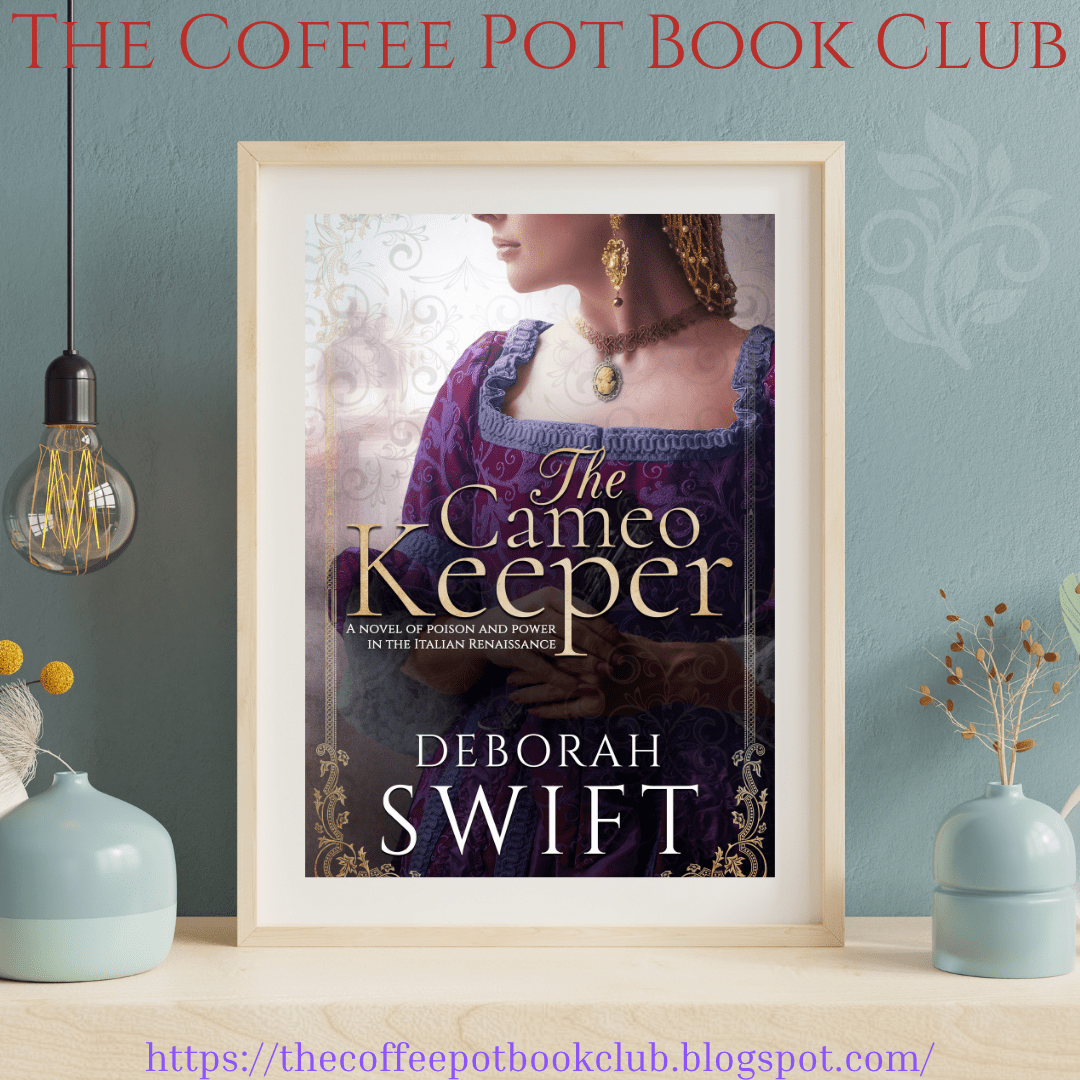
I’m delighted to welcome Deborah Swift and her new book, The Cameo Keeper, to the blog #HistoricalFiction #Renaissance #GiuliaTofana #Poison #BlogTour #TheCoffeePotBookClub 

I’m delighted to welcome Deborah Swift and her new book, The Cameo Keeper, to the blog #HistoricalFiction #Renaissance #GiuliaTofana #Poison #BlogTour #TheCoffeePotBookClub 

I’m delighted to welcome Deborah Swift and her new book, The Cameo Keeper, to the blog with an excerpt from the novel.

Rome, September 1644

As soon as Mia opened the door Donna Olimpia came straight in, looking side to side as if to check no-one could see her.

Mia extended a hand in greeting. ‘This way, honoured Signora.’ 

‘What’s that smell?’

‘Lavender, Signora. For making the linen smell sweet.’ She indicated the stairs and the woman went ahead of her, heavy feet and thick ankles under her richly embroidered black skirts. At the top Mia pointed to the door off the piano nobile and followed her client into the cooler room at the back of the house. 

Donna Olimpia threw back her widow’s veil to survey the sala, which was probably much smaller and more humble than any she was used to. Mia examined her client in turn, for clues as to what might cause her headaches, even though she was no expert at all. 

A determined face. Thick eyebrows over shrewd eyes, and a manner that meant business. 

Seeming satisfied by the look of the place, Donna Olimpia took the chair opposite Mia’s. ‘My servants tell me you are the best in Rome for women’s ailments,’ she said. ‘But you look younger than I imagined. I’d got the impression you were older.’

‘How can I help you, Signora?’

‘I have these headaches – megrim, my physician calls them. But he is no use. All his bloodletting hasn’t changed them one iota. They start with my eyes blurring and the room starts to swim, and then the headache. Torture. Like iron bands around my head. When it comes, I can do nothing but lie down in a dark room. They make me weak, and I can’t afford weakness. Not now.’

‘And how long do they last?’

‘Days. Sometimes three days at a stretch. They are debilitating and nothing seems to help.’

‘You have no headache now?’

‘Only the cardinals and their demands.’ She gave a small smile.

‘We have several remedies for headaches, but I will go down to my store and bring you something that may soothe your excess humours. Would you like refreshment while you wait?’ Mia couldn’t help the tingle of excitement that the great lady was actually sitting in her sala.

‘Nothing, thank you. I mustn’t be away from the city long or my servants will wonder where I am.’

Mia gave a small curtsey, as was the custom, and hurried downstairs to where Giulia was waiting. Giulia raised her eyebrows in question. 

‘She’s here, and she says it’s a megrim. Have you anything for that?’

Giulia reached up to a high shelf. ‘I’ll give her a simple mix of vervain and lemongrass. It won’t do her any good, but it won’t do her any harm either.’ Giulia took a corked bottle down and passed it over. ‘Now hurry. The sooner we can be rid of her, the sooner I’ll be able to breathe easy.’

Mia scurried back up the stairs, but was disconcerted to see Donna Olimpia had gone through the open door to her small workroom and was now snooping through the books turned to the wall. With a jolt, Mia saw she was studying one on astrology. Even worse, she recognised it as one of the treatises favouring Galileo, a man considered heretical by the last Pope.

Donna Olimpia turned when Mia entered, still holding the book, her finger acting as bookmark in the heavy leather volume.

‘Here, Signora.’ Mia said, holding out the bottle of milky liquid. ‘This preparation has proved to be very good in cases such as yours.’

Donna Olimpia didn’t take it. ‘You have expensive tastes. Many books on the stars, and some on medicine, I see. And charts.’ She indicated the parchments of the heavens that were pinned to the walls.

This was a conversation Mia didn’t want to have. ‘I have an interest, that is all. In how it relates to healing. My main work is simple remedies from the kitchen.’ She was sweating now, fearing Donna Olimpia would denounce her to the Inquisition.

‘These are not simple tracts for the average reader. They are written in some depth. And that is a costly globe of the night sky. Very impressive. You have knowledge of the stars?’

Mia floundered. ‘No.’ The only safe answer. 

‘But I wager you can make an astrological chart and do a reading?’ Donna Olimpia pinned her with a steely gaze. 

‘Only for myself, in private, not—’

‘Then you could draw one up for me, could you not? And I have a very precise question. I would pay you well if you did me this favour.’

‘But I’m just an amateur, I don’t know that—’

Donna Olimpia waved the book at her. ‘Don’t dissemble with me. These are not books for the beginner.’

‘My apologies, madam, I—’

‘You will draw up my chart. Guess if you must, but I must know how long I have.’ 

‘You mean how long will you live?’ It was an astonishing question that no-one had ever asked, let alone a woman who was the Pope’s sister-in-law, because it was a question that could be heresy against God. 

‘No, no. Not how long will I live! I don’t care about that. How long will my brother-in-law live – what do the stars say about that? In other words, how much time do I have for my vision – my quest to turn this city around?’

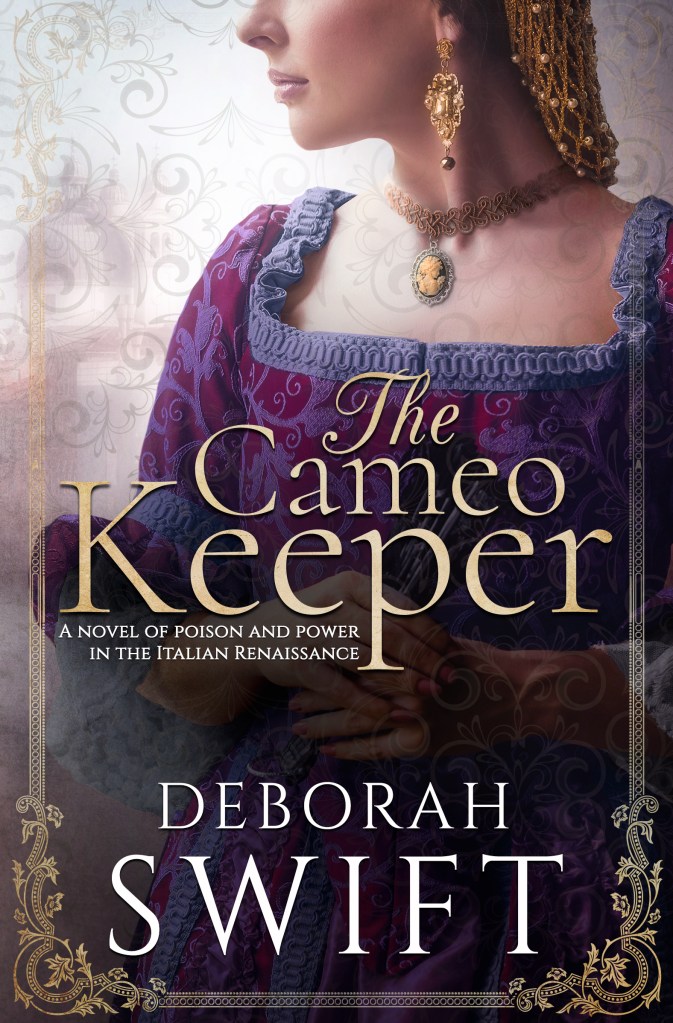
Here’s the Blurb

Rome 1644: A Novel of Love, Power, and Poison

Remember tonight… for it is the beginning of always ― Dante Alighieri

In the heart of Rome, the conclave is choosing a new Pope, and whoever wins will determine the fate of the Eternal City.

Astrologer Mia and her fiancé Jacopo, a physician at the Santo Spirito Hospital, plan to marry, but the election result is a shock and changes everything.

As Pope Innocent X takes the throne, he brings along his sister-in-law, the formidable Donna Olimpia Maidalchini, known as La Papessa – the female Pope. When Mia is offered a position as her personal astrologer, she and Jacopo find themselves on opposite sides of the most powerful family in Rome.

Mia is determined to protect her mother, Giulia Tofana, a renowned poisoner. But with La Papessa obsessed with bringing Giulia to justice, Mia and Jacopo’s love is put to the ultimate test.

As the new dawn of Renaissance medicine emerges, Mia must navigate the dangerous political landscape of Rome while trying to protect her family and her heart. Will she be able to save her mother, or will she lose everything she holds dear?

For fans of “The Borgias” and “The Crown,” this gripping tale of love, power, and poison will keep you on the edge of your seat until the very end.

Praise:

‘historical fiction that is brisk, fresh and bristling with intrigue’ 
~
 Bookmarked Reviews ★★★★★
Buy Link

Universal Link

Meet the Author

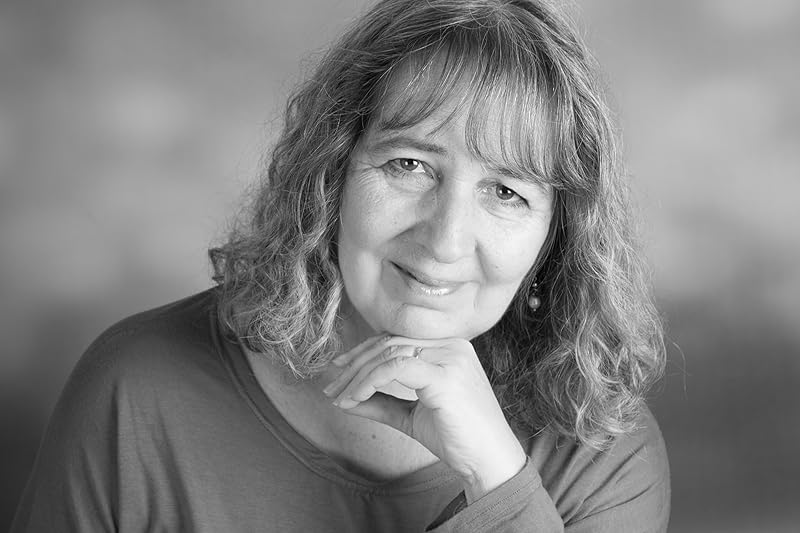
Deborah Swift is the author of twenty novels of historical fiction. 

Her Renaissance novel in this series, The Poison Keeper, was recently voted Best Book of the Decade by the Wishing Shelf Readers Award. Her WW2 novel Past Encounters was the winner of the BookViral Millennium Award, and is one of seven books set in the WW2 era.

Deborah lives in the North of England close to the mountains and the sea.
Author Deborah Swift

Connect with the Author

Follow The Cameo Keeper blog tour with The Coffee Pot Book Club

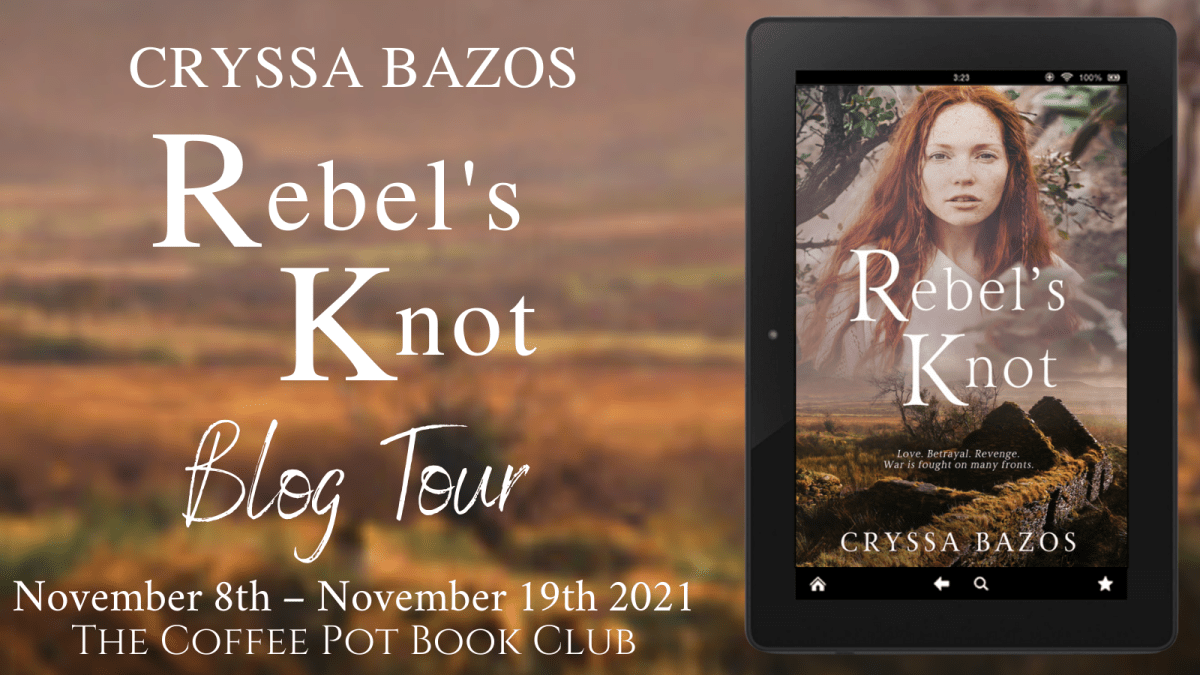
Welcome to today’s stop on the blog tour for Rebel’s Knot by Cryssa Bazos

Today, I’m delighted to welcome Cryssa Bazos to the blog with a post about her new book, Rebel’s Knot.

Your book, Rebel’s Knot, is set during the seventeenth century in Ireland, a period I know very little about. As a historian first and foremost, and then a writer, I’m always interested in how people research their historical stories.

Can you explain your research process to me, and give an idea of the resources that you rely on the most (other than your imagination, of course) to bring your historical landscape to life? 

Thank you for having me on your blog! Research can be an obsession. While only a small percentage ends up in the final copy, all those hours of research still colour between the lines.

I usually research in three major waves. The first is at the early stage before I write anything. I read historical non-fiction to give me an understanding of the era and subject. This is a general survey to determine where my story will sit within the history, and I look for signposts where I can lay my foundation.

When I feel that I have a good understanding, I start writing. I’m eager to get a taste for the characters and the story. By the time I hit the end of the first act, I often realize I need far more information about the setting and everyday details than I have. This leads me to my second wave of research, where I gather a hundred historical details that will be boiled down to only a few that stay in the text. I search out first-hand contemporary accounts, in letters or diaries, and try to get a sense of the world that my characters inhabit. This is where the characters lift off the page for me, and I can walk around in their shoes and understand what’s important in their life.

The last wave of research is my way of getting out of the dreaded middle slump. At this stage, the characters are walking around aimlessly, waiting for the events that will sweep them to the end. This is the rabbit hole stage of the process. Some might call it procrastination, and while it appears to be, what I’m actually doing is searching for inspiration from history. Where I often find the gold is in the footnotes. The list of goods stolen from a captured ship, for example, can be the lynchpin of a new subplot.

Research – Depositphotos Licence #33252823

Do you have a ‘go’ to book/resource that you couldn’t write without having to hand, and if so, what is it (if you don’t mind sharing)?

I have several favourite online resources. British History Online (https://www.british-history.ac.uk) is one welcome rabbit hole, and it’s easy to get seriously lost going through the transcribed content they have in there. British Civil Wars Project (http://bcw-project.org) is a great resource for anything to do with the War of the Three Kingdoms. I often pop in when I want to check on a date or a fact, and they have sections organized for Scotland and Ireland. I also love the articles available on JSTOR, and will usually head there to get more in-depth understanding on a topic.

When I was researching Rebel’s Knot, I relied on God’s Executioner by Micheál Ó Siochrú. It’s an insightful and balanced view of the Cromwellian Conquest of Ireland, including the events leading up to it. My copy is now dogeared and marked up.

One of the historical figures that I feature in Rebel’s Knot is Edmund O’Dwyer, Commander-in-Chief of the Irish forces in Tipperary and Waterford. He’s mentioned only several times in the historical record and yet he played an important role in the defence of Tipperary. There’s very little known about him. I managed to find an old history of the O’Dwyers called The O’Dwyers of Kilnamanagh by Sir Michael O’Dwyer (1933), which not only compiled the scant information on Edmund O’Dwyer, but gave more information on his family and heritage.

Another major source of information was A Contemporary History of Affairs in Ireland, from 1641 to 1652 by Sir John Thomas Gilbert. This was a compilation of letters, diary entries and the record of the treaties in one volume. While the English Parliamentarians wrote most of the accounts, the information was still invaluable. I learned about the range of the English forces in Tipperary, and their favourable perspective on commanders such as O’Dwyer spoke volumes about his character.

I also tracked down a first-hand account of an English bookseller travelling through Ireland in the latter seventeenth-century called Teague Land or A Merry Ramble to the Wild Irish (1698) by John Dunton. It’s rare to find contemporary accounts of common people, so this was quite the find that the traveller captured his experiences with his Irish hosts. He seemed to be a bit of a foodie, because he left detailed information about what they offered him to eat and how they prepared his meals.

There were a myriad of other sources and old maps that I found helpful (let’s not get started on the maps), but the above resources were the material I kept returning to throughout writing my novel.

I’d like to thank you for the opportunity to chat about research! It’s a topic near to my heart.

Cryssa

Thank you so much for sharing your research with me. Good luck with the new book.

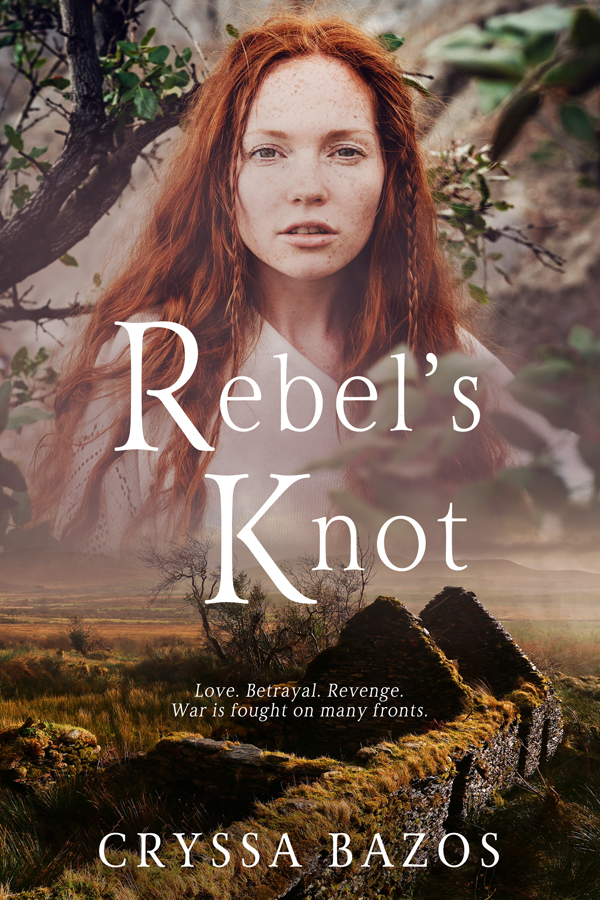
Here’s the blurb

Ireland 1652: In the desperate, final days of the English invasion of Ireland . . .

A fey young woman, Áine Callaghan, is the sole survivor of an attack by English marauders. When Irish soldier Niall O’Coneill discovers his own kin slaughtered in the same massacre, he vows to hunt down the men responsible. He takes Áine under his protection and together they reach the safety of an encampment held by the Irish forces in Tipperary. 

Hardly a safe haven, the camp is rife with danger and intrigue. Áine is a stranger with the old stories stirring on her tongue and rumours follow her everywhere. The English cut off support to the brigade, and a traitor undermines the Irish cause, turning Niall from hunter to hunted. 

When someone from Áine’s past arrives, her secrets boil to the surface—and she must slay her demons once and for all.

As the web of violence and treachery grows, Áine and Niall find solace in each other’s arms—but can their love survive long-buried secrets and the darkness of vengeance?

Trigger Warnings:

Violence, references to sexual/physical abuse.

Buy Links:

Universal Amazon Links:  

Universal Link

Meet the Author

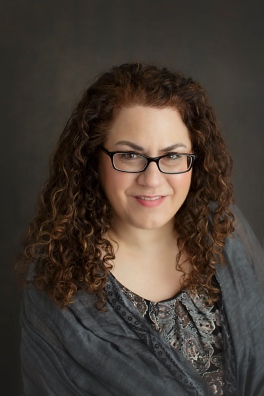
Cryssa Bazos is an award-winning historical fiction author and a seventeenth century enthusiast. Her debut novel, Traitor’s Knot is the Medalist winner of the 2017 New Apple Award for Historical Fiction, a finalist for the 2018 EPIC eBook Awards for Historical Romance. Her second novel, Severed Knot, is a B.R.A.G Medallion Honoree and a finalist for the 2019 Chaucer Award. A forthcoming third book in the standalone series, Rebel’s Knot, was published November 2021.

Connect with Cryssa Bazos

WebsiteTwitter:   FacebookInstagram

BookBub: Amazon Author PageGoodreads

Don’t forget to check out the other stops on the Rebel’s Knot blog tour with The Coffee Pot Book Club