Author of Saxon historical fiction and non-fiction, 20th-century historical mysteries, and Norse-inspired historical romantasy. Book reviewer and blog host.
Evy Miller thinks a summer with her grandparents in sleepy Dorset will be painfully dull. Her suspicions are confirmed when Juby, a wild-haired, lanky old man, strolls through her grandparents’ doorway. At first, she thinks he’s nothing more than an odd duck who charms her grandmother and annoys her grandfather. The last thing she expects is to become his companion on visits to the small village of Rouklye, whose entire population was evicted during WWII. She has no idea that the reason for Juby’s visits will become a defining moment in her life and change her understanding of history and her own family forever.
MICHAEL LAWRENCE has written and published a great many books, but he’s done a few other too. For instance, after leaving art school he began training as a graphic designer in a London studio before morphing into a photographer. As a photographer he took pictures for advertising agencies, publishers and newspapers, of pop stars and politicians, of fashion models and underwear, and many other kinds of people and things besides. He also worked in a travelling circus for a little while, and has been an antiques dealer, co-owned two art galleries, and made hundreds of paintings, drawings and experimental digital images. One of his private joys is recording songs (many of which he’s written) under the alias Aldous U.
As a writer he’s won the odd award, had books translated into twenty or so languages (one of which – ‘Young Dracula’ – was the inspiration for five BBC-TV series), has shuffled onto stages at literary festivals, and been interviewed on TV and radio. ‘There’s more,’ he says, ‘but I don’t want to bore you. There’s a lot of me in the Rainey novels, but I’m not saying which bits.’
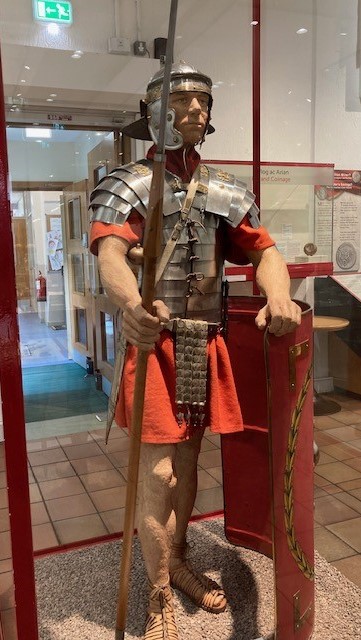
Here in the UK we are very lucky to have quite a few Roman sites to explore, which is very helpful when writing a story set during that era. The Romans were here for nearly 400 years, so they have left a lot of traces behind. My story SHADOWS IN THE SPRING features a legionary as the villain, so I had to do some research regarding the occupying legions that were present in the Britannia of AD 80. Therefore, it was natural for me to visit the town of Caerleon, which is fairly close to where I live.
Caerleon was called Isca by the Romans after the name of the river that flows through it, which is now the Usk. Around AD 75 they built a fortress there in order to keep the local Silures tribe under control. They’d been difficult to subdue and it needed a strong military presence. The Silures must have been a real thorn in the Romans’ side as Isca was one of only three permanent legionary bases in Britain at the time. (The others were at Chester/Deva and York/Eboracum).
The legion assigned to build it was the Legio II Augusta – or Second Augustan Legion. This legion had formed a part of the force that invaded Britain in AD 43 and they had remained ever since. They were originally stationed at Exeter, but later sent to Isca when the Silures proved troublesome. Part of a legionary’s job was to build forts, ramparts, ditches and roads, and they must have had to work very hard. The outline of the Isca fortress can still be seen in the town today, and it is vast. To begin with, the barracks and other buildings would have been constructed mostly of timber, with the buildings surrounded by a ditch and earth bank topped by a palisade. I would have been impressive and presumably intimidating to the locals. It housed upwards of 5,000 men, quite a sizeable force.
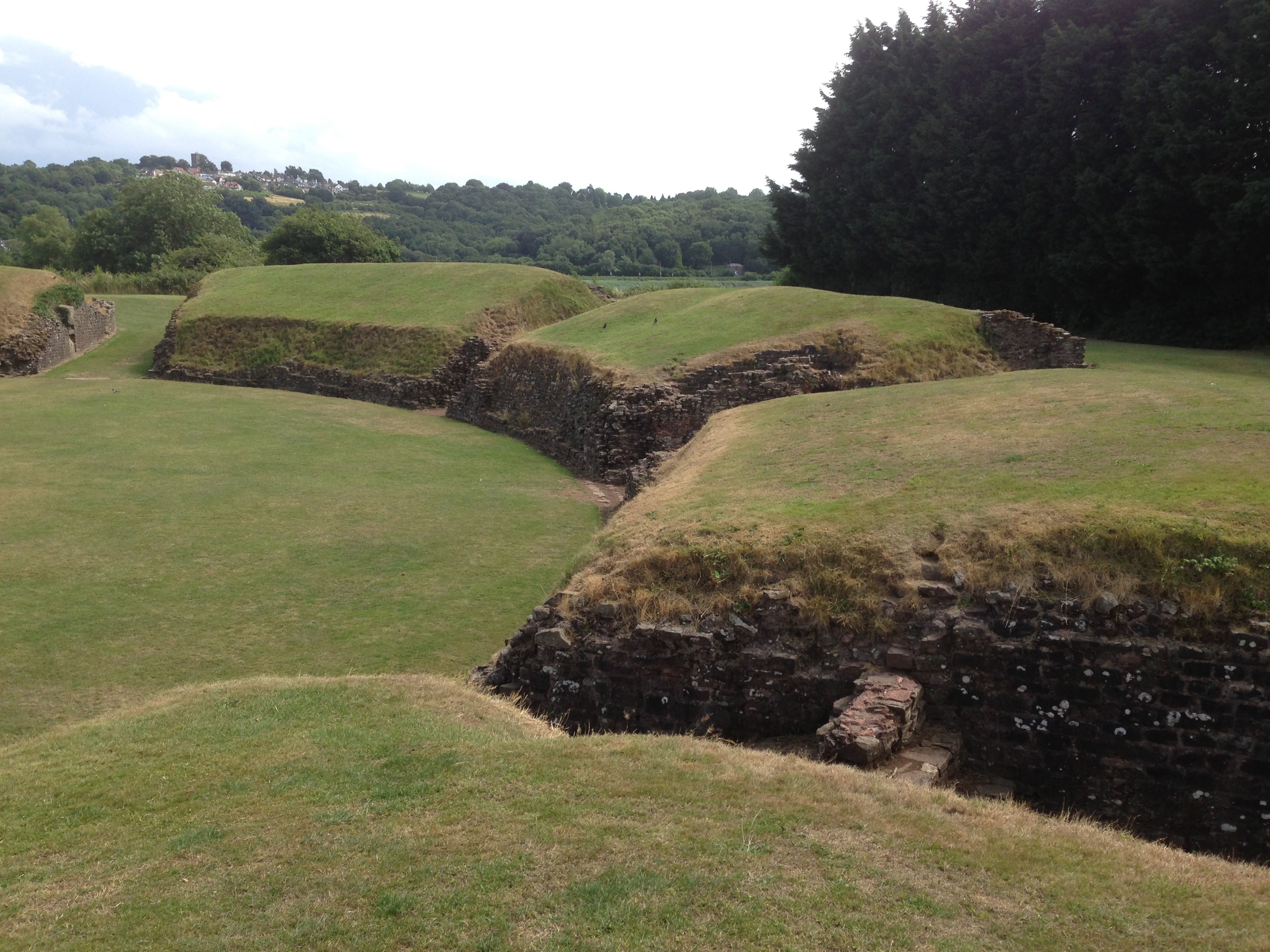
The barracksThe amphitheatre
As with other forts, a civilian settlement grew up around it (a so-called vicus) and buildings like a bath complex were added for both legionaries and civilians to enjoy. The legionaries would have enjoyed this ‘taste of home’ as I’m sure life in Wales was very different to what at least some of them were used to. Imagine coming from sunny Italy or Spain to a cold, windy and rainy Britannia – probably a shock to the system! It was also dangerous, what with skirmishes and illnesses making life expectancy short, so to be able to relax and enjoy some leisure time at the baths was greatly appreciated.
SHADOWS IN THE SPRING is set in AD 80, which was ten years before the amphitheatre at Isca was built just outside the fort. It’s still there today, albeit mostly consisting of turf now. It’s an impressive place that would have seated about 6,000 people on wooden tiers built on a stone base. No doubt the spectators enjoyed all sorts of events, like gladiatorial games and executions of criminals. It was also used for military training. I loved standing in the middle of the arena – once covered in sand – and imagining what it must have been like to perform there.
There are two museums in Caerleon – one that shows what’s left of the baths and tells their story, and one with Roman artefacts. Both were very useful to me and I really enjoyed my visit to the picturesque town. It’s a bit off the beaten track, but if you ever find yourself nearby, I would definitely recommend that you take a look – you won’t regret it!
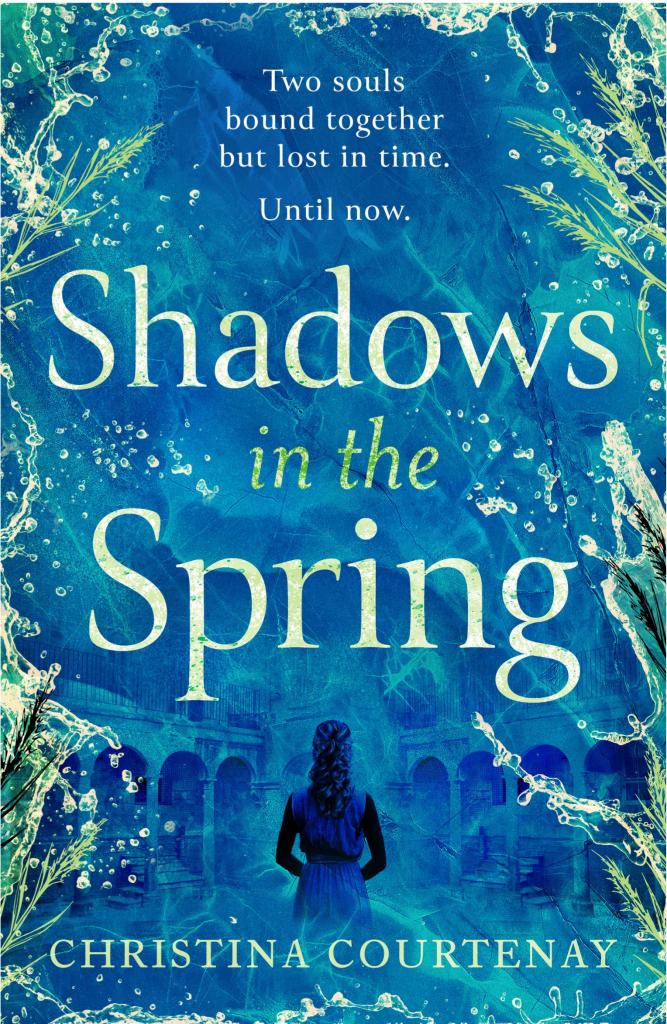
Here’s the blurb
Two souls bound together but lost in time. Until now.
AD 80
Duro of the Iceni tribe escaped life as an enslaved gladiator and is now finally home in Britannia with one thing on his mind: vengeance. For 20 years he has sought the Roman legionary who destroyed his family. What he didn’t expect was Gisel: a fierce Germanic woman with long white-blonde hair, forced into slavery by the Romans. Hypnotised by her spirit and her beauty, Duro frees Gisel and slowly tries to win her trust as they work together to complete his quest.
Present Day
Mackenna Jackson returns to Bath with a broken heart, thanks to rockstar Blue Daniels. Luckily she can still count on Blue’s former bandmate Jonah Miller as a listening ear. But Jonah has secretly been fighting stronger feelings, drawn to Mac’s quiet confidence and gorgeous white-blonde hair. As they explore the area, memories they can’t quite explain flood them both.
Is the spark between Mac and Jonah in fact a sign of something much deeper – a love enduring through millennia – or can it all be an illusion?
Christina Courtenay writes historical romance, time slip/dual time and time travel stories, and lives in Herefordshire (near the Welsh border) in the UK. Although born in England, she has a Swedish mother and was brought up in Sweden – hence her abiding interest in the Vikings. Christina is a Vice President and former Chair and of the UK’s Romantic Novelists’ Association and has won several awards, including the RoNA for Best Historical Romantic Novel twice with Highland Storms (2012) and The Gilded Fan (2014) and the RNA Fantasy Romantic Novel of the year 2021 with Echoes of the Runes. SHADOWS IN THE SPRING (dual time historical romance published by Headline Review 24th April 2025) is her latest novel. Christina is a keen amateur genealogist and loves history and archaeology (the armchair variety).
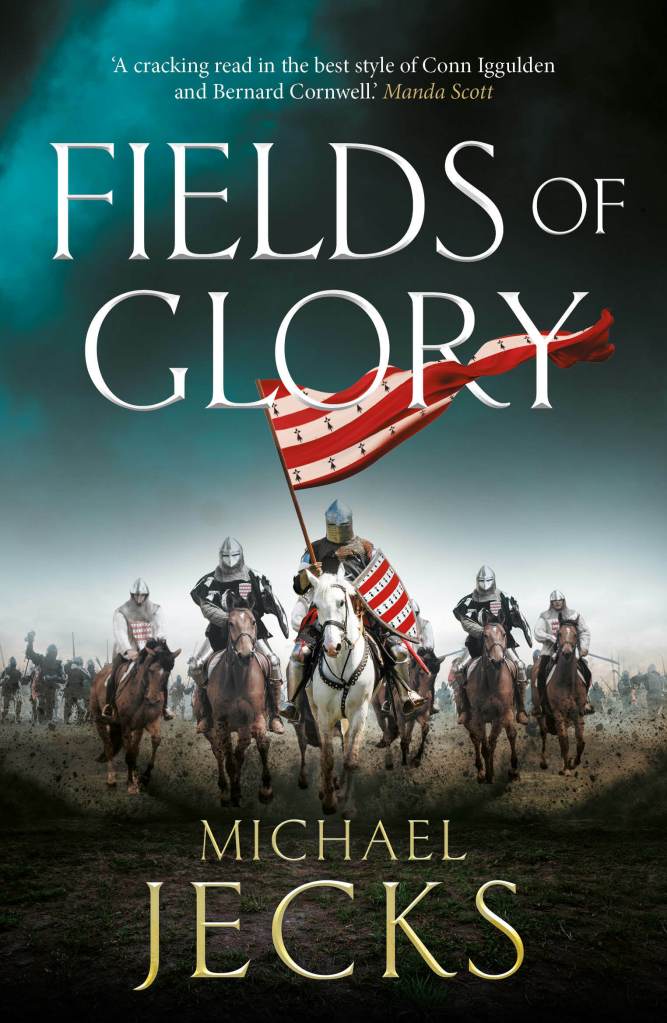
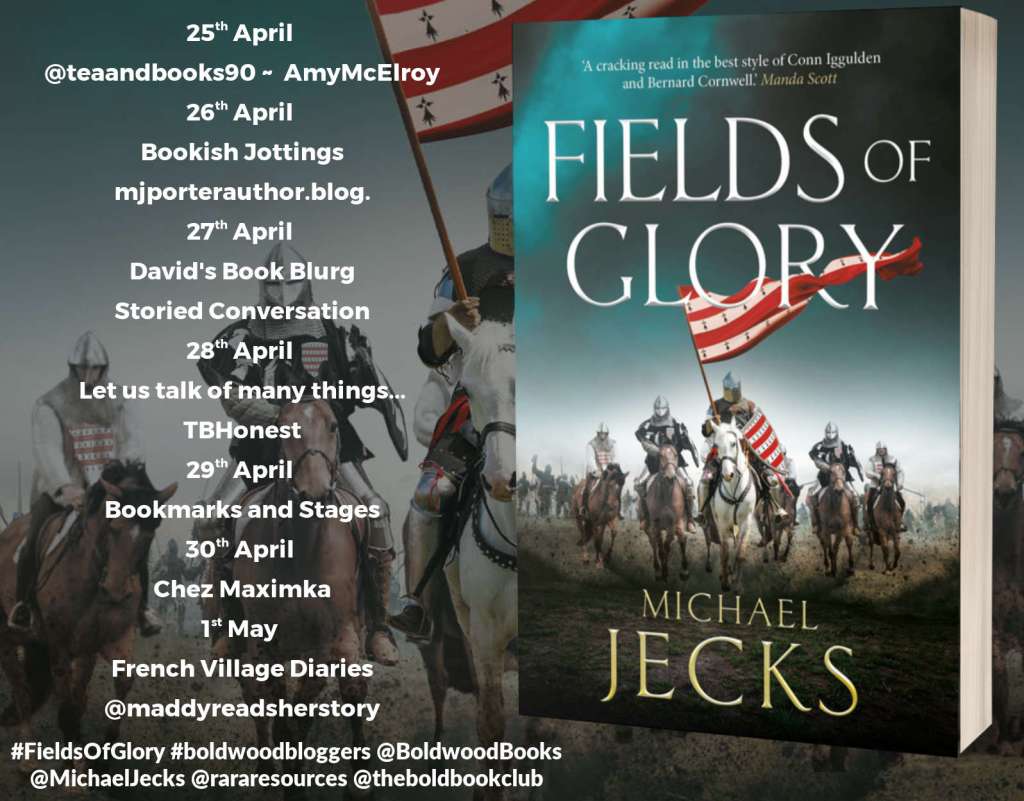
1346. France. King Edward III is restless. Despite earlier victories the French crown remains intact. Determined to bring France under his own rule, Edward has devised a new plan of attack – one which he believes will finally bring the French army to its knees: a final, cataclysmic battle …
Berenger Fripper, Vintener of a pox-ridden mob of sixteen who make up the Vintaine of Sir John de Sully, storms the beaches of Normandy to bring victory to their king. But the French are nowhere to be seen…
And so Berenger leads his Vintaine through France and onward to battle – the Battle of Crécy – one which will both bond and break his men and be a decisive turning point in the Hundred Years’ War.
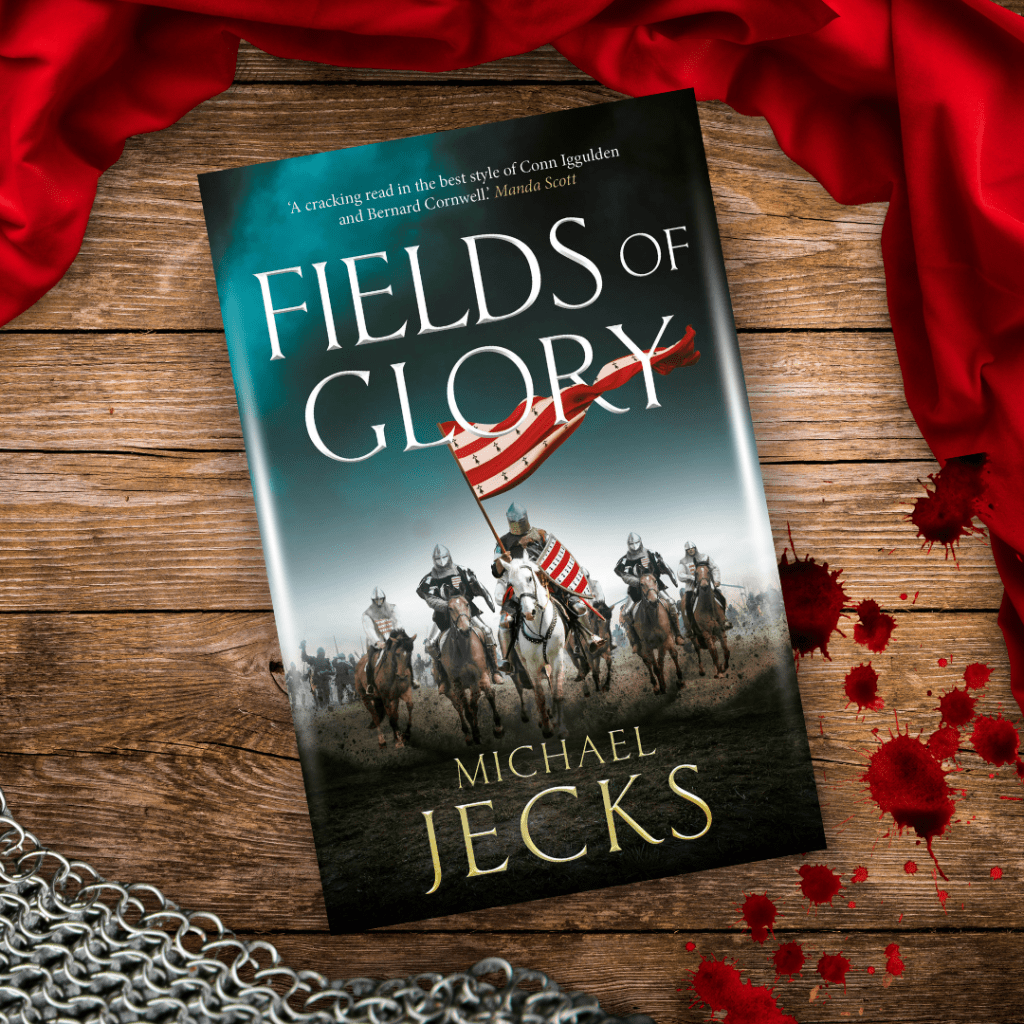
Fields of Glory by Michael Jecks is a novel about the Hundred Years’ War in all its bloody glory. Featuring an ensemble cast of characters, every person has their own story to tell, hidden behind the veneer of bloody war, and the demands of an intolerant king, who appears to preach reconciliation with the French but finds every excuse to change his mind.
I can’t say any of this ragtag collection of men is particularly endearing. Sir John cares more for his horse than his men, while King Edward and the Prince of Wales are just as thoughtless regarding the lives they’re destroying. This makes it a very realistic portrayal, if not for the faint-hearted. Indeed, if seeking some semblance of empathy between the characters, we must look to the men of the Vintaine, and not those who command them.
A blood-drenched traipse through France will bring our characters the opportunity to earn battle booty, if only they can live through it. Fields of Glory is a must-read for fans of the genre and those interested in the Hundred Years’ War.
Meet the author
Studied actuarial science, then became a computer salesman for 13 years- after the 13th company folded, he turned to writing.
He’s the author of 50 novels, 6 novellas, 4 collaborative books and short stories. His tales are inspired by history and legends, but are all grounded in real life and real people, what motivates them, and why they turn to violence.
Founder of Medieval Murderers, he has served on the committees of: Historical Writers’ Association, CWA and Detection Club. He has judged the Debut Dagger, Ian Fleming Steel Dagger and other prizes, as well as serving as Dagger liaison officer and CWA Chair. He has taught writing at Swanwick and Evesham, and tutored for the Royal Literary Fund. He now runs South West Writers in Devon.
His work has been celebrated by Visconti and Conway Stewart pens; 2014 he was International Guest of Honour at the Bloody Words festival in Toronto, and Grand Master of the first parade in the New Orleans Mardi Gras.
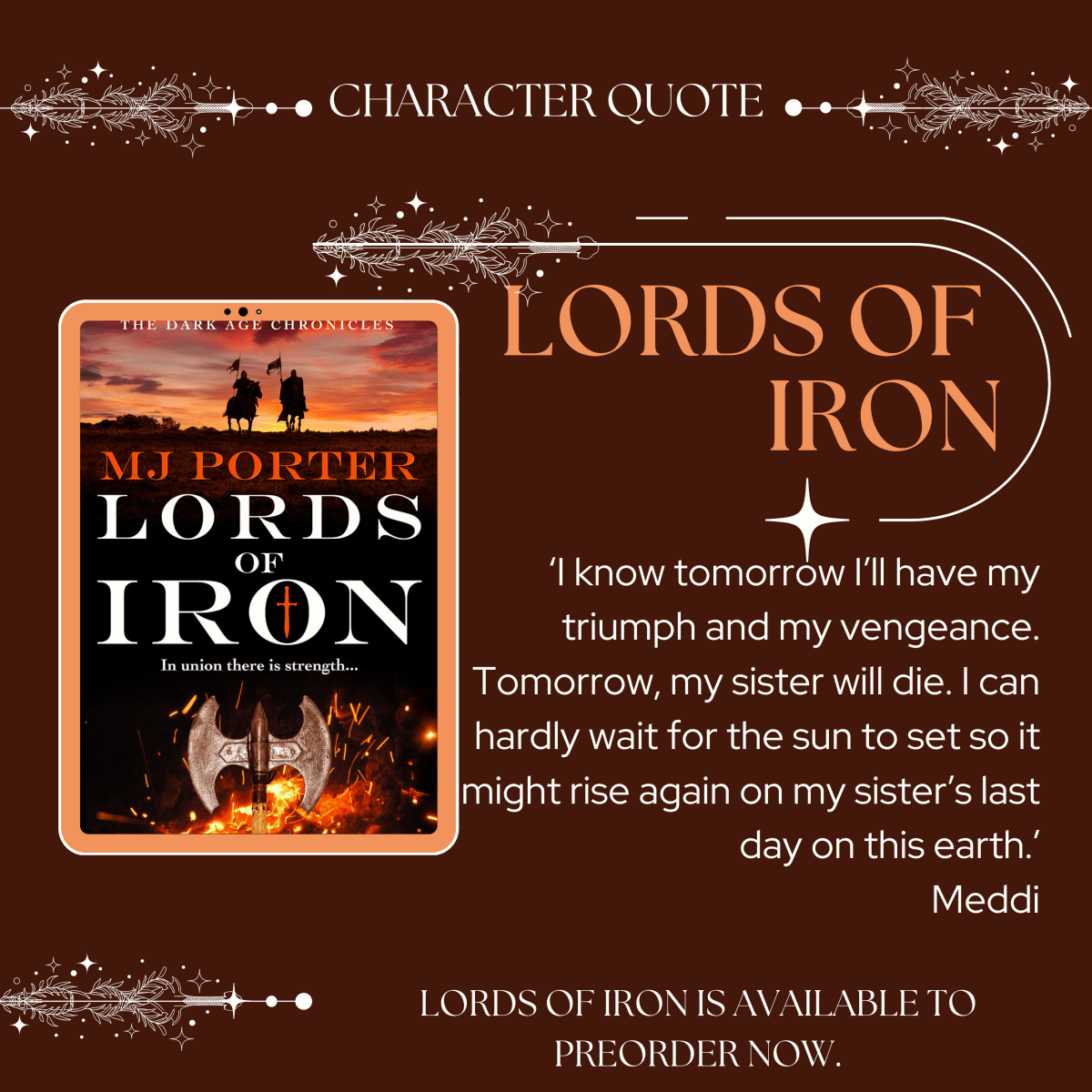
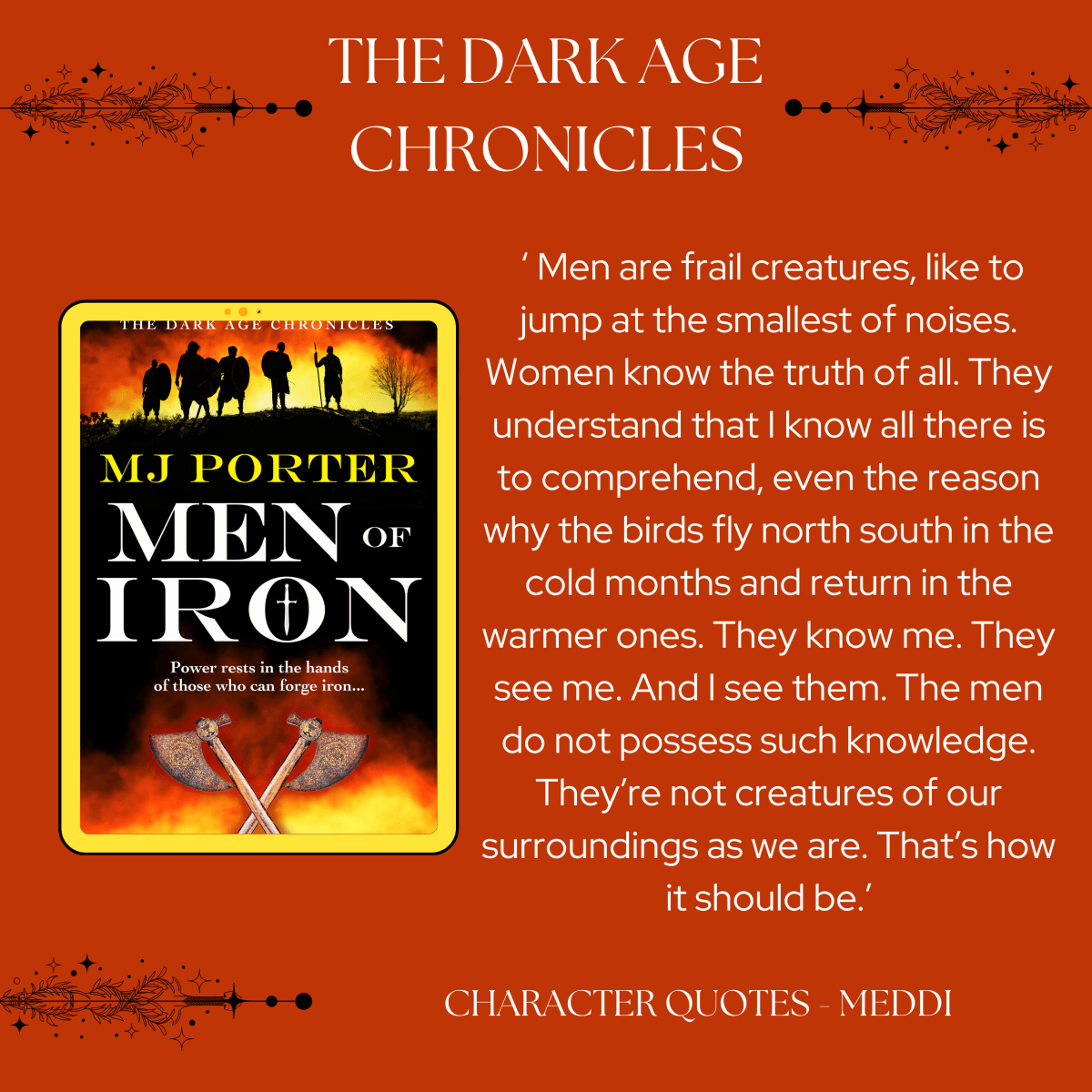
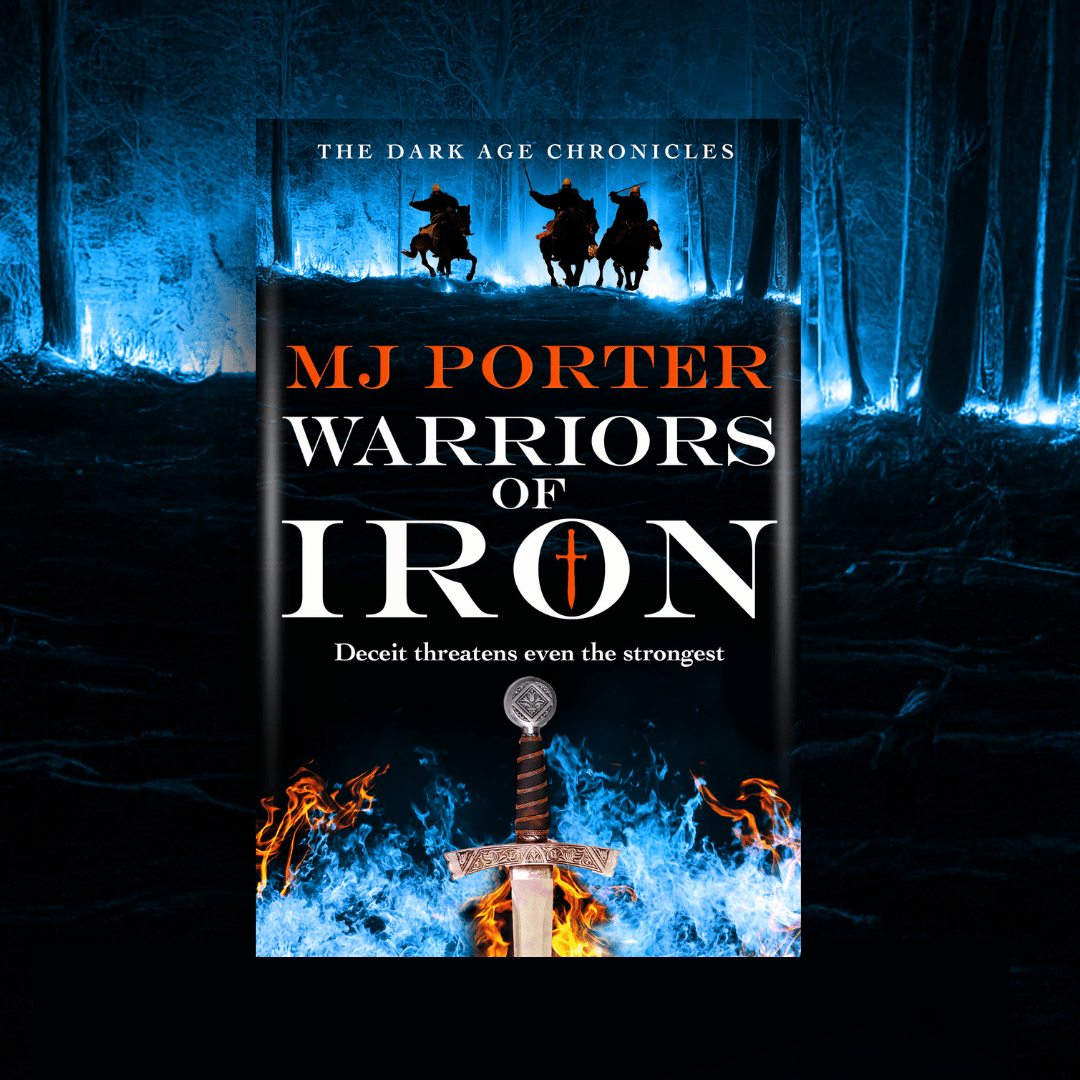
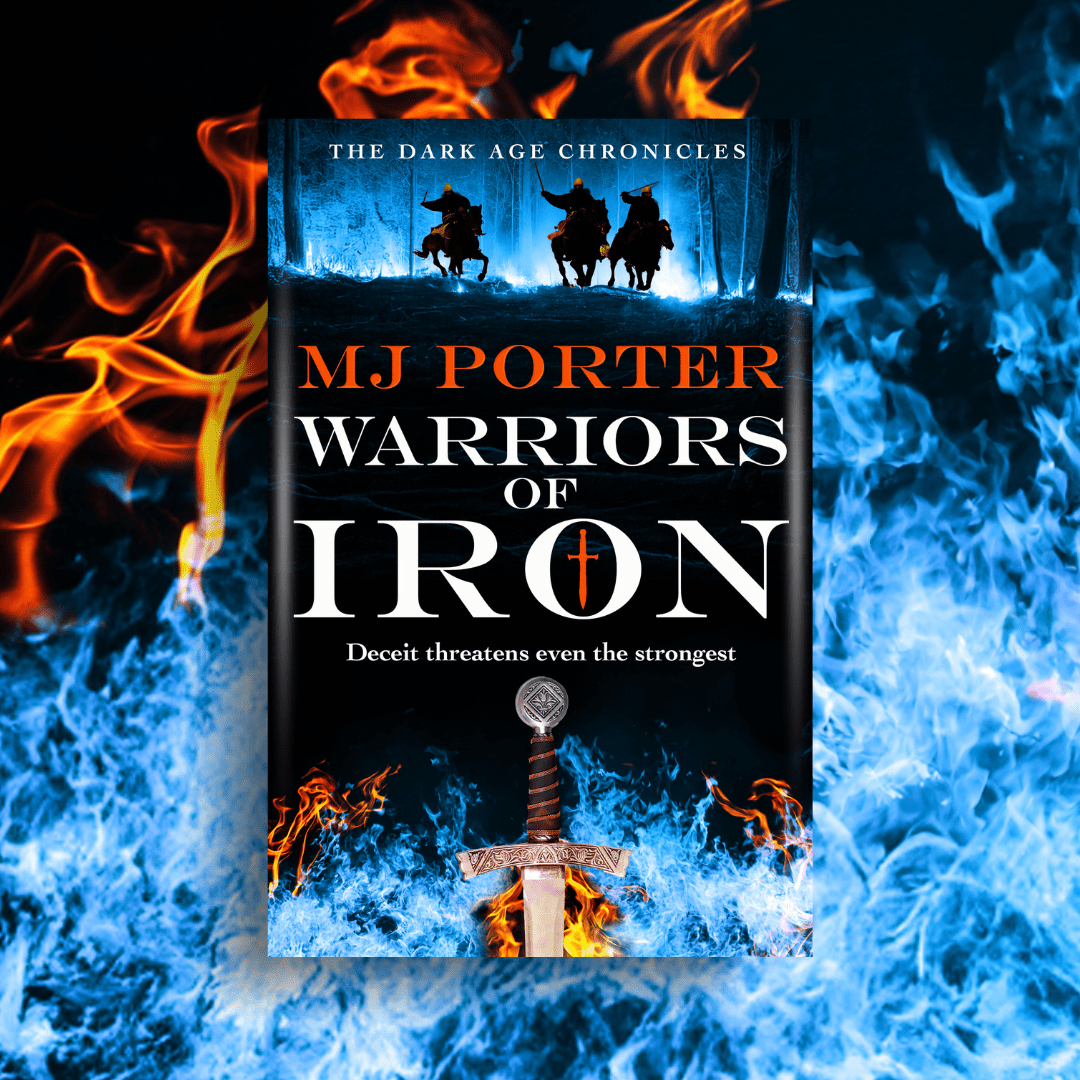
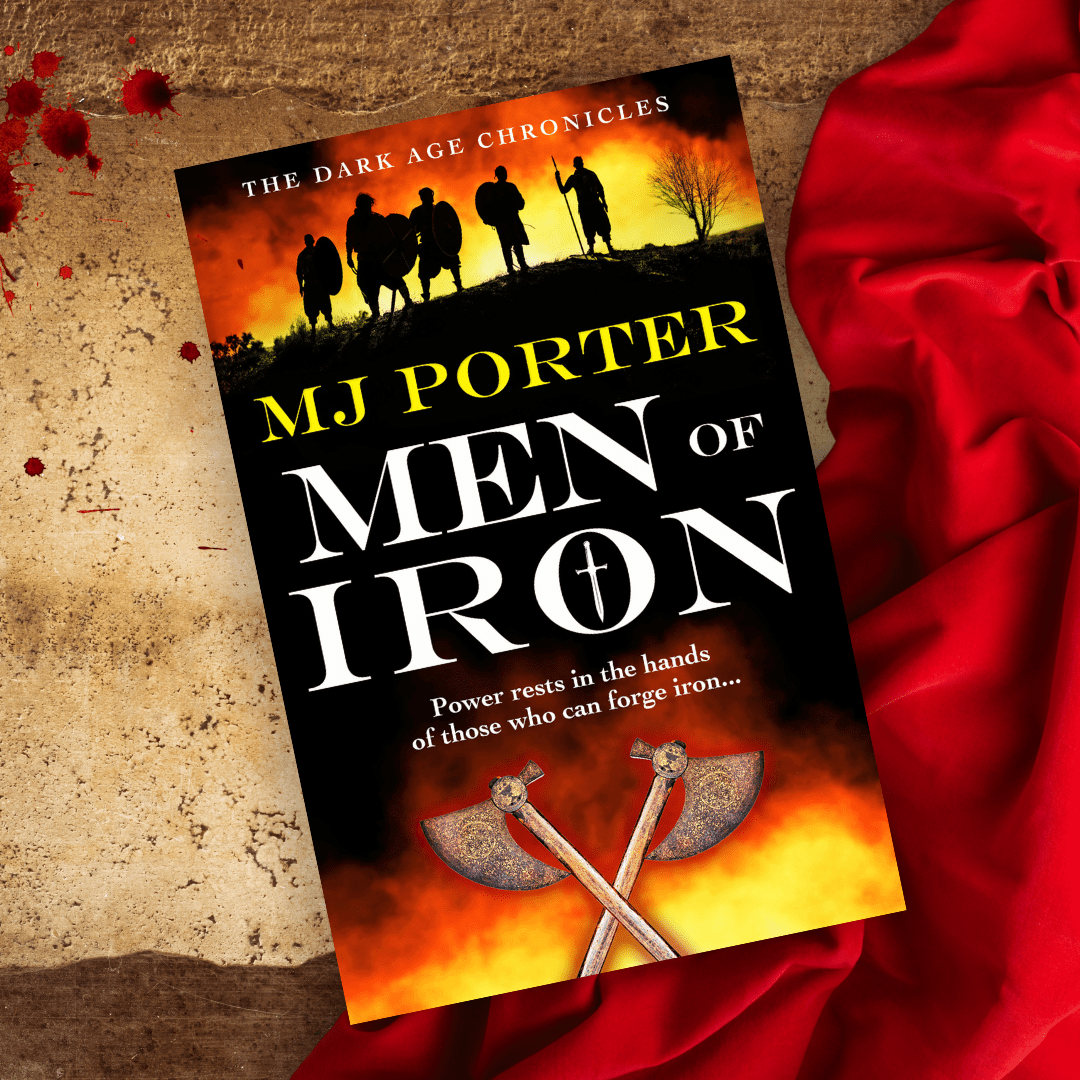
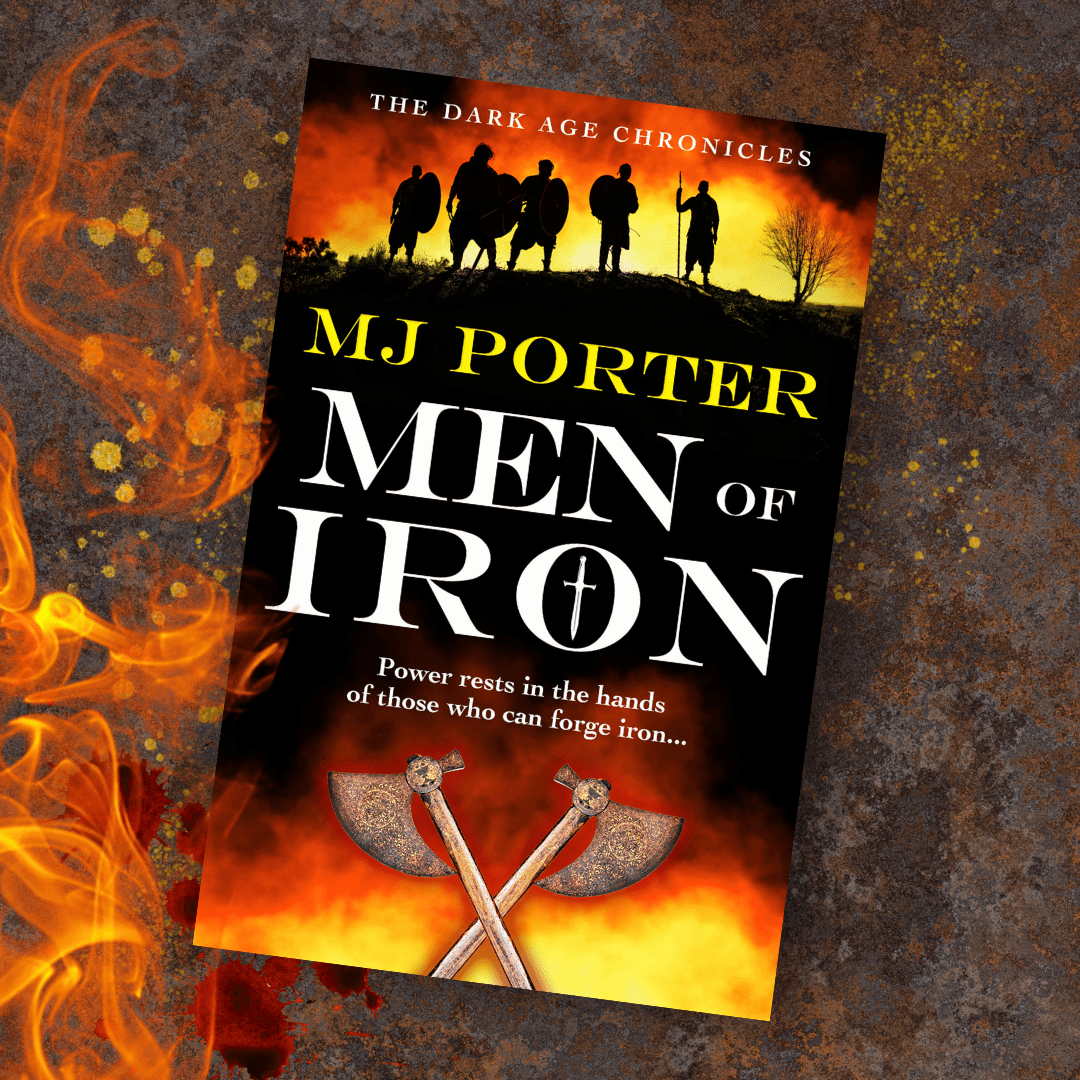
It’s happy release day to Men of Iron, the first book in the Dark Age Chronicles Trilogy #newrelease #MenOfIron #histfic
The Dark Ages?
As a bit of a history nerd, I’m not always comfortable with the term ‘Dark Ages’ for my books, mostly because the ‘real’ Dark Ages took place between about 410 and 600 in England, and so, until NOW, my books haven’t strictly fallen into that category. (Also, as a very literal child, I entirely mistook what was meant by the Dark Ages, and I was always perplexed as to why it was so damn dark.)
Admittedly, many apply the term to almost all of the period of Saxon England, which is somewhat incorrect (and indeed it was once applied to the entire Middle Ages). The idea of the Dark Ages stems from a belief there was no scientific or cultural advancement during this period (according to Wiki), but particularly in regards to England it references the lack of surviving written records from the period.
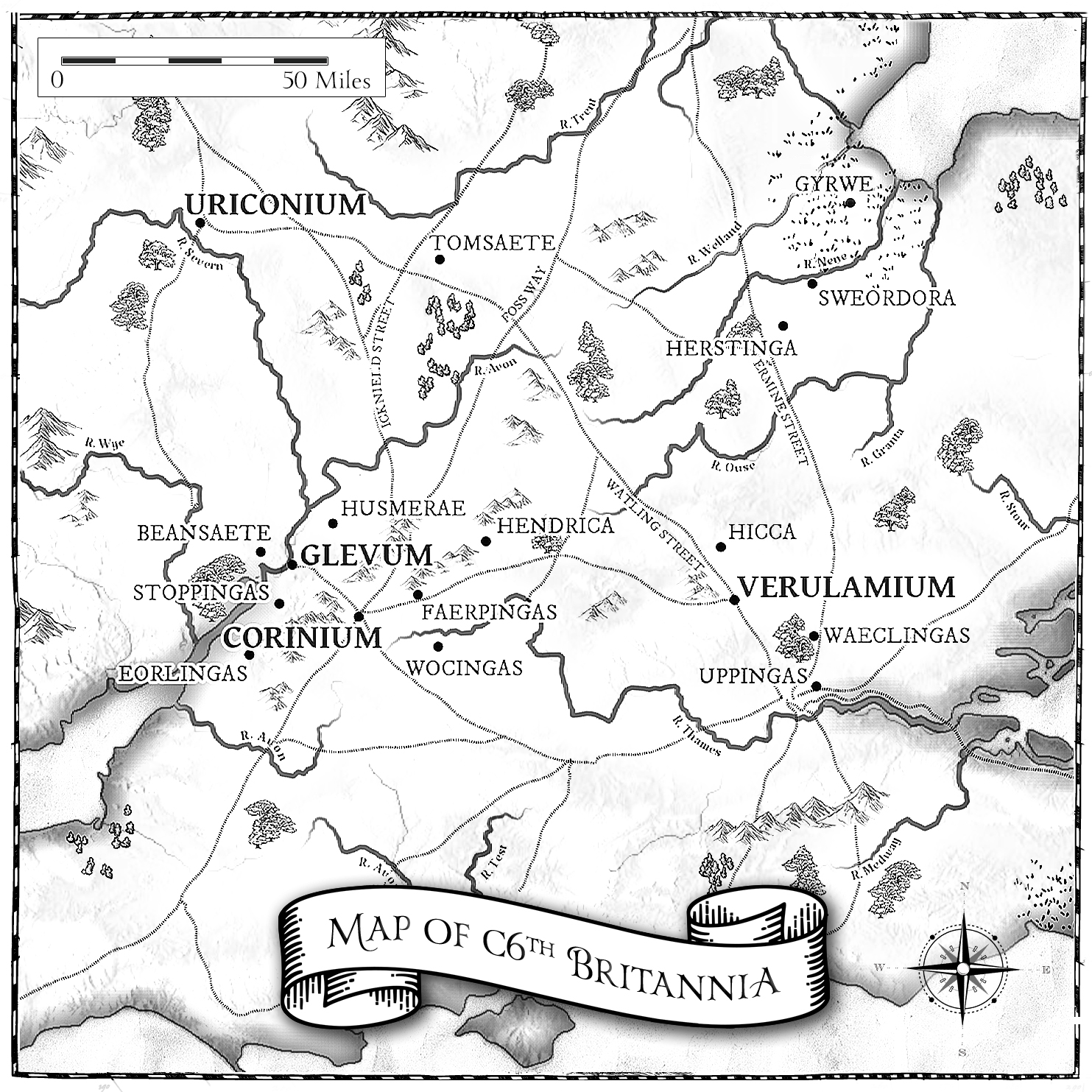
Archaeology is massively changing this interpretation, and there is now an accepted view that much can be understood about the era, just not in the way ‘historians’ might think – the merging of archaeology and history (and other sciences) is rewriting the period. We’re no longer entirely reliant on two written sources, Gildas, and his De Excidio et Conquestu Britanniae – On The Ruin of Britain (who may or may not have a cameo in Men of Iron), or Bede, (amongst historians often called ‘Bloody’ Bede) and his Historia ecclesiastica gentis Anglorum – History of the English People (as well as a few ‘odd’ earlier sources. Check out my blog post for more details.) It might be impossible to apply dates to developments, but it is possible to postulate what was actually happening during these ‘lost’ two hundred years, even if much of our knowledge must rely on finds from graves. It is also increasingly understood that this period was complex and that rarely does ‘one narrative’ adequately explain what was happening throughout England. This is a time before the major Saxon kingdoms, when much was in flux with cultures merging and endeavouring to survive with the loss of the Roman economy.
A new trilogy
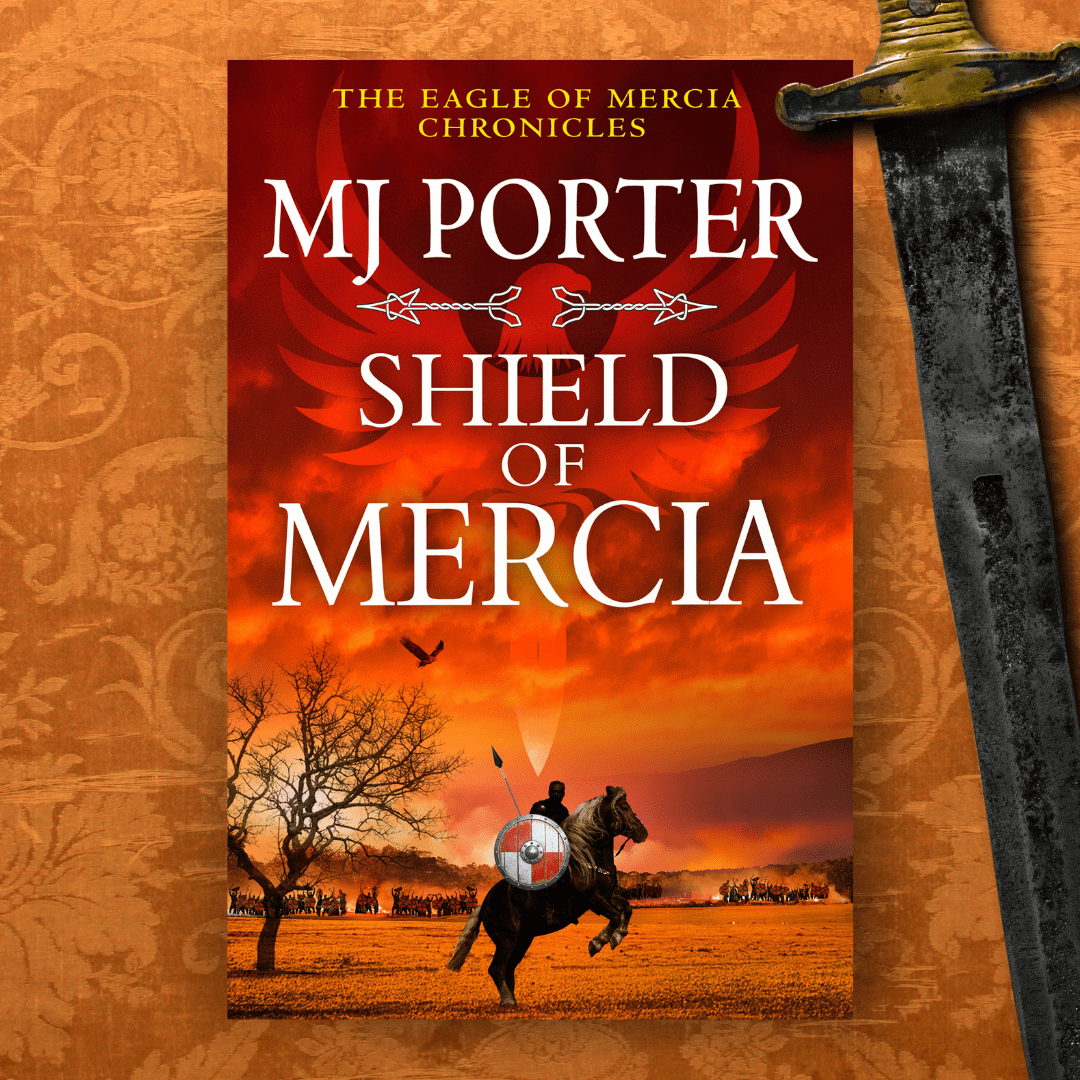
And this is where my new trilogy enters stage left. This period fascinates me. I’ve been reading extensively about it for some time, and eventually managed to convince my editor (thank you) to let me tell ‘a‘ story of what ‘might‘ have been happening in this period. It can’t be based on any ‘named’ historical individuals (well, apart from one or two I’ve snuck in there as fictional creations) but it can attempt to populate this complex and little-understood period with people who lived and breathed, and I’m so excited to share it, with my readers. And guess what, it’s about what was ‘Mercia’ before it was ‘Mercia.’ (If you think you’re going to get me away from Mercia, you’re very mistaken.)
So how then to tell this story with so many cultures? I’ve taken the decision to offer a dual narrative, one from Meddi, my seeress in the west of England (close to Gloucester), and the other, Wærmund, my would-be-warrior from the east of England (the Fens). These two main characters allow me to explore the continuity and change taking place in what would become England. Their experiences as a seeress, as a warrior, and with the added complications of family discord driving their actions, ensure the characters from Men of Iron feel like ‘real people’ even in this distant, hazy landscape so similar and yet so different to everything we experience today. I really hope you’ll enjoy it. (I’m also very excited as I have dual narrators for this trilogy.)