
The Winter Guest by W C Ryan. Book Review. Historical mystery. Highly recommended.

The drive leads past the gate house and through the trees towards the big house, visible through the winter-bared branches. Its windows stare down at Harkin and the sea beyond . . .

January 1921. Though the Great War is over, in Ireland a new, civil war is raging. The once-grand Kilcolgan House, a crumbling bastion shrouded in sea-mist, lies half empty and filled with ghosts – both real and imagined – the Prendevilles, the noble family within, co-existing only as the balance of their secrets is kept.

Then, when an IRA ambush goes terribly wrong, Maud Prendeville, eldest daughter of Lord Kilcolgan, is killed, leaving the family reeling. Yet the IRA column insist they left her alive, that someone else must have been responsible for her terrible fate. Captain Tom Harkin, an IRA intelligence officer and Maud’s former fiancé, is sent to investigate, becoming an unwelcome guest in this strange, gloomy household.

Working undercover, Harkin must delve into the house’s secrets – and discover where, in this fractured, embattled town, each family member’s allegiances truly lie. But Harkin too is haunted by the ghosts of the past and by his terrible experiences on the battlefields. Can he find out the truth about Maud’s death before the past – and his strange, unnerving surroundings – overwhelm him?

A haunting, atmospheric mystery set against the raw Irish landscape in a country divided, The Winter Guest is the perfect chilling read.

The Winter Guest is my first W C Ryan book, but it won’t be my last.

The Winter Guest is a little awkward to get into. The first chapter could perhaps be better placed elsewhere or left out altogether, but once past that point, and as the reader meets Harkin, we’re quickly drawn into his world. A man suffering from PTSD following the Great War and involving himself in the IRA, is a man on the edge, inhabiting a world filled with suspicion and shadows, where things that seem real, are simply not.

He is a sympathetic character and the reader feels. a great deal of empathy for him. 

The landscape he walks into is one bedevilled by atmospheric weather conditions – there is a great deal of attention spent on creating the image of a house on the cusp of ruin, a family in the midst of ruin and the weather conditions prevalent at the coastline. On occasion, it feels a little too much but the lack of electricity, the reliance on candles, ensures that the slightly other-worldly elements can never be forgotten. The flashback descriptions of life in the trenches of the Great War haunt the reader as well as Harkin,

You may have noticed that I thoroughly enjoyed this novel. I would put it on a par with last year’s The Glass Woman and The Quickening. A haunting story not to be missed. My thanks to Netgalley and the publisher for my review copy
Check out my review for Cecily by Annie Garthwaite #histfic #bookreview #highlyrecommended

Here’s the blurb

Rebellion?’
The word is a spark. They can start a fire with it, or smother it in their fingertips.
She chooses to start a fire.

You are born high, but marry a traitor’s son. You bear him twelve children, carry his cause and bury his past.

You play the game, against enemies who wish you ashes. Slowly, you rise.

You are Cecily.

But when the king who governs you proves unfit, what then?

Loyalty or treason – death may follow both. The board is set. Time to make your first move.

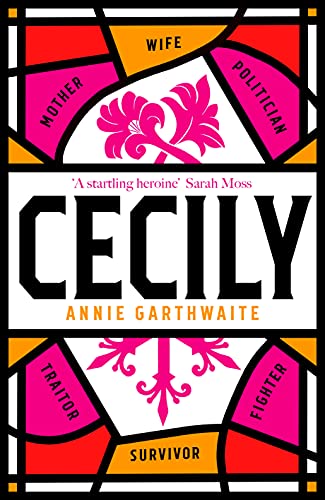
Cover for Cecily by author Annie Garthwaite

My Review

Cecily, the story of Cecily Neville up to and including 1461, is a wonderful retelling of her story.

Having read Anne O’Brien’s The Queen’s Rival last year, which offers Cecily’s story from the late 1450s onwards, I feel that this unknown woman has now been brought to life in wonderful detail. (If you have only read one of these two books then do please try the other one – you won’t be disappointed.)

Cecily is told from Cecily’s point of view, as such, there are some things that she can’t know or witness, and the author manages this incredibly skillfully. We know what Cecily does, and we know other events when she knows them. It’s a perfect way to ensure the reader, even if they know the history of the time period, doesn’t get ahead of themselves. 

Cecily is an engaging and headstrong woman. The author gives her a voice that we can understand, reflecting a quick intelligence and an ability to piece together events skillfully. Some scenes may feel rushed, and there is a refusal to dwell on the royal splendour of the court, but I think this added to the story. It is the interaction of the king, queen and the courtiers that’s important, not who was wearing what and eating what. This is absolutely my sort of historical fiction book.

I only wish I’d read it sooner.

Book Review – The Seven by Peter Newman – fantasy – recommended

“Years have passed since the Vagrant journeyed to the Shining City, Vesper in arm and Gamma’s sword in hand.

Since then the world has changed. Vesper, following the footsteps of her father, journeyed to the breach and closed the tear between worlds, protecting the last of humanity, but also trapping the infernal horde and all those that fell to its corruptions: willing or otherwise.

In this new age it is Vesper who leads the charge towards unity and peace, with seemingly nothing standing between the world and a bright new future.

That is until eyes open.

And The Seven awakes.”

I received a free EArc from Netgalley and notice that this has just come out in paperback so I am sharing my review again!

After only a few pages, I decided to read the previous book in the series, as the world I discovered was both intriguing and quite alien. I thought I needed some back story, and indeed I did. My review for The Malice is here.

https://www.goodreads.com/review/show/2011536175?book_show_action=false&from_review_page=1

I should also perhaps have taken the time to read The Vagrant but impatience won out, and anyway, The Vagrant, unlike in The Malice, is a real part of this final part of the trilogy (I am assuming it’s the final part).

Anyway, back to The Seven.

The world created by Peter Newman throughout The Vagrant series is inherently alien. It feels new and strange and, on occasion, very, very weird. This, more than anything, immediately draws the reader in, for Newman’s descriptions are sparse in the extreme, and I was often left decrying his lack of description (which is weird for me because I often skip excess descriptions in books content to let my imagination hold sway). Neither is it just his descriptions that are sparse, the whole nature of the book is trimmed down so that you really have to read each and every word – there’s no skipping a bit because you sort of know what’s about to happen. There is also, in the grand scheme of things, little conversation. This ties with the ‘pared’ down nature of the planet that these people inhabit.

The characters in this final book – Vesper, Samael and Scout, The Vagrant, Jem, her daughter, Obeisance and The Seven, as well as The First, Neer and other characters from the earlier book (including The Buck although not as much as I might have liked) – are all scarcely sketched and yet all have very distinct characters. There is no need to’like’ any of the characters (not like in some books) and yet throughout the series you gain respect for them all – even when they might be being cowardly or acting contrary to what we might hope they do. This is a strength of the book – for all the weirdness and strangeness – these are people (I use that word lightly) that we can understand if not relate to.

I very much enjoyed the ‘backstory’ in The Seven. Throughout The Malice I found it a little distracting, but in The Seven, the back story is vitally important, and indeed, at the end, I would have liked to know more about Massala and her creations.

Book 3 is eminently more readable than The Malice – and I don’t think it was because I knew more about the ‘world’ of The Vagrant – I think the storyline is more recognizable and therefore flows better. Yet I don’t think the author ever quite gives the reader what they want – there is not really a happily ever after, there is just an ending, and one which is never wholly assured until it actually happens.

There are very good battle scenes, and very good ‘political’ scenes and yet through it all, the world of The Vagrant remains aloof – difficult to grasp onto. It is not a typical fantasy book and some might well struggle with it, but I think it’s well worth the struggle (The Malice took me a month to read because I struggled with elements of it – The Seven is a much quicker read) and it is refreshing to read something so very different and ‘new’.

The Seven is available now and can be purchased here;

Book Review – The Seven by Peter Newman – fantasy – recommended

“Years have passed since the Vagrant journeyed to the Shining City, Vesper in arm and Gamma’s sword in hand.

Since then the world has changed. Vesper, following the footsteps of her father, journeyed to the breach and closed the tear between worlds, protecting the last of humanity, but also trapping the infernal horde and all those that fell to its corruptions: willing or otherwise.

In this new age it is Vesper who leads the charge towards unity and peace, with seemingly nothing standing between the world and a bright new future.

That is until eyes open.

And The Seven awakes.”

I received a free EArc from Netgalley.

But that said, after only a few pages, I decided to read the previous book in the series, as the world I discovered was both intriguing and quite alien. I thought I needed some back story, and indeed I did. My review for The Malice is here.

https://www.goodreads.com/review/show/2011536175?book_show_action=false&from_review_page=1

I should also perhaps have taken the time to read The Vagrant but impatience won out, and anyway, The Vagrant, unlike in The Malice, is a real part of this final part of the trilogy (I am assuming it’s the final part).

Anyway, back to The Seven.

The world created by Peter Newman throughout The Vagrant series is inherently alien. It feels new and strange and, on occasion, very, very weird. This, more than anything, immediately draws the reader in, for Newman’s descriptions are sparse in the extreme, and I was often left decrying his lack of description (which is weird for me because I often skip excess descriptions in books content to let my imagination hold sway). Neither is it just his descriptions that are sparse, the whole nature of the book is trimmed down so that you really have to read each and every word – there’s no skipping a bit because you sort of know what’s about to happen. There is also, in the grand scheme of things, little conversation. This ties with the ‘pared’ down nature of the planet that these people inhabit.

The characters in this final book – Vesper, Samael and Scout, The Vagrant, Jem, her daughter, Obeisance and The Seven, as well as The First, Neer and other characters from the earlier book (including The Buck although not as much as I might have liked) – are all scarcely sketched and yet all have very distinct characters. There is no need to’like’ any of the characters (not like in some books) and yet throughout the series you gain respect for them all – even when they might be being cowardly or acting contrary to what we might hope they do. This is a strength of the book – for all the weirdness and strangeness – these are people (I use that word lightly) that we can understand if not relate to.

I very much enjoyed the ‘backstory’ in The Seven. Throughout The Malice I found it a little distracting, but in The Seven, the back story is vitally important, and indeed, at the end, I would have liked to know more about Massala and her creations.

Book 3 is eminently more readable than The Malice – and I don’t think it was because I knew more about the ‘world’ of The Vagrant – I think the storyline is more recognizable and therefore flows better. Yet I don’t think the author ever quite gives the reader what they want – there is not really a happily ever after, there is just an ending, and one which is never wholly assured until it actually happens.

There are very good battle scenes, and very good ‘political’ scenes and yet through it all, the world of The Vagrant remains aloof – difficult to grasp onto. It is not a typical fantasy book and some might well struggle with it, but I think it’s well worth the struggle (The Malice took me a month to read because I struggled with elements of it – The Seven is a much quicker read) and it is refreshing to read something so very different and ‘new’.

The Seven is available now and can be purchased here;