
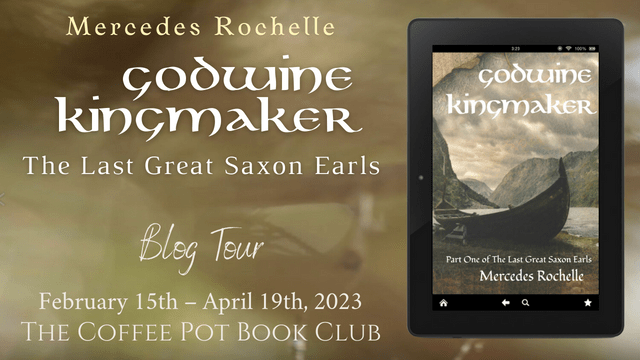
Today I’m delighted to welcome fellow author of Saxon stories, Mercedes Rochelle to the blog, to answer my questions about the family of Earl Godwine

I can never miss an opportunity to ask a fellow Saxon author questions about why they write about the same period as me. My thanks to Mercedes for answering them.

What drew you to the character of Godwine and his wife and children?

While I was writing my first book, Heir To A Prophecy, I introduced my protagonist Walter into London on the day Godwine came back from exile. It was a plot device to introduce him to Harold Godwineson (Walter took out one of the Normans fleeing through the crowd). I didn’t know who Godwine was, but I couldn’t shake him loose! I went back fifty years and discovered a great story.

Naturally, very little is known about these historical characters, and I had two challenges that dovetailed nicely. Both had to do with not wanting to fall into that old predictable trap concerning characters. First of all, the love interest. There are so many love stories that seem formulaic. I didn’t want that same old theme: disliking each other first, then falling in love (and all the variations thereof). On the other hand, I understand that there needs to be some kind of stress in the romance to make a good story. It was obvious that Godwine had a happy marriage (or at least a productive one) since they had so many children. I was really intrigued by the discrepancy of their social status. Godwine was a commoner, and Gytha was a noble (or the Danish equivalent). At the same time, I had a hard time figuring out why Swegn, the firstborn, turned into such a bad egg. I don’t believe a character should be all good or all bad. People just aren’t like that. Even wicked characters act that way for a reason; sometimes they have good qualities that get buried under their more powerful bad qualities. Finally I had an inspiration: if Godwine’s marriage started out in anger, or stress (Gytha was given to him in marriage, but she didn’t have to go willingly), perhaps the firstborn would be neglected and unloved. That would explain his subsequent behaviour. It took some doing to make that work, but I’m happy with the result.

What part of your research did you enjoy the most? 

I love research; I actually prefer the research to the writing. I knew I was going to like Godwine. What surprised me was how fascinated I was with Canute. He was an incredibly complicated character. From the angry king-to-be that cut the noses off his 200 hostages after England rejected him in favour of Aethelred the Unready, he eventually became a very successful monarch. Most of all, I loved the single combat between him and Edmund Ironside, where he cleverly talked himself out of getting flattened by convincing Edmund to split the kingdom between them. This may well be apocryphal, but that’s the challenge of writing about events 1000 years ago. We have more legends than “history” to work with, and the legends are so good they stick.

Was there a resource that was invaluable?

I hate to admit this because it makes me sound so old, but when I was writing Godwine Kingmaker there was no internet. Back then, I was living in St. Louis, MO—a very nice town but far from the libraries I needed. If the book wasn’t in the card catalogue, it might as well not even exist. So, like any warm-blooded researcher who didn’t have a family to take care of, I pulled up stakes and moved to New York. The day I discovered the New York Public Library my life changed forever. I found authors I never knew about, and finally got my hands on my first copy of Edward A. Freeman’s “History of the Norman Conquest of England”. I thought I had gone to heaven! In six volumes he wrote about every aspect of Anglo-Saxon England I could possibly think of. (These days Freeman is somewhat out of fashion, but he’s still my go-to when I need to look something up; he has never failed me yet.) Copy machines were available for ten cents a page, but as much as I needed to copy, I’d be better off buying the books—if I could find them. No such luck until a couple of years later, when I went on a book-buying trip to England and discovered Hay-on-Wye. A breakthrough! Those were the days (the late ’80s) when old used hardbacks were still easy to find, and I discovered my very own set of Freeman which I gleefully brought home. That was the original basis of all my research. Those books are still my most precious possession, though now you can find them online (scanned, of course).

Did you learn anything that surprised you while writing the trilogy?

Back to Canute again. While delving into Harold’s relationship with Edith Swan-neck in THE SONS OF GODWINE, again I wanted to avoid the usual romantic formulas. First of all, I had to decide whether Edith was a luscious young thing or an attractive widow; both possibilities were referred to in the histories. By lucky chance, I stumbled across Canute’s Law Code of 1020, designed to smooth relations between the Danes and the Saxons. One section dealt with heriot (essentially an inheritance tax), not a new concept. But I found a reference to protecting widows. Canute gave a widow twelve months to pay her husband’s heriot. But she had to remain unmarried or she would lose both her morning-gift and all possessions from her former husband. If some unscrupulous man coveted her inheritance and forced her to marry him, all the possessions would pass on to the nearest kinsman. The king would lose the heriot tax if this were to happen, so it was also written into Canute’s law that a widow should never be forced to marry a man she dislikes. After all, the Crown had much to lose. So I decided to make Edith a recent widow trying to evade the attentions of an unwelcome suitor, while she and Harold conducted their relationship. 

What is your personal opinion? Do you believe that William the Conqueror was justified in claiming England? Do you believe he had been promised it?

Apparently the whole justification came down to King Edward the Confessor’s promise to William when the duke visited England during Godwine’s exile. I think we can negate the assertion that Edward felt some sort of gratitude for having been sheltered there during his exile. When Edward left Normandy in 1041, William was only 13 years old and Edward was 38. With that age gap, it seems unlikely that the two of them would have developed a close relationship, so any alleged gratitude Edward might have owed probably belonged to William’s father Robert, dead by 1035. 

Now, during Godwine’s exile in 1051, it’s far from certain that William even visited England. Some historians thought he would have been too busy putting down rebellions to leave his country even for a short time. If William did visit England and if Edward offered him the crown at this point, it’s curious why he would have done so. The king knew that it was up to the Witan to decide the succession. However, considering his antagonism toward the Godwines (he even put the queen in a nunnery while Godwine was in exile), perhaps he made this alleged promise out of spite. 

However, it’s my belief that the blame can be placed upon Robert of Jumièges, former Archbishop of Canterbury and arch-enemy of Earl Godwine. Robert is one of the Normans who fled from London once it was clear that Godwine was back in control. He’s almost certainly the one who kidnapped the hostages, Godwine’s son Wulfnoth and grandson Hakon, and brought them to Normandy. In my interpretation, Jumièges acted on his own when he told William that Edward declared him heir to the English throne, and here are the hostages to guarantee his promise. What a great revenge on Godwine and all of England for kicking him out! Why wouldn’t William believe such an opportune offer?

Who is your personal favourite member of the House of Godwine?

When all is said and done, Earl Godwine still holds his place as my favourite. If it weren’t for him, there would be no Harold Godwineson Last Anglo-Saxon King. I think he helped smooth the relations between the conquering Danish king and his unhappy countrymen, then moved on to staunchly defend the Saxons against the hated Normans. His rise to power was unprecedented, and I think his fall was tragic, though not in the way we usually think of as a tragedy. Having sacrificed so much for the wrong son, he had nothing left to live for as he watched Harold take his place in the hearts of his people.

As you know, I write about the Earls of Mercia. What opinion did you form of the rivals to the House of Godwine while researching and writing your books?

I wondered if you’d ask that question! Of course, by the late Anglo-Saxon period, I think the Mercian earls had lost much of their lustre. Old Earl Leofric certainly held his own against Earl Godwine (with the help of Earl Siward of Northumbria). It seems the odds were against Leofric as Godwine’s sons were granted their own earldoms, shifting the balance of power in Godwine’s favour. At this stage, I always thought of them as bitter, unhappy competitors who could never regain their former glory. After King Edward died, Harold tried to join forces with the grandsons of Leofric, Edwin and Morcar, but I don’t think their association was ever successful. William the Conqueror certainly put an end to that. 

Thank you for answering my questions with such insight. I hope you enjoy the blog tour.

Here’s the blurb:

They showed so much promise. What happened to the Godwines? How did they lose their grip? Who was this Godwine anyway, first Earl of Wessex and known as the Kingmaker? Was he an unscrupulous schemer, using King and Witan to gain power? Or was he the greatest of all Saxon Earls, protector of the English against the hated Normans? The answer depends on who you ask. 

He was befriended by the Danes, raised up by Canute the Great, given an Earldom and a wife from the highest Danish ranks. He sired nine children, among them four Earls, a Queen and a future King. Along with his power came a struggle to keep his enemies at bay, and Godwine’s best efforts were brought down by the misdeeds of his eldest son Swegn. 

Although he became father-in-law to a reluctant Edward the Confessor, his fortunes dwindled as the Normans gained prominence at court. Driven into exile, Godwine regathered his forces and came back even stronger, only to discover that his second son Harold was destined to surpass him in renown and glory.
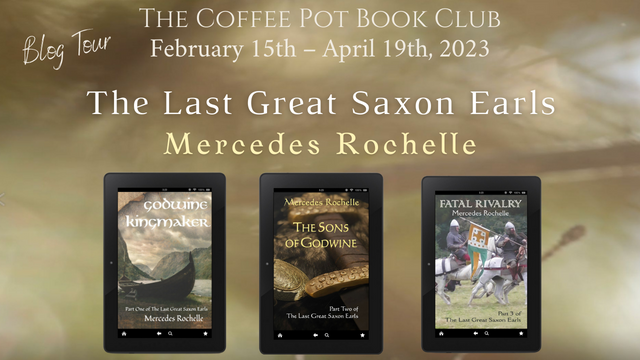
Buy Links:

This series is available on Kindle Unlimited

Universal Link

Amazon UK:   Amazon USAmazon CA:   Amazon AU:  

Audio:  

Meet Mercedes

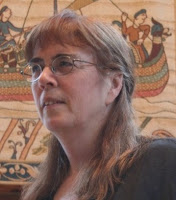
Mercedes Rochelle is an ardent lover of medieval history, and has channeled this interest into fiction writing. She believes that good Historical Fiction, or Faction as it’s coming to be known, is an excellent way to introduce the subject to curious readers. She also writes a blog: HistoricalBritainBlog.com to explore the history behind the story. 

Born in St. Louis, MO, she received by BA in Literature at the Univ. of Missouri St.Louis in 1979 then moved to New York in 1982 while in her mid-20s to “see the world”. The search hasn’t ended! 

Today she lives in Sergeantsville, NJ with her husband in a log home they had built themselves.

Connect with Mercedes

WebsiteTwitter:    Facebook:   

Book Bub:    Amazon Author Page:    Goodreads:   

Follow The Last Great Saxon Earls blog tour with The Coffee Pot Book Club

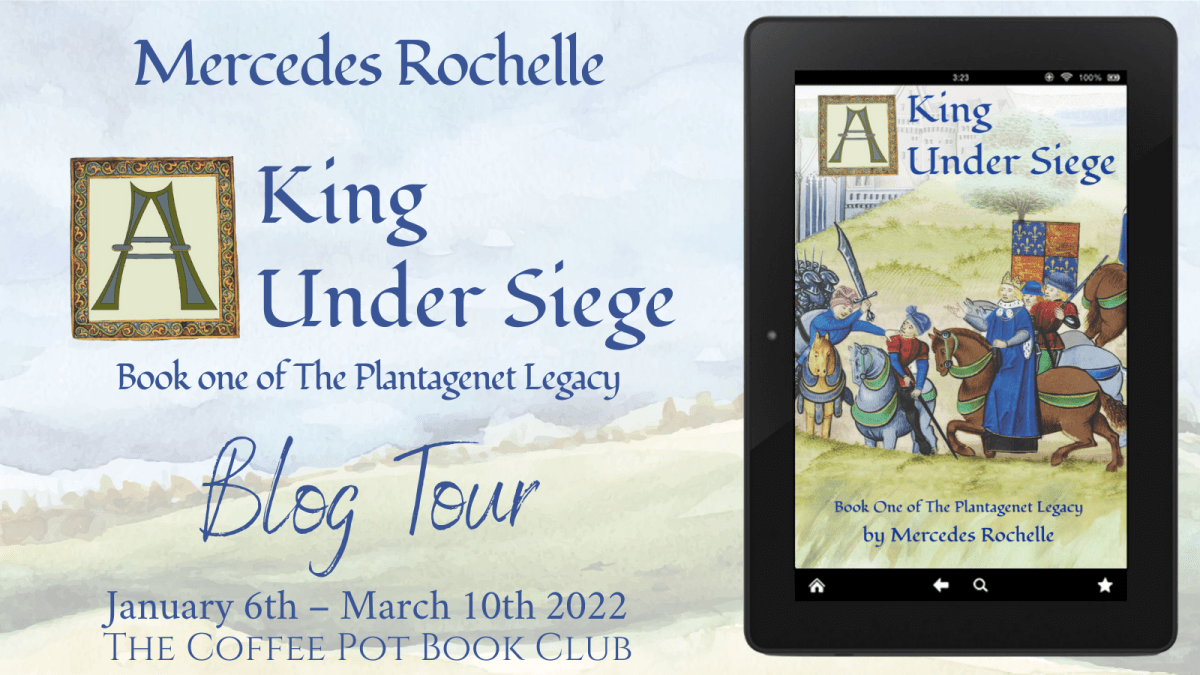
Today, I’m delighted to welcome Mercedes Rochelle to the blog with her new book, A King Under Siege.

Your book, A King Under Siege, sounds fascinating. Can you share with me what the first idea was that made you decide to write this story? It might be very different from how the story ended up being, but I am curious, if you don’t mind sharing. And, if the story is very different, would you mind sharing the process by which you ended up with your current novel?

Shakespeare and A King Under Siege

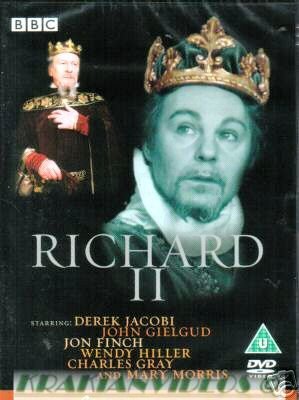
Back in my college days, I watched the new BBC Shakespeare Production of Richard II with Derek Jacobi. I had never heard of Richard, but I watched this play with growing fascination and by the end, when he sat in prison bemoaning the fate of kings, I was smitten. You know, I carried him around with me for over forty years, intending to write his story someday. 

At the time, I didn’t realize that Shakespeare only covered the last three years of Richard’s life in the play. I had no idea what I was in for: first the Peasants’ Revolt then the Lords Appellant (and the Merciless Parliament) putting Richard’s friends and advisors to death. His story was much more complicated than I ever imagined. And of course, it helped explain the events in Shakespeare’s play—especially the exile of Henry Bolingbroke, which was kind of “out of left field” to me. In fact, I would say that events during Richard’s reign deserved more than one play, but there’s a possibility that Shakespeare might have upset the queen if he had done so. He barely managed to stay out of jail as it was—especially after the Earl of Essex used his play to promote his ill-fated rebellion.

But I digress. Suffice it to say that Shakespeare’s play actually depicted events in my next book, THE KING’S RETRIBUTION. So I had to go back and start from the beginning. At first, I was going to gloss over the Peasants’ Revolt, but frankly I found it too interesting to ignore. Wat Tyler and John Ball were giant personalities, and their revolt shook medieval society to its core. And indeed, I think Richard’s actions revealed his courage under fire—a trait so important to kingship. Too bad he was only fourteen and under the thumb of his elders who were quick to downplay his accomplishments. 

Froissart-JohnBall-BL-Royal 18 E I f. 165v

But it wasn’t until I unearthed the whole Lords Appellant episode that I understood how Richard’s personality got warped. He lost everyone who was important to him—except for his wife—and was humiliated to the point of almost losing his crown. No wonder he felt the need to wreak revenge. It’s a marvel he waited so long. I believe the untimely death of Queen Anne removed the most effective brake on his unwholesome tendencies. 

So Shakespeare, who began his play with the famous scene where Bolingbroke and Mowbray accused each other of treason, showed us the beginning of the end. Their unfortunate quarrel gave Richard the opportunity to get rid of the last two Appellants who almost destroyed his kingship. He had already taken his revenge on the other three, the Duke of Gloucester (whose unavenged murder is referenced several times in the play without explanation), the Earl of Arundel (who was executed) and the Earl of Warwick (who was degraded and imprisoned). Exiling Bolingbroke and Mowbray gave Richard great satisfaction, and Gaunt’s death shortly thereafter clinched his triumph when he confiscated Bolingbroke’s inheritance. 

I always wondered whether the Elizabethans knew the history behind Shakespeare’s plays (for instance, did they know Banquo in Macbeth was the ancestor of the Stewarts?). In Richard II’s case, the play works as it is very well, but a knowledge of its background makes it even more comprehensible. I watched the play often while writing this book (and afterwards), and each time I saw it I caught something new. Needless to say, the same qualifies for Henry IV, as I was soon to discover!

Thank you so much for sharing. I think Shakespeare has a lot to be blamed for. His tendency to play around with details of the past is as fascinating as the events he depicts. Good luck with the new book.

Here’s the blurb:


Richard II found himself under siege not once, but twice in his minority. Crowned king at age ten, he was only fourteen when the Peasants’ Revolt terrorized London. But he proved himself every bit the Plantagenet successor, facing Wat Tyler and the rebels when all seemed lost. Alas, his triumph was short-lived, and for the next ten years he struggled to assert himself against his uncles and increasingly hostile nobles. Just like in the days of his great-grandfather Edward II, vengeful magnates strove to separate him from his friends and advisors, and even threatened to depose him if he refused to do their bidding. The Lords Appellant, as they came to be known, purged the royal household with the help of the Merciless Parliament. They murdered his closest allies, leaving the King alone and defenseless. He would never forget his humiliation at the hands of his subjects. Richard’s inability to protect his adherents would haunt him for the rest of his life, and he vowed that next time, retribution would be his.

Buy Links:

Universal Link

Amazon UKAmazon USAmazon CAAmazon AU

Barnes and Noble: 

Meet the Author

Mercedes Rochelle is an ardent lover of medieval history, and has channeled this interest into fiction writing. Her first four books cover eleventh-century Britain and events surrounding the Norman Conquest of England. The next series is called The Plantagenet Legacy about the struggles and abdication of Richard II, leading to the troubled reigns of the Lancastrian Kings. She also writes a blog: HistoricalBritainBlog.com to explore the history behind the story. Born in St. Louis, MO, she received by BA in Literature at the Univ. of Missouri St.Louis in 1979 then moved to New York in 1982 while in her mid-20s to “see the world”. The search hasn’t ended! Today she lives in Sergeantsville, NJ with her husband in a log home they had built themselves.

Connect with Mercedes

WebsiteTwitterFacebook

BookBubAmazon Author PageGoodreads:


Don’t forget to check out the other stops on the A King Under Siege blog tour with The Coffee Pot Book Club

Mercedes Rochelle is sharing some historical research from The Usurper King #blogtour #histfic

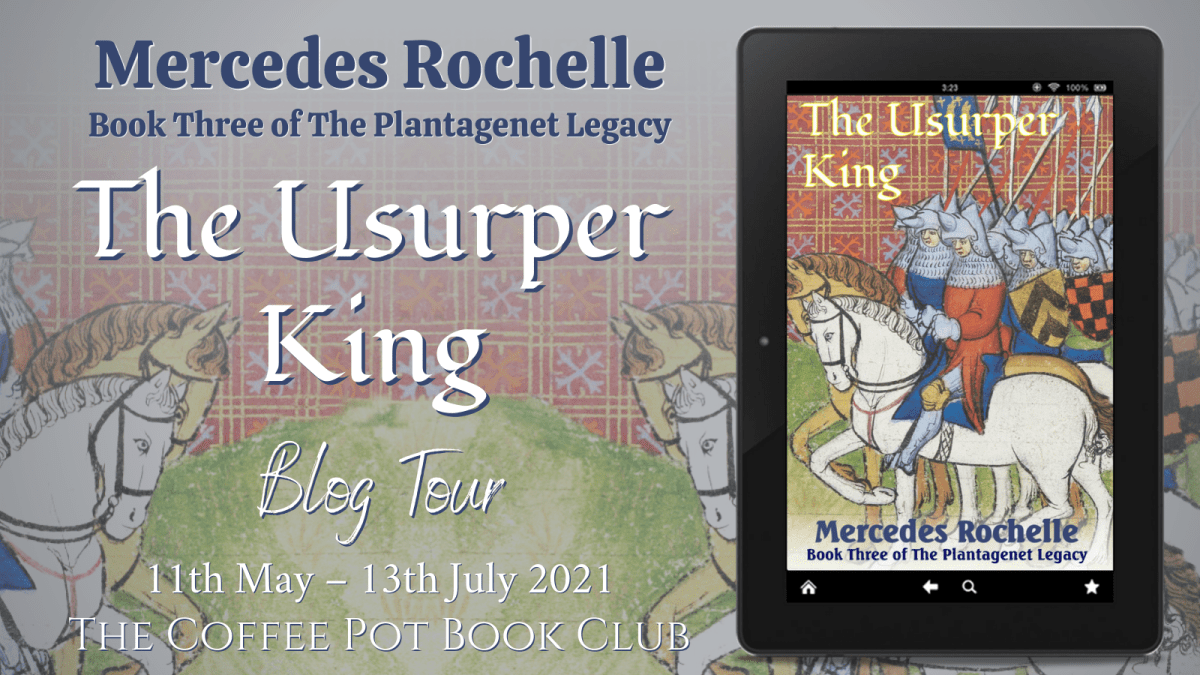
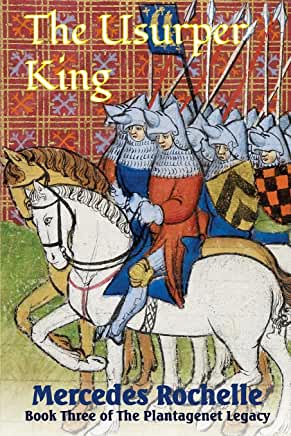
Today I’m delighted to welcome Mercedes Rochelle to the blog with a fantastic post about her new book, The Usurper King.

Your book, Usurper King, is my sort of historical fiction book, offering a retelling of the past, with people who existed and lived, and caused themselves all sorts of problems. As a historian first and foremost, and then a writer, I’m always interested in how people research their historical stories.

Can you explain your research process to me, and give an idea of the resources that you rely on the most (other than your imagination, of course) to bring your historical landscape to life? 

Do you have a ‘go’ to book/resource that you couldn’t write without having to hand, and if so, what is it (if you don’t mind sharing)?

Thank you for hosting me on your blog! Oh, yes, research is my favorite thing. I couldn’t imagine writing any other type of book, since research is such a big part of the process for me. In fact, I’m always sorry when I do have to rely on my imagination, because the “real” history always seems more interesting to me. To repeat a well-worn phrase, “you just can’t make this stuff up”. History never ceases to amaze me.

Back in the days of my 11th century work, I started writing about ten years before the internet was a twinkle in Al Gore’s eye. If the local library didn’t have a book, as far as I was concerned it didn’t exist. That’s one of the major reasons I moved to New York in my mid-20s. The New York Public Library was a treasure trove. I also remember my first trip to England; back then, used bookstores still had plenty of old hardbacks and in Hay-On-Wye I discovered the full 6-volume set of Edward A. Freeman’s History of the Norman Conquest of England. Who cares that they weighed a hundred pounds? (Well, by the time I bought all the other books my suitcase probably weighed that much.) This is in the days before they had wheels on suitcases! But I digress. That set was truly my go-to source for all my novels of the period. Of course I eventually supplemented them with more modern scholars, but I never found a historian with more exhaustive knowledge. 

That is, until I jumped forward 300 years. Now my exhaustive historian is James Hamilton Wylie, with four books on Henry IV and three books on Henry V (vols. 2 & 3 published posthumously). Wow. But try finding him! The best you can get is a poor scanned copy, or an even poorer printed copy of the scan. 

When I moved from Harold Godwineson to Richard II, I had to start all over again with my research. It took me a year of daily reading before I even began writing about Richard II. I’ve learned that the fat books (in page-length) are the best starting points. They give us a broad brush-stroke (like a landscape painting) and create the structure for the story. The huge books tend to be sparse on details. Then I slowly get more specific, finding books that are more focused on a particular topic. 

By the time I delve into academic articles, I am ready to sort out the fine details of a scene. I learned to pay close attention to footnotes; this is where I find most of my articles. These treatises are specific to a particular subject, so the author puts every bit of knowledge into an event (including all contradictory source material). For instance, in my last book, THE KING’S RETRIBUTION, I had to tackle the death of the Duke of Gloucester before the 1397 Revenge Parliament. As is usually the case, historians were all over the place trying to decide what happened (at the time, it was a well-kept secret). Thank goodness for Professor James Tait. He wrote an article, DID RICHARD II MURDER THE DUKE OF GLOUCESTER? in which he gave us the most detailed description of this whole episode, tracking all the dates and highlighting the missing passages in Gloucester’s written confession. As far as I can tell, this is still the most definitive argument on the subject, and he concluded that Richard was guilty as charged. I probably read that article a dozen times before I wrote the scene.

If I’m lucky, I often find these articles online. JSTOR.org is a fabulous source; I pay $10 per month for a subscription and it’s well worth it. Sometimes I have to pay for the article. Otherwise, they might be bound in a compilation such as Fourteenth Century Studies or The Fifteenth Century (in fifteen volumes) and can’t be had elsewhere. These can get very expensive, and alas, sometimes each volume only has one or two articles I need. If I’m desperate enough, I’ll bite the proverbial bullet and hope they will provide more help in future projects! 

So over the course of a novel, I usually consume well over 30 history books and fill two loose-leaf binders full of articles. After I’ve run my course, I go back to the beginning and re-read much of the material to pick up stuff I missed the first time through. You just can’t absorb it all when it’s new. The reading never stops while I’m writing; occasionally I’ll be able to insert something in my editing phase. Unfortunately, I never learned Latin so I can’t go to the source material (if it’s even accessible to non-scholars). But I’ve found that the important stuff is repeated in secondary sources anyway, which frankly is the bulk of what I would need for a work of fiction.

Each century has its definitive scholars. In late 14th-early 15th century England you absolutely must read Kenneth McFarlane; he opened up new scholarship on the period in the 40s and 50s. My favorite historian is Chris Given-Wilson, who did write a “fat” book about Henry IV. He also gives great background on the royal household and English nobility. Without the background, the history will fall flat. 

Needless to say, if I’m not enamoured with a subject, I’m not likely to write a novel about it. I would say I’m spending an average of two years thinking about and writing each book; with a series, I’m already researching one or even two books ahead. It helps foreshadow certain events. When I get to the end of a series, it’s like falling off a cliff!

Henry Bolingbroke with Richard II at Flint Castle, Harley MS 1319, British Library  (Wikipedia)

Coronation of Henry IV, Harley MS 4380, F.186V,  British Library (Wikimedia)

Thank you so much for such a fascinating post. Good luck with the new book.

Here’s the blurb;

From Outlaw to Usurper, Henry Bolingbroke fought one rebellion after another.

First, he led his own uprising. Gathering support the day he returned from exile, Henry marched across the country and vanquished the forsaken Richard II. Little did he realize that his problems were only just beginning. How does a usurper prove his legitimacy? What to do with the deposed king? Only three months after he took the crown, Henry IV had to face a rebellion led by Richard’s disgruntled favorites. Worse yet, he was harassed by rumors of Richard’s return to claim the throne. His own supporters were turning against him. How to control the overweening Percies, who were already demanding more than he could give? What to do with the rebellious Welsh? After only three years, the horrific Battle of Shrewsbury nearly cost him the throne—and his life. It didn’t take long for Henry to discover that that having the kingship was much less rewarding than striving for it.

Amazon UKAmazon US

Mercedes Rochelle

Mercedes Rochelle is an ardent lover of medieval history, and has channeled this interest into fiction writing. Her first four books cover eleventh-century Britain and events surrounding the Norman Conquest of England. The next series is called The Plantagenet Legacy about the struggles and abdication of Richard II, leading to the troubled reigns of the Lancastrian Kings. She also writes a blog: HistoricalBritainBlog.com to explore the history behind the story. Born in St. Louis, MO, she received by BA in Literature at the Univ. of Missouri St.Louis in 1979 then moved to New York in 1982 while in her mid-20s to “see the world”. The search hasn’t ended! Today she lives in Sergeantsville, NJ with her husband in a log home they had built themselves.

Connect with Mercedes Rochelle.

Website:  BlogFacebookTwitter

Book Bub:  Amazon Author PageGoodreads: 

Don’t forget to check out the stops on the blog tour with The Coffee Pot Book Club.