It’s often forgotten, in the great swirl of events throughout the eleventh century, that England wasn’t conquered once, but instead three times, by King Swein in 1013, by his son in 1016, and then by William the Conqueror in 1066.
England only reclaimed its English king with the death of King Swein shortly after he claimed the kingship, when Æthelred II, the much-maligned, king of England was restored, it’s said, by his nobility, provided he did ‘a better job’ of it (I paraphrase). At this time, Cnut, Swein’s son, wasn’t deemed as suitable to replace his father, while Æthelred II had many sons who could succeed him. Æthelred was deemed ‘an old man’ by now (born probably in about 966-8), but he had surviving sons from his marriage to his first wife, named as Ælfgifu, and also from the better known Lady Emma. The oldest of these sons,Athelstan, died in 1014, having made a name for himself as an honourable man. His will survives. His next youngest brother had also perished a decade ago, meaning Edmund was the oldest surviving son. In the great swirl of events, people forget Edmund was proclaimed king on his father’s death in April 1016, and that he ruled for a good sixth months, before his own death in November.
The relationship between Edmund and his father is difficult to unpick. It doesn’t seem to have been congenial. Æthelred II is most often accused of having overmighty subjects (somewhat ironic when they invited him back to England after Swein’s death), and there was a particular thorny problem of Eadric Streona, married, it’s said, to one of Æthelred’s daughters, and a tricky character. Eadric is associated with Mercia. To counter his reach, Edmund, married into a Mercian family in 1015, the story being that he rescued the woman from captivity and then married her. As romantic as that might sound, this was sound political expediency. In the tenth century, King Athelstan was strongly associated with Mercia, being declared king of Mercia before becoming king of Wessex. Edgar, in the 950s, seems to have done something similar, being declared king of Mercia while his brother, Eadwig, was king of England, or perhaps only Wessex – there is much uncertainty about this. Eadwig would die young, allowing Edgar to build on his Mercian powerbase and claim England for himself.
As such, Edmund was following known precedent when he looked to Mercia for support when he must have feared that the eyes of the witan would favour his younger half-brother, Edward, for the kingship. No doubt, Edmund actually gained support because while England was at war with Cnut throughout 1016, he was a man grown and could fight for the English. Edward, much younger, would have been unable to do so.
And so to 1016. On the death of his father, Edmund was declared king, but Cnut also took the same title. Many battles later, Cnut and Edmund reached an accord, it’s said, after the English defeat at the unallocated battle of Assandun. England was ‘split,’ Edmund became king of Wessex, Cnut held the remainder and it could have possibly remained split if not for Edmund’s untimely death, perhaps from wounds taken in battle fighting against Cnut and his warriors, and in which, Eadric Streona had played his new king false, defecting to King Cnut’s side.
Edmund II, known as Ironside, left two children, perhaps twins, and these children were raised in exile, away from England and the reach of the Danish conquering force. They did still have a part to play in the future of England, and Edmund’s granddaughter became queen of Scotland in 1070, while his grandson was briefly declared king of England in the tumultuous events of 1066.
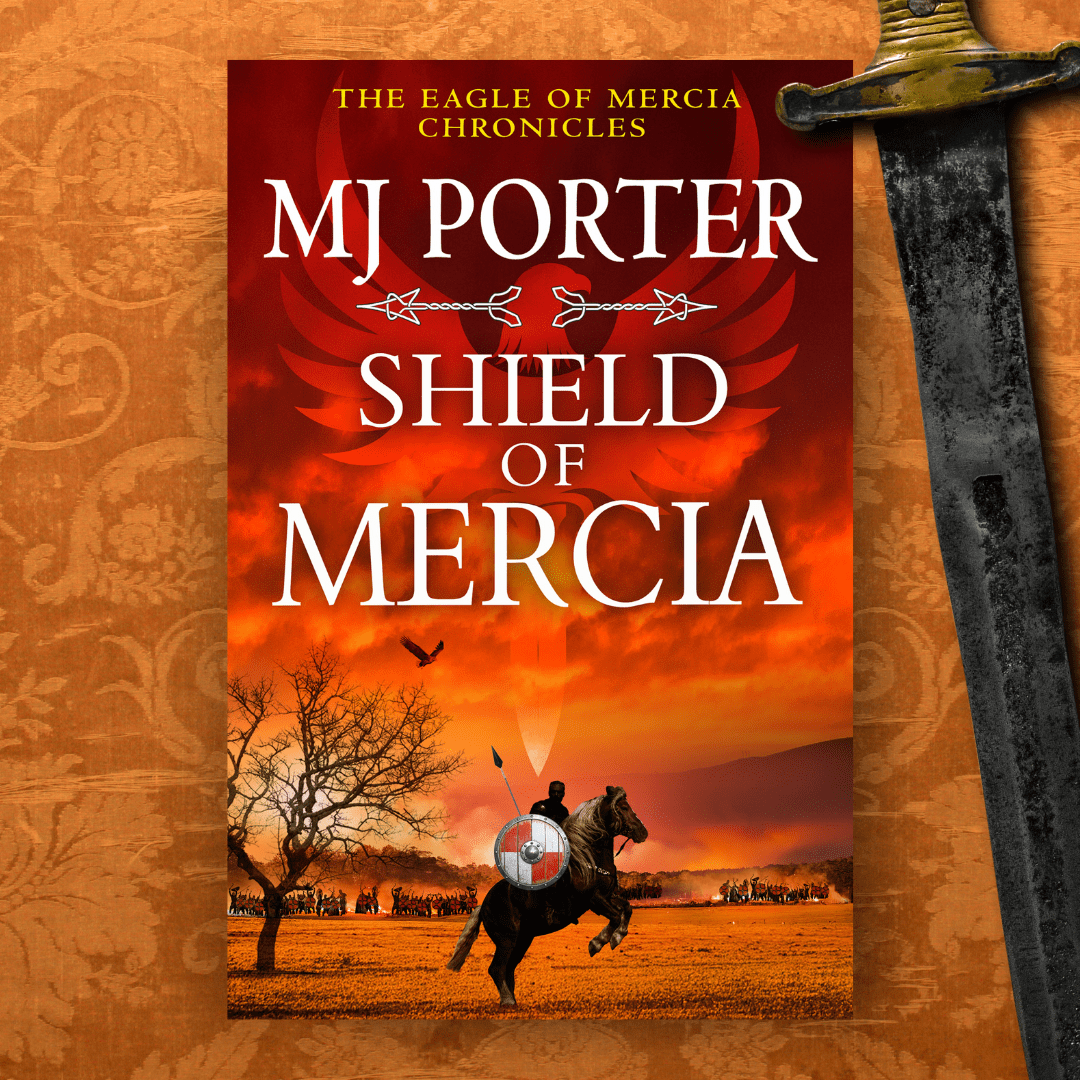
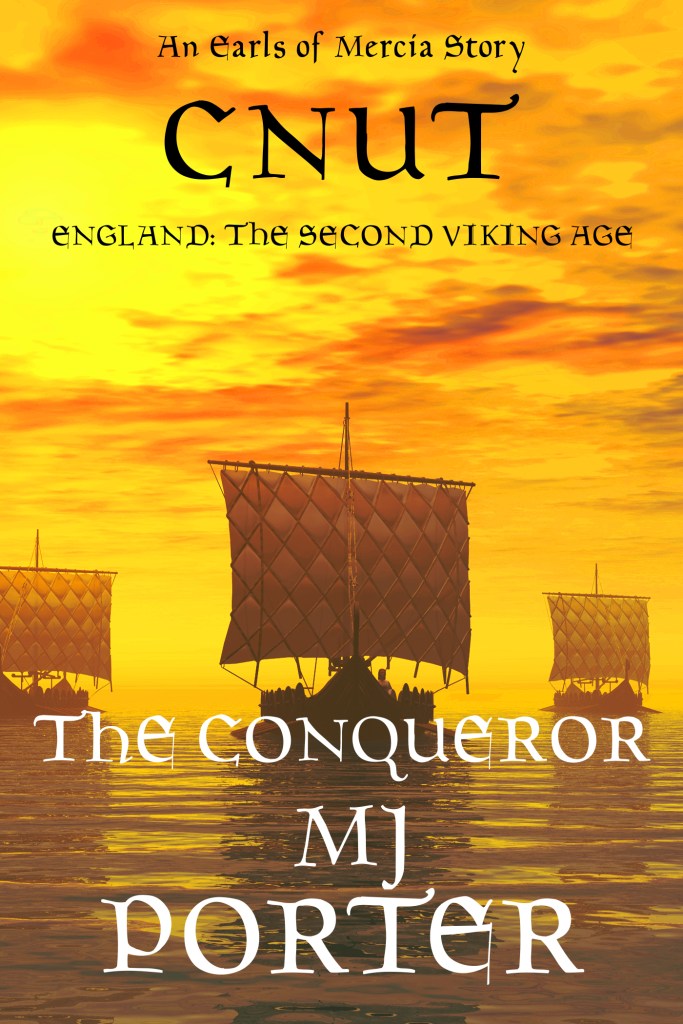
You can read the story of Cnut and Edmund in The Earls of Mercia series side story, Cnut: The Conqueror.
Here’s the blurb:
To gain what he wanted, what he felt he was owed, he would do anything, even if it meant breaking oaths to a woman he loved and the mother of his son.
Swein, King of Denmark, and briefly England, lies dead, his son ousted from England as King Æthelred returns from his exile in Normandy at the behest of his witan and the bishops. Æthelred might have relinquished his kingdom to Swein, the Danish conqueror, but with Swein dead, the men have no interest in supporting an untried youth whose name resounds with the murder of one of England’s greatest bishops. A youth known only for his savagery and joy of battle. A true Norseman who utilizes his weapons without thought.
But Cnut wants a kingdom and will do anything to gain one. As England’s ravaged by a civil war between the sons of two former kings, Edmund, son of King Æthelred, and Cnut, son of Swein, the men must make personal decisions in the heat of battle as they strive to reclaim their birthrights whilst doing all they can to stay alive.
Cnut is a side story in the Earls of Mercia series, retelling the story of the last century of Saxon England through the eyes of the powerful Earls of Mercia, the only noble family, apart from the House of Wessex, to hold their position for nearly a century.
Primary sources are never without problems. They hold bias, they hold perceived bias, but they are, more often than not, an insight into how people perceived an event as soon after it as details are available to the modern historian.
The Anglo-Saxon Chronicle, with it’s many recensions is a fantastic source, but riddled with problems which can, quite often be clearly seen precisely because it survives in different versions.
For the true student, it’s worth investigating the bias of the different ASCs and taking note of them. Over the years a number of approaches have been taken to the ASC starting from when it was just accepted as the source for Saxon England. This means that for a time all the different recensions were amalgamated. Now, the individuality of each recension is truly appreciated, because as with all early sources, quite often, what isn’t said is just as important as what is said.
(The Anglo-Saxon Chronicle also benefits from a latinised version that was written by Ealdorman Æthelweard at the end of the tenth century and this can likewise be used in a similar way as the Old English recensions.)
Yet, for the sake of not infringing anyone’s copyright, when publishing my books and listing information on my websites, I have to rely on the older translations of the ASC as these are the ones I can use freely. Whilst this isn’t ideal, it does allow me to still make a very valid point, and that is this, the entry for the year 1016 (the year Cnut claimed the English kingdom) is vast, and I mean vast. Compared to previous year’s, 1016 is massive. (I’ve copied it below from http://omacl.org/Anglo/part4.html, but this resource seems to have disappeared, but there is another version available here: https://archive.org/stream/anglosaxonchroni00gile/anglosaxonchroni00gile_djvu.txt) if you want to take a look. I am not sure, as I look at this in 2023, which text this refers to, but possible A). Not until 1023 does an entry even half as long as this appear, and I’m starting to consider if this was all a lot of political rhetoric and whether, the entries for previous years have been purposefully shortened, or amended to show the inevitability of Cnut’s accession to the kingdom of the English. I need to do far more research, but as 2015 roles round to 2016, I can’t see a better time to more fully study the time period and this I plan to do next year.
A.D. 1016. This year came King Knute with a marine force of one hundred and sixty ships, and Alderman Edric with him, over the Thames into Mercia at Cricklade; whence they proceeded to Warwickshire, during the middle of the winter, and plundered therein, and burned, and slew all they met. Then began Edmund the etheling to gather an army, which, when it was collected, could avail him nothing, unless the king were there and they had the assistance of the citizens of London. The expedition therefore was frustrated, and each man betook himself home. After this. an army was again ordered, under full penalties, that every person, however distant, should go forth; and they sent to the king in London, and besought him to come to meet the army with the aid that he could collect. When they were all assembled, it succeeded nothing better than it often did before; and, when it was told the king, that those persons would betray him who ought to assist him, then forsook he the army, and returned again to London. Then rode Edmund the etheling to Earl Utred in Northumbria; and every man supposed that they would collect an army King Knute; but they went into Stafforddhire, and to Shrewsbury, and to Chester; and they plundered on their parts, and Knute on his. He went out through Buckinghamshire to Bedfordshire; thence to Huntingdonshire, and so into Northamptonshire along the fens to Stamford. Thence into Lincolnshire. Thence to Nottinghamshire; and so into Northumbria toward York. When Utred understood this, he ceased from plundering, and hastened northward, and submitted for need, and all the Northumbrians with him; but, though he gave hostages, he was nevertheless slain by the advice of Alderman Edric, and Thurkytel, the son of Nafan, with him. After this, King Knute appointed Eric earl over Northumbria, as Utred was; and then went southward another way, all by west, till the whole army came, before Easter, to the ships. Meantime Edmund Etheling went to London to his father: and after Easter went King Knute with all his ships toward London; but it happened that King Ethelred died ere the ships came. He ended his days on St. George’s day; having held his kingdom in much tribulation and difficulty as long as his life continued. After his decease, all the peers that were in London, and the citizens, chose Edmund king; who bravely defended his kingdom while his time was. Then came the ships to Greenwich, about the gang-days, and within a short interval went to London; where they sunk a deep ditch on the south side, and dragged their ships to the west side of the bridge. Afterwards they trenched the city without, so that no man could go in or out, and often fought against it: but the citizens bravely withstood them. King Edmund had ere this gone out, and invaded the West-Saxons, who all submitted to him; and soon afterward he fought with the enemy at Pen near Gillingham. A second battle he fought, after midsummer, at Sherston; where much slaughter was made on either side, and the leaders themselves came together in the fight. Alderman Edric and Aylmer the darling were assisting the army against King Edmund. Then collected he his force the third time, and went to London, all by north of the Thames, and so out through Clayhanger, and relieved the citizens, driving the enemy to their ships. It was within two nights after that the king went over at Brentford; where he fought with the enemy, and put them to flight: but there many of the English were drowned, from their own carelessness; who went before the main army with a design to plunder. After this the king went into Wessex, and collected his army; but the enemy soon returned to London, and beset the city without, and fought strongly against it both by water and land. But the almighty God delivered them. The enemy went afterward from London with their ships into the Orwell; where they went up and proceeded into Mercia, slaying and burning whatsoever they overtook, as their custom is; and, having provided themselves with meat, they drove their ships and their herds into the Medway. Then assembled King Edmund the fourth time all the English nation, and forded over the Thames at Brentford; whence he proceeded into Kent. The enemy fled before him with their horses into the Isle of Shepey; and the king slew as many of them as he could overtake. Alderman Edric then went to meet the king at Aylesford; than which no measure could be more ill-advised. The enemy, meanwhile, returned into Essex, and advanced into Mercia, destroying all that he overtook. When the king understood that the army was up, then collected he the fifth time all the English nation, and went behind them, and overtook them in Essex, on the down called Assingdon; where they fiercely came together. Then did Alderman Edric as he often did before — he first began the flight with the Maisevethians, and so betrayed his natural lord and all the people of England. There had Knute the victory, though all England fought against him! There was then slain Bishop Ednoth, and Abbot Wulsy, and Alderman Elfric, and Alderman Godwin of Lindsey, and Ulfkytel of East-Anglia, and Ethelward, the son of Alderman Ethelsy (59). And all the nobility of the English nation was there undone! After this fight went King Knute up with his army into Glocestershire, where he heard say that King Edmund was. Then advised Alderman Edric, and the counsellors that were there assembled, that the kings should make peace with each other, and produce hostages. Then both the kings met together at Olney, south of Deerhurst, and became allies and sworn brothers. There they confirmed their friendship both with pledges and with oaths, and settled the pay of the army. With this covenant they parted: King Edmund took to Wessex, and Knute to Mercia and the northern district. The army then went to their ships with the things they had taken; and the people of London made peace with them, and purchased their security, whereupon they brought their ships to London, and provided themselves winter-quarters therein. On the feast of St. Andrew died King Edmund; and he is buried with his grandfather Edgar at Gastonbury. In the same year died Wulfgar, Abbot of Abingdon; and Ethelsy took to the abbacy.
It could be as simple as many events taking place in one year but I harbour the feeling that Cnut might have wanted to portray Edmund as a great warrior to make his own triumphs that little bit greater. After all, Æthelred II receives no treatment as detailed as Edmund throughout his 30 years on the throne and Edmund ruled for a matter of months. While Edmund is still shown as being unable to take decisive military action against Cnut, he fares much better than poor old Æthelred (according to the Anglo-Saxon Chronicle)! Perhaps I should count the words Edmund receives compared to Cnut as a really basic indicator of the bias of the entry?
There are many events planned for the anniversary of Cnut’s accession to the English kingdom, and I know that much will be said and written about the event. Maybe by this time next year, there might be many, many theories abounding about the ASC but for now, I’m happy to be questioning the information I have, or don’t have, and raising the interesting questions of just how much the people of Anglo-Saxon/Anglo-Danish England used propaganda? It’s certainly not a new tool and it’s one the people of England understood a thousand year’s ago just as well as they do now. Cnut’s Queen, Emma/Ælfgifu had a book commissioned about Cnut shortly after his death, and the latinised version of the ASC that I mentioned above, was also a political statement by it’s author, thought to be an ealdorman, and so a member of the nobility.
Be wary of what is accepted as fact, just because someone took the time to a) write it down and b) ensure it survived to modern times!











 MJ Porter
