
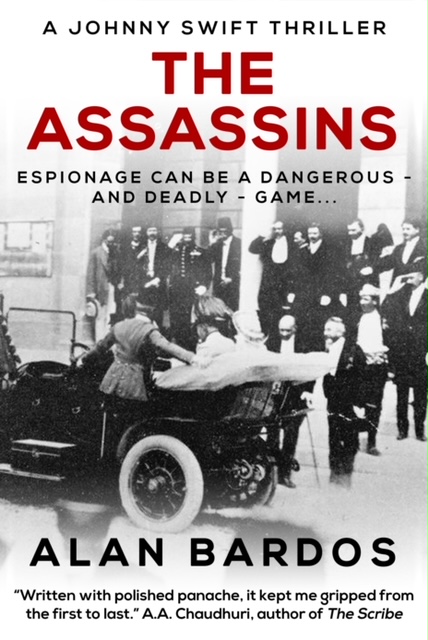
Today, I’m delighted to welcome a returning Alan Bardos to the blog, with a post about A Comedy of Errors inspired by his book about the assassination of Archduke Franz Ferdinand and his wife Sophie.
The assassination of Archduke Franz Ferdinand was one of history’s greatest turning points, but it happened by accident. Everyone knows the story ends with the death of the Archduke and his wife, Sophie, putting into play the diplomatic crisis that lead to the First World War. It is perhaps less well known that the events leading up to the assassination were a terrible comedy of errors that culminated in a world changing tragedy.
It was this combination of tragedy and comedy that first drew me to the story and, I hope will draw people to a novel about the assassination, despite knowing the ending! The assassination of Franz Ferdinand happened as a result of a whole series of mistakes and missed opportunities right from the beginning.
When the assassins travelled from Belgrade to Sarajevo, Nedeljko Cabrinovic the biggest liability of the conspirators, met a police detective from Sarajevo on the train in Bosnia. The detective was a friend of his father’s, who was a businessman and pillar of the community, which had created a lot of conflict with his radical son.
The policeman had recently seen Nedeljko’s father and struck up a conversation with Nedeljko to catch him up on family news. This made Gavrilo Princip, who was traveling separately, but by accident sitting in the same train carriage, nervous. Cabrinovic’s easy going nature had already endangered the other assassins during the journey. The Policeman noticed and asked Cabrinovic who Gavrilo was and why he was staring at them, but his suspicions were not raised any further. A simple request to see Gavrilo Princip’s papers would have revealed that he was travelling illegally and put pay to the whole plot before the assassins reached Sarajevo.
This reflects the Austro-Hungarian Government’s attitude to the threat placed by the nationalist movements in their Balkan provinces. No attempt was made to counter them because the security services did not believe they existed, let alone posed a threat. The repeated warnings of a possible assassination were ignored by the local military governor, General Potiorek, the Archduke himself and the Austro-Hungarian Government. The idea that half starved schoolboys could be any kind of a threat was too ridiculous to contemplate.
This is the main theme I wanted to explore in The Assassins, through my two lead fictional characters: Johnny Swift, a feckless British diplomat and Lazlo Breitner, a methodical Hungarian official.
Breitner is well aware of the threat from the assassins and does everything he can to persuade the authorities of the danger posed by the nationalist movements, bringing him into conflict with his superiors.
He is forced to take drastic measures to convince them and coerces Johnny into joining the conspirators. Johnny manages to ingratiate himself with the assassins and joins in their reckless behaviour that should have got them caught. Somehow they remain undetected and Johnny’s licentious nature frustrates Breitner’s plan.
On the morning of the Archduke’s visit Johnny realises the enormity of his error and tries to foil the assassination plot. Then the tragedies of 28th June 1914 come into play.
They say that the side that makes the least amount of mistakes wins a war. It also seems to be the case for the side who starts them.
Here’s the blurb
1914.
Tensions are reaching boiling point in Europe and the threat of war is imminent.
Johnny Swift, a young and brash diplomatic clerk employed by the British embassy is sent to infiltrate the ‘Young Bosnians’, a group of idealistic conspirators planning to murder Franz Ferdinand. The heir to the Austro-Hungarian throne, in a bid to liberate their country from the monarchy’s grip.
Swift has been having an affair with his employer’s wife, Lady Elizabeth Smyth. Sir George Smyth dispatches the agent on the dangerous mission, believing that it will be the last he will see of his young rival.
The agent manages to infiltrate the Young Bosnian conspirators’ cell, helped by Lazlo Breitner, a Hungarian Civil Servant.
However, Swift soon realises that he may be in over his head. His gambling debts and taste for beautiful women prove the least of his problems as he struggles to survive on his wits in the increasingly complex – and perilous – world of politics and espionage.
Desperate to advance himself and with the lives of a royal couple unexpectedly in his hands, Swift tries to avert catastrophe.
Amazon Purchase Links
Meet the author
Writing historical fiction combines the first great love of Alan Bardos’s life, making up stories, with the second, researching historical events and characters. He currently lives in Oxfordshire with his wife… the other great love of his life.
There is still a great deal of mystery and debate surrounding many of the events of the First World War, which he explores in his historical fiction series. Through the eyes of Johnny Swift, a disgraced and degenerate diplomat and soldier.
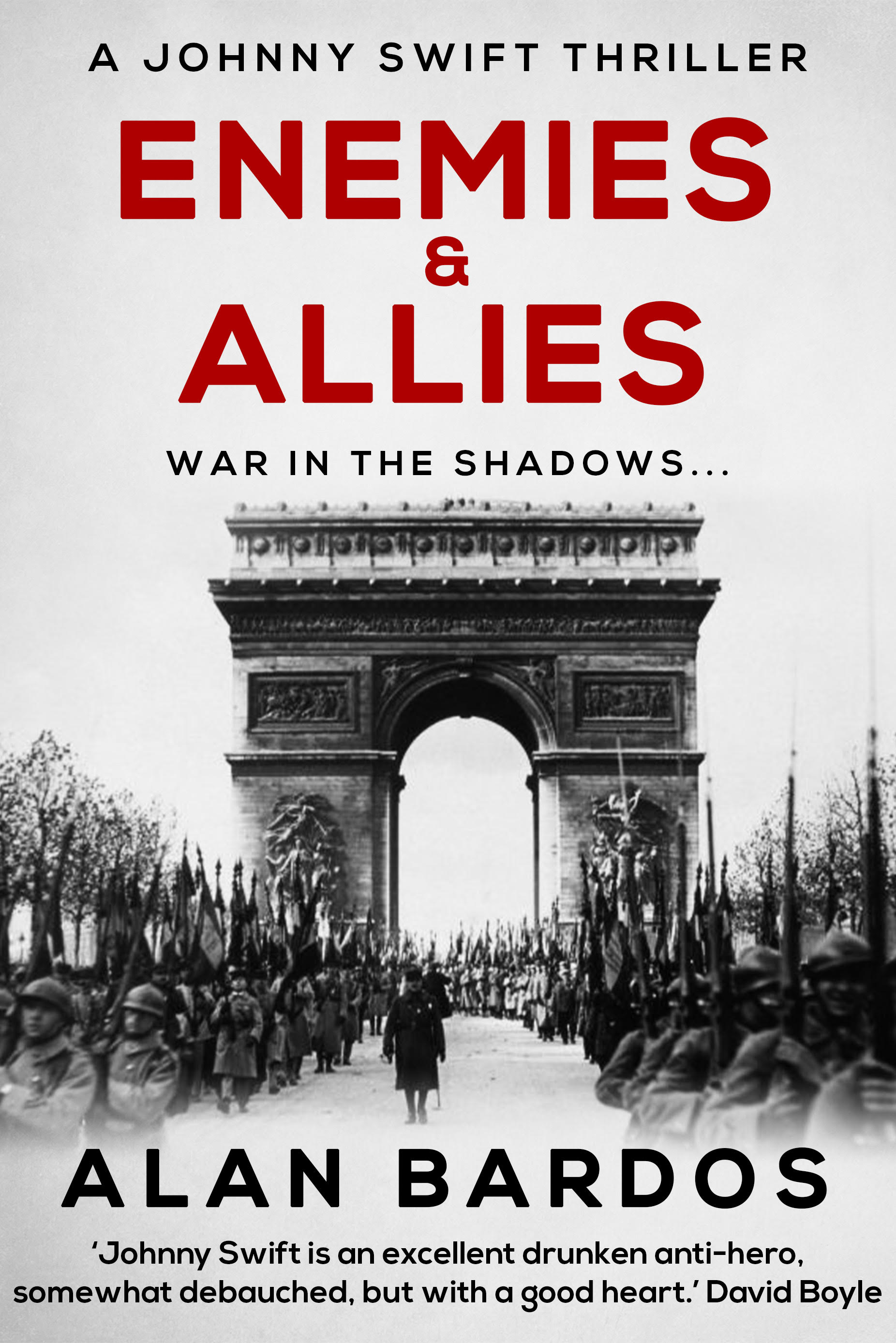
The series starts with the pivotal event of the twentieth century. The Assassination of Archduke Franz Ferdinand. The second book ‘The Dardanelles Conspiracy’ is based on an attempt by Naval Intelligence to bribe Turkey out of the First World War. In the third book Johnny will be employed as a useful idiot to flush out a traitor working to undermine the Allies.

Connect with Alan

 MJ Porter