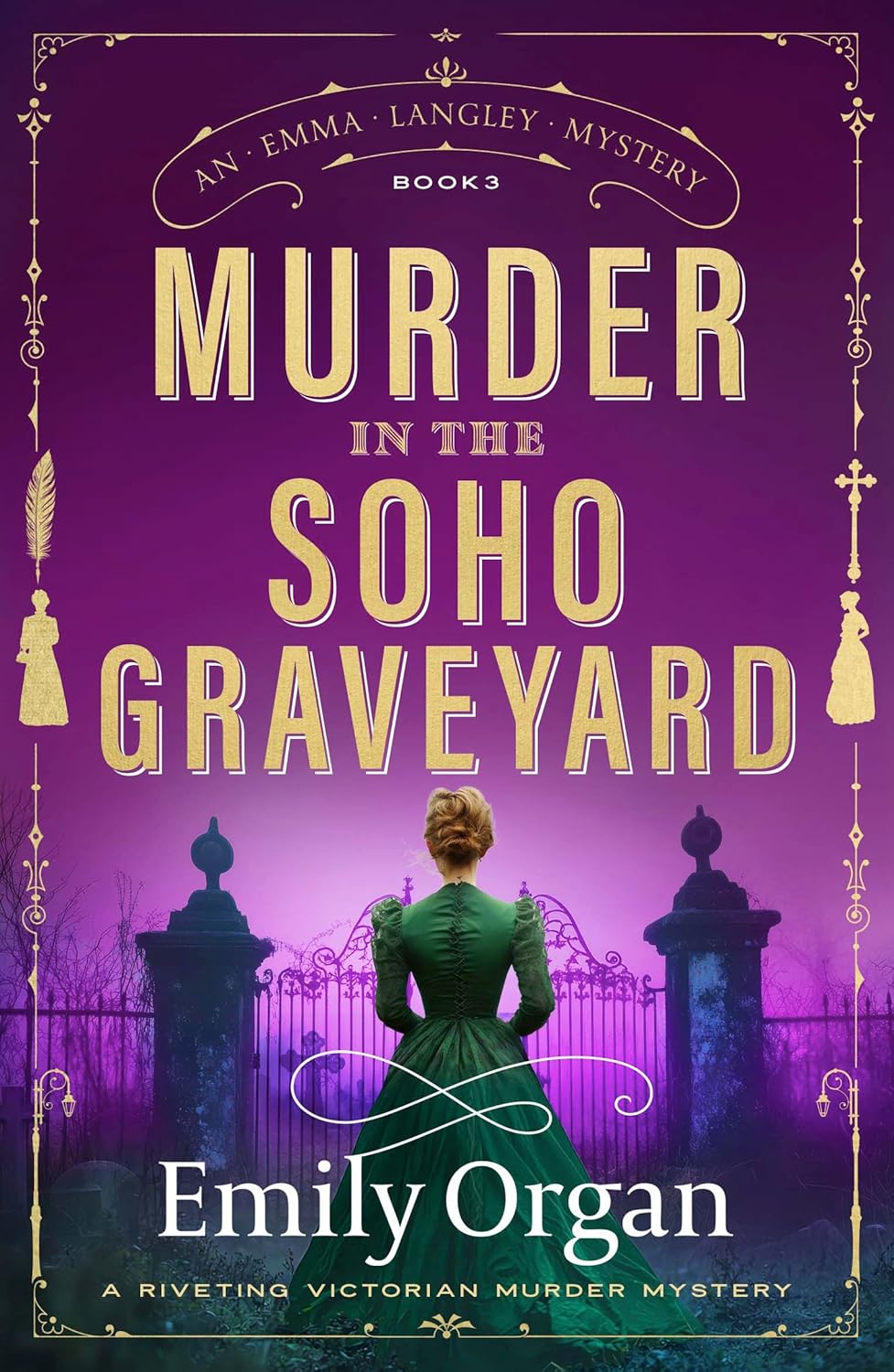

I’m sharing my review for Murder in the Soho Graveyard, a Victorian mystery #histfic #bookreview (as well as reviews for the 1st two books in the series) #mystery

I’m sharing my review for Murder in the Soho Graveyard, a Victorian mystery #histfic #bookreview (as well as reviews for the 1st two books in the series) #mystery

Here’s the blurb

A churchyard discovery. A shocking secret. A deadly confrontation.

London, 1890. When the body of a wealthy widow is found in the neglected graveyard of St Anne’s Church, Soho, Emma Langley and Penny Green soon discover her respectable façade concealed a web of bitter enemies.

From a disgraced doctor stripped of his livelihood to a governess whose reputation was destroyed by lies, the victim, Mrs Melbourne, left a trail of devastation in her wake.

Then Mrs Melbourne’s Belgravia mansion is consumed by a mysterious fire. Emma and Penny must race to decipher water-damaged papers salvaged from the ruins that could hold the key to the truth.

But as anonymous threatening letters arrive warning them to abandon their investigation, the friends realise they’re hunting someone who will kill again to protect their secret. In the shadow-filled streets of Victorian London, can Emma and Penny expose the murderer before they become the next victims?

An atmospheric Victorian mystery that takes you from the crumbling graveyards of Soho to the grand squares of Belgravia – and will keep you reading late into the night.

Purchase Link

https://amzn.to/47YWZtt

My Review

Murder in the Soho Graveyard is the third book in the Emma Langley Victorian Mystery series. I have read the previous two books in the series (see the reviews lower down the page).

Our two main characters once more find themselves involved in an unexpected mystery, while our cast of regular extras is expanding once more.  When Emma comes upon the forlorn figure of a woman sitting on a bench she can’t help but ask if she’s well, and from then, Emma and Penny are determined to help her clear her name of any involvement in the murder of a rather nasty individual, masquerading as an unpright, wealthy Victorian lady while at heart, she’s manipulative and really quite horrible.

There are several suspects, all of them with their own particular axe to grind and the reveal, when it comes, wasn’t at all what I thought it would be.

Murder in the Soho Graveyard is another well-paced and well-plotted Victorian mystery featuring our two amateur sleuths.


If you want to start at the beginning of the series… (which you should!)

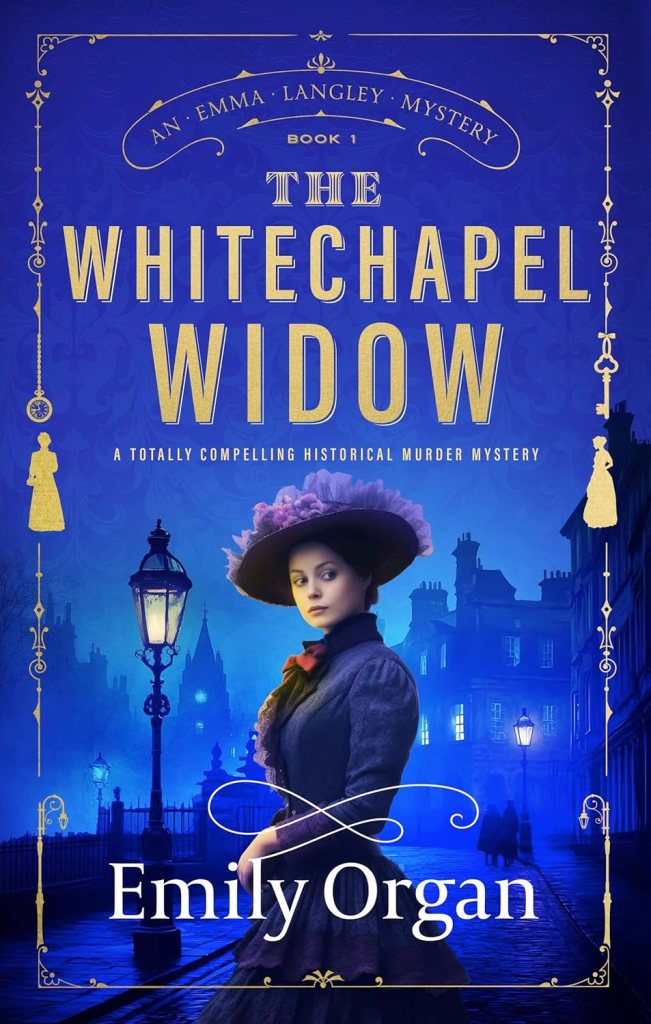
The Whitechapel Widow

London hunts the Ripper. A widow hunts her husband’s killer.

London, 1888. While Jack the Ripper’s reign of terror grips the city, Emma Langley’s world shatters when her husband is found murdered in Whitechapel. But grief is quickly overshadowed by a startling discovery: William Langley was not the man she thought she knew.

As panic fills London’s streets, Emma delves into her husband’s secret life, uncovering a web of lies that stretches from glittering society drawing rooms to the seedy gambling dens of the East End. Aided by Penny Green, a former reporter with a nose for trouble, Emma follows a trail of blackmail and corruption.

But exposing her husband’s killer could make her the next victim and in the shadows of gaslit streets, a murderer waits, ready to strike again…

Purchase Link

https://amzn.to/4gAtFvA

My Review

The Whitechapel Widow is a very well-plotted historical mystery set at the time of the attacks by Jack the Ripper in London. The author does a fabulous job of weaving the narrative through known events, and I really enjoyed the mystery elements. Emma is a great new main character, but I also enjoyed the inclusion of Emily’s heroine, Penny Green.

I will certainly be reading more of the series.


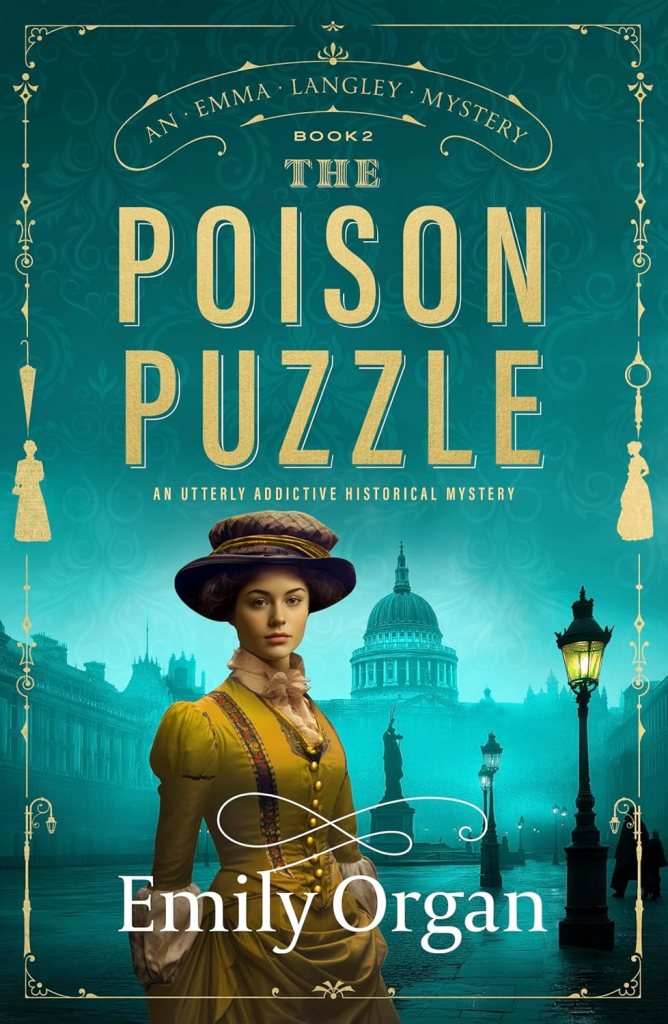
The Poison Puzzle

A secret society. A suspicious death. A trail of deadly clues.

London, 1889. When Emma Langley discovers a mysterious symbol in her late husband’s diary, she uncovers a connection to a secretive treasure-hunting group with powerful members. Her investigation takes an unexpected turn when Lord Charles Harpole, a society member, is found dying in his hotel room.

The authorities rule it suicide, but Emma and her friend Penny Green aren’t convinced. As they follow a trail of cryptic clues leading from St. Paul’s Cathedral to Hampton Court, they find themselves caught in a deadly game.

With suspects ranging from the lord’s grieving fiancée to his ambitious brother, Emma must solve the puzzle before the killer claims another victim. But in the fog-shrouded streets of Victorian London, someone will stop at nothing to keep the society’s secrets buried…

Emma Langley returns in this gripping Victorian mystery that weaves historical detail with page-turning suspense.

Purchase Link

https://amzn.to/46jQArD

My Review

I very much enjoyed The Poison Puzzle, the second book in the Emma Langley Historical Mystery series, but I must admit, I felt the buildup was somewhat better than the eventual resolution, which fell a little flat for me. That said, I will be continuing the series, as I do adore all the period detail for the books, and I certainly appreciated the research that went into making the treasure hunt feel very authentic.

Posts

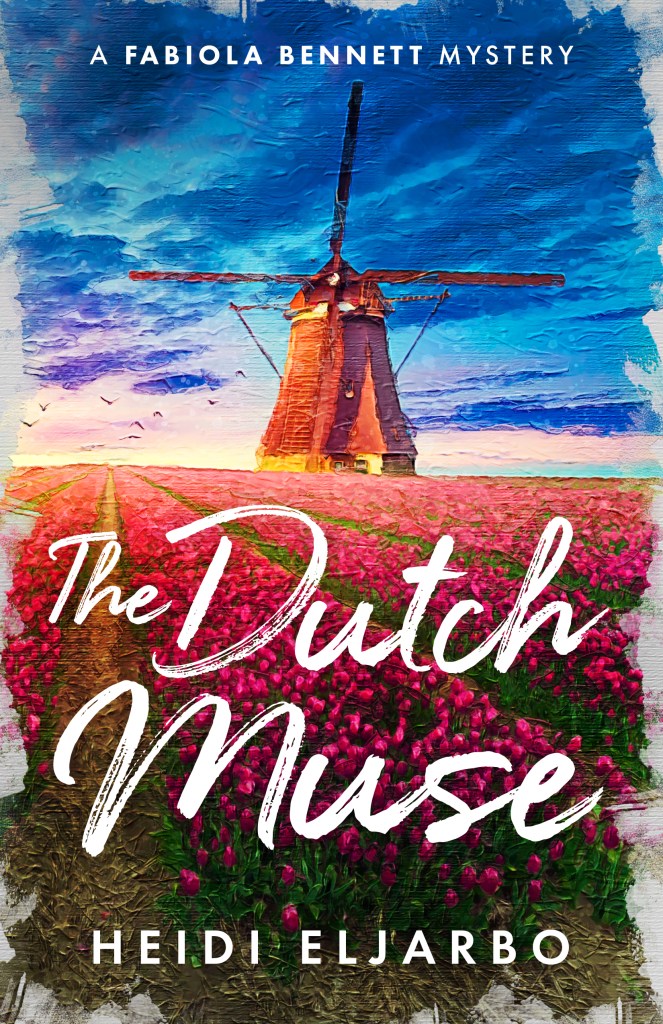
I’m delighted to welcome Heidi Eljarbo and her new book, The Dutch Muse, to the blog #HistoricalMystery #ArtHistory #DualTimeline #CozyMystery #BlogTour #TheCoffeePotBookClub

I’m delighted to welcome Heidi Eljarbo and her new book, The Dutch Muse, A Fabiola Bennett Mystery, to the blog.

Here’s the Blurb

A ruthless thief leaves a private Dutch gallery with a coveted seventeenth-century painting. The owner lies unconscious on the floor. Art historian Fabiola Bennett is on vacation in Holland and takes on the case.

Amsterdam, 1973.
It’s late summer, and Fabiola and Pippa join their friend, Cary, for a few days of sightseeing, museums, and riding bikes around the beautiful city.


For the first time in her life, Fabiola feels a pang of jealousy, and rude comments from a gallerist make her doubt her own abilities.

Then, unexpectedly, Cary’s Dutch client, Lennard van de Hoek, is brutally struck down and a baroque portrait by Ferdinand Bol is stolen. Fabiola pushes aside her problems and jumps into danger without hesitation. The list of suspects is long, and with a cold-blooded criminal at large, they must constantly be on the alert.

Amsterdam, 1641.
Ferdinand Bol has completed his five-year training with Master Rembrandt van Rijn and is ready to set up his own studio. The future looks bright, and Ferdinand sets a goal to become a widely sought-after and, hopefully, prosperous master portraitist.


Just when Ferdinand’s career starts to flourish—and patrons and customers discover his exceptional talent—one of his models confesses she’s in deep trouble, and he drops everything to help her.

This is a fast-paced and captivating who-done-it set in the Netherlands—the fourth installment and a spin-off from the Soli Hansen Mysteries.

Buy Link

Universal Link

This title is available to read on #KindleUnlimited

Meet the Author

HEIDI ELJARBO grew up in a home full of books, artwork, and happy creativity. She is the author of historical novels filled with courage, hope, mystery, adventure, and sweet romance during challenging times. She’s been named a master of dual timelines and often writes about strong-willed women of past centuries.

After living in Canada, six US states, Japan, Switzerland, and Austria, Heidi now calls Norway home. She lives with her husband on a charming island and enjoys walking in any kind of weather, hugging her grandchildren, and has a passion for art and history. 

Her family’s chosen retreat is a mountain cabin, where they hike in the summer and ski the vast white terrain during winter.

Heidi’s favorites are her family, God’s beautiful nature, and the word whimsical.

Connect with the Author

Website: Newsletter: BookBub:

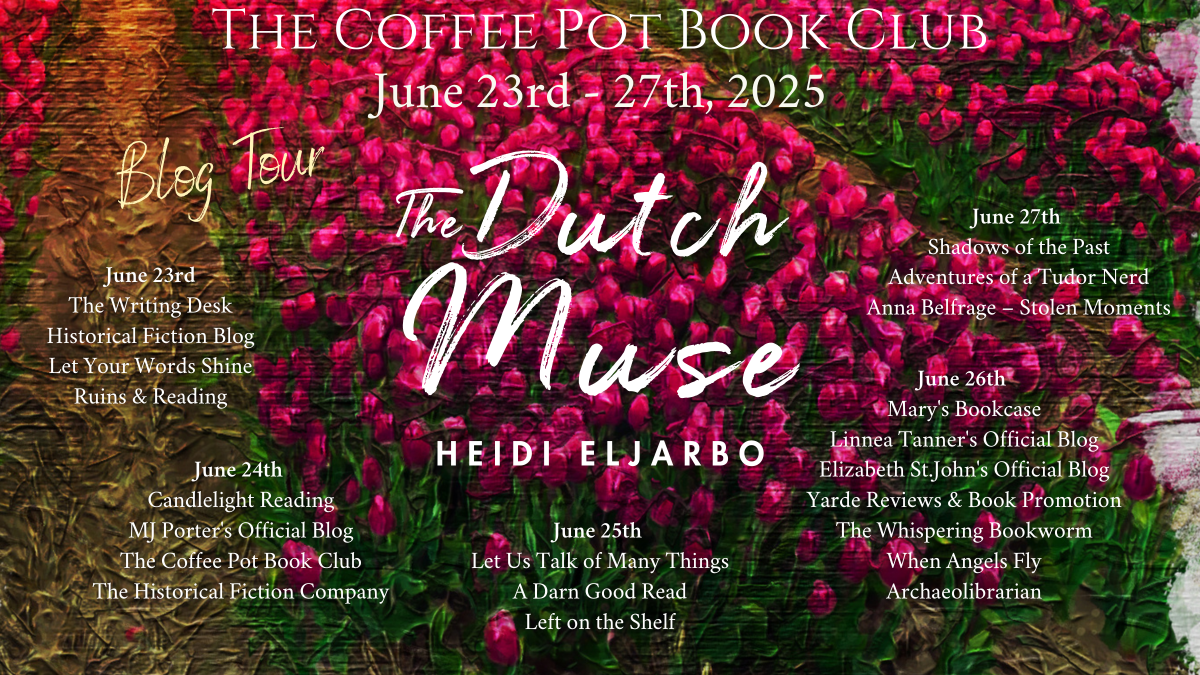
Follow The Dutch Muse blog tour with The Coffee Pot Book Club

Check out The Paris Portrait.

Posts

I’m delighted to welcome Heidi Eljarbo and her new book, The Paris Portrait, to the blog #HistoricalMystery #ArtHistory #DualTimeline #CozyMystery #BlogTour #TheCoffeePotBookClub

I’m delighted to welcome Heidi Eljarbo and her new book, The Paris Portrait, A Fabiola Bennett Mystery, to the blog.

Here’s the Blurb

Fabiola stumbles upon a clue that indicates a royal portrait went missing almost two hundred years ago. Is this true, or is there substance to the rumor?

Paris, France, 1973.
After an enjoyable but dusty road trip, Fabiola and her friends, Pippa and Cary, arrive in a small village on the outskirts of Paris to spend a few days with Fabiola’s brother Eivind and his family.

On their first evening there, Eivind shows Fabiola an ancient recipe book he bought at an auction. The book is filled with old writing, and he asks Fabiola to decipher the pages. After the others have gone to bed, she spends hours reading and is gripped by the last pages that have nothing to do with recipes for baked goods and stews. Certain the author was a famous portrait artist at the time of the French Revolution, Fabiola and her friends set out on a treacherous investigation, dodging murderers and thieves to learn the truth.

Versailles, France, 1789.
Élisabeth Louise Vigée Le Brun— portraitist and close friend of the extravagant queen of France, Marie Antoinette—has already painted thirty portraits of the queen. Her contemporaries compare her to the old Dutch masters, calling her one of the greatest portrait painters of her time.

But outside on the streets, Paris is becoming more perilous with every day that passes. Madame Le Brun would be a fool to think the rumors of a revolution will pass, and aristocratic life will continue as before.

Amid the turmoil, she paints one final portrait of Marie Antoinette, knowing well her association with the queen could cause her to be arrested or executed. As chaos and riots in Paris turn to violence, Madame Le Brun flees with her young daughter, hoping her royal friend and the portrait will be safe.

This is Heidi Eljarbo’s third dual timeline novel about Norwegian art historian Fabiola Bennett—a captivating spin-off from her much-loved Soli Hansen Mysteries.

Buy Link

Universal Link:

This title is available to read on #KindleUnlimited

Meet the Author

HEIDI ELJARBO grew up in a home full of books, artwork, and happy creativity. She is the author of historical novels filled with courage, hope, mystery, adventure, and sweet romance during challenging times. She’s been named a master of dual timelines and often writes about strong-willed women of past centuries.

After living in Canada, six US states, Japan, Switzerland, and Austria, Heidi now calls Norway home. She lives with her husband on a charming island and enjoys walking their Wheaten Terrier in any kind of weather, hugging her grandchildren, and has a passion for art and history.

Connect with the Author

Website: Newsletter: BookBub:

Follow The Paris Portrait blog tour with The Coffee Pot Book Club

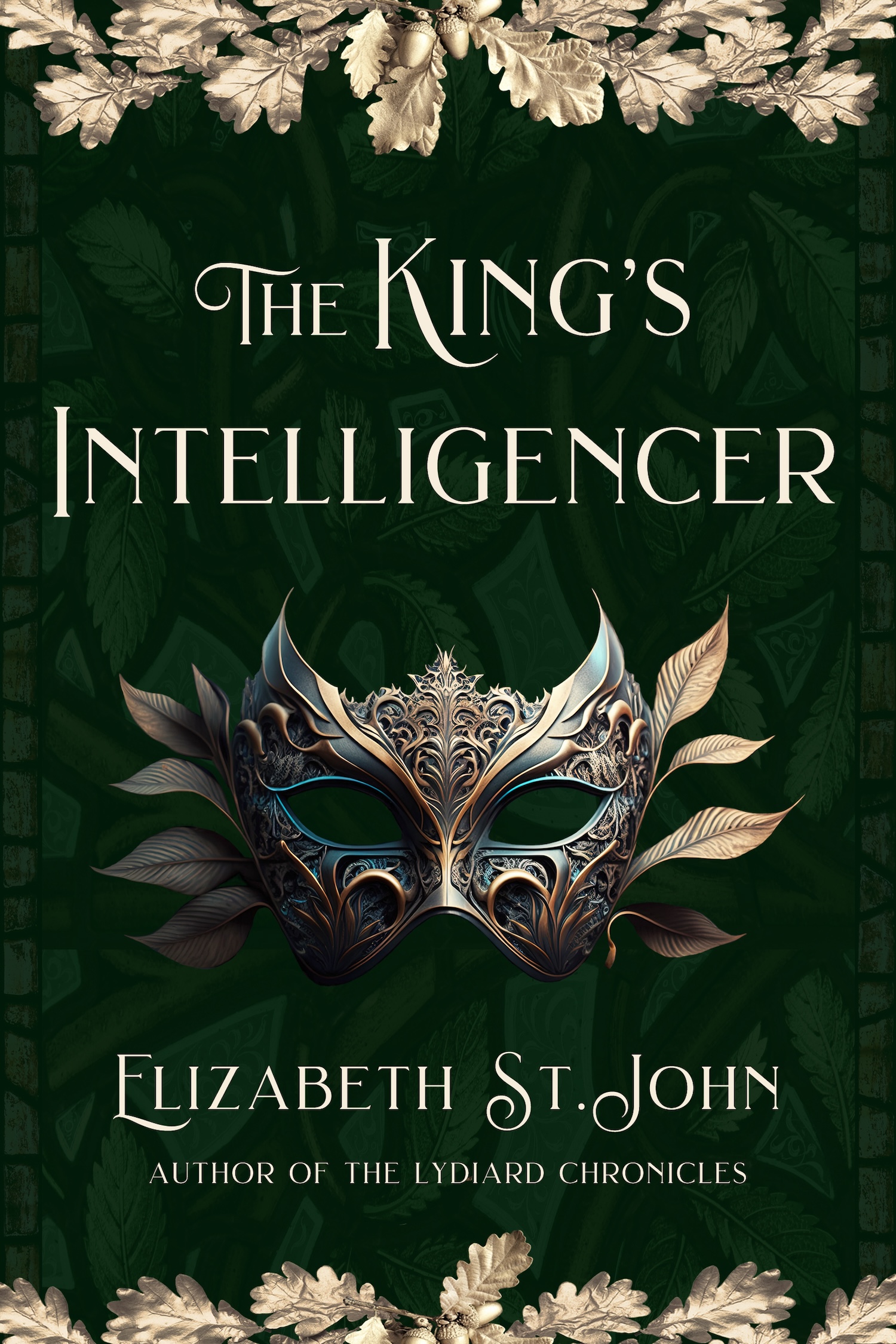
I’m delighted to welcome Elizabeth St. John and her new book, The King’s Intelligencer, to the blog #TheKingsIntelligencer #HistoricalFiction #HistoricalMystery #TheLydiardChronicles #BlogTour #TheCoffeePotBookClub

I’m delighted to welcome Elizabeth St.John and her new book, The King’s Intelligencer, to the blog with an excerpt.

Excerpt

Chapter 10

As he spoke, from the copse before them broke a mob of burly and ill-dressed men, twenty or thirty strong, led by several drummers. They were fierce and defiant, waving their fists, clutching clubs and sticks, and shouting chants in knavish accents in time with the pounding. Franny and Mary scrambled to their feet. Nicholas was rigid, his fists clenched at his sides.

“They are Protestants from the City,” he said grimly, “demonstrating against the Catholic influence at court. I had heard London was seeing mobs like this daily. But I did not think they would venture as far as St. James’s.”

“What do they want?” Franny whispered. Mary was trembling, her tall frame shaking like a poplar in the breeze. The pages, little more than children, had run into the bushes, leaving them alone. Why had she not thought to bring guards? She answered her own question. Because it was the duke’s park. Who would dare—

“To tell the king England will not welcome Catholics,” Nicholas muttered between clenched teeth. “And those who support them are enemies of the people.”

Franny fell silent, conscious of his raised emotion. When she had seen Nicholas Jameson on the night of the sedan race, Rochester had called him a red-letter man, a Catholic. In all their times together, they had not discussed religion. He came and went to Mary’s lessons, kept his opinions private. Even during their growing intimacy through Calysto, they never mentioned their religions. And yet at this moment, Franny could tell Nicholas was fully aware of the danger associated with being a Catholic.

The leaders of the gang stepped aside, and two youths broke from the crowd carrying aloft the effigy of a priest on their shoulders. With a shout, they tied a rope around its neck and slung it over the branch of an oak not a hundred feet from where Franny stood.

Mary clung to Franny. “What are they doing? Why are they hanging the priest?” she cried.

“Hush.” Nicholas turned to her. “Hush, Lady Mary, we do not want to be identified.” He pushed her behind the tree Franny had just been dozing against.

“The Lady Mary is Protestant,” Franny protested.

“With a Catholic father and a Catholic stepmother,” Nicholas snapped back. “This mob will not stop to ask.”

There was no mistaking Mary’s breeding, her expensive clothes, her ornate hair. And her height. Franny was tall, but Mary carried the Stuart loftiness in her bones, impossible to hide. The mob may not immediately have recognised her as the heir-to-the-heir, but they would tell she was noble. And here, at St. James’s Park, likely to be of the Catholic duke’s court. Franny snatched a handful of dirt from the tree roots, rubbed it on Mary’s face, pulled out her hairpins, and swiftly ruffled her powdered hair until it was dingy with earth and hung lank around her face. She took her own shawl and wrapped it around Mary’s shoulders.

“Bend your knees,” Franny hissed. “Disguise your height.”

Nicholas put his arm across her in warning, held her back against the rough bark. In other circumstances, Franny would have welcomed his touch. Right now, she could think of nothing but keeping Mary safe. The page boys had long gone. Guards. They needed guards. How could she have been so thoughtless not to bring guards?

The shouts of the mob grew louder as they yanked the effigy into the air, now swinging as realistically as if a real man were dangling within the priest’s clothes. They were no more than fifty yards from Franny, and their voices rang clear.

“The Catholic curs would sell us back to Rome!”

“The king will give the pope England’s throne!”

“The Duke of York is a bloody papist. Hang him for his treachery!”

Nicholas was white. Franny did not know him well enough to recognise fear or anger.

“We have to get Lady Mary back to the palace.” She shook his arm. “Nicholas, we cannot stay hiding here.”

Blurb

London, 1674: When children’s bones are unexpectedly unearthed in the Tower of London, England’s most haunting mystery—the fate of the missing princes—is reignited.

Franny Apsley, trusted confidante to Charles II’s beloved niece and heir, Lady Mary Stuart, is caught up in the court’s excitement surrounding the find. Yet, as a dark family secret comes to light, Franny realises the truth behind the missing princes is far more complex—and dangerous—than anyone suspects. Recruited by her formidable cousin Nan Wilmot,  Dowager Countess of Rochester, to discover the truth behind the bones, Franny is thrust into the shadowy world of intelligencers. But her quest is complicated by an attraction to the charismatic court artist Nicholas Jameson, a recent arrival from Paris who harbours secrets of his own.

Pursued by Nicholas, Franny searches for evidence hidden in secret family letters and paintings, and uncovers a startling diplomatic plot involving Lady Mary, which causes Franny to question her own judgment, threatens the throne, and sets England on a course for war. With only her courage and the guidance of an enigmatic spy within the royal household, Franny must decide how far she will go to expose the truth—and whether that truth will lead to England’s salvation or her own heartbreak.

In a glittering and debauched society where love is treacherous and loyalty masked, Franny must navigate a world where a woman’s voice is often silenced and confront the ultimate question: What is she willing to risk for the sake of her country, her happiness, and her family’s safety?

A captivating historical novel of conspiracy, passion, and courage, The King’s Intelligencer is one woman’s quest for a truth that could change the fate of a nation. A companion to the critically acclaimed best-selling novels The Godmother’s Secret and The Lydiard Chronicles, The King’s Intelligencer weaves together beloved characters and actual events to bring a suspenseful mystery to life.

Buy Links

Universal Link:

This title is available to read on #KindleUnlimited

Meet the Author

Elizabeth St.John’s critically acclaimed historical fiction novels tell the stories of her ancestors: extraordinary women whose intriguing kinship with England’s kings and queens brings an intimately unique perspective to Medieval, Tudor, and Stuart times.

Inspired by family archives and residences from Lydiard Park to the Tower of London, Elizabeth spends much of her time exploring ancestral portraits, diaries, and lost gardens. And encountering the occasional ghost. But that’s another story.

Living between California, England, and the past, Elizabeth is the International Ambassador for The Friends of Lydiard Park, an English charity dedicated to conserving and enhancing this beautiful centuries-old country house and park. As a curator for The Lydiard Archives, she is constantly looking for an undiscovered treasure to inspire her next novel.

Elizabeth’s works include The Lydiard Chronicles, a trilogy set in 17th-century England during the Civil War, and The Godmother’s Secret, which unravels the medieval mystery of the missing princes in the Tower of London. Her latest release, The King’s Intelligencer, follows Franny Apsley’s perilous quest to uncover the truth behind the sudden discovery of the princes’ bones. In Charles II’s court of intrigue and deceit, Franny must decide what she’ll risk—for England’s salvation, her family’s safety, and her own happiness.

Connect with the Author

Website: Bluesky: BookBub:

Follow The King’s Intelligencer blog tour with The Coffee Pot Book Club

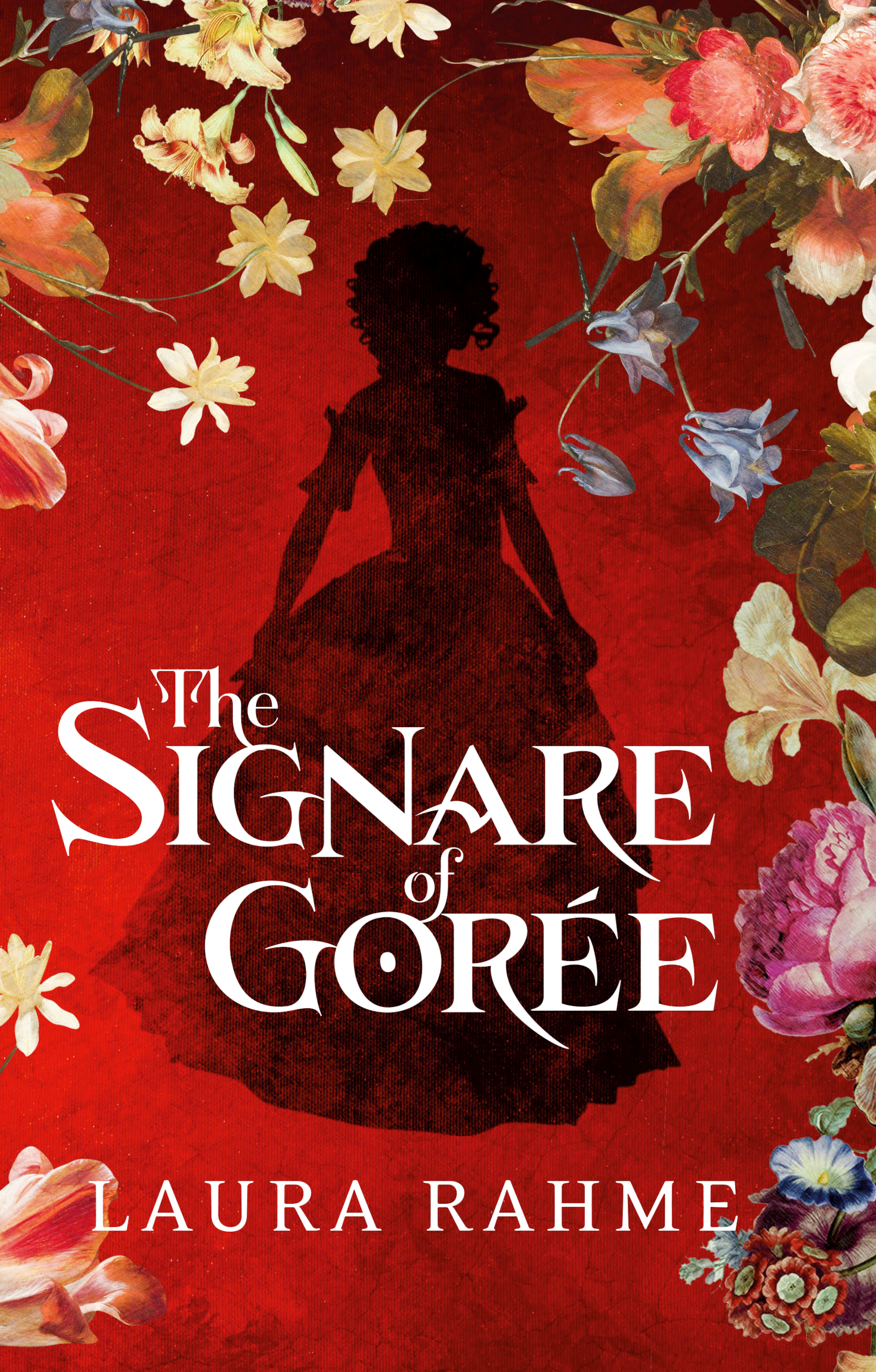
I’m delighted to welcome Laura Rahme and her new book, The Signare of Gorée, to the blog #HistoricalMystery #HistoricalFiction #BlogTour #TheCoffeePotBookClub

I’m delighted to welcome Laura Rahme and her new book, The Signare of Gorée, to the blog with The Last Waalo Queen: Ndaté Yalla Mbodj.

The Last Waalo Queen: Ndaté Yalla Mbodj

One of the historical figures that I feature in my novel, The Signare of Gorée, is Senegal’s last warrior queen, Ndaté Yalla Mbodj. Her origins are generally accepted to be a blend of Serer and Lebou, two of the main cultural groups in Senegal. She held the title of lingeer of the Waalo kingdom of Senegal. She appears only briefly in my book and does not play a direct part in the mystery, yet her presence looms large and hints at key events that would change Senegal’s destiny in the upcoming decade.

During the 1840s, Senegal consisted of independent kingdoms. The Waalo kingdom which extended along the northwest of Senegal, sharing a border with Mauritania, comprised the island of Saint-Louis, settled by the French since 1659. South of Waalo lay the kingdom of Cayor which engulfed today’s capital, Dakar, then a Lebou village. Only a short pirogue trip away was the island of Gorée, ceded to Europeans, and a center for commercial and slave trade for centuries.

The Signare of Gorée is set in a period when concessions by Waalo rulers allowed the French to trade in Senegal, but during which French figures were not sovereign. Europeans had to pay custom taxes to continue to trade freely in the Waalo. Over the years and leading into 1854, the French encountered increasing opposition, and what they saw as nuisances, arising from Waalo or Cayor rulers, but also from the Trarza Moors who dwelled across the Mauritanian border. Frustrated in their desire for economic gain, French entrepreneurs aspired to conquest as the means to secure the flow of resources and merchandise. As such, Ndaté Yalla Mbodj was not only the sole female ruler of Senegal, but she was to be the last queen of non-colonized Senegal. Her fight would be bitter and determined.

She ascended the throne in the palace of Nder on 1 October 1846 upon the death of her sister, Njembot Mbodj. While still young, both women had witnessed their mother’s tragic self-immolation during a battle with the Trarza moors. The Waalo army consisted of fiercely animist male warriors called tieddos, but the Waalo women were also trained in combat. Since then, and despite French military intervention to thwart it, a marital alliance between Njembot Mbodj and the Trarza ruler had smoothed discords between the Waalo kingdom and the Trarza emirate. But during her rule, Ndaté Yalla was forced to fight both the French and the Trarzas.

From the time she stepped on the throne, Ndaté Yalla made it clear that the French were to obey tithe and land boundary agreements. She wrote them letters and signed them – the only female ruler to do so – and defied them, asserting her rulership over the Waalo. In short, she bothered them.

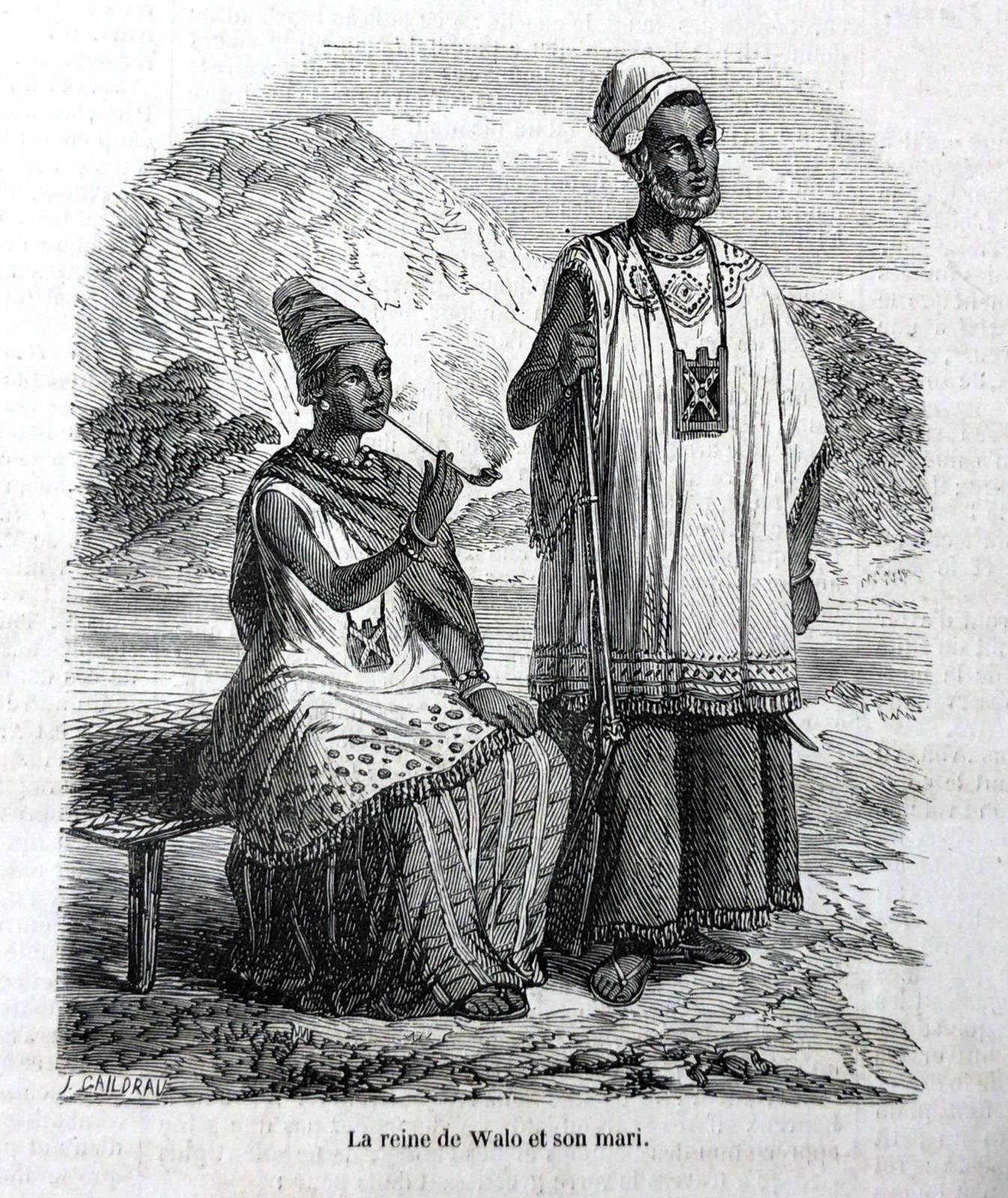
Ndaté Yalla Mbodj et her husband Marosso Tassé Diop
An engraving by Jules Gaildrau (1816-1898)
Public domain image

Together with her husband, Marosso Tassé Diop, who was prince of Cayor, Lord of Koki, and commander of the Waalo’s tieddo army, Ndaté Yalla fought regularly with the French and Moors.

But the French would have the last word. They called upon Louis Faidherbe, a poly-engineer and French general, to quell both the Trarzas and the Waalo kingdom. In 1854, the Bordeaux entrepreneur, Hilaire Maurel, who appears in The Signare of Gorée, would end up playing a decisive role, along with his nephew, Marc Maurel, in General Faidherbe’s mind-blowing ascension as governor of Senegal. They worked behind the scenes to ensure that the like-minded Faidherbe and his military strategies would clear the path for their already thriving enterprises and future economic ambitions.

Rallying an army that included coerced local troops, Faidherbe defeated Ndaté Yalla Mbodj in 1855, spelling the collapse of the kingdoms of Waalo and Cayor. The fall of the lingeer was powerfully symbolic. The other male-led kingdoms of Senegal would fall soon after, marking the start of France’s colonization of Senegal. During his 1855-1864 campaign, General Faidherbe employed a scorched-earth policy, burning through fertile plains and razing villages. He not only burned Ndaté Yalla Mbodj’s palace in Nder but took away her son, Sidya Diop. The afflicted lingeer would die in 1860, in Dagana, where her commemorative statue stands today.

I was born in Dakar fifteen years after Senegal regained its independence from France. Colonial education must have lingered a while as I never learned about Ndaté Yalla Mbodj at school. I also suspect the Senegalese values of soutoura (discretion) and muñ (to tolerate) encouraged a long silence on the sufferings and injustices of the past. But in the last twenty years, in the name of historical accuracy, and as more African voices are given due weight, Ndaté Yalla Mbodj’s name has resurged. Publications that tell of her important story now exist in multiple languages. I am not the first to mention her, but it was important for me to feature her in The Signare of Gorée.

Blurb

1846. In the heat of West Africa, the French navy uncovers the corpses of two French soldiers. Inspector Maurice Leroux arrives at the island of Gorée. It seems death has come to this small colonial outpost off the Senegal coast, home to the prosperous mixed-blood women known as the signares.

The navy suspects that the Bambara people, emboldened by approaching emancipation, may be out for blood. While confronted by the locals’ strange magical beliefs, Maurice remains skeptical. Does malevolence play a part, or are these deaths accidental, brought upon by the brutality of nature in an island known as the white man’s grave?

But when murder strikes, it becomes clear that a killer is stalking Gorée.

Swept by a mystery unlike any he has known, Maurice meets Signare Angélique Aussenac. The proud métis, deserted by her wealthy Bordeaux lover, casts her spell upon Maurice.

But beyond the throbbing sounds of the tam-tams and the glittering signare soirées, danger lurks. Someone is watching. And the deaths go on.

Could the killer be one of the rich Bordeaux merchants? Or are they hiding among the powerful signares?

A historical mystery spanning France and Senegal, THE SIGNARE OF GORÉE explores a world of magic, murder, and passion.

Buy Link

Universal Link:

This title is available to read on #KindleUnlimited

Meet the Author

Laura Rahme is the author of seven historical novels. Born in Dakar, Senegal where she spent her early childhood, she moved to Australia at the age of ten. A graduate of two Honors degrees in Aerospace Engineering and Psychology, she has worked over two decades as an IT professional. Her greatest joy comes from travel, researching history, and penning historical mysteries. She now lives in France with her screenwriting husband.

Connect with the Author

Website:

Follow the Signare of Goree blog tour with The Coffee Pot Book Club

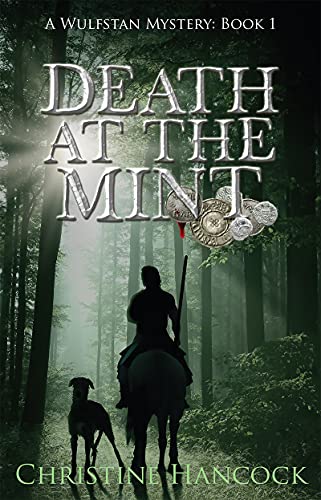
Check out my review for Death at the Mint by Christine Hancock #historicalmystery #bookreview

I’m really excited to review Death at the Mint by Christine Hancock. Christine writes the Byrhtnoth Chronicles set in the middle of the tenth century, but in Death at the Mint, she’s taken one of our favourite characters and allowed him to solve an intriguing mystery.

Here’s the blurb

“When Wulfstan swore revenge on his enemy, he expected to die. Now that man is dead.
Far to the south, another body is found in an Essex wood.
Abbot Dunstan of Glastonbury is concerned. The victim ran the mint. Is the king’s coinage in danger of corruption?
Dunstan sends Wulfstan to Maldon to investigate.
Can Wulfstan discover the truth? Is there a connection with his own past?
Having lost everything he held dear; can he learn to live again?”

“Finally, Wulfstan – my favourite character in the Byrhtnoth Chronicles – has been given his own story. Read and enjoy!”
Ruth Downie, author of the Gaius Petreius Ruso Mysteries.

My Review

I was lucky enough to get to read an early draft of Death at the Mint, and also the finished product. Firstly, an assurance, yes, Wulfstan is a character from the previous books but if you haven’t read them (which you might want to do after this one) it won’t detract from your enjoyment. Not at all. This is an excellent standalone Saxon mystery.

Wulfstan, his hound and his horse make an intriguing team, and what I particularly enjoyed was the reimagining of life in a Saxon settlement. This is something I’ve always been a bit terrified of doing in my own books, and Christine Hancock does it incredibly well. Added to which, the mystery will really draw you in.

This was a wonderful book, the mystery has a satisfying ending, which I don’t think readers will guess.