
Today, I’m delighted to welcome Jane Davis and her new book, Small Eden, to the blog #HistoricalFiction #TheCoffeePotBookClub #BlogTour #blogpost

Today, I’m welcoming Jane Davis to the blog with a fascinating post about her new book, Small Eden.

In England’s Green and Pleasant Land

In Victorian England, Carshalton and nearby Mitcham were known for their physic gardens, where plants were grown for medicinal and cosmetic use. Peppermint, lavender, camomile, aniseed, rhubarb, and liquorice were stable crops but today the name Carshalton is best associated with lavender growing. Of the many lavender farms that used to exist, only two remain. Mayfield Lavender is the larger of the two. In the summer months, people come a long way to see it. https://www.mayfieldlavender.com/
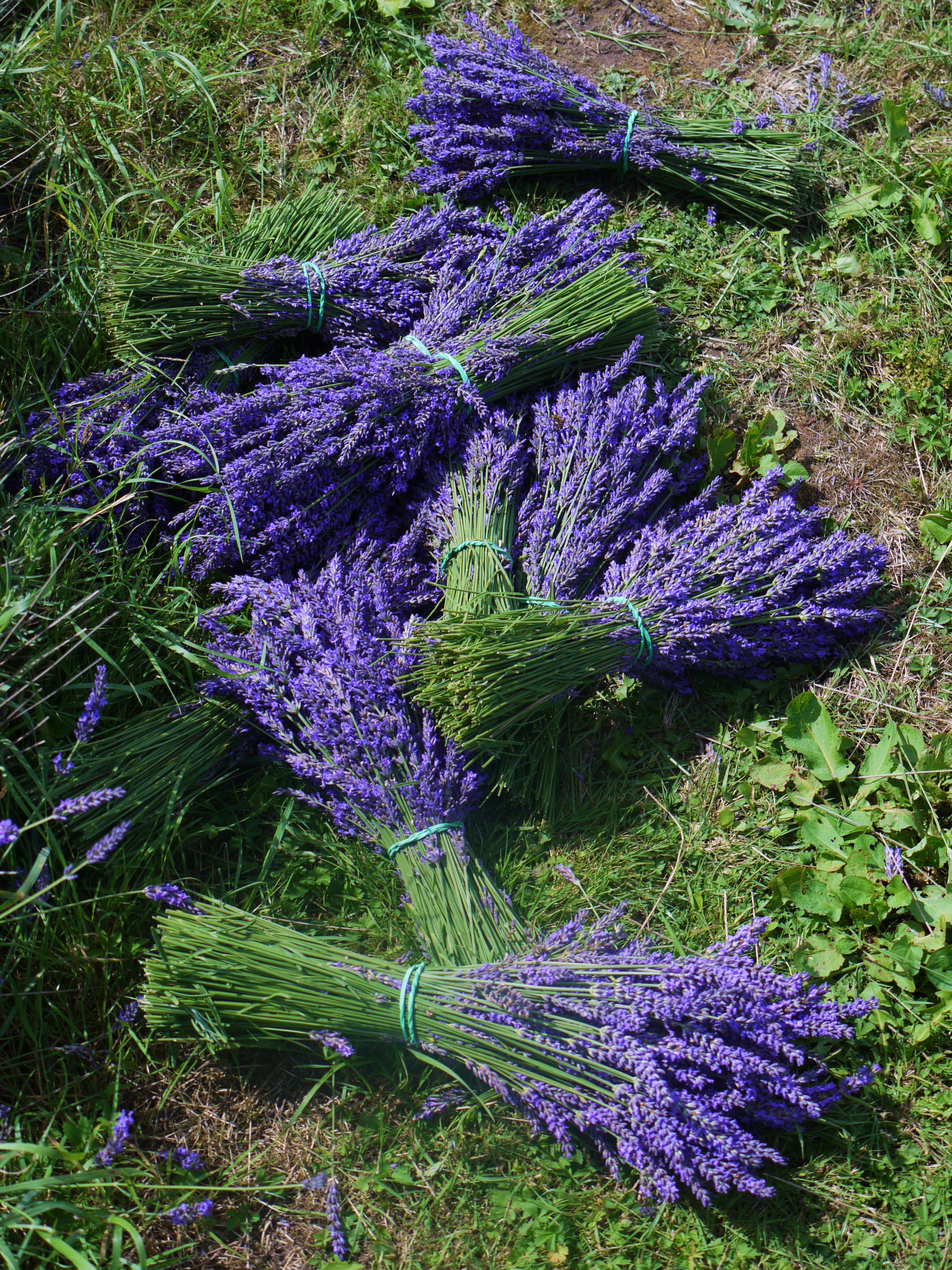
Lavender Fields (copyright, author)

At a time when few women ran their own businesses, I was delighted to stumble across the story of Sarah Sprules. Sarah had worked alongside her father in his physic garden and took over his business after he died. Her produce was known worldwide. Her lavender water won medals at exhibitions in Jamaica and Chicago, but the highest accolade she held was her Royal Warrant to supply lavender oil to Queen Victoria, bestowed on her after the Queen and Princess Louise visited her during August 1886. The royal connection proved especially beneficial as Queen Victoria had so many European relatives. 

But that wasn’t all. it was the discovery that Mitcham was once the opium-growing capital of the UK that made me decide my leading man, Robert Cooke, should be a physic gardener. This chapter has been written out of the history books, but in the nineteenth century, far from having a seedy reputation, opium use was respectable. Queen Victoria’s household ordered opium from the royal apothecary, and Prime Minister William Gladstone is said to have drunk opium tea before important speeches. It was used an anaesthetic, in sedatives, for the relief of headaches, migraines, sciatica, as a cough suppressant, to treat pneumonia, and for the relief of abdominal complaints and women’s cramps.

Mrs Beeton’s famous Book of Household Management recommended that no household should be without a supply of powdered opium and laudanum, and she included a recipe for laudanum. But awareness of its dangers was beginning to spread. 

Opium Poppy or Papaver somniferum, vintage engraved illustration. Trousset encyclopedia (1886 – 1891). (Image licensed to author)

Short Matching Excerpt from Small Eden

It was Freya who first showed him Dr Bull’s Hints to Mothers, a pamphlet highlighting the dangers of opiates in the nursery. Of course he doesn’t agree with the practice of dosing up babies so that they sleep all day, he told his wife, but yes, he’s aware it goes on. Working mothers have little choice but to leave children for hours at a time, so they doctor their gripe-water. And it’s not just the poor. Mothers read the labels that say Infant Preservative and Soothing Syrup. They think that ‘purely herbal’ and ‘natural ingredients’ means that products are safe. Though it was chilling to read about case after case of infant deaths linked to over-use.

As many as a third of infant deaths in industrial cities.

And he, who has buried two sons.

But even Dr Bull didn’t condemn the use of opiates outright. They are medicines, he wrote, and like any medicine, ought to be prepared by pharmacists. The trouble is, Robert told Freya, that until recently any Tom, Dick or Harry could operate a pharmacy. And hasn’t he been vocal in his support for an overhaul of the system?

***

Why did it take so long for opium to be banned?

In the 19th Century, Great Britain fought two wars to crush Chinese efforts to restrict its importation. Why? Because opium was vital to the British economy. And then there was the thorny issue of class. The upper and middle classes saw the heavy use of laudanum among the lower classes as ‘misuse’; however they saw their own use of opiates was seen as necessary, and certainly no more than a ‘habit’. Addiction wasn’t yet recognised. That would come later.

The anti-opium movement

In 1874, a group of Quaker businessmen formed The Society for the Suppression of the Opium Trade. Then in 1888 Benjamin Broomhall formed the Christian Union for the Severance of the British Empire with the Opium Traffic. Together, their efforts ensured that the British public were aware of the anti-opium campaign.

Short Matching Excerpt from Small Eden

“Indulge me if you will while I explain how the Indian trade operates – a system that the House of Commons condemned this April last. The East India Company – with whom I’m sure you are familiar – created the Opium Agency. Two thousand five hundred clerks working from one hundred offices administer the trade. The Agency offers farmers interest-free advances, in return for which they must deliver strict quotas. What’s so wrong with that? you may ask. What is wrong, my friends, is that the very same Agency sets the price farmers are paid for raw opium, and it isn’t enough to cover the cost of rent, manure and irrigation, let alone any labour the farmer needs to hire. And Indian producers don’t have the option of selling to higher bidders. Fail to deliver their allocated quota and they face the destruction of their crops, prosecution and imprisonment. What we have is two thousand five hundred quill-pushers forcing millions of peasants into growing a crop they would be better off without. And this, this, is the Indian Government’s second largest source of revenue. Only land tax brings in more.”

More muttering, louder. The shaking of heads and jowls.

“I propose a motion. That in the opinion of this meeting, traffic in opium is a bountiful source of degradation and a hindrance to the spread of the gospel.” Quakers are not the types to be whipped up into a frenzy of moral indignation, but their agreement is enthusiastic. “Furthermore, I contend that the Indian Government should cease to derive income from its production and sale.”

Robert looks about. Surely he can’t be the only one to wonder what is to replace the income the colonial government derives from opium? Ignoring this – and from a purely selfish perspective, provided discussion is limited to Indian production – his business will be unaffected. Seeing his neighbours raise their hands to vote, Robert lifts his own to half-mast. Beside him, Smithers does likewise.

***

The time comes when Robert Cooke must make a choice. He can either diversify, or he can gamble that the government will ban cheap foreign imports and that the price of domestic produce will rise. Robert Cooke is a risk-taker. He decides to specialise, and that decision will cost him dearly. It may even cost him his family. 

Thank you so much for such a fascinating post. Good luck with your new book.

Here’s the blurb:

A boy with his head in the clouds. A man with a head full of dreams.  

1884. The symptoms of scarlet fever are easily mistaken for teething, as Robert Cooke and his pregnant wife Freya discover at the cost of their two infant sons. Freya immediately isolates for the safety of their unborn child. Cut off from each other, there is no opportunity for husband and wife to teach each other the language of their loss. By the time they meet again, the subject is taboo. But unspoken grief is a dangerous enemy. It bides its time.

A decade later and now a successful businessman, Robert decides to create a pleasure garden in memory of his sons, in the very same place he found refuge as a boy – a disused chalk quarry in Surrey’s Carshalton. But instead of sharing his vision with his wife, he widens the gulf between them by keeping her in the dark. It is another woman who translates his dreams. An obscure yet talented artist called Florence Hoddy, who lives alone with her unmarried brother, painting only what she sees from her window… 

Buy Links:

Universal Link

Amazon UKAmazon USAmazon CAAmazon AU

Barnes and NobleWaterstones:    (POD) / Trade paperback – Waterstones

FoylesKoboiBooksSmashwords:

Meet the author

Hailed by The Bookseller as ‘One to Watch’, Jane Davis writes thought-provoking literary page turners.

She spent her twenties and the first half of her thirties chasing promotions in the business world but, frustrated by the lack of a creative outlet, she turned to writing.

Her first novel, ‘Half-Truths and White Lies’, won a national award established with the aim of finding the next Joanne Harris. Further recognition followed in 2016 with ‘An Unknown Woman’ being named Self-Published Book of the Year by Writing Magazine/the David St John Thomas Charitable Trust, as well as being shortlisted in the IAN Awards, and in 2019 with ‘Smash all the Windows’ winning the inaugural Selfies Book Award. Her novel, ‘At the Stroke of Nine O’Clock’ was featured by The Lady Magazine as one of their favourite books set in the 1950s, selected as a Historical Novel Society Editor’s Choice, and shortlisted for the Selfies Book Awards 2021.

Interested in how people behave under pressure, Jane introduces her characters when they are in highly volatile situations and then, in her words, she throws them to the lions. The themes she explores are diverse, ranging from pioneering female photographers, to relatives seeking justice for the victims of a fictional disaster.

Jane Davis lives in Carshalton, Surrey, in what was originally the ticket office for a Victorian pleasure gardens, known locally as ‘the gingerbread house’. Her house frequently features in her fiction. In fact, she burnt it to the ground in the opening chapter of ‘An Unknown Woman’. In her latest release, Small Eden, she asks the question why one man would choose to open a pleasure gardens at a time when so many others were facing bankruptcy?

When she isn’t writing, you may spot Jane disappearing up the side of a mountain with a camera in hand.

Connect with Jane:

WebsiteTwitterFacebook:  LinkedIn

PinterestBook BubAmazon Author PageGoodreads

Follow the Small Eden blog tour with The Coffee Pot Book Club

Posts

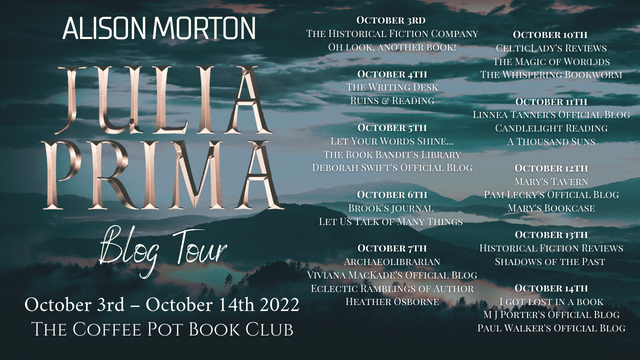
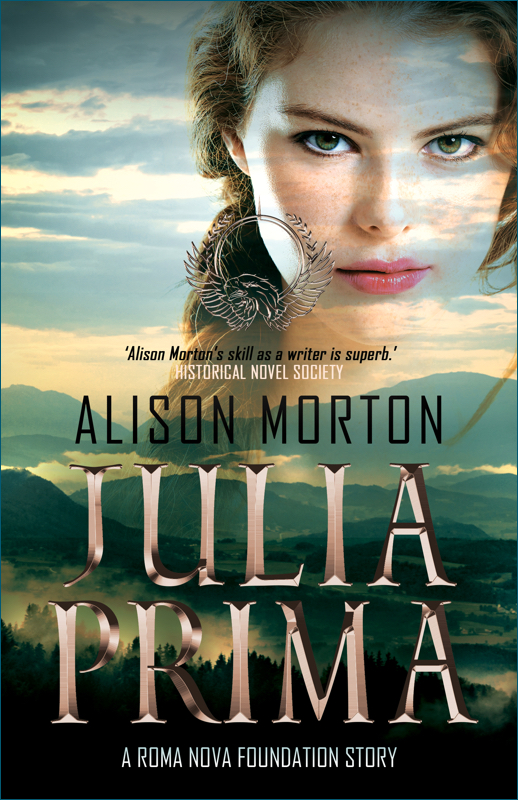
Today I’m welcoming JULIA PRIMA by Alison Morton to the blog #HistoricalFiction #BlogTour #CoffeePotBookClub #BlogPost

I’m delighted to feature JULIA PRIMA by Alison Morton, and she’s written a fabulous post about her book.

The dangers of travelling in the fourth century

Historical fiction at its best transports the reader into another time and place – the heat, fear and smell of battle, the celebration of a marriage where fire flickers nearby when the bride’s hair is arranged with a sharp spear point, or a voyage across a cold featureless sea where you feared might drop off the edge of the world into oblivion.

Style, tone and construction may be radically different, and the settings may be frightening or fascinating, but all good historical fiction conveys the impression of being an eyewitness to what is happening around them as well as how they are acting in that context.

One immediate way of anchoring a book in the past is thinking about how people travelled. We are so used to leaping into the car or catching a train or plane that we forget how completely different journeys were for pre-industrial people.

The concept of distance has changed radically over time. Over much of human history, it was measured in days or weeks taken rather than in land measurement such as miles. Depending on modes of transport available, whether imperial courier’s horse, an ox cart or simple trudging on foot, the perception of distance depended on the state of tracks, paths or roads. 

JULIA PRIMA features a journey on horseback through mountains, transfer on a coastal barge, a voyage on a trading ship, crossing the Apennines on horseback and finally walking through the city of Rome. Each method presents challenges. Horses must be rested and fed regularly. Roman imperial couriers carrying urgent dispatches would change horses at official way stations every 8-10 miles for this reason. Only in Hollywood films and Netflix series can they gallop on and on all day. Saddles at that time had four horns – two back and two front – which held the rider in securely; there were no stirrups. Then there was the question of whether horses were shod or not . . . 

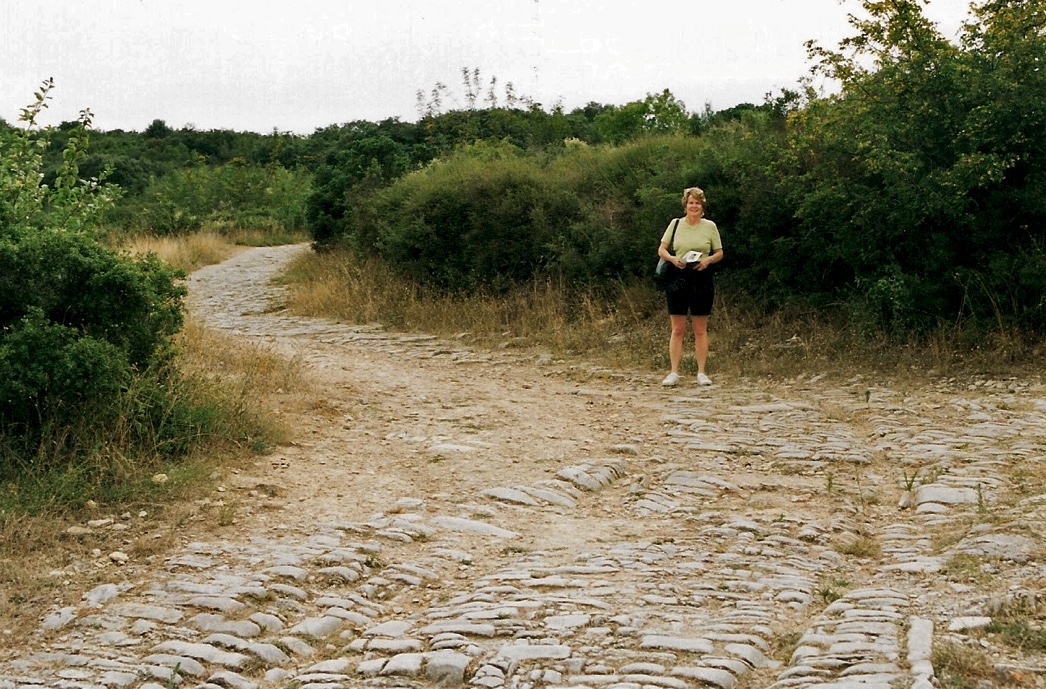
Not all Roman roads were hard metalled and impeccably paved and drained. Primarily, the roads had been built for military use as a quick and efficient means for overland movement of armies and officials. Altogether there were more than 400,000 kilometres (250,000 miles) of roads, of which over 80,500 km (50,000 miles) were stone paved. Many were gravelled, even in towns with some slabbed surfaces in the most important parts such as the forum. Added to these were private roads, rural roads, tracks and link roads. Much more detail here: https://www.alison-morton.com/2020/12/18/on-the-road-to-rome/

Taken together, they allowed the movement of people and goods, and connected isolated communities, helping them to absorb new ideas and influences, sell surplus goods, and buy what they could not produce locally. This trade resulted in an increase of wealth for everyone to a level not seen before and is suggested as a strong reason why many people strove to adopt the lifestyle of their conquerors. 

But towards the end of the fourth century, there were potholes, missing slabs and invasive vegetation as local authorities could not afford their upkeep. Bridges built earlier, especially in the time of Augustus nearly two hundred years earlier, were failing, with parapets missing, holes in the surface and even collapsing completely.

Sailings, even for short passages such as across the Adriatic from Trieste to Ancona, were subject to season, usually May to October, and in the late fourth century, the most fearful danger: pirates. The imperial navy was mostly based in Constantinople by the time of JULIA PRIMA in AD 370 and the few ships still based in Ravenna would not offer comprehensive protection. Storms could bring all sea transport to a grinding halt as could a complete lack of wind. Nevertheless, traders still crossed the water, usually in convoys, and if fortunate escorted by a naval ship which gave an appearance, if not the reality, of protection.

Ferries today such as the cross-Channel ones offer cushioned seating, restaurants, shops and even cabins with ensuite bathrooms. Julia and her companions travel on the hard deck of a merchant ship with whatever shelter and comfort, such as light mattresses, they brought with them. The galley could provide hot water, but you brought your own washing bowl, cups and eating dishes and your own food. Once it set sail, a ship was a self-contained and vulnerable world that was lost to all human contact until it docked again. No ship’s radio, GPS, satellite tracking and communication meant that it could disappear without trace and nobody would know its fate. And news of events, e.g. death of an emperor, would only be available once the ship docked. 

Many travellers stayed with friends, family or trade colleagues. In larger cities and ports, there was a range of possibilities from well-equipped rooms in top class inns to a bed in a shared dormitory, often also shared with travellers of the insect variety!

At the most simple were private houses offering a room in their property for a fee. They could include stabling for animals and supper for their riders. Perhaps an early form of B&B! Travellers would know these houses by a lamp lit over their entrance door. Often this was the only form of hospitality in rural or remote areas.

mansio gave accommodation to official visitors and feeding, watering and stables for their animals. They had to produce a travel document/official chit to show their entitlement to gain access to these government-funded facilities or they were back on the road again. 

Non-official travellers had a choice, depending on the size of their purse and their inclination. Cauponae were often sited near the mansions and performed the same functions at a lower level of comfort. However, they suffered from a bad reputation as they were frequented by thieves and prostitutes. Tabernae provided hospitality for the more discerning traveller. In early days, they were mere houses along the road, but as Rome grew, so did its tabernae, becoming more luxurious. Of course, some did not, but they were generally above the level of the scruffy cauponae. Many cities of today grew up around a taberna complex, such as Rheinzabern in the Rhineland. 

A third system of way stations serviced vehicles and animals: the mutationes (changing stations). In these complexes, the driver could purchase the services of wheelwrights, cartwrights and equarii medici, or vets.  Some hostelries had elements of each type above, so historical fiction writers can often use generic descriptions such as inns or lodgings and vary the description of the accommodation as it suits their story. 

For travellers in the late imperial period, such as Julia in AD 370, the danger from bandits had increased markedly. Some were dispossessed agricultural workers, some escaped slaves, mercenaries for hire or just criminals. As systems dissolved, the military became less visible and finances to fund them ran out, thereby making travelling increasingly dangerous.

Here’s the blurb:

“You should have trusted me. You should have given me a choice.”

AD 370, Roman frontier province of Noricum. Neither wholly married nor wholly divorced, Julia Bacausa is trapped in the power struggle between the Christian church and her pagan ruler father. 

Tribune Lucius Apulius’s career is blighted by his determination to stay faithful to the Roman gods in a Christian empire. Stripped of his command in Britannia, he’s demoted to the backwater of Noricum – and encounters Julia.

Unwittingly, he takes her for a whore. When confronted by who she is, he is overcome with remorse and fear. Despite this disaster, Julia and Lucius are drawn to one another by an irresistible attraction.

But their intensifying bond is broken when Lucius is banished to Rome. Distraught, Julia gambles everything to join him. But a vengeful presence from the past overshadows her perilous journey. Following her heart’s desire brings danger she could never have envisaged…

Buy Links:

Universal Link: https://books2read.com/JULIAPRIMA

Amazon UK:   Amazon USAmazon CAAmazon AU

Barnes and NobleWaterstonesKoboApple

Meet the author:

Alison Morton writes award-winning thrillers featuring tough but compassionate heroines. Her nine-book Roma Nova series is set in an imaginary European country where a remnant of the ancient Roman Empire has survived into the 21stcentury and is ruled by women who face conspiracy, revolution and heartache but with a sharp line in dialogue. 

She blends her fascination for Ancient Rome with six years’ military service and a life of reading crime, historical and thriller fiction. On the way, she collected a BA in modern languages and an MA in history.  

Alison now lives in Poitou in France, the home of Mélisende, the heroine of her latest two contemporary thrillers, Double Identity and Double Pursuit. Oh, and she’s writing the next Roma Nova story.

Connect with Alison

Alison Morton’s World of Thrillers site

Facebook author pageTwitter

Alison’s writing blog:  InstagramGoodreads:  
BookBubAlison’s Amazon pageNewsletter sign-up

Follow the JULIA PRIMA blog tour with The Coffee Pot Book Club

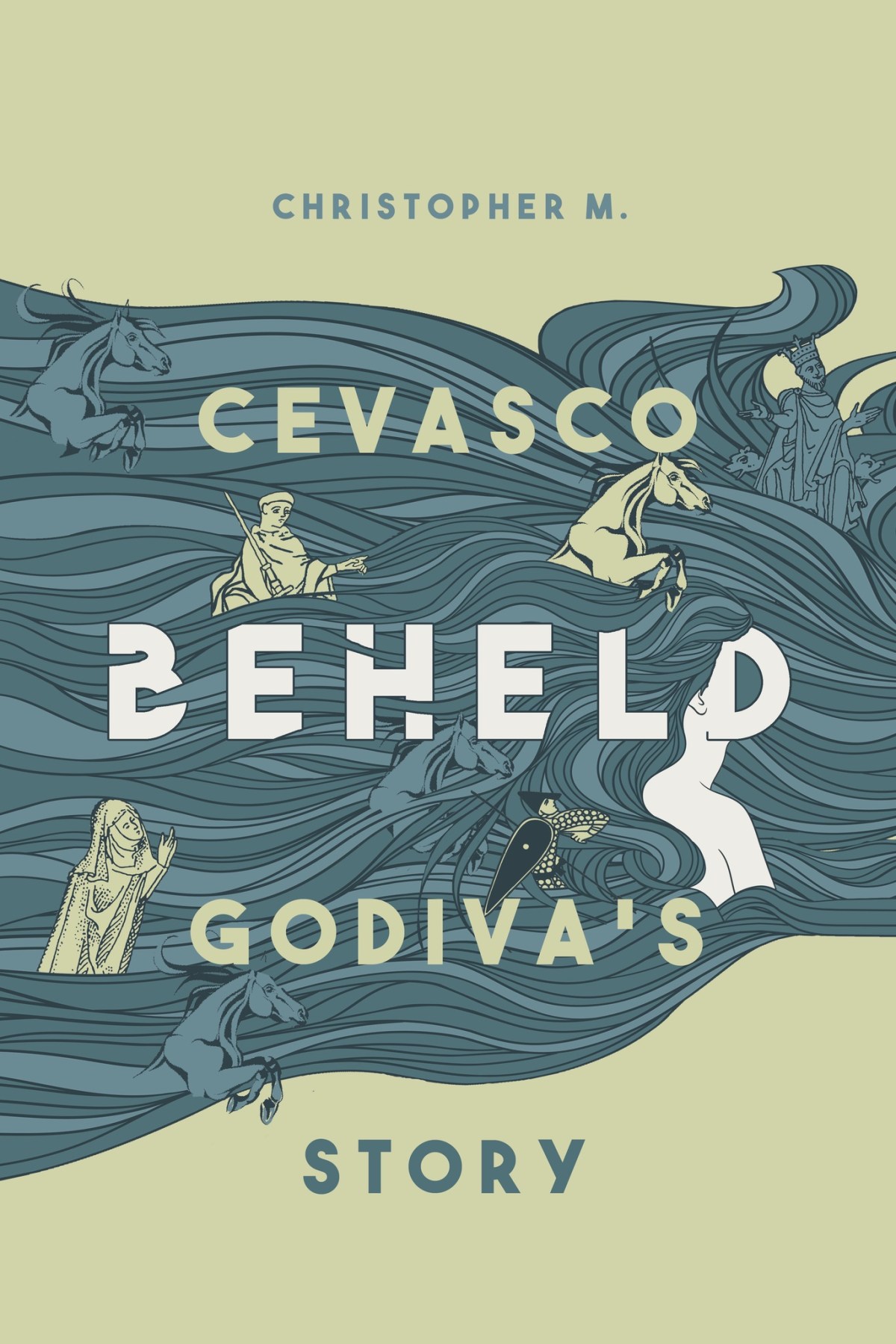
I’ve been asking fellow historical fiction author, Christopher M Cevasco, some questions about his love of Saxon England following the release of his new book, Beheld: Godiva’s Story

Today, I’ve been asking fellow historical fiction author, Christopher M Cervasco, some questions about his love of Saxon England

Can you explain, if possible, why you’re so fascinated by the tenth and eleventh centuries in Saxon England?

It’s a period of tumultuous change filled with a wide cast of colorful characters, beginning with the children of Alfred the Great seeking to push forward the process of English unification and lasting through the Norman Conquest. Along the way, there’s a long stretch of conquering Danish rule in England under King Cnut’s line. We also see major monastic reforms during this period that radically changed the way religious houses operated in England. And throughout these two centuries, we witness such watermark moments as the murder of King Edward the Martyr (one of history’s great unsolved mysteries), the Battle of Maldon (immortalized in the Old English poem), the St Brice’s Day massacre, frequent Viking raids, and then of course the fascinating series of events that took place in 1066, arising from the succession crisis after Edward the Confessor’s death and culminating in the Battle of Hastings. 

Weaving in and out of these events or in some cases existing on their periphery are such memorable individuals as Ealdorman Byrhtnoth (who fell at Maldon), the historical Macbeth, Svein Forkbeard, the Norman William the Conqueror, the Norwegian King Harald Hardrada (whose adventurous life spanned all the way to Constantinople), Harold Godwineson and his brother Tostig (the tragedy of their falling out is epic in its proportions), and the English resistance fighter Hereward the Wake, just to name a handful. Notably, these centuries also give us such fascinating and powerful women as Alfred’s daughter Æthelflæd (Lady of the Mercians), Ælfthryth (mother of Æthelred the Unready and the first wife of an English king known to have been anointed as queen), Emma of Normandy (queen to both King Æthelred and King Cnut), Godwin’s formidable wife Gytha Thorkelsdóttir, and of course Lady Godiva herself! 

To me it’s always seemed that no matter where I look in 10th- and 11th-century England, I uncover some fascinating tidbit, memorable figure, or an event that demands my attention and makes me want to dig deeper and find out more. I suppose to some extent this is true of any period, but these two centuries in England just feel particularly ripe.

Could you explain to me what came first, the desire to tell Lady Godiva’s story, or wanting to use the resource of Earl Leofric’s visions? Or was it just happy coincidence?

Godiva and her story definitely came first.  The legendary tale of her naked ride is of course sensational and lurid, but beyond that, Godiva was one of the most powerful and influential women to have lived during that period. She was married to Leofric, a powerful earl of Mercia during both the Danish occupation of England under King Cnut’s line and during the subsequent return of the royal English bloodline under King Edward the Confessor. Her own life spanned the periods before, during, and after the Danish conquest and she was alive to witness the Norman Conquest. 

The more I delved into this period, the more it became clear to me that Godiva and her husband were very key figures behind the scenes of all of these events. And yet, while we do know a good many details about Godiva’s public life, very little survives in the historical record to tell us about her personal life. I wanted to remedy that by filling in the blanks and connecting the dots. It was while doing that, and in particular while researching Godiva’s husband, that I came across the Old English manuscript known as Visio Leofrici (“The Visions of Leofric”), which dates from the 11th Century and recounts a series of holy visions supposedly experienced by Earl Leofric. As a novelist, that source just called out to me, and I made sure to find a way to incorporate much of its substance into my story. In some ways it was my attempt to come to terms with what was really going on in that primary source that led to the fraught and somewhat tragic character arc I ended up developing for Leofric as I told the story of Godiva.

I notice during the book, hopefully no spoilers, that you also choose to have King Edward as a very uneasy ally of the Godwin family. I too have opted for that explanation in my books, but do you believe it’s historically likely, or is it just wishful thinking on our part?

It always seemed to me that Edward’s relationship with Earl Godwin’s family must have been uneasy and complicated. Yes, he married Godwin’s daughter and made her his queen, and yes the English nobles endorsed Godwin’s son Harold as Edward’s named successor after Edward’s death, but neither of these two facts was particularly straightforward. There was a period when Edward briefly more or less imprisoned his wife in a nunnery coincident with a time when he actually exiled Godwin and the rest of Godwin’s family from the kingdom on charges of treason. And it seems hard to believe that Edward would ever have forgotten the fact that decades earlier, Godwin had helped to blind and murder Edward’s younger brother Alfred. 

As for Harold, while I do personally believe Edward wished at the end for Harold to succeed him, his naming of Harold was anything but straightforward, with Harold having to engage in all sorts of political maneuvering (including an arranged marriage to Lady Godiva’s granddaughter) in order to secure the support of the English nobles. And of course William maintained (with the backing of the papacy) that Edward had in fact promised the English throne to him—not to Harold—and that Harold was merely an oath-breaker and usurper. None of these complications would have arisen, I feel, if Edward’s relationship with the Godwin clan had been purely amicable. So yes, I too ran with the idea that they were only ever uneasy allies.

Do you plan on writing more books in Saxon England?

I’m currently working on a round of final revisions to a war-time resistance thriller set among the English rebels who opposed Norman rule using guerrilla tactics and sabotage in the years immediately following the Battle of Hastings in 1066. After that, I’ll be turning my attention to a new book in which I’ll seek to unravel the mystery surrounding the 978 murder of Edward the Martyr.

I’m looking forward to the murder mystery! Thank you so much for sharing your love of Saxon England. It’s good to know I’m not the only one:)

Here’s all the details for Beheld: Godiva’s Story

A darkly twisted psychological thriller exploring the legend of Lady Godiva’s naked ride.

Having survived a grave illness to become one of 11th-century England’s wealthiest landowners, Godgyfu of Coventry (Lady Godiva) remains forever grateful to the town whose patron saint worked such miracles. She vows to rebuild Coventry’s abbey and better the lives of its townsfolk. But the wider kingdom is descending into political turmoil, and her husband, Earl Leofric, starts to break under the strain. Godgyfu finds her own plans unravelling the moment she meets Thomas, a Benedictine novice with perverse secret desires. Three lives become dangerously entangled in a shocking web of ambition, voyeuristic lust, and horrid obsession. Can Godgyfu escape the monk’s menacing wiles and Leofric’s betrayals to secure her future in a changing kingdom? Perhaps, but first she faces a dark test of wills leading her perilously closer to a legendary ride…

Trigger Warnings:
Sexual situations, psychological abuse, violence, brief references to suicide.

Universal Amazon Link

Barnes and Noble

Lethe Press

Check out my review for Beheld, and the blog tour for Beheld.

Christopher M Cevasco

Christopher M. Cevasco was born in New Jersey and spent a memorable decade in Brooklyn, New York, but he feels most at home in medieval England, Normandy, Norway, and Greenland. A lifelong passion for history and fiction led him to earn degrees in Medieval Studies and English and later to embark upon a writing career that merges these two loves. 

Chris was the founding editor of the award-winning Paradox: The Magazine of Historical and Speculative Fiction from 2003 to 2009. His own short stories appear in such venues as Black Static, Beneath Ceaseless Skies, Distant Echoes(Corazon Books, UK), and the Prime Books anthologies Shades of Blue and Gray: Ghosts of the Civil War and Zombies: Shambling Through the Ages
A long-time member of the Historical Novel Society, Chris currently serves on the society’s North American conference board as registration chair for the upcoming 2023 conference in San Antonio, Texas. 

Chris lives with his wife and their two children in Myrtle Beach, South Carolina.

WebsiteTwitterFacebook

Amazon Author PageGoodreads

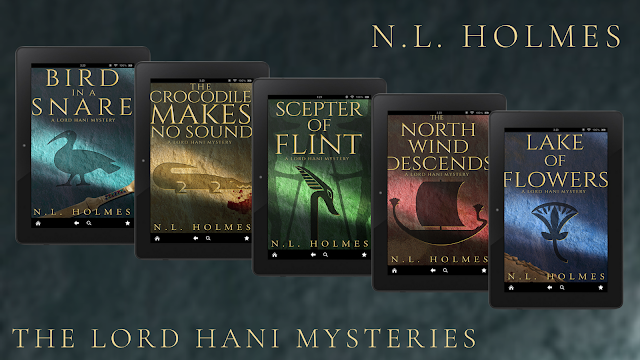
Today, I’m delighted to welcome N L Holmes to the blog with her book, Bird in a Snare, the first book in The Lord Hani Mysteries #blogpost

Today, I’m delighted to welcome N L Holmes to the blog. She’s going to share with us all the inspiration behind her Egyptian mystery books.

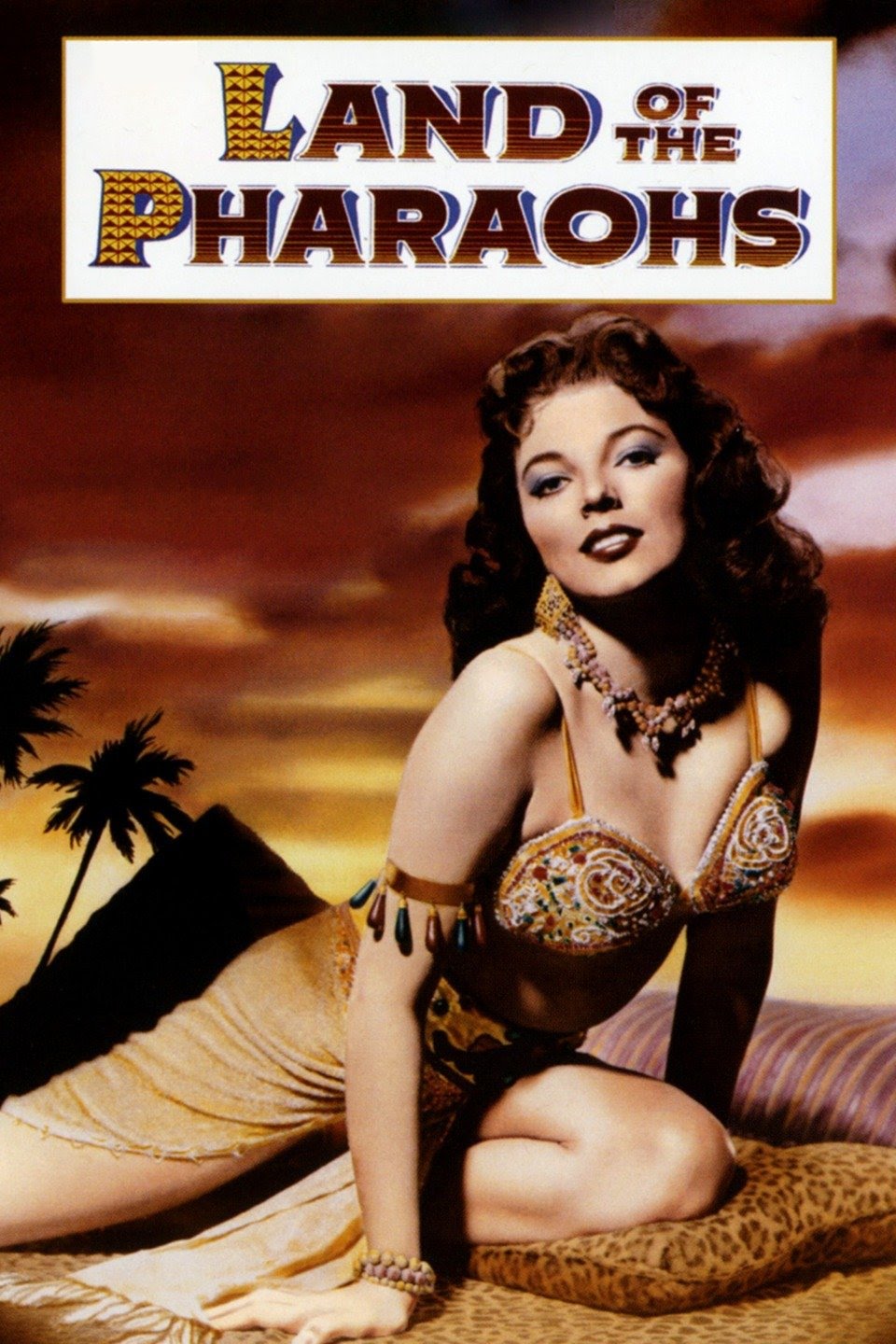
In a way, my Egyptian stories started the same way yours did, M.J. As a kid, I used to love all those fifties sword-and-sandal movies like The Egyptian and Land of the Pharaohs. That awakened my fascination with archaeology and perhaps with what ancient societies looked like. I remember raising pennies to help raise the temple at Abu Simbel when Lake Nassar was being built. During the decades that followed, I got sidetracked from my first love, but in my fortieth year, I went back to school and got my PhD in archaeology after all. Not specifically Egyptian, but Classical and Near Eastern, which situated me in the Eastern Mediterranean. And that meant people who interacted with the Egyptians. The interest was still simmering! 

Land of the Pharaohs

We’re getting closer now to the actual inspiration for Lord Hani. Over the following twenty-five years, I taught a wide variety of classes on ancient culture and history, including one on Ancient Egypt and one called Ancient Near Eastern Empires, which included Egypt and the Hittites. My family had been bookish, so the idea of starting to write fiction when I retired from teaching was a natural one. And the first inspiration I had for a story came from that Ancient Empires class. As an exercise, I had assigned my students to read the few brief historical documents referring to a certain royal divorce in the Syrian city of Ugarit, a vassal of the Hittites. “Now,” I told them, “describe what we really know about the event.” It became pretty clear that there wasn’t much you could say without drifting off into speculation.  I said to myself, There’s a novel in there! So when I retired, I began to write The Queen’s Dog and expanded it into the Empire at Twilight series, set in the last few generations of the Hittite Empire.

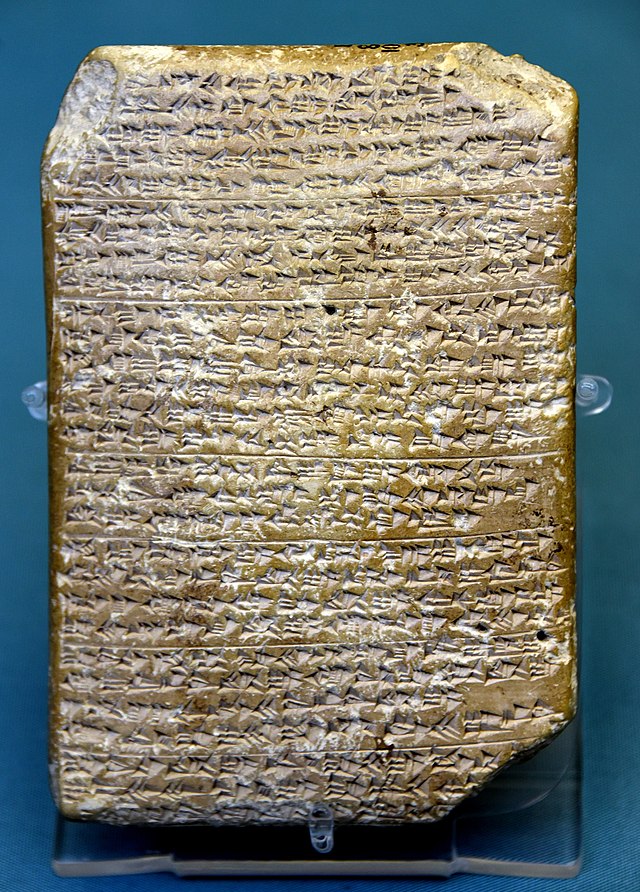
From my teaching experience, though, I knew there were only about five people in the world who got excited by the Hittites, whereas loads of people were Egyptophiles. I loved Egypt too, after all. And we had a wonderful resource in the Amarna Letters. This is a partial archive of diplomatic correspondence from the reign of Akhenaten, the “heretic pharaoh”, that tells us nearly everything we know about Egypt’s relationship with its vassals and peers in the fourteenth century BCE. Here was a ready-made cast of characters and loads of plot points grounded in reality. Hani son of Mery-ra appeared frequently in the Letters, and his every mission was ready to become an adventure. I took Hani as my protagonist and developed his character into the sort of man I thought might be a trusted royal emissary under several kings. Then I selected a number of events and personages and wove them together. The process was “This, this, and this happened. Now explain it. Give the actors motives and relationships.”

Amarna letters

I’m not a writer who plots in advance, so I can’t say that had any particular story in mind before I started. The process was one of tying diverse threads in so that nothing was left dangling at the end. In addition to Hani’s particular adventures, I wanted to capture a sense of the social and political upheaval Akhenaten inflicted on his kingdom with his “reforms.” Thus, I made Hani’s family involved with the worship of Amen-Ra—people whose personal lives took a direct hit from the revolution of values. Hani’s crisis of conscience is an ongoing thread through the six books of the series.  But in addition to the political intrigue and the personal or familial arc, there is also a murder mystery in each book. In the case of Bird in a Snare and The North Wind Descends, the murder is a real historical fact; the others are fictional. After my experience with the Hittite series, I thought a solid, definable genre series might be easier for readers to digest. People seemed not to know exactly what to do with a genre-less, perhaps literary book set in the remote past, just because there weren’t any. Historical mysteries are familiar and popular. And that is how Lord Hani came to be!

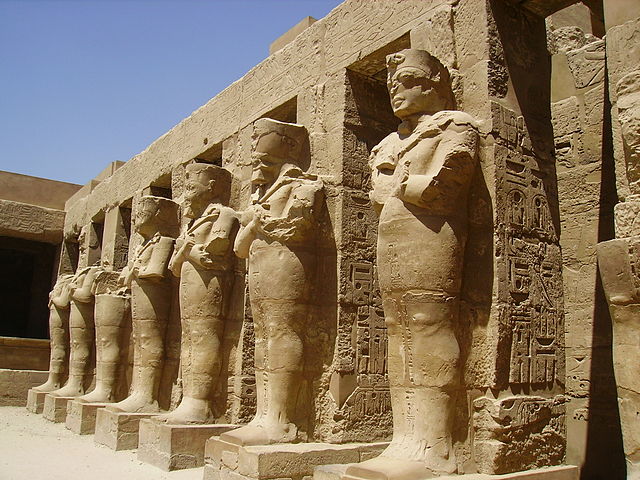
Amen temple

Thank you so much for sharing the inspiration behind your series of books. They sound fascinating. Good luck with them.

Here’s the blurb:

When Hani, an Egyptian diplomat under Akhenaten, is sent to investigate the murder of a useful bandit leader in Syria, he encounters corruption, tangled relationships, and yet more murder. His investigation is complicated by the new king’s religious reforms, which have struck Hani’s own family to the core. Hani’s mission is to amass enough evidence for his superiors to prosecute the wrongdoers despite the king’s protection—but not just every superior can be trusted. And maybe not even the king! Winner of the 2020 Geoffrey Chaucer Award for historical fiction before 1750.

Trigger Warnings:
Sexual abuse of children

Buy Links:

Amazon UKAmazon US: Amazon CAAmazon AU

Barnes and Noble:  KoboiBooksAudio

Universal Links for series:

Bird in a Snare (Book 1)

The Crocodile Makes No Sound (Book 2)

Scepter of Flint (Book 3)

The North Wind Descends (Book 4)

Lake of Flowers (Book 5)

Meet the author

N.L. Holmes is the pen name of a professional archaeologist who received her doctorate from Bryn Mawr College. She has excavated in Greece and in Israel and taught ancient history and humanities at the university level for many years. She has always had a passion for books, and in childhood, she and her cousin (also a writer today) used to write stories for fun.

Connect with N L Holmes

WebsiteTwitter:  FacebookLinkedInInstagram

PinterestBookBubAmazon Author PageGoodreads

Don’t forget to check out the other stops on the Bird in a Snare blog tour with The Coffee Pot book Club