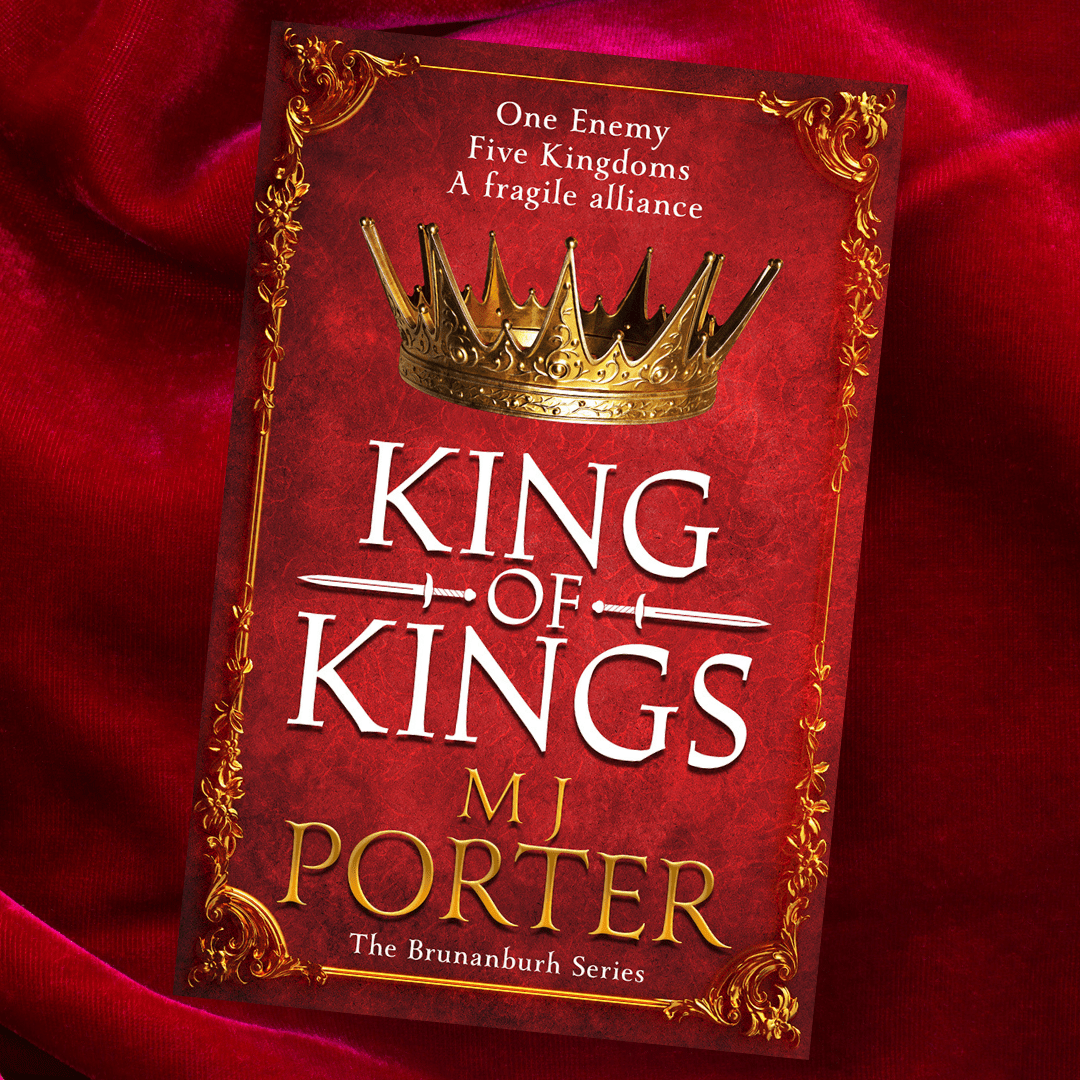
King of Kings is currently just 99p/99c on Amazon Kindle/Kobo in the UK/Canada and in Australia it’s $1.99

Here’s the blurb

‘An epic tale of the birth of a nation. Truly mesmerising. Game of Thrones meets The Last Kingdom’ – Gordon Doherty

In the battle for power, there can be only one ruler.

AD925
Athelstan is the king of the English, uniting the petty kingdoms of Wessex, Mercia, the Danish-held Five Boroughs and York following the sudden death of his father, King Edward.
His vision is to unite the realms of the Scots and the Welsh in a peace accord that will protect their borders from the marauding threat of the Norse Vikings.
Whilst seemingly craving peace and demanding loyalty with an imperium over every kingdom, Athelstan could dream of a much bigger prize.
But danger and betrayal surround his best intentions, namely from his overlooked stepbrother, Edwin, who conspires and vies for what he deems is his rightful place as England’s king.
As ever, powerful men who wish to rule do not wish to be ruled, and Constantin of the Scots, Owain of Strathclyde, and Ealdred of Bamburgh plot their revenge against the upstart English king, using any means necessary.
An epic story of kingsmanship that will set in motion the pivotal, bloody Battle of Brunanburh where allies have to be chosen wisely…

‘MJ effortlessly draws you into early Medieval England with this fascinating tale.’ – Donovan Cook

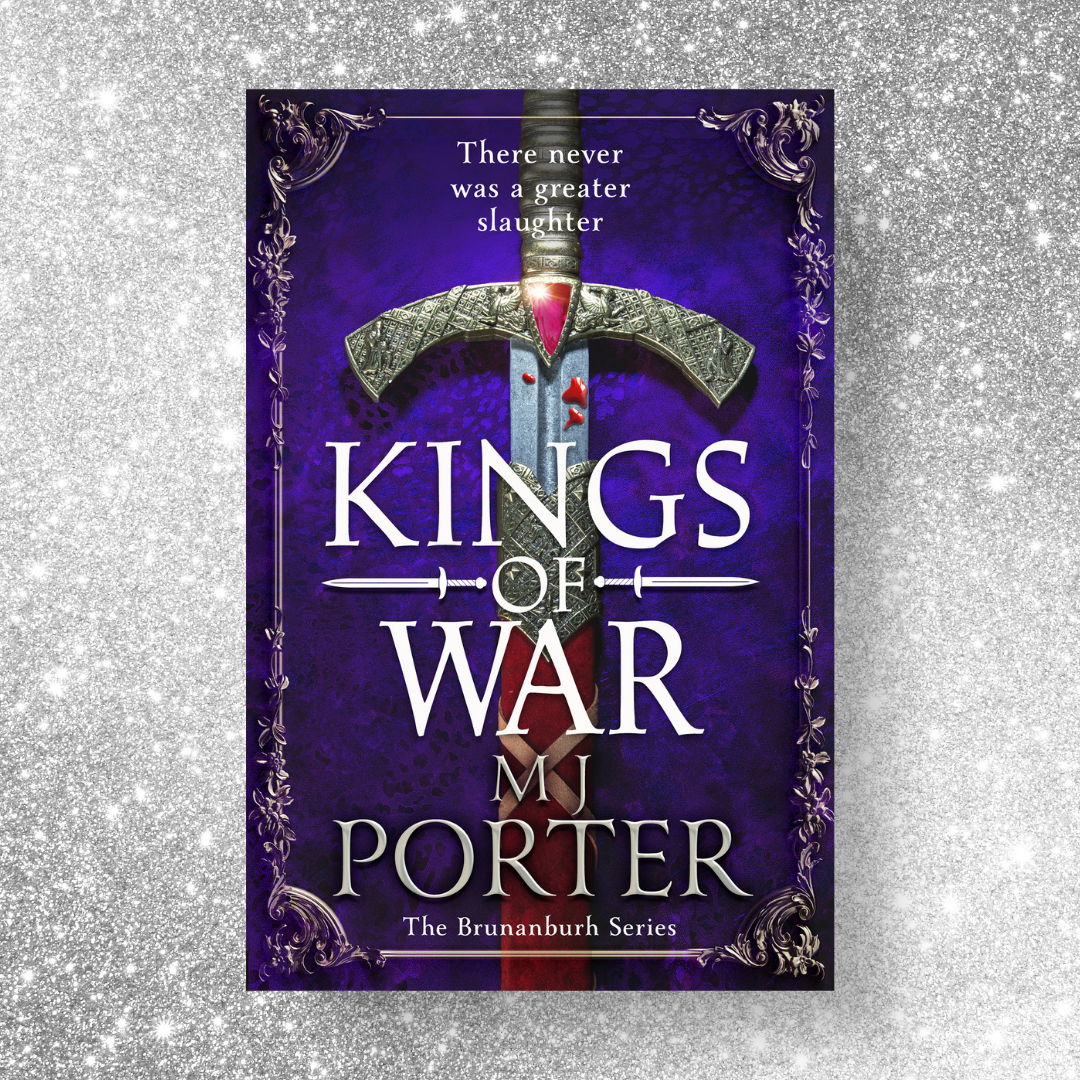
Yep, you’ve read that right. King of Kings is currently reduced in select territories, and select platforms, to just 99p/99c/$1.99 and equivalent. With book 2, Kings of War, and its fabulous cover, due for release next month, now is the perfect time to grab book 1.

Did you watch Seven Kings Must Die? Then this is the series for you. This is my retelling of the famous battle of Brunanburh, in all its complex political machinations and quest to be ‘king’ over all of Britain, not just England.

The tale began life in 2014 – long before anyone knew (perhaps other than Bernard Cornwell) that the Uhtred tales would culminate in the battle of Brunanburh. It’s my attempt to give a ‘wide’ view of the build-up and the battle, and to tell a story of Great Britain in the 920s and 930s instead of just picking a side.

These ambitious men tried to rewrite the map of Great Britain, and wow, they caused some carnage along the way.

I’ve written some blog posts to help everyone know who the characters are, and to give an idea of what was happening in what would be England, Scotland, Wales and Ireland at the time. Check out the posts from the main Brunanburh Series page on my blog. Enjoy:)
Book Review – Sword of Kings by Bernard Cornwell – historical fiction

Here’s the blurb;

“Uhtred of Bebbanburg is a man of his word.

An oath bound him to King Alfred. An oath bound him to Æthelflaed. And now an oath will wrench him away from the ancestral home he fought so hard to regain. For Uhtred has sworn that on King Edward’s death, he will kill two men. And now Edward is dying.

A violent attack drives Uhtred south with a small band of warriors, and headlong into the battle for kingship. Plunged into a world of shifting alliances and uncertain loyalties, he will need all his strength and guile to overcome the fiercest warrior of them all.

As two opposing Kings gather their armies, fate drags Uhtred to London, and a struggle for control that must leave one King victorious, and one dead. But fate – as Uhtred has learned to his cost – is inexorable. Wyrd bið ful ãræd. And Uhtred’s destiny is to stand at the heart of the shield wall once again…”

I sometimes feel that this series of books has long since run its course, but Sword of Kings, Book 12, had me intrigued just from reading the blurb.

Lord Uhtred has firmly moved into a time period I know, study and write about, and while sometimes it’s hard to read the way another person treats ‘your’ characters, I thoroughly enjoyed the starkly different interpretation of events surrounding King Edward’s death, because, quite simply, there is no ‘right or wrong’ when writing about this period. It’s a very much anything goes scenario, and into this, Lord Uhtred, bored and old, having finally captured Bebbanburg, is allowed to take centre stage.

Uhtred is older, but not wiser, and once more, if it wasn’t for the intervention of others, he would certainly not make it to the end of Book 12, hale and hearty.

Uhtred has as many enemies as normal, and his loyalties are split, but the will is strong to enact some revenge when he realises his ships are being attacked by an old enemy he ‘s made an oath to kill. Heading South, with the news that King Edward is either dying or dead, while plague pushes its way ever northwards, there’s a great deal of time spent on board ship. There’s a battle on a ship, and then another battle, and then there’s tides, rivers, currents, different boats, oars, sails and many other ship related activities. (It does get a little repetitive). There’s the Farne Islands, Kentish coasts, London, rivers in Mercia, London once more and then a bridge as well as a wall.

The action is pretty full-on but somewhat repetitive. Uhtred makes any number of bad decisions, and then the quest for revenge drives him on, even though it probably shouldn’t.

In effect, Uhtred turns the tide of ‘history’ once more, and not necessarily to his favour.

The old rivalries between paganism and Christianity continue, as does Uhtred’s unease with the plans the new king has for Northumbria, and for him. It’s these scenes that I find most tedious. I would like a little more nuance to Uhtred, but it seems his character will never develop more than it has. BC tries to make Uhtred appear as more than just a thug by adding a few women to the cast, as well as a host of orphans, and having his relationships with them testify that he isn’t ‘a ‘bad man’ just a righteous one who must abide by his oaths.’ Essentially, if Uhtred likes you, then that’s good, but if not, then you’re in trouble.

There are many elements to the story that I would change – the insistence on Anglo-Saxon place names being one of them, the ship ‘lingo’ another one – but hey, it’s Uhtred. You know what you’re getting from the start, and you won’t be disappointed, although you might feel a bit seasick!

Here’s to the next book.

Sword of Kings was released on 3rd October, and is available from here:

Book Review – Fools and Mortal by Bernard Cornwell – Recommended

So releasing today is Bernard Cornwell’s foray into Elizabethan England. Here’s the blurb;

“A dramatic new departure for international bestselling author Bernard Cornwell, FOOLS AND MORTALS takes us into the heart of the Elizabethan era, long one of his favourite periods of British history.

Fools and Mortals follows the young Richard Shakespeare, an actor struggling to make his way in a company dominated by his estranged older brother, William. As the growth of theatre blooms, their rivalry – and that of the playhouses, playwrights and actors vying for acclaim and glory – propels a high-stakes story of conflict and betrayal.

Showcasing his renowned storyteller’s skill, Bernard Cornwell has created an Elizabethan world incredibly rich in its portrayal: you walk the London streets, stand in the palaces and are on stage in the playhouses, as he weaves a remarkable story in which performances, rivalries and ambition combine to form a tangled web of intrigue.”

When I first read the blurb for this book (quite some time ago), I was disappointed and felt that despite all of Bernard Cornwell’s prior success he had decided to sell his soul to Satan. The Tudors and the Elizabethan period, in particular, have, as far as I’m concerned, been done to death. I vowed I wouldn’t read the book – I won’t read anything that’s Tudor/Elizabethan anymore because I can’t believe that there’s anything to say about the period that hasn’t been covered elsewhere.
However, when this came up on NetGalley, I decided to take a chance. I’d read a few other reviews, and looked at the ‘star’ ratings on Goodreads and was just a bit curious.
My first impressions were not that great – it’s a ridiculously easy book to read – even with all the quotations from the plays – but none of the characters are at all ‘pleasant’ and London, as ever, has been depicted as gross and disgusting (even if it’s historically accurate, I’m sure that there’s no need for such detail). It probably doesn’t help that the book is set during the winter and so everyone is cold and freezing most of the time.
Yet, I was intrigued enough to keep on reading – quite avidly. And so I did. Slowly some of the characters developed a few more personable traits – Will Shakespeare is a grumpy man to his brother, but sometimes pleasant to others – his brother is needy and a little desperate. All of the other ‘players’ are sketched with firm strokes, although we never really get to know them well.
The storyline concerning the work of the players, the way the theatres of London worked, and the precariousness of their position, is told very well. But the ‘main’ story (perhaps – maybe it’s not actually the main part after all – in true Shakespeare play within a play style) is a little weak and ends quite abruptly.
The story is at its best when describing the Shakespearian play being ‘played’ and it’s here that most will find the story a real joy to read and will appreciate the vision of Shakespeare that Cromwell has.
It would perhaps have been better to release this book under a pseudonym. Fans of Uhtred will be disappointed – and those who love stories of Elizabethan England might be put off by the ‘warlike’ nature of many of Cromwell’s previous books. It means that the people who would enjoy this book might miss it all together, whereas those who shouldn’t read it, just might and will be disappointed by it.
It’s a shame really. The book will more than likely be a huge commercial success – but in terms of ratings and reviews, it might well falter for these reasons.
Overall, I enjoyed the novel, although perhaps not quite as much as the wonderful Shakespeare ‘comedy’ written by Ben Elton on BBC2 at the moment, Upstart Crow (catch it on iPlayer as it has just finished on the TV).

And you can get a copy here, from today;

Film Review – King Arthur:Legend of the Sword – highly, highly recommended (historical fantasy)

I don’t often offer my opinions on films – as they can be somewhat divisive. However, given the bad press surrounding this film – apparently it’s a flop, I feel compelled to write a little in support of the film as I went to see it and it was massively entertaining and so well done, I think people might need a little nudge in the right direction and a bit of positivity.

Firstly, I am not a huge fan of King Arthur legends – (apart from Sword in the Stone – obviously). I often struggle with the ‘historical placement’ of it all and the huge body of medieval literature and idealism that has affected the original ‘legend’. There is no need to fear on that part in this film. The massively imaginative reimagining of ‘England’ by Guy Ritchie is so vast and encompassing that you can’t help but love it. This is Camelot and Londinium as you’ve probably never seen it before. The landscapes are stunning, the details amazing – even the costumes don’t jar and the music, with its thundering drums, adds to a movie that starts a little slowly for all of 5 minutes, and then just builds and builds until the fantastic conclusion.

If you’re a fan of Guy Ritchie movies everything he’s accomplished since Lock, Stock is there (I am a huge fan of his Sherlock Holmes films because, again, they are so refreshing, and I think the Man from UNCLE is very underrated because it’s so damn stylish). This is Londinium with all the ‘street talk’ of Lock, Stock and the attitude of its characters and their ‘banter’ is up there with the best Sherlock lines. There are some fantastic and quirky camera angles used that really add to the enjoyment of the film – this is a film without dull moments, and I mean none – (unlike Guardians of the Galaxy 2 which was also awesome but has a bit in the middle that’s a bit ‘flat’). It starts, and it rolls and it keeps going.

If you’re a fan of Arthurian Legends then too, this has much to offer. Camelot is there, Uhtred, Vortigern, the Lady of the Lake, Druids and even Merlin gets more than a mention. This is an ‘epic’ England of ‘Arthurian’ times – and if sometimes Ritchie plays a little bit hard and fast with some of the expected storylines, this shouldn’t detract because you’ll be too busy laughing, or watching in amazement with your mouth hanging open!

This is clever, and witty craftsmanship. Having seen a few ‘good’ action films recently, this film suffers from none of their flaws – while it’s as stylistic as Assassin’s Creed and has superb music to accompany it (I felt the music in Assassin’s Creed throbbing through my veins), King Arthur benefits from a plot and story that drives it ever forward. The slightly forced camaraderie of The Great Wall, (which again is a stylistically fantastic film and very well made) has no place in this film – the main stars work so well together that everything feels natural and never forced.

Jude Law is stunningly evil, Charlie Hunnam doesn’t falter once, his delivery is fantastic, and the actress playing the druid is mystical and powerful and beautiful in a mystical way. The supporting cast, which is both vast and small, is filled with familiar faces – it’s good to see the guy from Game of Thrones, the little nod to the BBC Merlin series, and ‘Blue’ is a little gem. The David Beckham cameo didn’t even make me flinch and some might not even recognise him as he delivers his lines in a bluff ‘Londinium’ accent. Eric Bana is exceptionally heroic as Uhtred, and I’m not unconvinced that Jason Statham doesn’t have a cameo as well.

And all this before I even get to the fantastical elements of this historical fantasy (which I’m not spoiling – go and see them) because they are so well done.

For all those fans of Vikings, this is a film for you that doesn’t suffer from the need to drag out storylines for an entire season. For fans of The Last Kingdom – this film will show you how this sort of thing should be done – there’s no half-ass fighting scenes, weak dialogue, or moody ‘elf’ man. The kings and warriors in this don’t pansy around with wooden crosses around their necks, worrying about what ‘their’ God might or might not think about everything that’s going on.

This is a ‘reimagined’ world of epic proportions, and as you might have noticed, I really can’t praise it enough, so put down your latest historical fiction/fantasy novel, and get yourself to the cinema! This is how ‘Arthur’ should be done.

The Legend of Arthur was released in the UK on 21st May 2017.

http://www.imdb.com/title/tt1972591/?ref_=nv_sr_1

Why do I do this to myself!!! It’s a 300 year gap!!!

Sometimes, sometimes, I wonder why I make my life so difficult!

Let me explain.

So, for my dissertation, I was going to study the early years of Iceland and compare them with the developments in the Danelaw, only then I got sidetracked by Leofwine, Ealdorman of the Hwicce, and from him grew both my dissertation and The Earls of Mercia series following the Ealdorman through the years from 994-1067 (eventually). And I should have been happy. Only, someone mentioned that they really wanted to know what happened between Alfred and Æthelred II and so the Brunanburh series was born.

King Penda of Mercia

Now, I have no one to blame for my next project, Hædfeld (now Pagan Warrior), because it was my idea but, but, well the battle of Hædfeld was entirely my own idea but it takes place in 632/3 and that brings a whole load of new problems. I know the time period vaguely, and I’ve studied the old Northumbrian Supremacy, Mercian Supremacy and finally, the Wessex Supremacy, but I feel as though I’ve wandered into an entirely different minefield of pseudo-facts and facts. I know I only have myself to blame, but it’s made me realise how easy it is to forget the great period that the Saxon period covers. Starting somewhere in the fifth century and running to the eleventh, that’s nearly 600 years.

Now, put it into context, if I was trying to do that with this year, I’d be going all the way back to the 1400s and the War of the Roses and the end of the Hundred Years War. That’s a huge period! Think of all the facts and pseudo-facts we know about that huge chunk of time.

Still, I can’t deny that I’m very excited about bringing the rascally Penda to life, and maybe one day, I’ll turn my attention to that Offa as well. Time will tell.

(Please note this is a historic blog post that I’ve left on the blog for information. It’s interesting to see how I felt about the trilogy now known as the Gods and Kings trilogy and featuring Penda the pagan, when I first started it).

Curious about how the trilogy developed then check out the Gods and Kings series page on the blog.

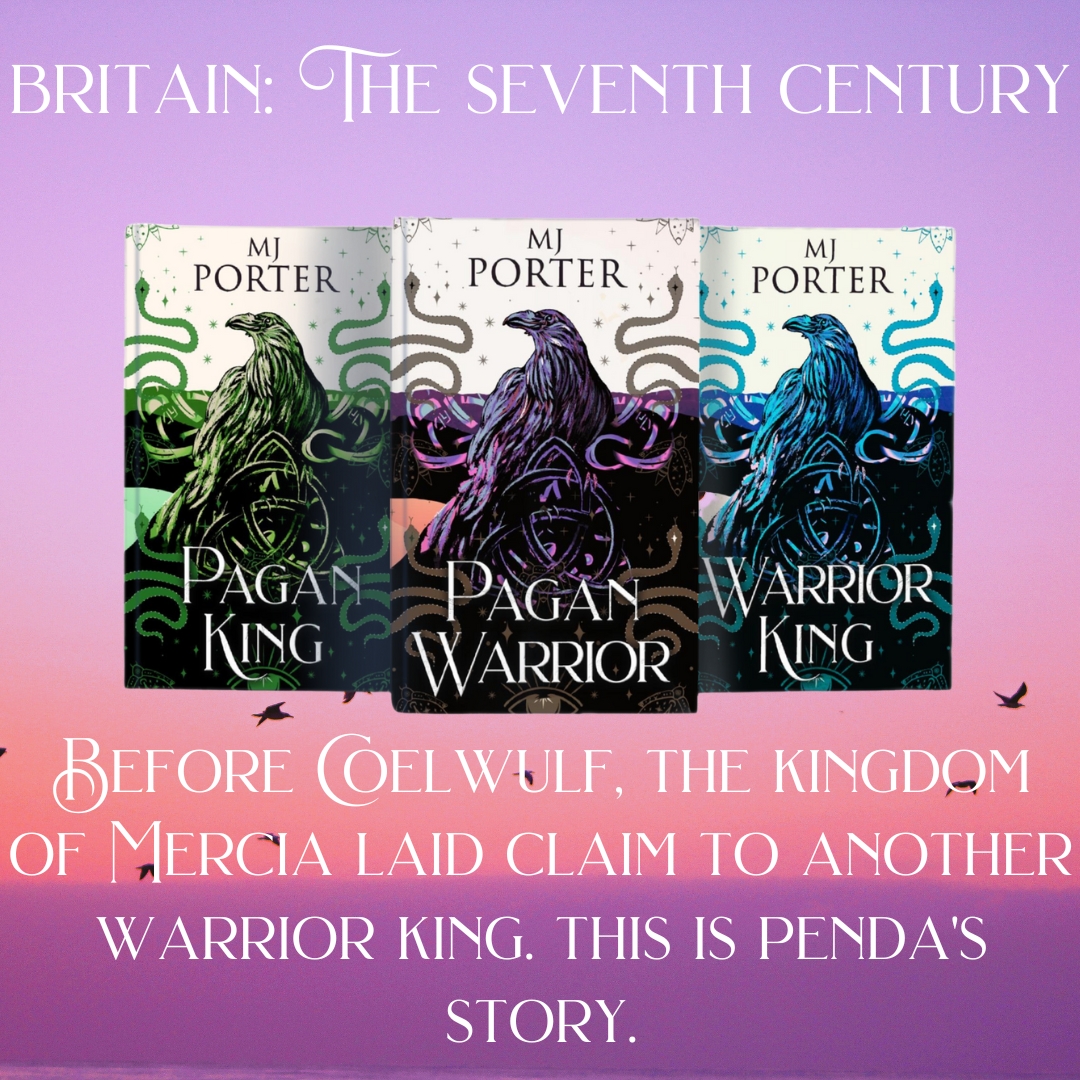
Image showing the three books in the Gods and Kings trilogy
Gods and Kings Trilogy