
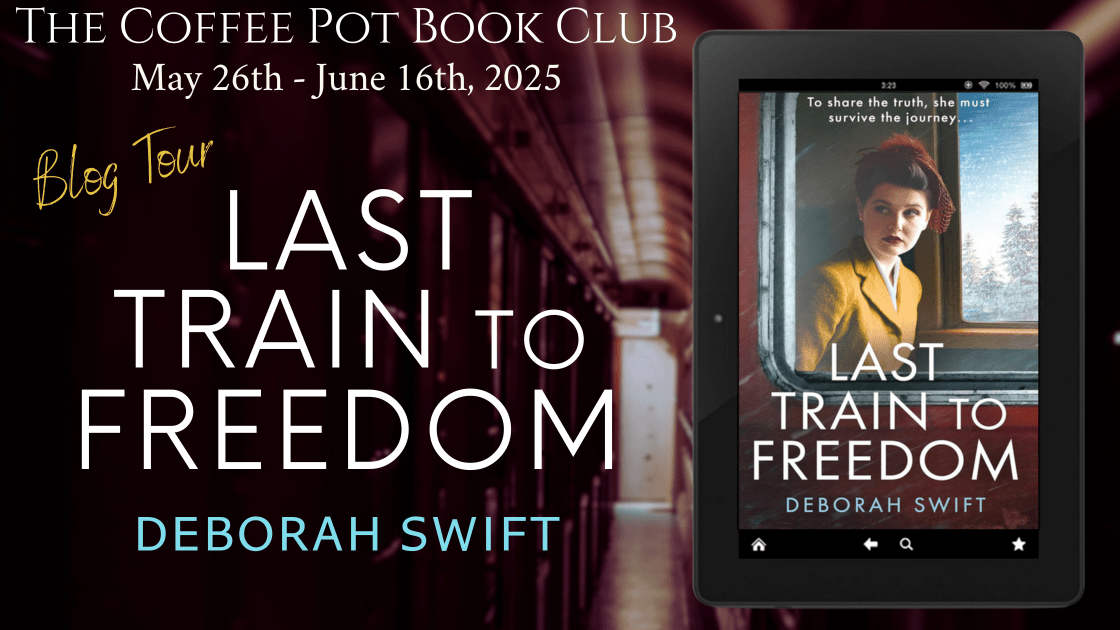
I’m delighted to welcome Deborah Swift and her new book, Last Train to Freedom, to the blog #WW2 #TransSiberian #Russia #Japan #WomensFiction #Spies #BlogTour #TheCoffeePotBookClub

I’m delighted to welcome Deborah Swift and her new book, Last Train to Freedom, to the blog with Researching Last Train to Freedom and the Sugihara Story.

Researching Last Train to Freedom and the Sugihara Story

Last Train to Freedom is set in WW2 during the Soviet occupation of Lithuania, and with the threat of the Nazis over the border. The parallels to today’s political situation in Ukraine could not be clearer.

The book tells the story of Jewish refugees fleeing from Nazi and Soviet oppression. Because of the current situation, although I was fascinated by the Trans-Siberian Express, I was not about to go and take the journey myself. My initial research was largely based around websites such as the Holocaust Encyclopedia and then books and papers found via JStor and other trustworthy academic websites.

The main story is about how Japanese Consul Sugihara enabled the escape of thousands of Jews by giving them visas – against the wishes of his government. One man held the fate of so many lives in his hands. The best overview I found of events was In Search of Sugihara by Ellel Levine.
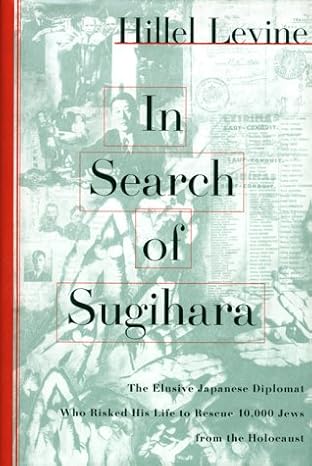
Pic of book In Search of Sugihara

Sughara’s wife Yukiko wrote a memoir about the events called No Visa (Rokusen-nin no Inochi) which is widely available, and tells the inside story of her husband’s frantic signing of visas before the consulate was shut down by the Soviets. Being aware that applicants were in life-threatening danger, Sugihara ignored his superiors’ orders and, from July 18 to August 28, 1940, he issued over 2100 life-saving transit visas.

‘My husband and I talked about the visas before he issued them. We understood that both the Japanese and German governments disagreed with our ideas, but we went ahead anyhow.’

Sugihara spoke to Soviet officials who agreed to let the Jews travel through the country via the Trans-Siberian Railway. I used detailed maps of the journey and researched each of the stops along the way to get a sense of where events might take place along the journey. Finding out about Russian trains of the 1940’s was quite a journey in itself – how did the doors open? What were the carriages like?
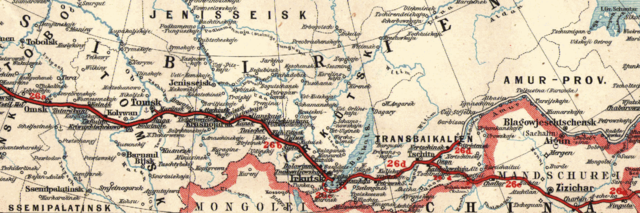
Pic of map of Trans-Siberian Railway

I gleaned much of the information from trawling through memoirs looking for telling detail. The escape on the Trans-Siberian Express was recorded by many in their memoirs, most notably I Have My Mother’s Eyes (A Holocaust Memoir Across Generations by Barbara Ruth Bluman, Light One Candle: A Survivor’s Tale from Lithuania to Jerusalem by Solly Ganor and One More Border: The True Story of One Family’s Escape from War-Torn Europe by William Kaplan. There are also several recordings on YouTube which tell the story, for example this one about the Lermer family.

The story takes place in three geographical locations – Lithuania, Moscow, and Japan, and all needed research, not to mention the journey across 6000 miles of Siberian wilderness! About half way through I wondered, have I bitten off more than I can chew here? But by then I was hooked on the story and just ploughed on, my huge collection of books and papers growing all the time.
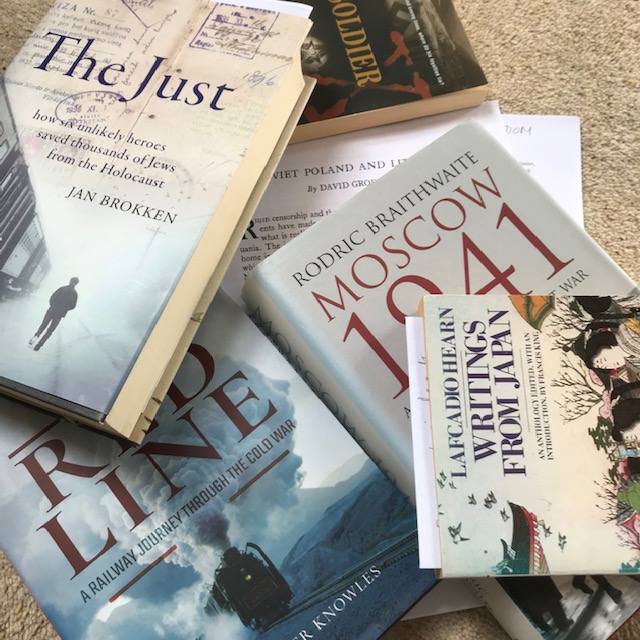
I used many other books to give me a sense of the culture and background, especially to grasp an idea of the Russian mindset, and also the culture of Japan for when my fictional refugees eventually arrive in Kobe.

Trains, trains, trains! I watched an awful lot of old steam train videos to get a sense of how steam was built up to power the engine, what sort of noise it might make and how it might behave in snow. I became a train buff for about six months, visiting the National Railway Museum to get a sense of the sheer weight and size of these old trains.

I hope that anyone reading the book will feel, as I did when researching, that they have really been through the middle of Siberia, and I hope they will enjoy the journey.

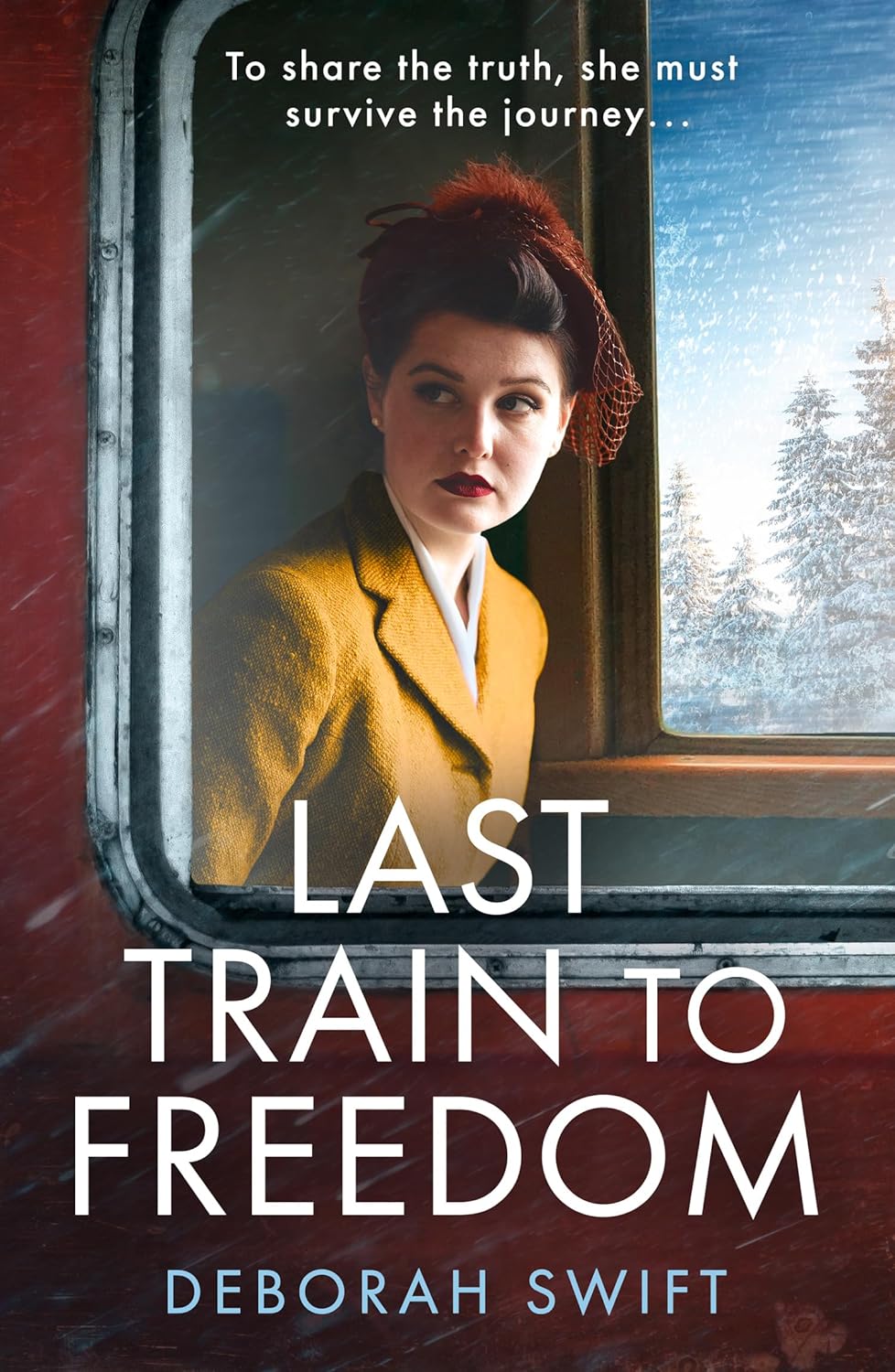
Last Train to Freedom is out in ebook, paperback and audio.
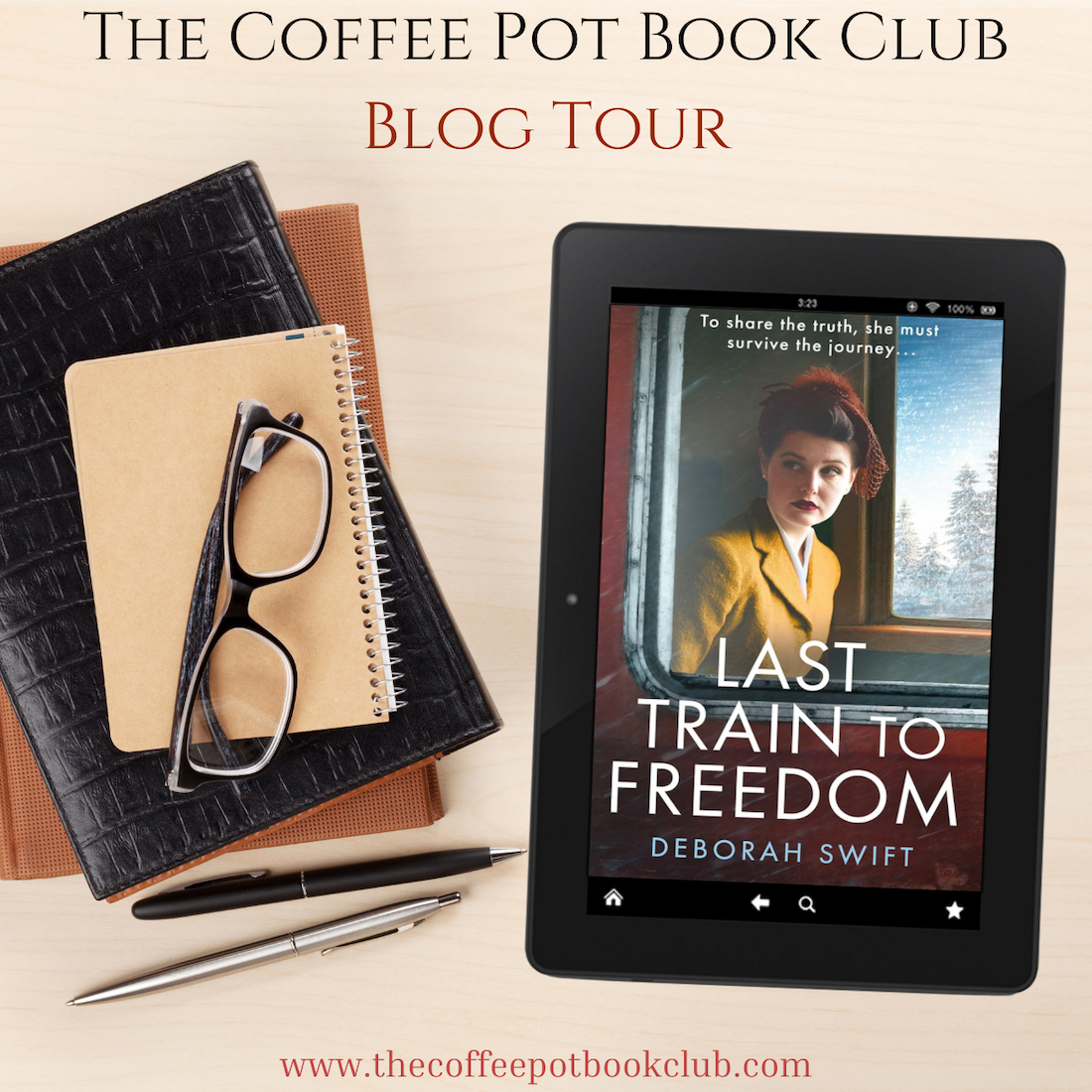
Here’s the Blurb

‘Taut, compelling and beautifully written – I loved it!’ ~ DAISY WOOD

‘Tense and thought-provoking’ ~ CATHERINE LAW

1940. As Soviet forces storm Lithuania, Zofia and her brother Jacek must flee to survive.

A lifeline appears when Japanese consul Sugihara offers them visas on one condition: they must deliver a parcel to Tokyo. Inside lies intelligence on Nazi atrocities, evidence so explosive that Nazi and Soviet agents will stop at nothing to possess it.

Pursued across Siberia on the Trans-Siberian Express, Zofia faces danger at every turn, racing to expose the truth as Japan edges closer to allying with the Nazis. With the fate of countless lives hanging in the balance, can she complete her mission before time runs out?

‘Such an interesting and original book…. Informative, full of suspense and thrills.’

~ Netgalley Review
Buy Link

Universal Link:

Meet the Author

Deborah Swift is the English author of twenty historical novels, including Millennium Award winner Past Encounters, and The Poison Keeper the novel based around the life of the legendary poisoner Giulia Tofana. The Poison Keeper won the Wishing Shelf Readers Award for Book of the Decade. Recently she has completed a secret agent series set in WW2, the first in the series being The Silk Code.

Deborah used to work as a set and costume designer for theatre and TV and enjoys the research aspect of creating historical fiction, something she loved doing as a scenographer. She likes to write about extraordinary characters set against a background of real historical events. Deborah lives in England on the edge of the Lake District, an area made famous by the Romantic Poets such as Wordsworth and Coleridge.
Connect with the Author
Follow the Last Train to Freedom blog tour with The Coffee Pot Book Club

Today, I’m incredibly excited to share a guest post by Kate Shanahan about her time-slip historical fantasy book, Tangled Spirits, set in medieval Japan (It’s a fabulous book that I highly recommend).

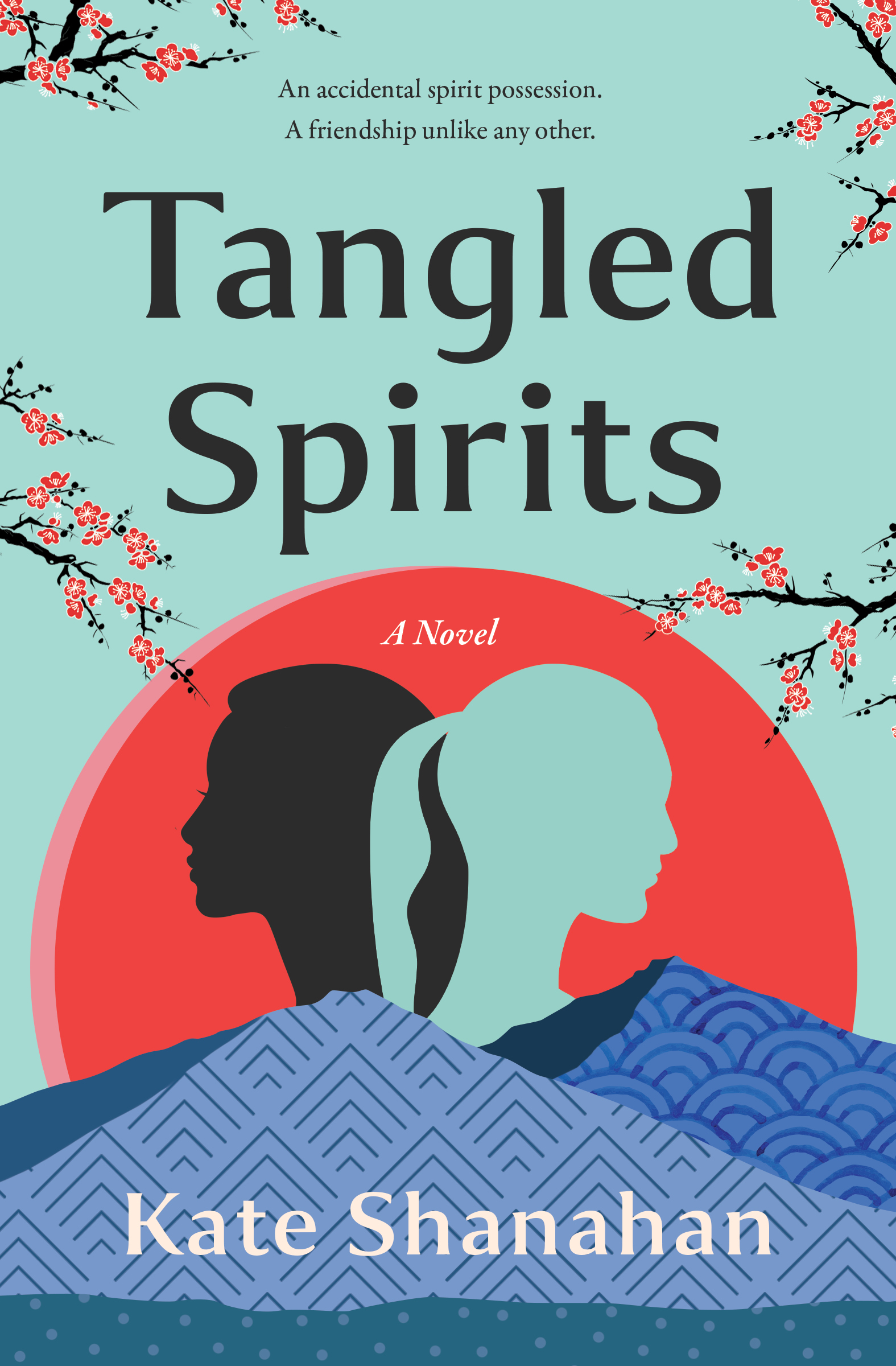
Hi, I’m Kate Shanahan, author of Tangled Spirits, a time-slip historical fantasy set in medieval Japan before shogun, samurai, and sushi were a thing. I’m blogging today about the cultural environment in 10th-11th centuries Japan that fostered the highest level of female literacy in the world at this time (among the aristocratic elite, that is.)

The world’s first full-length novel is usually considered to be Tale of Genji, written by Murasaki Shikubu, a lady-in-waiting at the imperial court of Japan at the beginning of the 11th century. She wrote this long, complex novel in an era when nearly all women everywhere in the world (and most men too) could neither read nor write. And not only did she write it, but enough people enjoyed reading it to ensure it was copied, shared, sold, borrowed, studied, illustrated, filmed, and gamified over the next 1000+ years.

I read Tale of Genji when I taught English in Japan. That same year, I read The Pillow Book, a journal written by lady-in-waiting Sei Shonagon, a contemporary of Murasaki’s. Sei invented a new form of journal called zuihitsu or ‘miscellany.’ In today’s terms, it’s more like the world’s first blog. 

Both Sei and Murasaki were ladies-in-waiting in the court of Emperor Ichijo, and they both could read and write Chinese as well as Japanese, rare skills for women even in their erudite sphere. How is it that these two women in medieval Japan both managed to create new forms of literature that are still studied today?

In the course of my research, I learned that women held many positions of high rank and even power in Japan’s early history. In fact, eight of Japan’s emperors have been women, six of them before the year 770. The Heian Period (794 to 1185) is known as the ‘golden age of Japan’ for its flowering of the arts and literature, and much of this flowering came from girl-power. 

(Before I go further, let me be clear that I’m only referring to the tiny elite at the top of the food chain who led a life of luxury and leisure far, far removed from the hardships of the unranked.)

I’ve noticed that Westerners are often surprised at some of the rights and privileges women enjoyed in this era in Japan. In the Heian Period, married noblewomen often continued to live with their parents after marriage, with the husband stopping by from time to time to see her. The wife’s father or uncles influenced the education and development of her children. This is called a ‘uxorial’ form of marriage, and it not only gave a woman more control and influence over raising her children, it also meant that if she weren’t happy with her husband’s behavior, she could send him away without seeing him. Women also could initiate a divorce and remarry. Men often had several wives and consorts, and women just one (at a time), but love affairs were not frowned upon as long as discreetly managed. 

The most important element of the environment that eventually produced Tale of Genji and The Pillow Book was the Fujiwara Regency. The emperor’s role was a sacred one with a focus on the rituals and prayers needed to keep divinities happy, so the regent’s role was a political, secular one. There were 21 regents from the Fujiwara clan between 804 and 1238, and the most famous was Michinaga, who was regent during both Sei Shonagon and Murasaki Shikibu’s tenure at court. In the course of my research for Tangled Spirits, I learned this proverb: “if one must have a child, let it be a girl.”  Fujiwara clan members gained power and access to the emperor by marrying their daughters to him. Those daughters produced children who often became Crown Prince and Emperor, and because of the uxorial tradition, Fujiwara regents kept their power by their influence over their imperial grandchildren. And that made daughters more valuable to a Fujiwara regent (or regent wanna-be) than a son. 

And literacy comes into play because it was important for these Fujiwara daughters to be able to entice the emperor with their beautiful calligraphy, their skill with writing poetry, and with reading out loud to him. Beauty and elegance were of utmost importance at court in this era, and calligraphy could make or break a love affair. Thus a high priority was placed on the education of potential imperial consorts.

And then once a Fujiwara daughter was at court, whether as a concubine, an official consort, or a Royal Consort (Empress), it was important for that consort to have women around her with skills in calligraphy, poetry, witty repartee, and story-telling, both to make the salon attractive to the Emperor and to entertain the consort. Women in this elite class lived lives of comparative leisure, and they stayed indoors most of the time. Reading, writing, and story-telling flourished as entertainment. 

And that created a sort of domino effect. Parents might not be of a high-enough rank for their daughters to be selected for the Emperor, but they educated their daughters to make them attractive to the consort’s salon, and that is how both Sei Shonagon and Murasaki Shikibu came to court.

It’s clear from the diaries of Sei Shonagon and Murasaki Shikibu that they both could read Chinese writing as well as the native ‘onnade’ and that such learning was considered masculine. Murasaki wrote that Sei was a show-off for not hiding her knowledge of Chinese, while Sei wrote that male courtiers sent poems in Chinese as a sort of prank, hoping to force her to reveal her knowledge (but she was too clever for that.) However, recent research indicates that a nobleman might teach his daughter to read and write Chinese as well as Japanese to improve her chance to obtain a position as an official in the Imperial Handmaid’s Office. Murasaki Shikibu writes in her diary that she learned Chinese by eavesdropping on her brother’s lessons, but it’s possible that both Murasaki and Sei Shonagon were taught Chinese reading and writing for that reason, as neither family was in the top ranks of nobility. Some high-ranking men even sought to marry women who could read Chinese as a skill that could help their own careers in government bureaucracy.

If you’d like to read more blog posts about Heian Japan or find out more about Tangled Spirits, you can find mine at kvshanahan.com

If you’d like to read more about literacy in this era, here’s an interesting article that I found in jstor.org.

Heldt, G. (2005). Writing like a Man: Poetic Literacy, Textual Property, and Gender in the “Tosa Diary.” The Journal of Asian Studies64(1), 7–34. http://www.jstor.org/stable/25075675

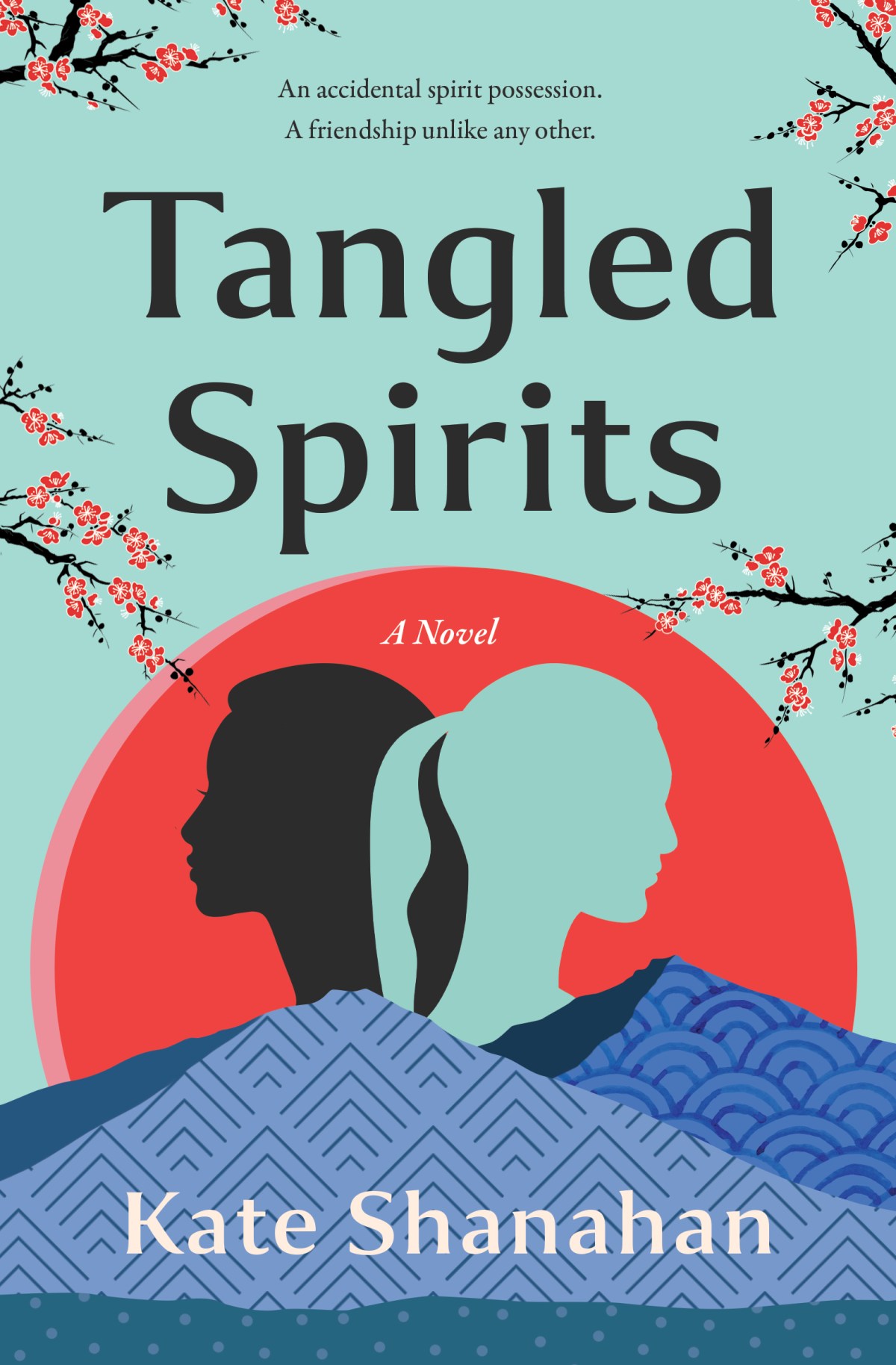
Here’s the blurb for Tangled Spirits.

Journey to the imperial court of Japan as Kate Shanahan skillfully blends fictional and historical figures and events into a time-slip tale of intrigue, personal sacrifice, and a friendship that spans a thousand years. 

Two spirits. One body. It’s harder than it looks.

2019: Anxious and insecure, Mina Cooper wants to change her life, to change herself, but she gets more change than she bargains for when her spirit is pulled into the past and into someone else’ body – in 10th century Japan. And now she has a lot more to be anxious about. Like exorcism. And bandits. And chaotic magic by an inexperienced shaman. 

999: Desperately lonely after her mother and sister die in an epidemic, aspiring shaman Lady Masako attempts to call her mother back from the spirit world, but gets possessed by Mina instead.

After a struggle for control and a failed exorcism, the two spirits agree to cooperate long enough to get help from the Royal Astrologer, the only person powerful enough to send Mina home.

But his help comes at a cost, and Mina’s imperfect knowledge of history offers little to negotiate with. And the longer he waits to help her, the greater the risk her spirit will fuse with Masako’s, and she’ll never get home.

Meet the author

Kate grew up in Massachusetts, but spent 4th, 8th, and 11th grades living in England, and speaks both languages (British and American) fluently. After graduating from University of Michigan with a BA in Political Science (East Asia Concentration), Kate taught English in Sapporo, Japan for two years. She enjoyed the experience so much that she returned to U of M for an MA in Asian Studies (Japan Specialization), and while there, worked part-time for the Center for Japanese Studies. Fortunately for Kate, Honda was expanding operations in Ohio around the time she finished, and she spent an entire career at Honda in project, business, and people management, thrilled to be able to travel to Japan and speak Japanese for work. Then she retired to work on that book about Sei Shonagon that she always had in the back of her mind to write, and that book evolved into Tangled Spirits.
 
After all those years in northern latitudes, Kate and her husband recently moved to Florida’s Gulf Coast where the sunshine makes it difficult to focus on writing. But she’s determined to do it anyway. After a bike ride.

Kate Shanahan Website

Tangled Spirits on Amazon

Kate Shanahan Instagram

Tangled Spirits is on special offer until 19th July 2022, for 99p/99c on Amazon UK/US and is also included in a Kindle Unlimited Subscription

Good luck with the new book, Kate. Thank you so much for such an interesting post about Japan. I can see why you were drawn to the period.

Here’s my review

I was lucky enough to read an early version of Tangled Spirits, and I flew through it in two days. It’s a fantastic and really intriguing story.

I liked the whole story – the idea of a 21st-century woman’s mind in a 10th-century woman’s body, seeing everything through new eyes, putting both current interpretations on etiquette and prevailing thoughts, as well as the 10th-century justification for it all. It was just tongue in cheek, and court politics enough, to ensure the reader always wants to know what’s going to happen.

Masako and Mina are both intriguing characters. As the story is told through Mina we know more about her thoughts and more about Masako’s actions. I could understand both of their viewpoints well enough, even if like Masako, I found it a bit frustrating that Mina wouldn’t share more of her knowledge of the future. I enjoyed that as time went on, they acted more and more like one another.

A really enjoyable read and one I highly recommend.