Tracey Warr is sharing some historical research from The Anarchy #historicalresearch #blogtour #histfic

Welcome to the blog. Your book, The Anarchy, is set in a time period that I thoroughly enjoy and sounds absolutely fascinating. As a historian first and foremost, and then a writer, I’m always interested in how people research their historical stories.

Can you explain your research process to me, and give an idea of the resources that you rely on the most (other than your imagination, of course) to bring your historical landscape to life? 

The Anarchy is set 1121–1139 and focuses on the later life of the Welsh noblewoman, Nest ferch Rhys. It is the final book in my Conquest trilogy telling the story of Nest’s turbulent life. Gwyneth Richards has argued that historiography has had a male bias ‘which has hitherto rendered women more invisible than is warranted by the available sources’ (2009, p. 24). Near-invisible women in the early middle ages are the territory of my historical fiction. I take the often very slight references to them in medieval chronicles and charters and imagine into the gaps. My first novel on an 11thcentury countess of Toulouse and Barcelona, Almodis de la Marche, came from a few sentences in the Chronicle of Ademar de Chabannes. My second novel came from a few more sentences in the same medieval chronicle on a different woman who was kidnapped by vikings. The Conquest trilogy derives from a couple of paragraphs on Nest ferch Rhys in Brut y Tywysogion (The Chronicle of the Princes

1 Brut y Twysogion (Chronicle of the Princes)
https://commons.wikimedia.org/wiki/File:Chronical_of_the_Princes_(f.260).jpg Attribution: National Library of Wales, CC0, via Wikimedia Commons

Nest ferch Rhys was the daughter of the last independent king in Wales, Rhys ap Tewdwr. Her father and three of her brothers were killed by invading Normans and she was probably raised in the Norman court. She became the mistress of the Norman king, Henry I, and had a son with him. She was married to Gerald FitzWalter, the Norman steward of Pembroke Castle, which had been part of her father’s kingdom. The Welsh prince, Owain of Powys, abducted her from Gerald for a few years. After Gerald died, she was married to Stephen de Marais, the Norman constable of Cardigan Castle. The character Haith in my novel is based on Hait who is documented as the sheriff of Pembroke in the 1130 pipe roll, the records of the court (Green, 1986). Hait is presumed, from his name, to have been Flemish. It is my invention to make him a close friend of King Henry. According to Nest’s grandson, Gerald of Wales, Hait was the father of one of Nest’s sons. 

Once I have a spark from a primary source such as the Brut y Tywysogion to set me off, I pursue several lines of enquiry to find out everything I can about my characters, their relationships with one another, and the contexts they lived in. The lines of enquiry I pursue are further primary sources, genealogical research, biographies, the literature and art of the time, objects in museums, maps, site research at places associated with the characters, and contextual research—finding out, for example what people in those times and places wore and ate, what games they played and what books they read. I do as much research as I can online and buy key books and then I spend days in the British Library poring over the more inaccessible sources.

Other primary sources I drew on for The Anarchy included William FitzStephen’s account of Norman London and the books written by Nest’s grandson, Gerald of Wales. The genealogical research gives me a sense of the relationships between people and, for instance, an idea of how many children my heroine had and when. One key resource I use for genealogical research is Charles Cawley’s Medieval Lands, which can be searched online (2014). Genealogies are often set out following the patriarchal line. I make an effort to perceive the matriarchal line too, as far as possible. Family and kin—on both sides—were extremely significant for medieval people.

Despite sometimes being described as the most famous early medieval Welsh woman, the historical record of Nest is slender. Her kidnap from her husband Gerald FitzWalter by Prince Owain Cadwgan, which probably occurred at Cilgerran Castle, is briefly described in Brut y Tywysogion (The Chronicle of the Princes). Nest is credited with advising Gerald to escape down the castle toilet chute, which let out onto the dungheap below, outside the castle walls. (See my earlier blogpost on the wily Gerald: https://englishhistoryauthors.blogspot.com/2016/11/a-norman-frontiersman-in-wales.html.) 

Kari Maund and Susan Johns have both written important studies on Nest ferch Rhys. I also research the people around her and try to get a sense of the atmosphere of the Norman court that Nest found herself in. C. Warren Hollister and Judith Green’s biographies of King Henry I were invaluable and writing the character of the king in my novels was one of the most enjoyable parts of composing them. I also drew on David Crouch’s book on the Beaumont twins to think about the personalities and factions at court. Reading journal articles, such as Eleanor Searle’s study of the marriages of Norman conquerors to Welsh and Anglo-Saxon heiresses, often gives me key information or details to use. 

My research on the literature of the time, such as The Mabinogion and the poems of the Welsh bards, helps me find fragments of the authentic voice of that period that I can use. In The Anarchy, Breri the Welsh bard is a double agent, spying for both the Welsh and the Normans. Amanda Jane Hingst’s book on the medieval writer, Orderic Vitalis, also gave me valuable material. Vivid details of daily life can be drawn from manuscript illustrations and objects in museums, and I often use particular objects, such as goblet or a ring, as a significant motif in the story. 

In the opening chapter of The Anarchy, Nest, has been widowed from one Norman and is married unwillingly to another, Stephen de Marais. After the ceremony, she absconds, leaving her wedding ring on the table in the great hall. 

Fourteenth-century medieval finger-ring, probably a wedding ring. The inscription probably reads ‘I will serve you until I die’. https://commons.wikimedia.org/wiki/File:Medieval_finger_ring_(showing_internal_inscription)_(FindID_199291).jpgAttribution: The Portable Antiquities Scheme/ The Trustees of the British Museum, CC BY-SA 4.0 <https://creativecommons.org/licenses/by-sa/4.0&gt;, via Wikimedia Commons

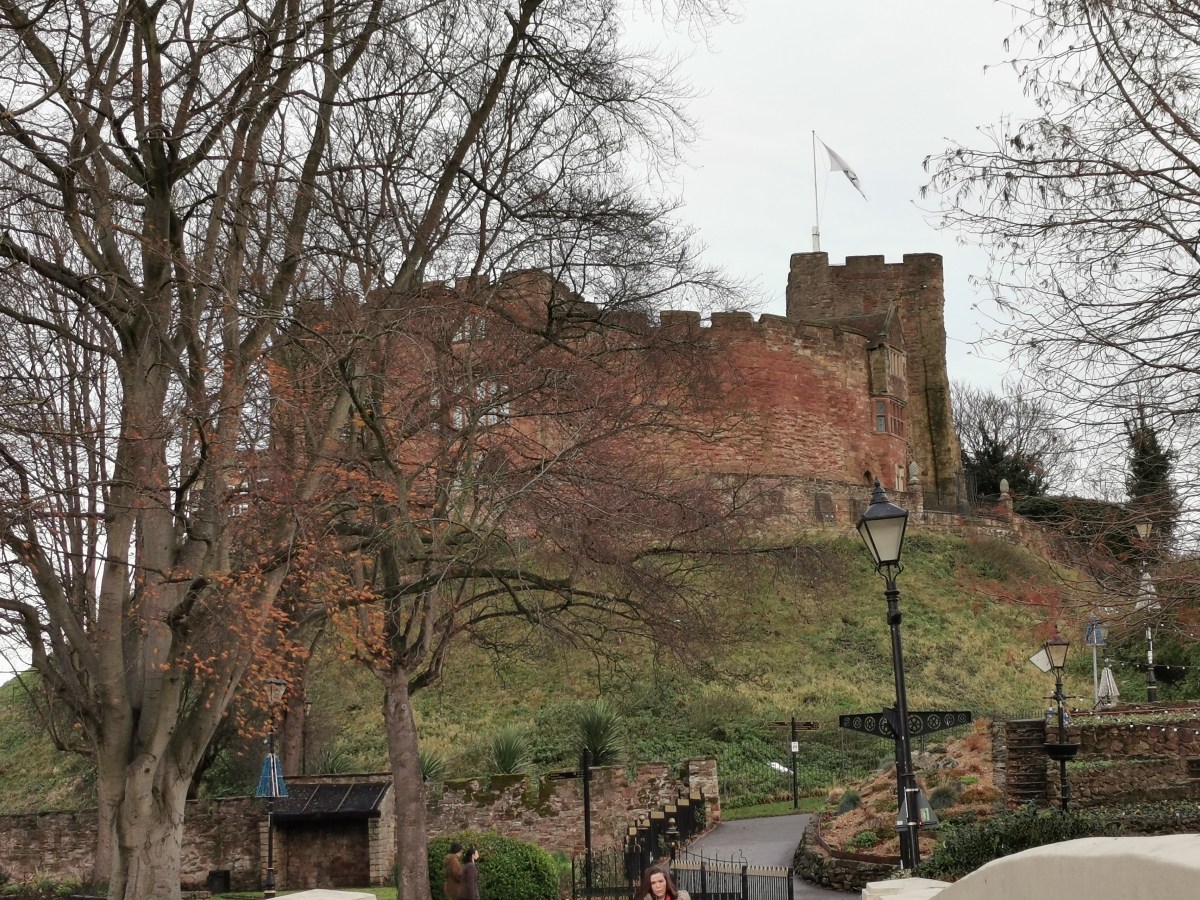
I walk the sites of the novel, visiting castle ruins. Even though there is rarely much to see surviving from the 12thcentury, site research gives me atmosphere, weather, birdsong, the lay of the land. I draw up my own chronology, genealogies, and maps to help me flesh out the fictional world of my characters so that it is imagined, but credible, built on a structure of recorded history.

(Historical references are listed below).

Brut y Tywysogion (Chronicle of the Princes). Written 681–1282. Thomas Jones transl. (1953) Caerdydd: Gwasg Prifysgol Cymru.

Ademar de Chabannes, Chronique, 3 vols., translated by Yves Chauvin and Georges Pon (2003) Turnhout: Brepols.

Cawley, Charles (2014) Medieval Lands, http://fmg.ac/Projects/MedLands/Search.htm.

Crouch, David (2008) The Beaumont Twins: The Roots and Branches of Power in the Twelfth Century, Cambridge: Cambridge University Press.
FitzStephen, William, Norman London. Written around 1183. Essay by Sir Frank Stenton & Introduction by F. Donald Logan (1990) New York: Italica Press. 
Gerald of Wales, The Itinerary Through Wales and the Description of Wales. Written 1191 and 1194. Lewis Thorpe, transl. (1978), Harmondsworth: Penguin.

Green, Judith A. (2009) Henry I King of England and Duke of Normandy, Cambridge: Cambridge University Press.

Hingst, Amanda Jane (2009) The Written World: Past and Place in the Work of Orderic Vitalis, Notre Dame, Indiana: University of Indiana Press.

Hollister, C. Warren (2001) Henry I, New Haven/London: Yale University Press.

Johns, Susan M. (2013) Gender, Nation and Conquest in the High Middle Ages: Nest of Deheubarth, Manchester: Manchester University Press.

Maund, Kari (2007) Princess Nest of Wales: Seductress of the English, Stroud: Tempus.

Richards, Gwyneth (2009) Welsh Noblewomen in the 13th Century, Lewiston, N.Y.: Edwin Mellen Press.

Searle, Eleanor (1980) ‘Women and the legitimization of succession’ in Brown, R. Allen, ed., (1981) Anglo-Norman Studies III: Proceedings of the Battle Conference, pp. 159-170.

Thank you so much for sharing your research with. It’s great to see all the resources you used. I also smiled because Kari Maund was one of my lecturers at university. Her books on the early Welsh period are wonderful.

Here’s the blurb:

Unhappily married to Stephen de Marais, the Welsh princess, Nest, becomes increasingly embroiled in her countrymen’s resistance to the Norman occupation of her family lands. She plans to visit King Henry in the hope of securing a life away from her unwanted husband, but grieving for the loss of his son, the King is obsessed with relics and prophecies.

Meanwhile, Haith tries to avoid the reality that Nest is married to another man by distracting himself with the mystery of the shipwreck in which the King’s heir drowned. As Haith pieces together fragments of the tragedy, he discovers a chest full of secrets, but will the revelations bring a culprit to light and aid the grieving King?

Will the two lovers be united as Nest fights for independence and Haith struggles to protect King Henry?

Universal Links: 

The Daughter of the Last King (Book 1)

The Drowned Court (Book 2)

The Anarchy (Book 3)

Amazon UKAmazon USAmazon CAAmazon AU

Barnes and NobleWaterstonesKoboBookShop.org

Meet the Author

Tracey Warr (1958- ) was born in London and lives in the UK and France. Her first historical novel, Almodis the Peaceweaver (Impress, 2011) is set in 11th century France and Spain and is a fictionalised account of the true story of the Occitan female lord, Almodis de la Marche, who was Countess of Toulouse and Barcelona. It was shortlisted for the Impress Prize for New Fiction and the Rome Film Festival Books Initiative and won a Santander Research Award. Her second novel, The Viking Hostage, set in 10th century France and Wales, was published by Impress Books in 2014 and topped the Amazon Australia charts. Her Conquest trilogy, Daughter of the Last King, The Drowned Court, and The Anarchy recount the story of a Welsh noblewoman caught up in the struggle between the Welsh and the Normans in the 12th century. She was awarded a Literature Wales Writers Bursary. Her writing is a weave of researched history and imagined stories in the gaps in history.

Tracey Warr studied English at University of Hull and Oxford University, gaining a BA (Hons) and MPhil. She worked at the Arts Council, Institute of Contemporary Arts, Chatto & Windus Publishers, and edited Poetry Review magazine with Mick Imlah. She also publishes art writing on contemporary artists, and in 2016 she published a future fiction novella, Meanda, in English and French, as part of the art project, Exoplanet Lot. She recently published a series of three books, The Water Age, which are future fiction and art and writing workshop books – one for adults and one for children – on the topic of water in the future. She gained a PhD in Art History in 2007 and was Guest Professor at Bauhaus University and Senior Lecturer at Oxford Brookes University and Dartington College of Arts. Her published books on contemporary art include The Artist’s Body (Phaidon, 2000), Remote Performances in Nature and Architecture (Routledge, 2015) and The Midden (Garret, 2018). She gained an MA in Creative Writing at University of Wales Trinity St David in 2011. She is Head of Research at Dartington Trust and teaches on MA Poetics of Imagination for Dartington Arts School.

Connect with Tracey Warr

WebsiteTwitterFacebook

LinkedInInstagramAmazon Author PageGoodreads

Don’t forget to check out the other stops on The Anarchy Blog Tour with The Coffee Pot Book Club

Book Review – The Tragic Daughters of Charles 1: Mary, Elizabeth and Henrietta Anne by Sarah-Beth Watkins – Historical Non-Fiction

Here’s the blurb;

“Mary, Elizabeth and Henrietta Anne, the daughters of King Charles I and his queen, Henrietta Maria, would be brought up against the background of the English Civil War. Mary would marry William, Prince of Orange, and be sent to live in the Netherlands. Elizabeth would remain in England under Parliamentary control. Henrietta Anne would escape to France and be the darling of the French Court. Yet none of the Stuart princesses would live to reach thirty. The Tragic Daughters of Charles I is their story.”

The Tragic Daughter of Charles is a well-named, and well-presented account of the daughters born to Charles I and his wife. The author, as ever, relies extensively on the letters her subjects wrote, and these are often presented in their entirety allowing the reader to understand the subjects well.
In some ways, it glosses over the Civil War and the Restoration of Charles II but this is because the focus is on the daughters/sisters and I believe the author manages to isolate them well from the greater backdrop of events, while also including the pertinent points.
A thoroughly enjoyable, short, read.

A firm 4/5 and my thanks to the publisher and Netgalley for the review copy.

The Tragic Daughters of Charles I is released on 26th April 2019 and can be purchased here, although other retailers are also available!

I’m reviewing Ælfred’s Britain by Max Adams #non-fiction #history #bookreview #HighlyRecommended

Here’s the blurb

“In 865, a great Viking army landed in East Anglia, precipitating a series of wars that would last until the middle of the following century. It was in this time of crisis that the modern kingdoms of Britain were born. In their responses to the Viking threat, these kingdoms forged their identities as hybrid cultures: vibrant and entrepreneurial peoples adapting to instability and opportunity.

Traditionally, Ælfred the Great is cast as the central player in the story of Viking Age Britain. But Max Adams, while stressing the genius of Ælfred as war leader, law-giver, and forger of the English nation, has a more nuanced and variegated narrative to relate. The Britain encountered by the Scandinavians of the ninth and tenth centuries was one of regional diversity and self-conscious cultural identities: of Picts, Dál Riatans and Strathclyde Britons; of Bernicians and Deirans, East Anglians, Mercians and West Saxons.”

The cover image for Ælfred's Britain by Max Adams

My Review

Ælfred’s Britain is an excellent book. It does not confine itself to the period of Alfred’s rule but comprehensively offers an account of England from the reign of Alfred’s grandfather to the end of the reign of his youngest grandson (King Eadred) in 955. This makes it much more than a book about Alfred but rather a book about Britain and the Vikings just before, after, and during the First Viking Age.
Instead of focusing on England and the Vikings, the book covers the activities of the Vikings in Ireland, Scotland, England and Wales, in a very similar vein to the wonderful book by Claire Downham ‘Viking Kings of Britain and Ireland: The Dynasty of Ívarr to A.D. 1014’, along the way noting events on the Continent and in the homelands of the Vikings and Danes.
This ia an important development in the history of the period and a step that should have been taken long, long ago. There is little point in knowing events in England in isolation during this period – a wider view point should and must be adopted.
The author also employs an enjoyable and enlightening look at the ‘map’ of Britain – offering something of a handy guide to the various ‘stopping-off’ points available to the men and women from Scandinavia along the coast and riverways.
Some may find the author’s naming conventions a little annoying, but it seems to me that all historians have a preferred naming convention and insist on sticking to it no matter what. It is only a slight bugbear, but that is because I know much of the period well.
This is a far more ‘historical’ book than The King in The North (which I always felt was too much like a travel guide for comfort). Still, it is, at heart, a book by an archaeologist, and this means that archaeology is used to ‘clothe’ the ‘known’ historical facts and vice versa. Yet, and I must applaud this, the author while relying on some slightly dubious ‘primary’ sources, ensures that the reader is aware of this – and the reader would do well to heed the warnings.
Overall, this is a very enjoyable book, filled with fascinating insights. It adopts a view point that has been a long time in being applied to this time period.


Book Review – Killer of Kings by Matthew Harffy – historical fiction

Here’s the blurb;

“AD 636. Anglo-Saxon Britain. A gripping, action-packed historical thriller and the fourth instalment in The Bernicia Chronicles. Perfect for fans of Bernard Cornwell.

Beobrand has land, men and riches. He should be content. And yet he cannot find peace until his enemies are food for the ravens. But before Beobrand can embark on his bloodfeud, King Oswald orders him southward, to escort holy men bearing sacred relics.

When Penda of Mercia marches a warhost into the southern kingdoms, Beobrand and his men are thrown into the midst of the conflict. Beobrand soon finds himself fighting for his life and his honour.

In the chaos that grips the south, dark secrets are exposed, bringing into question much that Beobrand had believed true. Can he unearth the answers and exact the vengeance he craves? Or will the blood-price prove too high, even for a warrior of his battle-fame and skill?”

Killer of Kings is the fourth full-length novel in The Bernicia Chronicles, but only the third that I’ve read, although I’ve also read the short-story that accompanies the series which I actually enjoyed more than the full-length novels because it was about Beobrand’s brother, who seems to be a wee bit cheerier than poor grumpy Beobrand.

Killer of Kings starts very strongly – the short prologue is excellent and I thought, because of what happens in it, that it was the beginning of something quite monumental. Sadly that’s not the case and instead, the first 50% of the novel is taken up with almost only one battle. Personally, I found it to be a very long build up to the battle, and then dismissed far too quickly.

The remainder of the story is very much a trip down memory lane for Beobrand, and this bit of the novel I really quite enjoyed before Beobrand goes off to settle an old blood feud.

I found the novel to be moderately entertaining but would have appreciated more sophistication in the plot line. As I said, 50% of the novel is concerned with only one battle, and so what comes after feels at times rushed and also a little bit too easy for old Beobrand to accomplish what he wants. He quickly takes up with moaning and grumbling about his injuries (as he did throughout book 3) but he is almost a happier Beobrand than throughout the previous book.

Overall, he is too easily swayed from his own wishes by weak attempts to incite him to honour which fall a little flat. The ongoing Christianity/Pagan Gods thing is, I know, a staple of the time period, but as with the Bernard Cornwell books, I feel it could be handled in a far more sophisticated manner, if not, entirely forgotten about for much of the book. Penda the Pagan was, as the author admits, no persecutor of Christians and as such, it’s difficult to make the East Anglian battle about religion – it was about ambition and strength, and we are told little about what happens as a consequence of the battle in terms of who is, or isn’t king, and what impact this might have had on Penda and Oswald..

The side-story – taking place at home and in his absence – is used to string the novel along – a battle scene followed by what’s happening in his absence – and while I know this is a literary convention employed by many to great affect. I found the back story to be a distraction from Beobrand’s tale, and also, a little too predictable, even as it mingles with Beobrand’s journey to his childhood home.

Overall I think the novel is a firm three star, bordering on a four, and therefore I’ve given it a four. The author has a strong view of the Albion inhabited by Beobrand and his comrades and this is a strength of the novel.

Killer of Kings is available from 1st June 2017.

Book Review – The Outcasts of Time by Ian Mortimer (Historical Fiction) Recommended

Here’s the blurb;

“The year is 1348 and brothers John and William have been infected by the plague. Their fate is sealed. Until a voice from the skies offers them a choice: ‘You may stay here and spend your last six days with your wife and children. Or you may put yourself in my hands now. I will wipe the scars from your face and the swellings from your body. I will extinguish your fever. I will let you live your last six days in the distance of the future.’

John and William agree: they will live for six more days and in return they will do good deeds in order to try to save their souls. But there’s a twist: each of those six days will begin ninety-nine years after the last, delivering them each time to an increasingly alien existence. As they travel, the reader travels with them, seeing the world change with conflict, disease, progress and enlightenment. But all the while time is counting down to a moment of judgement.”

I received a free E-Arc from Netgalley.

Ian Mortimer is a fantastic historian – looking at the past with new eyes and in so doing shedding light on events that are often, erroneously, presented as a fait accompli. For this reason, I was very excited to be given the opportunity to read and review his first work of fiction.

The Outcasts of Time is a deeply intriguing novel, looking not at the past through our perception, but rather the future (which is now our past) through the eyes of a man who lived over 600 years ago. This means that instead of our own misconceptions being applied to the past, every new century is seen afresh, with old eyes that note the changes and the differences as well as the similarities. That said, the novel is not always successful in doing this in an entertaining way, there are the odd occasions where I pondered whether the novel was actually going to be able to successfully bring to a conclusion what appears, at points, as nothing more than a random collection of chance encounters in and around the area of Exeter with different people throughout the 600 year period. I must point out, however, that in the end, I was very pleased to have all the events brought together and to be given some understanding of John’s ‘chance’ encounters.

The initial portrayal of the Black Death is as bleak as we could expect, and edged with harshness. I can understand why the events drove John to seek the option of travelling into the future as opposed to his hideous and painful death. What then transpires is a painstakingly detailed tramp through both the historical and the physical landscape. The book covers a small geographical area – wherever John and his brother could walk in a day’s journey. This feels, on occasion, a little restrictive, and yet the research involved in the endeavour can not be underestimated. Ian Mortimer has either envisaged, or drawn from the historical record, painstaking detail about the way the landscape, people and places changed throughout the 600 years from the Black Death. While this detail may occasionally slow the narrative it can not be ignored. What else would you notice if you did travel through time? It would be people’s clothes, haircuts, the decorations in their houses, the style of buildings and the food available to eat – not to mention the changes in bathrooms.

The grander events of history – the well known wars and kings and queens – are touched upon but they don’t constitute what John is hoping to achieve. He is looking for redemption – to save a soul in order to save his own – and his comments and feelings remain those of a man born and raised in the fourteenth century, confused and beguiled by events almost beyond his comprehension, which only increases with distance from his own time.

The author works hard to bring out every naunce of change through time – right down to evolving speech and the changing of names – by the end John is no longer John of Wrayment but John Everyman – time and language mangling his name, and depriving him of almost everything apart from his brother’s ring and his memories. By making John a stone carver, the author even manages to show that even something as ‘permanent’ as stone can be mangled and broken through time – the carvings John has made, based on his family and friends, gradually fall away and lose their shape. Nothing, it seems, is ever permanent, no matter the initial intent.

The people John meets are perhaps a little too easily convinced of his journey through time, and I do feel that the last two centuries – the 1800’s and 1900’s perhaps work better – but that is probably because they are more ‘real’ to me – they are more comprehensible to me just as those centuries closer to John seem to make more sense to him. This, I think, is to be expected.

I would also add that quite a bit of the novel is concerned with religion and religious change. This is fascinating, but also, on occasion, a little overpowering, and yet reflects the concerns of John very eloquently. It shows how recently religion has ceased to be such a major presence in the lives of many.

When John offers the opinion that “The man who has no knowledge of the past has no wisdom” he is speaking for the rationale behind this novel and doing so very eloquently.

Recommended to all who enjoy history and historical fiction.

The Outcasts of Time is released on 15th June 2017 and you can buy it here.

Book Review – The Shadow Queen by Anne O’Brien (historical fiction) Highly recommended

Here’s the blurb;

“From the Sunday Times bestselling author of The Queen’s Choice

A tale of treachery, power-hungry families and legal subterfuges.

Woven through it is a remarkable story of a beautiful girl, desirable as a bride, growing to be a woman of foresight and power.

A story of love and loyalty and of the cost of personal ambition. The story of the woman who would ultimately wield power as the King Mother to 10 year old King Richard II.”

I received a free E Arc from Netgalley.

The Shadow Queen is a fantastic read. Very well paced from beginning to end, it charts the life of Joan of Kent, the cousin of King Edward III, who is a prominent character throughout the story. I always enjoy it when an author finds a 'new' historical character to offer to their readers - for too long the Tudors and the Wars of the Roses have garnered far too much interest, as have the few women who were prominent in Medieval Times - Isabella of Castille and Elearnor of Aquaitaine. Often, no matter how hard an author might try, historical events can only be manipulated so much and I much prefer a fresh story.

Joan is an acerbic character - and some of the best passages in the book stem from when her nature is allowed to fly free - this is often when speaking to the men in her life - but at these times the characters feel very alive and real. So beguiling is she that I found it difficult to put the book down and read it in two days, even though I was supposed to be reading another novel.

I don't wish to spoil the nature of the story - for the unravelling of events around Joan is one of the author's strongest story telling techniques - suffice to say while some elements of her life garner slightly too much time in the novel, and others a little too little - the story is fantastically well crafted without dwelling too much on romance and matters of the heart because this isn't in the strong willed nature of the Plantaganet Princess, who is only too aware of her own power and strength because of her blood.

5 stars and a highly recommended for this story.

I would, however, have liked some longer historical notes at the end with more details about Joan as opposed to the royal family members she interacted with.

And you can buy it here when it’s released on 4th May 2017.


Book Review – Catherine of Braganza by Sarah-Beth Watkins (history)

Here’s the blurb;

Catherine of Braganza, a Portuguese princess, married Charles II in 1662 and became the merry monarch’s Restoration queen. Yet life for her was not so merry – she put up with the king’s many mistresses and continuous plots to remove her from the throne. She lived through times of war, plague and fire. Catherine’s marriage saw many trials and tribulations including her inability to produce an heir. Yet Charles supported his queen throughout the Restoration, remaining devoted to her no matter what. Outliving her husband, she ended up back in her home country and spent her final days as queen-regent of Portugal.

Although a historian myself, anything after the Tudors does almost defeat me because it’s not a period I’ve studied at great length – and this is probably just the right sort of book for me to read about a time period I know little about.

The author’s tone is light, and dispenses with any sort of discussion about sources and their reliability, rather focusing on what can be pieced together about Charles II’s Queen, which doesn’t seem to be a great deal. It is told in a chronological order – which I always like – and while I would have quite liked a list of Charles II’s mistresses and illegitimate children – Charles does not feature massively in the text. Not that he’s not there – and there are a few times when I was struck by Charles’ regard for his wife, unable to give him the legitimate sons he needed, and yet fiercely loyal to her for all that – apart from perhaps in his younger days when his treatment of her was quite scandalous.

Overall, a very enjoyable and quick read – I especially enjoyed the mentions of the French court as it brought back all my memories of studying Louis XIV. I think it would help to have some understanding of the time period when reading the book – but as I discovered while reading, I did actually know more about the time period than I thought I would.

This is released on 28th April 2017 and you can get a copy here;


Book Review – Betrayal: The Centurions I by Anthony Riches (historical fiction)

Here’s the blurb:

“Rome, AD 68. Nero has committed suicide. One hundred years of imperial rule by the descendants of Julius Caesar has ended, and chaos rules.

His successor Galba dismisses the incorruptible Germans of the Imperial Bodyguard for the crime of loyalty to the dead emperor. Ordering them back to their homeland he releases a Batavi officer from a Roman prison to be their prefect. But Julius Civilis is not the loyal servant of empire that he seems.

Four centurions, two Batavi and two Roman, will be caught up in the intrigues and the battles that follow – as friends, as victims, as leaders and as enemies.

Hramn is First Spear of the Bodyguard. Fiercely proud of his men’s honour, and furious at their disgrace, he leads them back to the Batavi homeland to face an uncertain future.

Alcaeus is a centurion with the tribe’s cohorts serving Rome on the northern frontier – men whose fighting skills prove crucial as Roman vies with Roman for the throne. A wolf-priest of Hercules, he wields the authority of his god and his own fighting prowess.

Marius is a Roman, first spear of the Fifth Legion: a self-made man who hates politics, but cannot avoid them in a year of murderous intrigue.

Aquillius, former first spear of the Eighth Augustan, like Hramn, is in disgrace for refusing to dishonour his oath of loyalty. But their paths will lead them to opposite sides of an unforgiving war.

And Civilis, Kivilaz to his countrymen, heroic leader, Roman citizen and patriotic Batavi, will change both the course of the Empire’s destiny and that of the centurions.”

For a book that’s only 400 pages long, Betrayal by Anthony Riches, took a painful amount of time to read. It is, and perhaps only people who’ve read the book will understand this comment, as hard to read as the struggles his crack Batavi troops endure as they forge rivers in all their armour. This is a huge shame. I can almost understand what the author was trying to achieve with this novel, and perhaps, for those who know the period well it will be a great success, but as a newly come reader to Roman era historical fiction, I found I needed to rely on my very sparse knowledge from other Roman historical fiction books to even have an inkling of what was happening.

Much of this could perhaps be remedied with a few more ‘signposts’ for the reader throughout the text. While the author informs us where the action is taking place, it would have been better to have known who the storyline actually involved. The characters all seem to have a number of different names and the author uses them freely, when in actual fact, they all just needed one name, and probably their title before that name – Centurion, Decurion, Legatus etc etc. In a story with so many characters the author really needs to help the reader by informing them as to who they’re reading about – there were great swathes of this novel when I literally had no idea which character the storyline was about and how it related to the other person I’d just been reading about. Some of this is due to the story being told, and the ‘actual’ events that took place, but much of it is just sloppy storycrafting.

The prologue is almost unreadable – sentences taking up the ENTIRE page on my Kindle and it took me three attempts to get through it. I was relieved when the prologue ended and the real story could get under way, but even that relief didn’t last too long. While the events of the prologue are later seen to have real significance to the storyline, I think they’re mentioned so often, that a ‘flashback’ would have sufficed. There is painstaking detail about the equivalent of a game of football/rugby but on other occasions, the characters somehow appear ‘overnight’ in Italy from Germany with very little explanation as to why, and and then travel back just as quickly. It makes me feel that there either wasn’t enough to make this a complete story, or that the author was trying to achieve too much in one book.

I do not believe that historical fiction should be ‘dumbed’ down so that readers can relate to it but it must be told in a manner that’s understandable to those who know little about it. This is the seventh work of Roman historical fiction I’ve read in as many weeks, and apart from one other (which I also struggled with) it is the one I enjoyed the least and also, understood the least. A real shame as I enjoy intelligent novels about the politics of the time, but this completely defeated me.

Betrayal was released on 9th March 2017 and is available here;

Book Review – Blood Forest by Geraint Jones (historical fiction) Highly Recommended

Here’s the blurb:

“Gladiator meets Full Metal Jacket in Geraint Jones’ spectacular debut Blood Forest, where honour and duty, legions and tribes clash in bloody, heart-breaking glory.

It is AD 9. In Northern Europe an army is dying, and an empire is being brought to its knees.

The Roman Empire is at the height of its power. Rome’s soldiers brutally enforce imperial rule, and its legions are the most efficient and aggressive fighting force in the world. Governor Varus leads 15,000 seasoned legionnaires north to subdue the Germanic tribes. To Rome these people are savages, ripe for conquest. But the Romans know little of this densely forested territory governed by fiercely independent chieftains. Rome’s supposed ally, Arminius, has unified the disgruntled tribes, leading the would-be conquerors towards a deadly trap. As the army marches deeper into enemy territory, one small band of soldiers must face the deadliest of foes, alone.”

I must first make two things very clear 1) I don't like Ancient Rome/the Romans and I have no interest in studying it because I'm an Anglo-Saxonist 2) I tried to give this book a 4 star but I've had to give it a 5. 

I am, I must confess, conflicted by those two points above! However, for all that I don't like books on Ancient Rome or the Romans (to me the Romans are all about sandals and skirts - and sandals are mentioned quite a few time) this story by Geraint Jones is stunning. I devoured it in two days and the reason I've opted for the 5 star is because the storyline infected my dreams last night and that means it's had a big impact on me. In case you want to know, it was the cover and the title that made me want to read the book.

I can not, and won't, attest to any historical accuracy in this story. As I said, I'm not a Roman historian however, the majority of this novel is about a small group of men, in a much larger army, and the events take place so far from Rome that the whole Roman 'thing' isn't actually all that important. This is a story of men, battle and comradeship, and perhaps, honour. It is very brutal, it is filled with foul language and hideous images of death and the dying. 

The author manages to avoid stereotyping his Roman soldiers, and all of the 'main' small group (Felix, Titus, Moon, Rufus, Chicken, Micon, Cnaeus and Pavo) have something to add to the story. It is told in the first person - which makes for a quick and easy read anyway - but our main character - whose name we only find out very late on in the novel and who we must call 'Felix' as the rest of the cast do - is an intriguing, if conflicted individual. And to be honest, most of the soldiers are conflicted - in the descriptions of the way the men deal with the violent conflict they find themselves in - the author spares nothing in allowing them to be twisted and changed by the many violent actions they've taken part in, or are forced to take part in, and while we may deplore their acts with our more modern sensibilities - so much of this novel is life and death that we too end up accepting what they're doing.

The reader might not like all of the men, I don't think we're meant to, but that means that we can respect the actions they take.

Even if you don't like Roman historical fiction, I would still recommend this novel to you. The writing style is fresh, the battle scenes well told so that even though there are many battle scenes, they never feel repetitive, and although I think the weakest part of the novel might well be its ending, when all the secrets and lies are exposed about the truth of the men making the decisions for the army that Felix and his comrades are a member of, I would still be interested in reading more about Felix.

This book is available to buy from April 9th 2017.

Book Review – Eagles in the Storm by Ben Kane (historical fiction)

Here’s the blurb;

“Arminius has been defeated, one of the three eagles has been recovered, and thousands of German tribesmen slain. Yet these successes aren’t nearly enough for senior centurion Lucius Tullus. Not until Arminius is dead, his old legion’s eagle liberated and the enemy tribes completely vanquished will he rest. But Arminius is still at large, devious, fearless and burning for revenge of his own. Charismatic as ever, he raises another large tribal army, which will harry the Romans the length and breadth of the land. Into this cauldron of bloodshed, danger and treachery, Tullus must go – alone. His mission – to find and bring back his legion’s eagle – will place him in more danger than he has ever faced before. Can he succeed? Can he even survive?”

This is only the third book about the Roman Empire that I’ve read, and bizarrely, one of the other one’s (read in the last two weeks) begins where Ben Kane has clearly started his trilogy that ends with Eagles in the Storm. That’s a long way of saying that even though I’ve not read the two other books in this series, I have some idea of the storyline that Ben Kane has been writing about, and while it’s probably not necessary, as there are more than enough illusions to the previous 2 books in this one, it meant that I was very comfortable and could enjoy this book without worrying that I was missing out on back story.

The story is mainly told from three different viewpoints – Tullus, a Roman Army Veteran, Arminius, the enemy of the Romans and Piso, one of Tullus’ soldiers.

Tullus is an honourable soldier, bedevilled by the events that happened in AD9 when his men, under the command of Varus, were annihilated by the traitor Areminius, the Eagle of his Legion stolen, leaving him carrying the burden of revenge ever since.

Aremenius, the chieftain who masterminded the events of AD9, has been striving to keep the disparate tribes of his homeland united against the Romans ever since, and the previous year (AD15) saw him suffer a setback that he wishes to overcome with a new campaign against the Romans. This is pretty hard to organise, as the chieftains he needs to convince are not easily swayed, because they seem to spend much of their time a little bit too drunk!.

Piso, one of Tullus’ soldiers, provides the view point of a ‘normal’ soldier in the Roman army.

While I can’t attest to the historical accuracy, because I’ve never studied this time period, I found this to be a very enjoyable story, if a little too obsessed with the need for the men to ‘pee and poo’ (I’m using polite words here) while on the march, or while fighting. This is essentially a book about men but then, it’s a story of soldiers and I assume that the Roman’s perhaps didn’t invite women into the ranks.

The pacing of the book is good, there is a slight wrinkle near the end, but in the end everything ends as it needs to, and as it should. So yes, it’s a little bit predictable, but hey ho, it’s still a fun read and I’ve already downloaded the two ‘shorts’ that Ben Kane has written to accompany the trilogy.

This book is released on 23rd March 2017 and can be purchased from here: