

I’m delighted to welcome Deborah Chase and her new book, Georgia’s Folly, to the blog #HistoricalRomance #AmericanCivilWar #SplitTimeRomance #BlogTour #TheCoffeePotBookClub

I’m delighted to welcome Deborah Chase and her new book, Georgia’s Folly, to the blog.

Here’s the Blurb

For fans of “Antiques Roadshow” and “American Pickers” – this is the one for you!

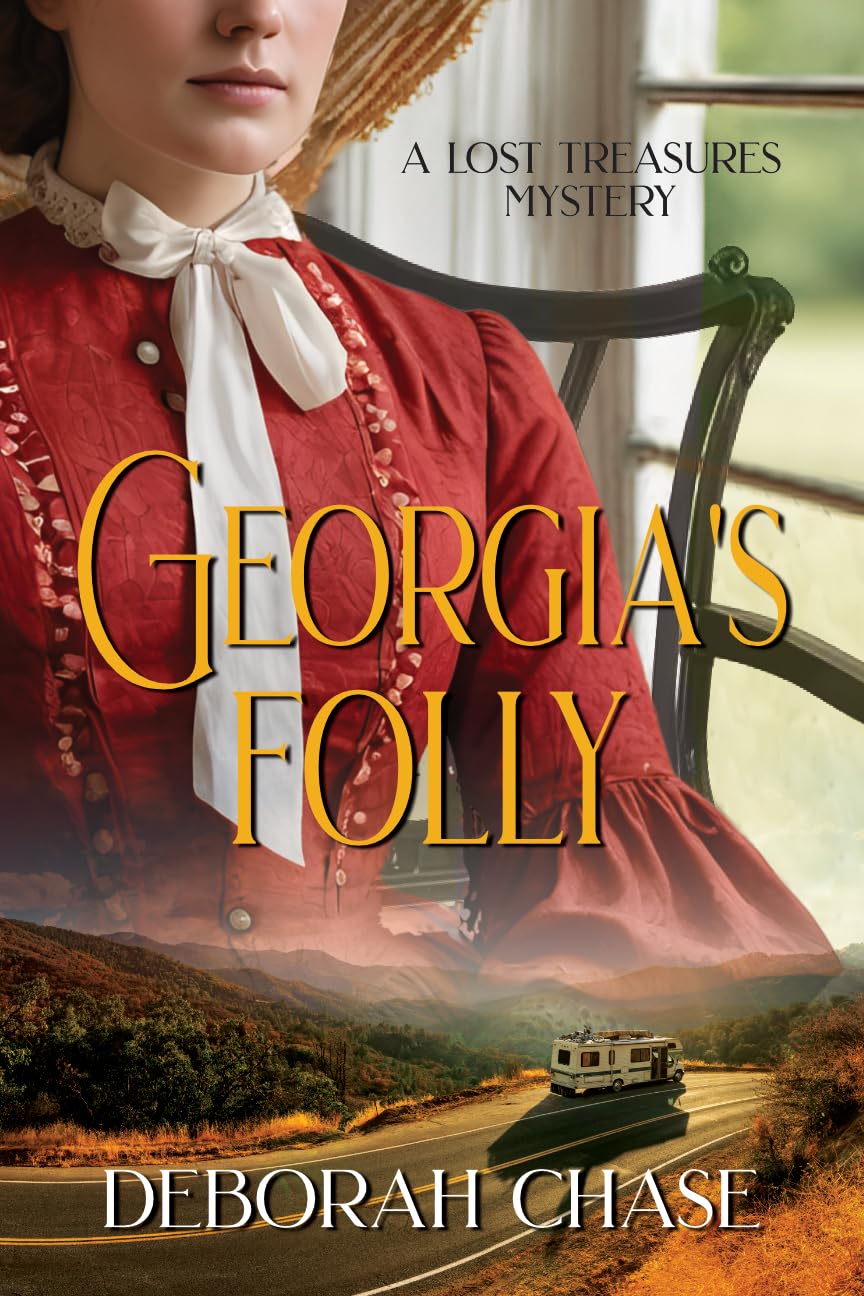
Beginning at a cluttered flea market and ending at a glittering art auction, Georgia’s Folly tells the compelling story that blends past and present and the search for a valuable and elusive antique. Chloe Bishop grew up in foster care. She loves shopping at flea markets, picking up family heirlooms like old pottery or vintage furniture to fill in for the family and home she never had.

As Chloe walks through the Brooklyn Flea Market, she stumbles upon the diary of Miss Georgia Potter, a young woman who had lived in Gettysburg, Pennsylvania during the Civil War. The yellowed pages reveal the impact of the war on daily life and spotlights the role of women including Harriet Tubman, Clara Barton and Louisa May Alcott. 

Like Chloe, Georgia Potter was a passionate collector and her diary lists her collection of valuable antiques—including the Holy Grail of 18th century furniture—a Chippendale settee. Well versed in antiques, Chloe is aware that there are only five known examples and a sixth settee would be worth more than $4 million.

Chloe immediately contacts Ben Thompson, the man who sold her the diary. Ben is a picker who drives his RV across America, searching for collectibles to sell to dealers. He is estranged from his wealthy, prominent family who cringe at his chosen career. Ben agrees to take her along to search for the valuable and iconic settee. As Ben and Chloe head to Gettysburg, they are unaware that Gregor Petrov, a shady antiques dealer and Harrison Kent, a respected but unscrupulous art expert are trailing them.

The search for the settee takes Chloe and Ben on fast paced journey from the Gettysburg battlefields to the 18th century street of artisans in Philadelphia to a historic mansion on the banks of the Hudson River. Traveling together in the small RV, Ben and Chloe draw closer. In the confines of the RV, embroiled in an unimaginable quest, Chloe confides that she is also in search for the father she never knew while Ben struggles to explain his complicated family to a woman who never had one.

In a thrilling ending, the rare Chippendale settee is not Chloe’s only valuable discovery.
Buy Link

Universal Link:

Meet the Author

Deborah Chase grew up in a family filled with art and antiques.  On the high end, her uncle, William Lincer, lead violist at the New York Philharmonic, was an art lover whose collection was sold at Sotheby’s. On the low end, her father, writer Allen Chase took her to flea markets and estate sales.  He sparked a lifelong fascination with tales of lost treasures that ranged from plundered Egyptian tombs to trainloads of art stolen by the Nazis.  It was this love of history and antiques that inspired her first novel, Georgia’s Folly

She was a founding editor of the Berkeley Wellness Newsletter and the author of 12 books including The Medically Based No-Nonsense Beauty Book (Alfred Knopf), Extend Your Life Diet (Pocket Books), Fruit Acids for Fabulous Skin (St Martin’s Press), Every Bride is Beautiful (Morrow), and with her husband Dr Neil Schachter co-author of Life and Breath (Doubleday) and The Good Doctor’s Guide to Colds and Flu (Harper).  The books have been a selection of the Book of the Month Club and her articles have appeared in Ladies Home Journal, Self, Glamour, Redbook, Family Circle, Parents and Good Housekeeping.

She is a graduate of Bronx High School of Science and a winner of the Westinghouse Science Talent Search. A graduate of New York University she earned a degree with a duel major in journalism and history. 

A native New Yorker, Deborah like to spend her weekends at an upstate home where a big kitchen and an endless supply of estate sales indulge her duel passions for cooking and collecting.

Connect with the Author


Website:

Follow Georgia’s Folly blog tour with The Coffee Pot Book Club

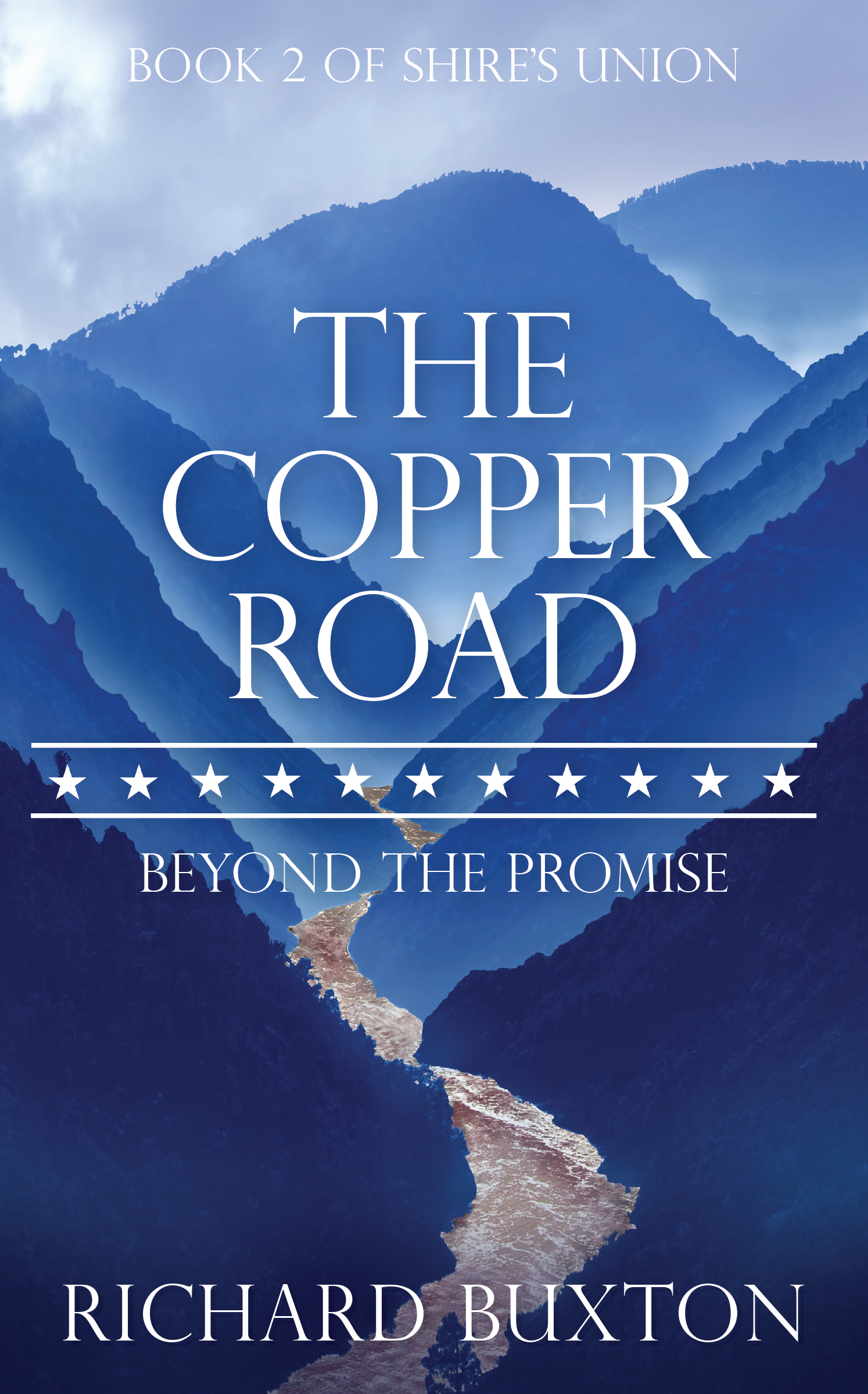
I’m delighted to welcome Richard Buxton and his trilogy, the Shire’s Union Trilogy, to the blog #ShiresUnion #AmericanCivilWar #Historical Fiction #BlogTour #TheCoffeePotBookClub

I’m delighted to welcome Richard Buxton and his trilogy, the Shire’s Union Trilogy, to the blog with a series trailer.

Shire’s Union Trilogy Series Trailer

Shire’s Union Trilogy Series Trailer

Tigers in Blue – Excerpt

Giles County, Tennessee – November 1864

Their train stopped again. The three of them disembarked and walked beyond the engine. It had pulled up a handful of crossties before a fire-blackened and wounded trestle bridge that spanned a deep and wide ravine. There must have been three hundred men or more working on the repairs. They swarmed over the bridge, a busy blue infestation, some out along the incomplete top span, others either end of a crane carried on a flatbed railcar, many more perilously among the posts and cross-struts. Men struggled to shout instructions over a chorus of hammer and saw. Way down in the ravine and across a swift creek stood a clump of engineer officers. One held a sheet of paper so big he looked in danger of being lifted into the air. Others pointed and gestured up at the bridge. As Shire watched, a steam winch puffed into action on the crane-car and a thick trestle rose and swayed up from below like a miracle, before being claimed by many hands and dragged into the great puzzle of wood. Despite their industry, the nearer half of the bridge was missing the top forty feet.

The engine driver came and stood beside them, wiping sooty hands on a dirty rag. Rice, greasy hair pushed back off his forehead, asked, ‘If you knew the bridge was broke, why did you set out? We’ll be stuck for days.’

The driver took his time surveying the works. ‘Well,’ he said, ‘you’re welcome to climb down and up the other side, but any trains that happen along from Nashville will only queue up to go south. Watch a while.’ He turned to walk back to his engine. ‘These people will have us over before nightfall.’

With nothing to do but wait, Shire and Tuck left Rice at the engine and worked their way along the top of the ravine to a spot where they could watch the repair. The ground fell steeply away before them. Predictably, Tuck dropped his pack, took up his fiddle and sat. He hadn’t said a word today. A stiff breeze struck up under a gray sky. At least they had the car to retreat to if it came on to rain. Shire got out his dog-eared map of Tennessee and Kentucky and unfolded it carefully so as not to bring on further dishevelment. He found Pulaski and traced the rail line to Nashville via Columbia. Short of Franklin he found Spring Hill. They would pass right by. Clara had been full of dubious enthusiasm for her move when he’d left her. What would have changed since? He wouldn’t need the train to stop again to be certain how he felt. That question had always been for her, though he wondered if she’d answered it quietly to herself a long time ago.

He folded his map away and got busy with a fire. In the army it paid to eat when the opportunity presented itself. ‘I’ll cook your pork. We ate mine yesterday,’ he said. They often shared rations. That way if one of them got a runt portion the hardship was shared too.

There was no response from Tuck. Sometimes it was like living with an elderly relative whose mind had been misplaced. In his own time, Tuck bowed into a slow waltz, utterly at odds with the exertions of the bridge builders. Evidently, it carried on the wind into the ravine and on to those high on the bridge, as not a few faces turned their way. There was a moment’s lull in the hammering before it stuttered up again. Two men on the flatbed end of the crane-car moved elegantly into closed hold and took a turn or two before their corporal beat them apart with his hat. Shire smiled but saw Tuck was too far inside his tune to take it in.

Once he had the fire going, he dug in Tuck’s pack for the salt belly-pork they’d been doled out back in Athens. It was a mess in there. An apple long past saving, percussion caps loose that should have been in a box, a lone dollar bill left to its own devices. The string hadn’t been tied properly on the pork paper. The exposed meat had picked up a covering of cotton threads and other miniature detritus. Shire reasoned it would cook off in his small skillet. Tuck’s ration was more than ample, so he cut off two-thirds and put it to cook slowly, not too close to the heat so that the fat would stay aboard. He wrapped the remains with care and was finding a safe corner back in Tuck’s pack when he happened on something round and hard. He drew out an enamel doorknob.

He recognized it. Tuck kept it as a grim reminder of his parents who were burned alive in their farmhouse, Tuck’s home. The enamel was scorched on one side, a smooth, mute witness to their murders. He’d been about to look for some wild onion or anything that might flavor the meat, but instead he took the doorknob and went to sit next to Tuck.

He didn’t expect to be acknowledged, but the lack irked Shire all the same. The waltz looped around and around. Shire could have sworn some of the hammering was striking out one, two, three… one, two, three. ‘I think you’re slowing down their industry,’ he said. Tuck played on. Shire felt a bubble of anger pop inside.

Blurb

Shire leaves his home and his life in Victorian England for the sake of a childhood promise, a promise that pulls him into the bleeding heart of the American Civil War. Lost in the bloody battlefields of the West, he discovers a second home for his loyalty.

Clara believes she has escaped from a predictable future of obligation and privilege, but her new life in the Appalachian Hills of Tennessee is decaying around her. In the mansion of Comrie, long hidden secrets are being slowly exhumed by a war that creeps ever closer.

The Shire’s Union trilogy is at once an outsider’s odyssey through the battle for Tennessee, a touching story of impossible love, and a portrait of America at war with itself. Self-interest and conflict, betrayal and passion, all fuse into a fateful climax.

Written by award winning author Richard Buxton, the Shire’s Union trilogy begins with Whirligig, is continued in The Copper Road, and concludes with Tigers in Blue.

Trilogy Buy Links:

US: UK:

Meet the Author

Richard lives with his family in the South Downs, Sussex, England. He completed an MA in Creative Writing at Chichester University in 2014. He has an abiding relationship with America, having studied at Syracuse University, New York State, in the late eighties. He travels extensively for research, especially in Tennessee, Georgia and Ohio, and is rarely happier than when setting off from a motel to spend the day wandering a battlefield or imagining the past close beside the churning wheel of a paddle steamer.

Richard’s short stories have won the Exeter Story Prize, the Bedford International Writing Competition and the Nivalis Short Story Award. His first novel, Whirligig (2017) was shortlisted for the Rubery International Book Award. It was followed by The Copper Road (2020) and the Shire’s Union trilogy was completed by Tigers in Blue (2023). To learn more about Richard’s writing visit www.richardbuxton.net.

Connect with the Author
Website: BookBub:

Follow the Shire’s Union Trilogy with The Coffee Pot Book Club

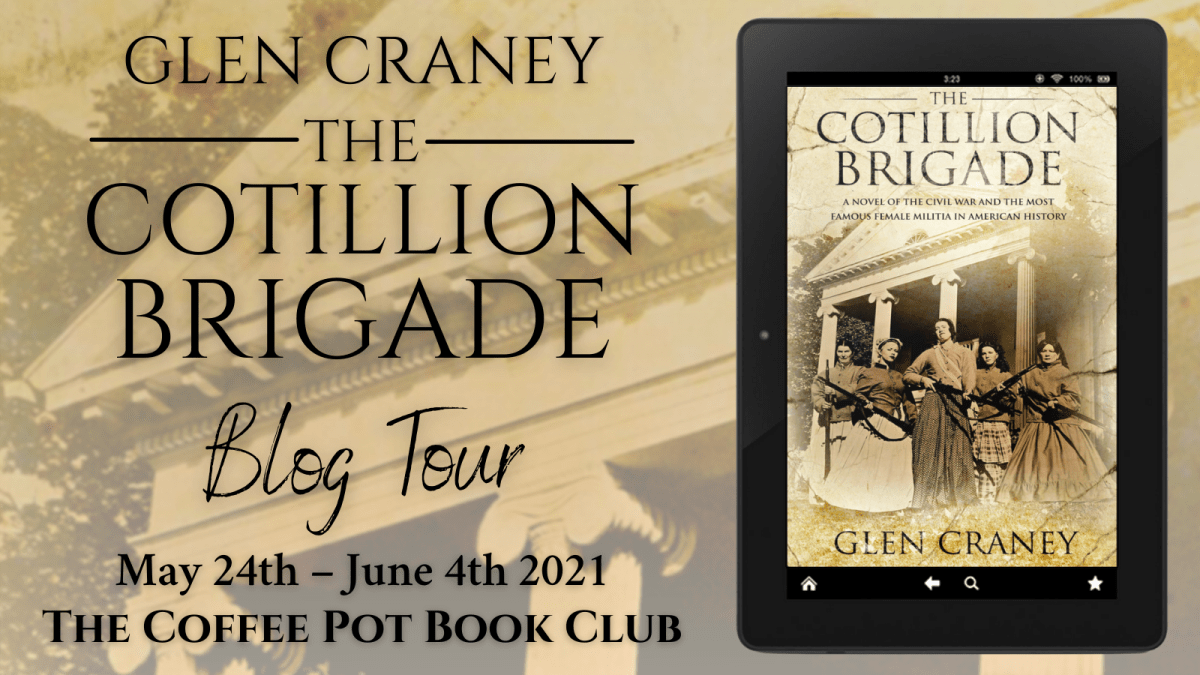
Glen Craney is sharing some historical research from The Cotillion Brigade #blogtour #historicalresearch

Today, I’m delighted to welcome Glen Craney to the blog with a fascinating post about the historical research that went into writing The Cotillion Brigade.

Thank you, M.J., for inviting me as a guest on your blog.

As part of my research process, I try to travel to the historical locations of my novels. And one of the first things I do is head first for the local cemetery. More than once, I’ve made discoveries from the headstones that changed the trajectory of my stories.

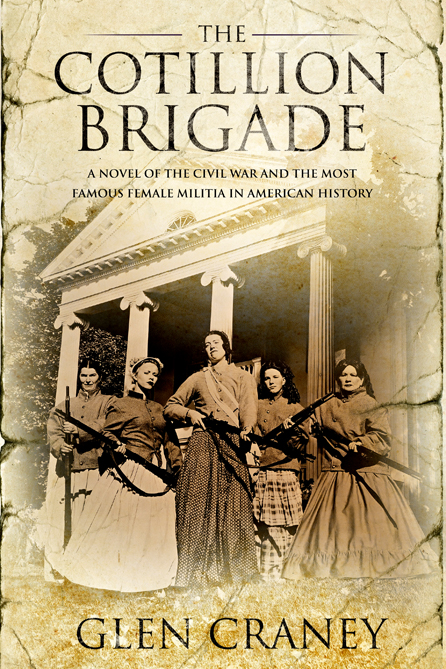
LaGrange, Georgia, is the setting of my latest novel, The Cotillion Brigade, which is based on the true story of the Nancy Hart Rifles, the most famous female militia in American history.

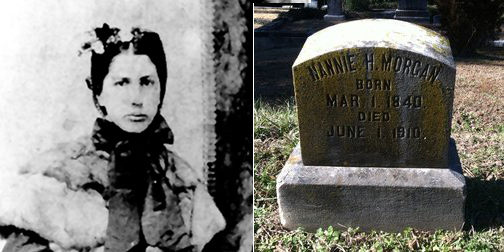
When I pulled into the scenic town of LaGrange to learn more about the Nancy Harts, I parked the car and walked among the monuments of Hillview Cemetery, where many of my characters from The Cotillion Brigade are buried. To my astonishment, and not a little chagrin, my protagonist, Captain Nancy Colquitt Hill Morgan, was nowhere to be found among her comrades in arms. How could she not be buried in the town she helped save?

I learned later that she is buried in Decatur, more than seventy-five miles away. I wondered if this was her wish. Had she moved to Decatur late in life to reside with family? I knew from my research that many Southern families, devastated by the war, could not afford to transport deceased members back to the homesteads.

Nancy Morgan’s Grave

Still feeling a little sad for Captain Nancy in exile, I drove across town to the smaller Stonewall Confederate Cemetery, where I was unprepared for another tragic discovery. Most of the three hundred soldiers buried there died from wounds and disease. After the bloody battle of Chickamauga and during Sherman’s Atlanta campaign, thousands of Confederate wounded were shipped south along the Atlanta and West Point rail line, one of the last surviving transport arteries in the heart of the Confederacy. Cities on the way, like Newnan, LaGrange, and West Point, became hospital centers, and the Nancy Harts took time from their military drills to help nurse the men.

The Stonewall Cemetery sits near the railroad tracks, and as I studied the names on the stones, the horrific reason for this location suddenly dawned on me. Many of the wounded men would not have survived the jarring journey from the battlefields northwest of Atlanta. Their bodies were likely removed from the train cars to be buried immediately.

John Gay-Stonewall Cemetery

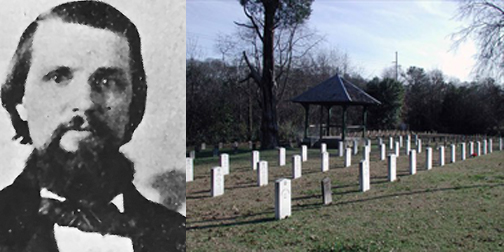
Captain Nancy’s close friend, Carolyn Poythress, was widowed very young before the war. She fell in love with another man, Lt. John Gay of the Fourth Georgia infantry regiment, who came back to LaGrange to convalesce from an artillery chest wound received at Antietam. After they married, Lt. Gay returned to Lee’s Army of Northern Virginia. He fell mortally wounded at the siege of Petersburg, only two weeks before the surrender at Appomattox. Caroline, accompanied by the daughter her husband never lived to see, insisted he be buried with his comrades at Stonewall Cemetery. Caroline lies in Hillview.

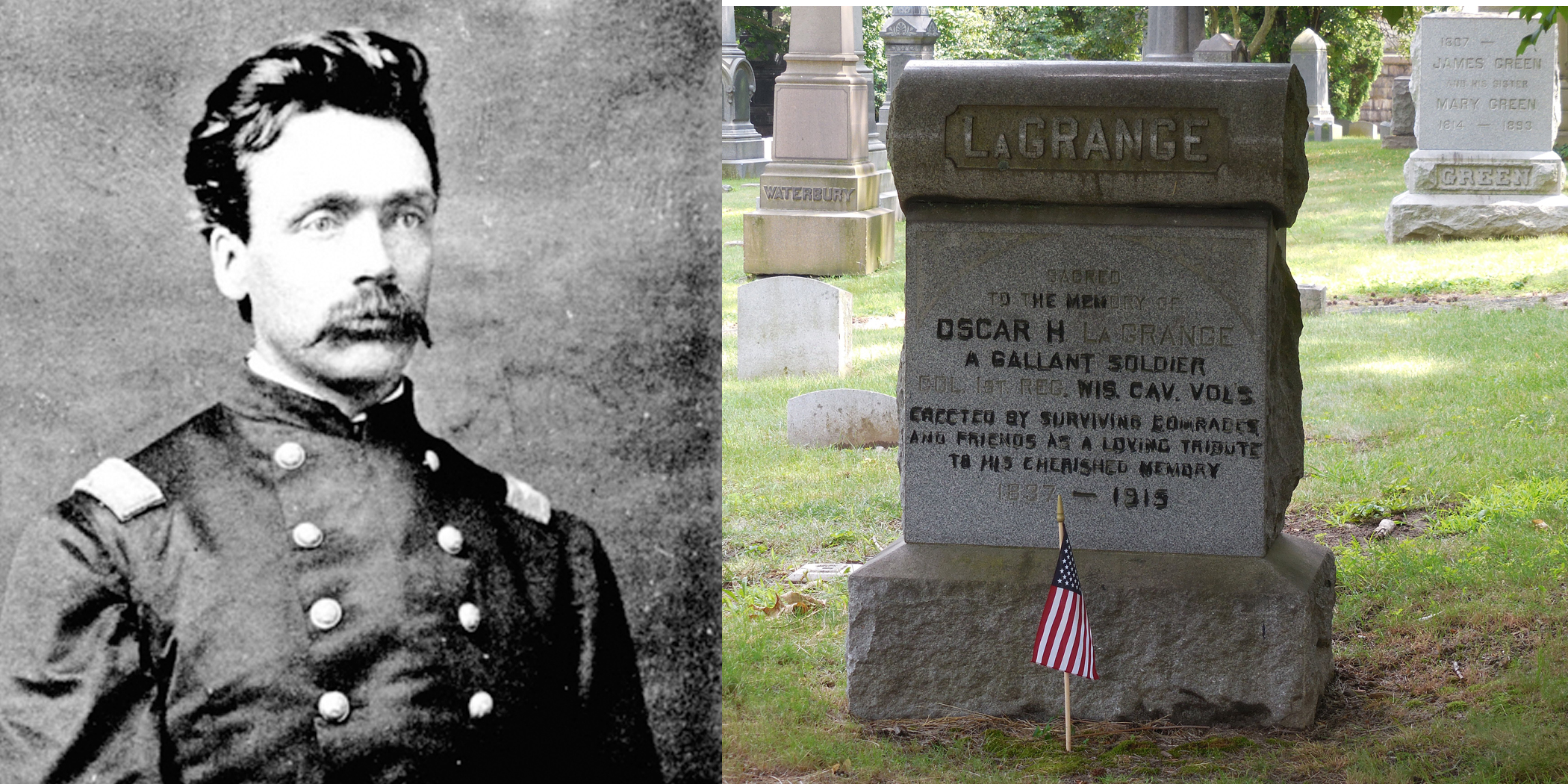
A thousand miles away, another plot revealed a secret about my second protagonist, Colonel Oscar Hugh LaGrange. The Union officer who confronted Captain Nancy and her militia during the last days of the war lies buried in the Bronx’s Woodland Cemetery. Next to his stone is that of his third wife, Susie Gray LaGrange, who goes unmentioned in the history books. Strange as it seems, the ardent Abolitionist colonel from Wisconsin married not one, but two, Southern plantation belles. That discovery would lead me to a new understanding about the officer’s transformation and the impact the Nancy Harts of Georgia had on him.

Colonel LaGrange’s Grave

Thank you so much for sharing your research with me. It’s always fascinating to understand the discoveries made while researching, and how they add to the finished story.

Here’s the blurb

Georgia burns.

Sherman’s Yankees are closing in.

Will the women of LaGrange run or fight?

Based on the true story of the celebrated Nancy Hart Rifles, The Cotillion Brigade is an epic novel of the Civil War’s ravages on family and love, the resilient bonds of sisterhood in devastation, and the miracle of reconciliation between bitter enemies.

“Gone With The Wind meets A League Of Their Own.”

— John Jeter, The Plunder Room

1856. Sixteen-year-old Nannie Colquitt Hill makes her debut in the antebellum society of the Chattahoochee River plantations. A thousand miles north, a Wisconsin farm boy, Hugh LaGrange, joins an Abolitionist crusade to ban slavery in Bleeding Kansas.

Five years later, secession and war against the homefront hurl them toward a confrontation unrivaled in American history.

Amazon UKAmazon USAmazon CAAmazon AU

KoboIBooksBarnes & Noble

Meet the Author

A graduate of Indiana University School of Law and Columbia University Graduate School of Journalism, Glen Craney practiced trial law before joining the Washington, D.C. press corps to write about national politics and the Iran-contra trial for Congressional Quarterly magazine. In 1996, the Academy of Motion Pictures, Arts and Sciences awarded him the Nicholl Fellowship prize for best new screenwriting. His debut historical novel, The Fire and the Light, was named Best New Fiction by the National Indie Excellence Awards. He is a three-time Finalist/Honorable Mention winner of Foreword Magazine’s Book-of-the-Year and a Chaucer Award winner for Historical Fiction. His books have taken readers to Occitania during the Albigensian Crusade, the Scotland of Robert Bruce, Portugal during the Age of Discovery, the trenches of France during World War I, the battlefields of the Civil War, and the American Hoovervilles of the Great Depression. He lives in Malibu, California.

Connect with Glen:

WebsiteFacebookTwitter

PinterestGoodreadsAmazon Author Page

Don’t forget to check out the other stops on The Cotillion Brigade Blog Tour.