
I’m delighted to welcome Helen Hollick and her book, Harold The King, to the blog #1066 #BattleOfHastings #NormanConquest #AngloSaxon #EnglishHistory #PublicationSilverAnniversary #BlogTour #BookBlast #TheCoffeePotBookClub 

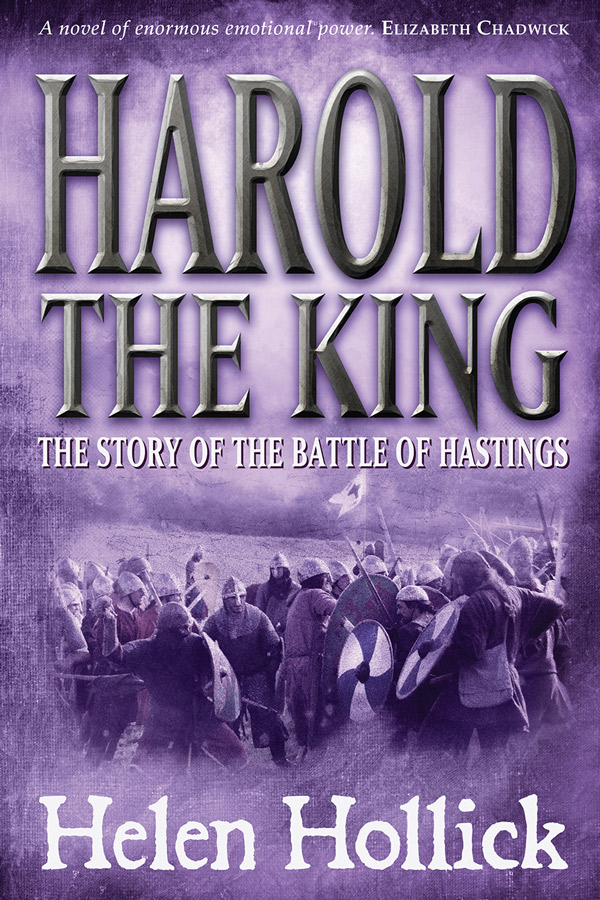
I’m delighted to welcome Helen Hollick and her book, Harold The King (UK)/ I Am The Chosen King (USA/Canada), to the blog.
Blurb

First published in 2000 – Celebrating a Silver Anniversary!

The events that led to the Battle of Hastings and the Norman Conquest of England in 1066 – told from the English point of view.

Two men. One crown.

England, 1044. Harold Godwinesson, a young, respected earl, falls in love with an ordinary but beautiful woman. In Normandy, William, the bastard son of a duke, falls in love with power.

In 1066 England falls vulnerable to the fate of these two men: one, chosen to be a king, the other, determined to take, by force, what he desires. Risking his life to defend his kingdom from foreign invasion, Harold II led his army into the great Battle of Hastings in October 1066 with all the honour and dignity that history remembers of its fallen heroes.

In this beautifully crafted tale, USA Today bestselling author Helen Hollick sets aside the propaganda of the Norman Conquest and brings to life the English version of the story of the man who was the last Anglo-Saxon king, revealing his tender love, determination and proud loyalty, all to be shattered by the desire for a crown – by one who had no right to wear it.
Praise for Helen Hollick

“Helen Hollick has it all! She tells a great story, gets her history right, and writes consistently readable books”

~ Bernard Cornwell

“A novel of enormous emotional power”

~ Elizabeth Chadwick

“Thanks to Hollick’s masterful storytelling, Harold’s nobility and heroism enthral to the point of engendering hope for a different ending…Joggles a cast of characters and a bloody, tangled plot with great skill”

~ Publisher’s Weekly

“Don’t miss Helen Hollick’s colourful recreation of the events leading up to the Norman Conquest.”

~ Daily Mail

“An epic re-telling of the Norman Conquest”

~ The Lady

“If only all historical fiction could be this good”

~ Historical Novel Society Review

Buy Link

Universal Link:

This title is available on #KindleUnlimited, except in US & Canada

Meet the Author

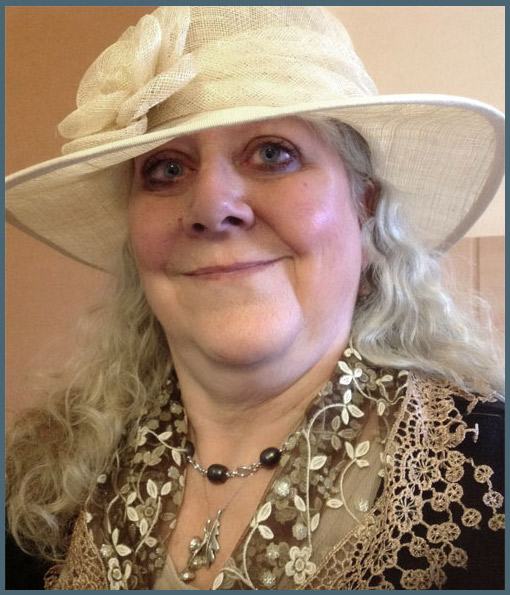
First accepted for traditional publication in 1993, Helen became a USA Today Bestseller with her historical novel, The Forever Queen (titled A Hollow Crown in the UK) with the sequel, Harold the King (US: I Am The Chosen King) being novels that explore the events that led to the Battle of Hastings in 1066. Her Pendragon’s Banner Trilogy is a fifth-century version of the Arthurian legend, and she writes a nautical adventure/supernatural series, The Sea Witch Voyages. She has also branched out into the quick read novella, ‘Cosy Mystery’ genre with her Jan Christopher Mysteries, set in the 1970s, with the first in the series, A Mirror Murder incorporating her, often hilarious, memories of working as a library assistant. The fifth in the series, A Memory Of Murder, was published in May 2024.

Her non-fiction books are Pirates: Truth and Tales and Life of A Smuggler. She is currently writing about the ghosts of North Devon, and Jamaica Gold for her Sea Witch Voyages.

Recognised by her stylish hats, Helen tries to attend book-related events as a chance to meet her readers and social-media followers, but her ‘wonky eyesight’ as she describes her condition of Glaucoma, and severe arthritis is now a little prohibitive for travel.

She lives with her family in an eighteenth-century farmhouse in North Devon with their dogs and cats, while on the farm there are showjumper horses, fat Exmoor ponies, an elderly Welsh pony, geese, ducks and hens. And several resident ghosts.
Connect with the Author
Website: Blog: Newsletter:

Follow Harold The King blog tour with The Coffee Pot Book Club

Who was Edmund, the man Cnut had to overwhelm to claim England’s kingship in the eleventh century?

Who was Edmund Ironside, son of Æthelred II?

It’s often forgotten, in the great swirl of events throughout the eleventh century, that England wasn’t conquered once, but instead three times, by King Swein in 1013, by his son in 1016, and then by William the Conqueror in 1066.

England only reclaimed its English king with the death of King Swein shortly after he claimed the kingship, when Æthelred II, the much-maligned, king of England was restored, it’s said, by his nobility, provided he did ‘a better job’ of it (I paraphrase). At this time, Cnut, Swein’s son, wasn’t deemed as suitable to replace his father, while Æthelred II had many sons who could succeed him. Æthelred was deemed ‘an old man’ by now (born probably in about 966-8), but he had surviving sons from his marriage to his first wife, named as Ælfgifu, and also from the better known Lady Emma. The oldest of these sons,Athelstan, died in 1014, having made a name for himself as an honourable man. His will survives. His next youngest brother had also perished a decade ago, meaning Edmund was the oldest surviving son. In the great swirl of events, people forget Edmund was proclaimed king on his father’s death in April 1016, and that he ruled for a good sixth months, before his own death in November.

Edmund Ironside - MS Royal 14 B VI

See page for author, Public domain, via Wikimedia Commons, https://upload.wikimedia.org/wikipedia/commons/6/69/Edmund_Ironside_-_MS_Royal_14_B_VI.jpg

The relationship between Edmund and his father is difficult to unpick. It doesn’t seem to have been congenial. Æthelred II is most often accused of having overmighty subjects (somewhat ironic when they invited him back to England after Swein’s death), and there was a particular thorny problem of Eadric Streona, married, it’s said, to one of Æthelred’s daughters, and a tricky character. Eadric is associated with Mercia. To counter his reach, Edmund, married into a Mercian family in 1015, the story being that he rescued the woman from captivity and then married her. As romantic as that might sound, this was sound political expediency. In the tenth century, King Athelstan was strongly associated with Mercia, being declared king of Mercia before becoming king of Wessex. Edgar, in the 950s, seems to have done something similar, being declared king of Mercia while his brother, Eadwig, was king of England, or perhaps only Wessex – there is much uncertainty about this. Eadwig would die young, allowing Edgar to build on his Mercian powerbase and claim England for himself.

As such, Edmund was following known precedent when he looked to Mercia for support when he must have feared that the eyes of the witan would favour his younger half-brother, Edward, for the kingship. No doubt, Edmund actually gained support because while England was at war with Cnut throughout 1016, he was a man grown and could fight for the English. Edward, much younger, would have been unable to do so.

And so to 1016. On the death of his father, Edmund was declared king, but Cnut also took the same title. Many battles later, Cnut and Edmund reached an accord, it’s said, after the English defeat at the unallocated battle of Assandun. England was ‘split,’ Edmund became king of Wessex, Cnut held the remainder and it could have possibly remained split if not for Edmund’s untimely death, perhaps from wounds taken in battle fighting against Cnut and his warriors, and in which, Eadric Streona had played his new king false, defecting to King Cnut’s side.

Edmund II, known as Ironside, left two children, perhaps twins, and these children were raised in exile, away from England and the reach of the Danish conquering force. They did still have a part to play in the future of England, and Edmund’s granddaughter became queen of Scotland in 1070, while his grandson was briefly declared king of England in the tumultuous events of 1066.

You can read the story of Cnut and Edmund in The Earls of Mercia series side story, Cnut: The Conqueror.

Here’s the blurb:

To gain what he wanted, what he felt he was owed, he would do anything, even if it meant breaking oaths to a woman he loved and the mother of his son.

Swein, King of Denmark, and briefly England, lies dead, his son ousted from England as King Æthelred returns from his exile in Normandy at the behest of his witan and the bishops. Æthelred might have relinquished his kingdom to Swein, the Danish conqueror, but with Swein dead, the men have no interest in supporting an untried youth whose name resounds with the murder of one of England’s greatest bishops. A youth known only for his savagery and joy of battle. A true Norseman who utilizes his weapons without thought.

But Cnut wants a kingdom and will do anything to gain one. As England’s ravaged by a civil war between the sons of two former kings, Edmund, son of King Æthelred, and Cnut, son of Swein, the men must make personal decisions in the heat of battle as they strive to reclaim their birthrights whilst doing all they can to stay alive.

books2read.com/Cnut

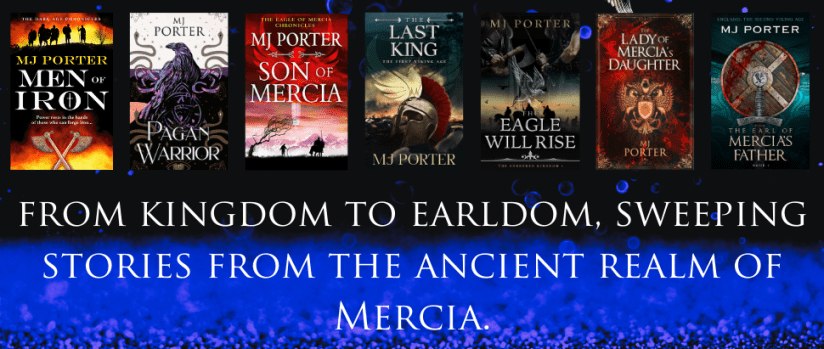
Cnut is a side story in the Earls of Mercia series, retelling the story of the last century of Saxon England through the eyes of the powerful Earls of Mercia, the only noble family, apart from the House of Wessex, to hold their position for nearly a century.

Posts