On this day in history, the battle of Maserfield between Northumbria and Mercia, 5th August 641 or 642

On this day in history was fought the second of three famous battles between Penda of Mercia and the Northumbrians kings. This battle was different in two ways to Hædfeld and Winwæd; it took place in the summer, and it occured in Mercia. (Hædfeld was an October battle near the River Don. Winwæd was a November battle fought somewhere in the north of modern-day England, it’s believed).

Warrior helms during the early Saxon era (seventh century)

Thanks to some spectacular archaeological finds, we can visualise how a Saxon warrior king might have looked. The reconstructions of the Sutton Hoo helm, and that found with the Staffordshire Horde (as well as a few others), present us with elaborate helmets crested with dyed-horse (or boar) hair in a way very reminiscent of the Roman era. They glitter, and they seem to be festooned in gold and silver work, but whether these were actually worn in battle or not is debatable.

Firstly, they would have made the kings or noblemen very noticeable to their enemy. Secondly, they were so valuable it’s impossible to consider the loss of one of them should they fall and their goods be taken by their enemy. Bad enough for their king and leader to die in battle, but to also lose such precious wealth as well seems unlikely. That said, of course, the Sutton Hoo helm was buried, and the fragments of the Staffordshire Hoard helmet were buried and lost. But the scarcity of such archaeological finds surely points to them being unusual or there would be hundreds of them.

(An image of the Staffordshire Helmet can be found here: https://www.stokemuseums.org.uk/pmag/collections/archaeology/the-staffordshire-hoard/ The monograph on the Staffordshire Hoard is also available for free download from https://library.oapen.org/handle/20.500.12657/39941)

Were these helmets worn in battle?

But there is another reason why these helmets might have existed, and that’s because they were for ceremonial purposes. Kings, before the reign of Athelstan (925-937) are not known to have undergone consecration with a crown but rather with a helmet. After all, they were warrior kings. Perhaps then, these survivals are more akin to that worn by a warrior-king when appearing before his people or for ceremonial reasons.

What weapons would a ‘normal’ warrior have?

What then might have been the more usual garb for a warrior of the Saxon era, which at nearly six hundred years is bound to offer some variations? Shield, spear, seax, sword and byrnie.

We get a feel for these items and how valuable they were from wills that survive from the later Saxon era, hundreds of years after the events of Pagan Warrior. Ealdormen had horses, both saddled and unsaddled, shields, spears, swords, helmets, byrnies, seax, scabbards and spears.

The will of Æthelmær, an ealdorman in the later tenth century, records that he’s granting his king, ‘four swords and eight horses, four with trappings and four without, and four helmets and four coats of mail and eight spears and eight shields,’[1] as part of his heriot, a contentious term for something that some argue was an eleventh-century development, and others argue, is merely reflecting earlier practice on the death of a man.

There would also have been thegns and king thegns, who had their own weapons, as well as the men of the fyrd, the free-men who could be called upon to perform military service each year, as and when required. It’s often assumed they would have been less well-armed, although this begs the question of whether kings and their warrior nobility were prepared to sacrifice those they relied on to provide them with food to gain more wealth. They might have found themselves with the money to pay for food but without the opportunity to do so.

There are very few representations of warriors, but the surviving strands of the Gododdin, a sixth-century lament to the fallen of Catraeth gives an idea of how these warrior men thought of one another. There is much talk of killing many enemies, drinking mead, and being mourned by those they leave behind.

Battle tactics

Battle tactics from the period are impossible to determine fully. Before writing my books which are blood-filled and violent, I read a fascinating account, by a military historian, on how he thought the Battle of Hastings might have been won or lost. The overwhelming sense I came away with was that local features, hillocks, streams, field boundaries even perhaps the path of a sheep track might well be the very thing that won or lost a battle for these opposing sides. The land that kings chose to go to war on was incredibly important. Perhaps then, it wasn’t all about the weapons but about where they decided to fight.

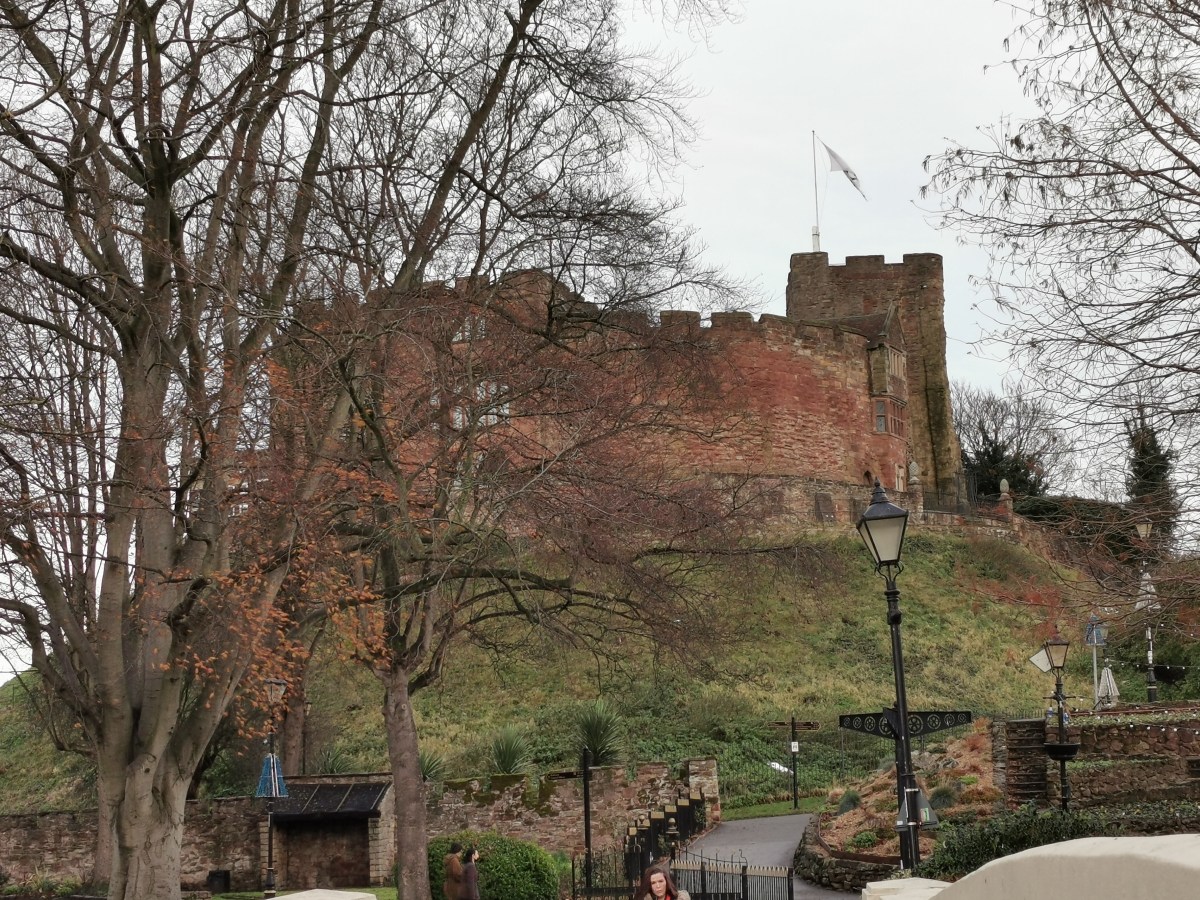
Pagan King, the story of the battle of Maserfeld

For Pagan King, the novel that tells the story of the battle of Maserfeld, I made use of some local landmarks I knew well, and for other aspects, well, that’s why I write historical fiction.

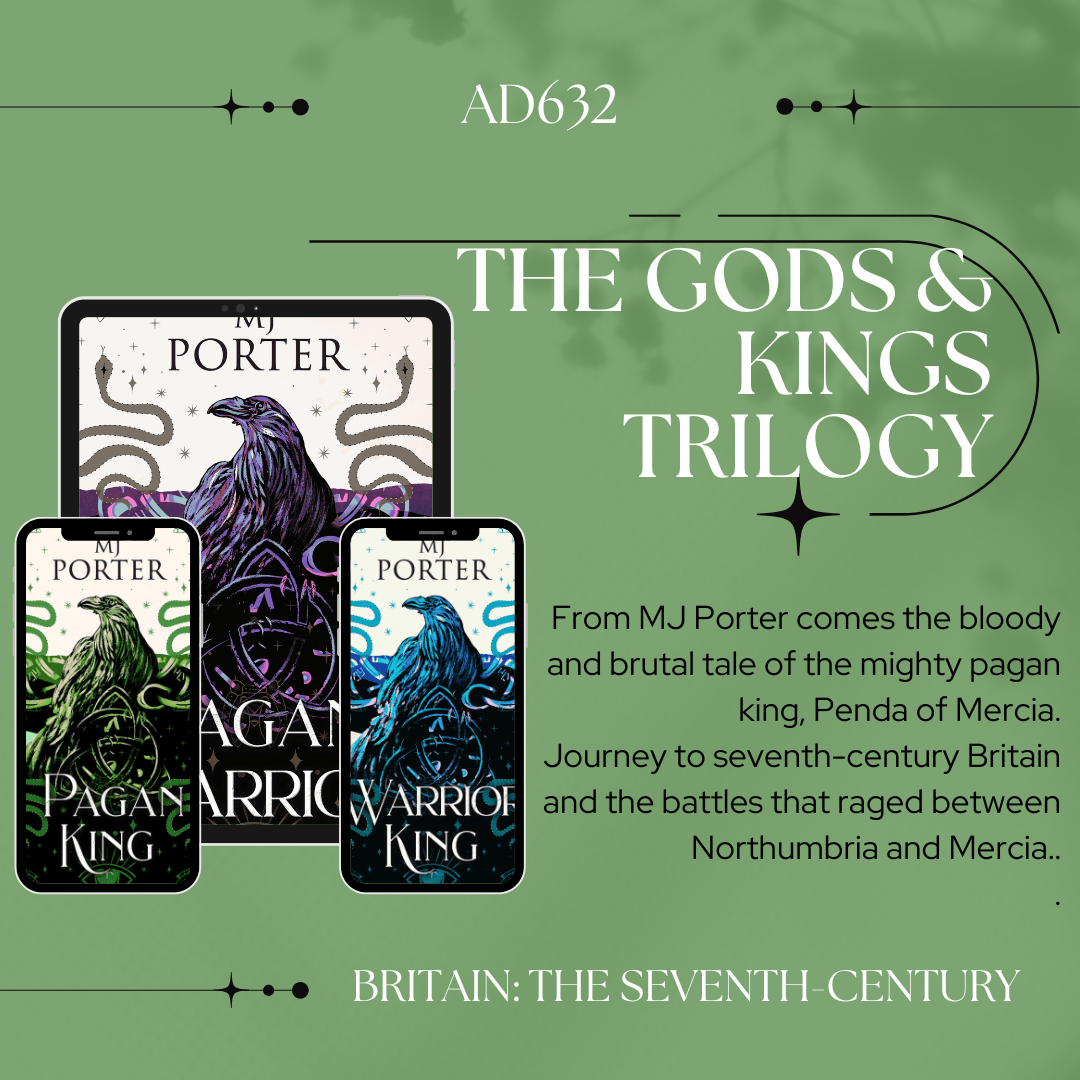
You can find out more information on the Gods and Kings page.
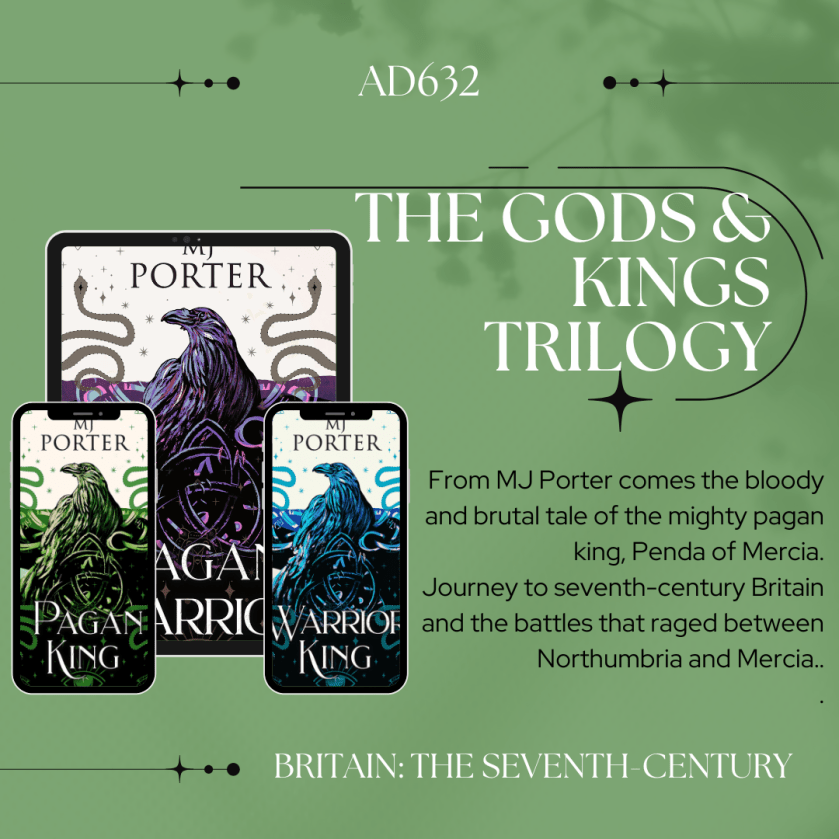
Gods and Kings Trilogy

[1] Dorothy Whitelock, Anglo-Saxon Wills 1930, reprinted edition. Cambridge University Press. p27

Posts

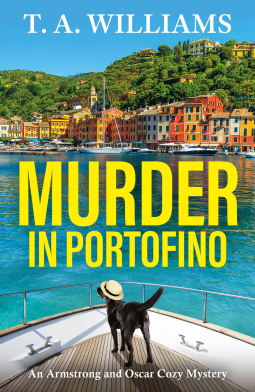
I’m reviewing the new book in the Armstrong and Oscar Cozy Italian Mysteries, Murder in Portofino by TA Williams

Here’s the blurb

A much-needed holiday…

Dan Armstrong hasn’t done much retiring since moving to Tuscany, and with his new career as a successful private investigator taking off, it seems murder seems to follow him. He’s hoping a much-needed trip to beautiful Portofino will give him the break he needs and quality time with girlfriend Anna.

A gathering of celebrities…

Portofino is a celebrity paradise, and holidaying on a nearby superyacht is a group of British media stars, all famous for being infamous. Dan isn’t impressed by their status or wealth, but when he overhears an argument between two of the group, he suspects something fishy could be going on…

A cold-blooded killer?

And then a body is washed up on shore and Dan’s hopes for a holiday go overboard. Could this simply be a tragic accident or is there a killer amidst the assembled celebrity cast? Dan and Oscar have their work cut out before the tide turns…

It’s another gripping case for Dan and Oscar – it’s murder in paradise!

My Review

It’s hard to believe that we’re on book 8 in the Armstrong and Oscar Cozy mysteries, but we are:)

Murder in Portofino perhaps takes a while longer than others to ‘get going.’ Instead, we’re treated to Dan, and Oscar enjoys some ‘downtime’ with Anna, who is close to Portofino. But, of course, our duo seems to attract mystery to them, and so we are soon embroiled in a luxury yacht and its inhabitants, with not one but two crimes to solve.

I thoroughly enjoyed this new addition to the series. I always appreciate the fact that the mysteries are consistently more complex than anticipated, and like Dan, we have to follow the lines of investigation to determine the truth.

A fine new addition to the series. Always a reliable and engaging read. I’m already looking forwards to book 9:)

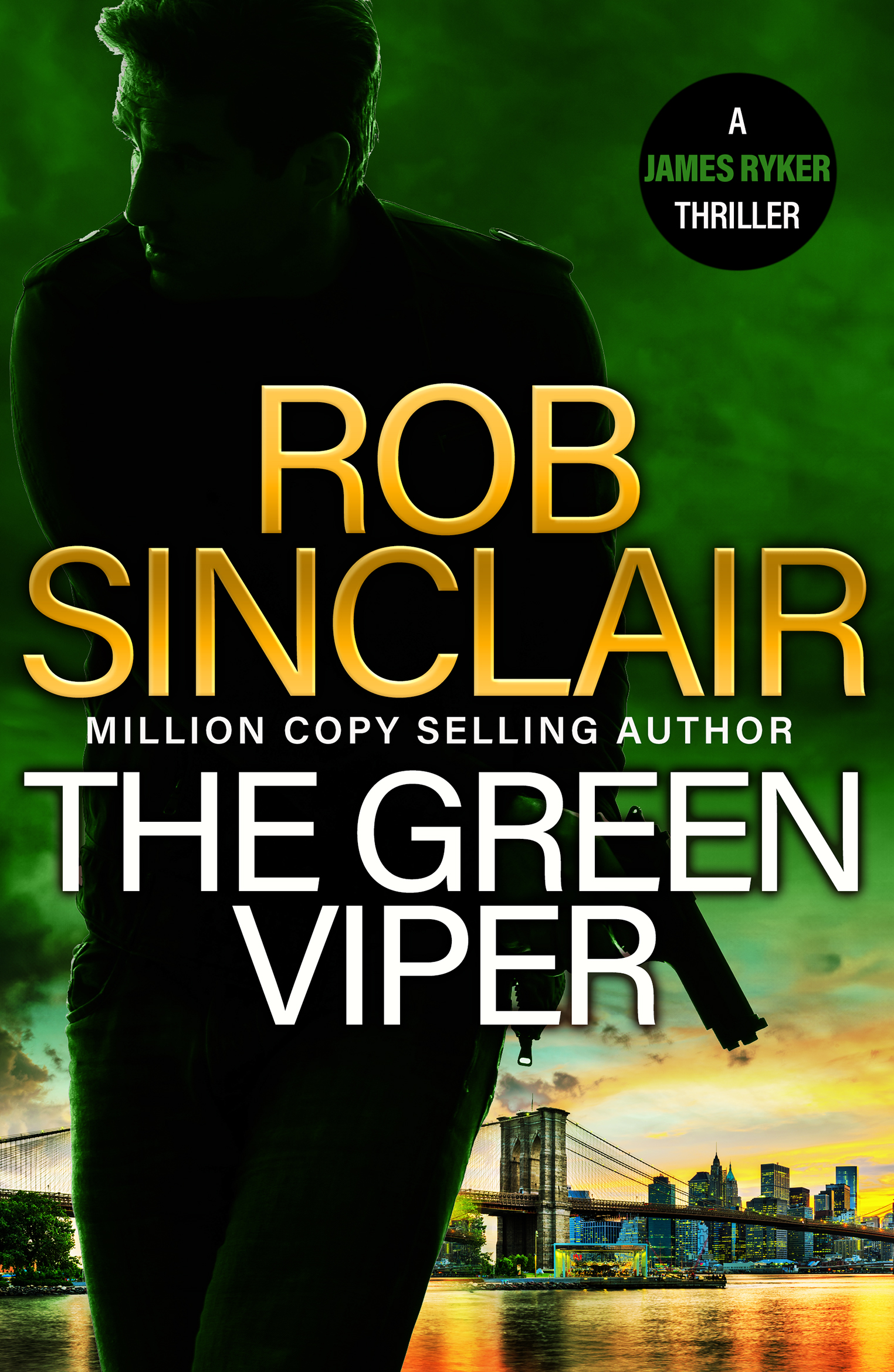
Check out my review for The Green Viper by Rob Sinclair #blogtour #thriller #newrelease

Here’s the blurb

I need your help. Call me.

Ex-intelligence agent James Ryker receives a coded message through a secret drop point, a means of communication known only to him and one other person. The problem is, that other person is his ex-boss, Mackie… and he’s already dead.

But the cry for help is real, and it’s a request Ryker can’t refuse.

Travelling to New York alone and without official sanction, Ryker has a single goal in mind, yet even he couldn’t have bargained for the violent world he’s soon embroiled in. Caught in the middle of a spiralling chaos with the FBI on one side, and two warring underworld bosses on the other, Ryker must put all of his skills to the test in order to come out on top, and keep his word.

In a world full of lies and deceit, loyalty is everything, and it’s time for James Ryker to pay his dues.

A fast-paced thriller filled with twists, turns, and intrigue that will grip fans of Mark Dawson and the Jason Bourne novels.

Cover for Rob Sinclair's The Green Viper book.

Purchase Link

https://mybook.to/greenvipersocial

My Review

The Green Viper is book 4 in the James Ryker series, but the first one I’ve read, although I’ve read one of Rob Sinclair’s standalone novels, Rogue Hero. Check out the review here.

It is fast-paced as our ‘hero’ sets about helping the son of his former boss where he’s entangled himself in a bit of bother in New York. That said, the beginning is a little more difficult to really get into – I would recommend persevering because after that, the storyline is very quick and I read the vast majority of the book in one sitting. It’s a fun, pacy read with a whole load of violent encounters thrown in for good measure, and some rather nasty bad guys, and our author has no problem with ramping up the body count.

If you’re a fan of action thrillers, then you’ll really enjoy The Green Viper. I certainly plan on finding some room on my TBR pile to add the other books in the series.

Meet the author

Rob Sinclair is the million copy bestseller of over twenty thrillers, including the James Ryker series. Rob previously studied Biochemistry at Nottingham University. He also worked for a global accounting firm for 13 years, specialising in global fraud investigations.

Photo of Rob Sinclair, author

Connect with the author

Facebook: https://www.facebook.com/robsinclairauthor

Twitter: https://twitter.com/RSinclairAuthor

Newsletter Sign Up: https://bit.ly/RobSinclairNews

Bookbub profile: https://www.bookbub.com/authors/rob-sinclair

Blog tour banner for Rob Sinclair's new James Ryker titles.

On the 1100th anniversary of the death of King Ælfweard of Wessex

The death of King Ælfweard of Wessex, 2nd August 924

Today sees the 1100th anniversary of the death of King Ælfweard of Wessex, a king most people have never heard of as his reign was just sixteen days in summer 924, and we know almost nothing about him. (According to one source, the Textus Roffensis he is credited with a reign of 4 weeks, which would have made him king before his father’s death. You can see a digital copy of this source here). There are surely many ‘might have beens’ about his reign, and as much as I admire Athelstan, his older halfbrother, I felt it only right to shed what light there is on Ælfweard.

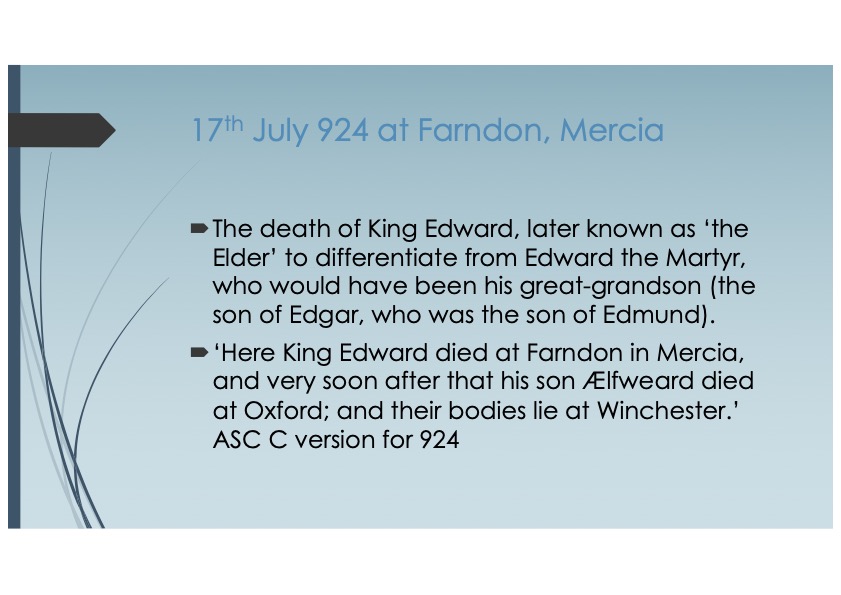
Quote from ASC from 17th July 924 recounting Edward the Elder's death

Who was Ælfweard?

He was the son of Edward the Elder (who had died 16 days earlier) and his second wife, Ælfflæd. He was, presumably, the oldest born son with Edward’s second wife, and from a very young age, he can be seen attesting to his father’s charters. We don’t know his exact date of birth because we don’t know when Edward remarried, and whether it was before or after his father’s death in 899.

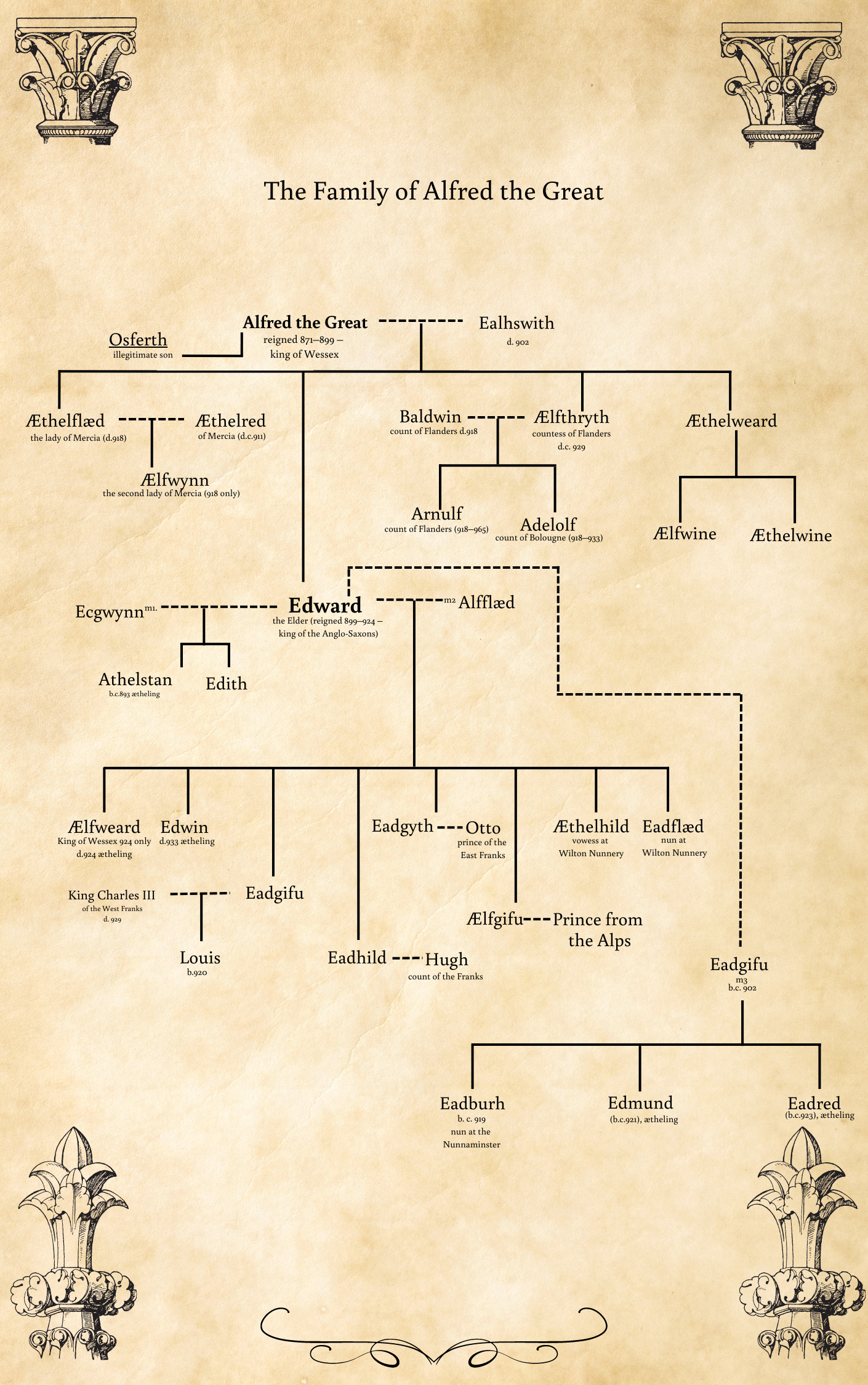
A family tree showing the family of Alfred the Great

What do we know about Ælfweard?

Ælfweard begins to attest charters in 901 as filius regis, alongside his famous older halfbrother, Athelstan, although Ælfweard is given precedence and named before him. This precedence for the oldest son from a second marriage would also be mirrored in later years by King Edgar, who presented his oldest son with his third wife, Elfrida, as the legitimate ætheling while acknowledging his oldest son with his first wife.

Ælfweard attests eight of his father’s charters (S365, S375, S376, S377, S378, S381, S382 and S383). The number is small and may not be representative. There’s a lack of surviving charter evidence from the reign of Edward the Elder and none from Ælfweard’s short reign. Indeed, his full brother, Edwin, doesn’t attest any of his father’s charters, although he is named in one of Athelstan’s charters (S1417). This is something that needs explaining and examining in more depth.

Ælfweard’s death ‘allowed’ Athelstan to become king of Wessex

Despite the survival of his full brother, Edwin, Athelstan was, eventually, proclaimed king of Wessex as well as Mercia on the death of Ælfweard, although his coronation was delayed until September 925 (Read about Athelstan here). We must consider what led to Ælfweard’s death at Oxford. Had he been with his father at Farndon in Mercia putting down a revolt or fighting the Norse enemy? Was there some sort of illness? Was he murdered by those loyal to Athelstan to allow him to become king of Wessex as well as Mercia? We do not know. The situation is presented as a fait accompli in the sources.

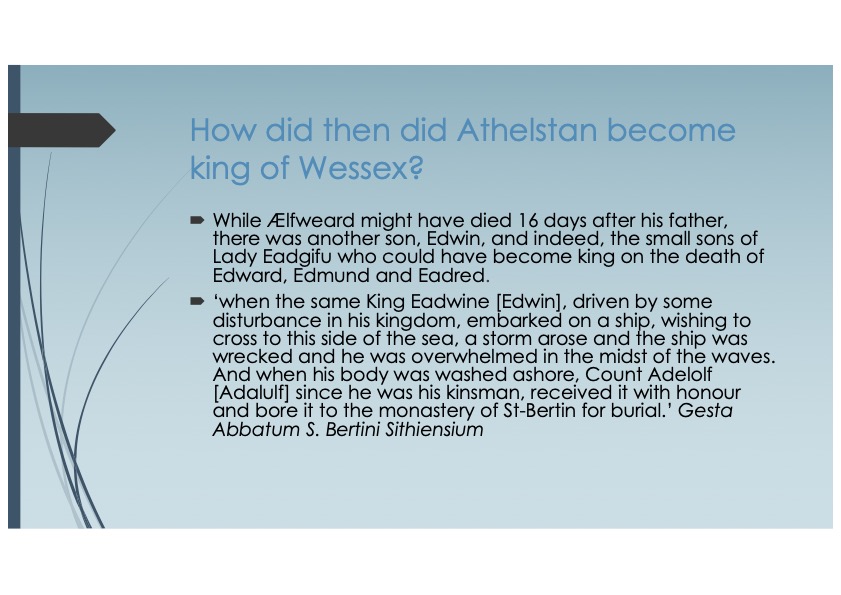
Edwin, Ælfweard’s younger full brother, would die far from England’s shores, if the information we do have about his death, is correct. It is possible he did rise in rebellion against Athelstan, but alas, we do not know any details.

Slide showing a quotation about Edwin's death.

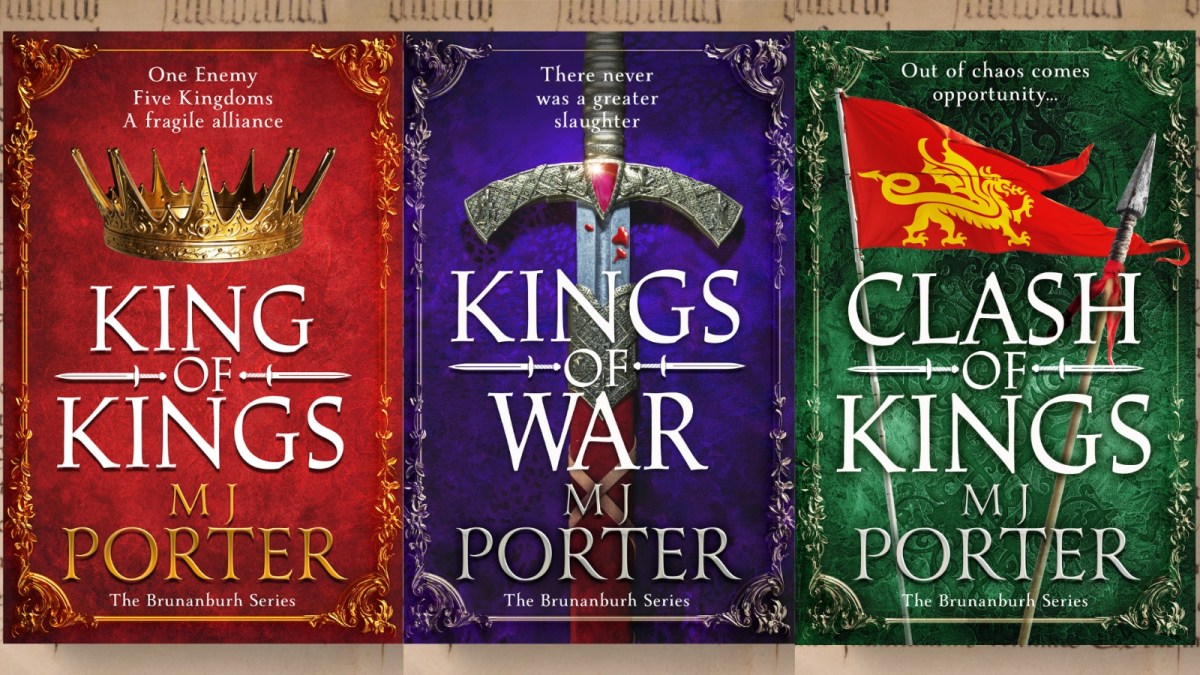
For more suggestions, and my fictional recreation of how Athelstan became king of Mercia, Wessex and the English, do check out my books, Kingmaker (the story of Lady Eadgifu, Edward the Elder’s third wife), and King of Kings (which begins with the coronation of King Athelstan in September 925). I’ve also written a post about Athelstan becoming king of Mercia which can be accessed here.

And for more information about the tenth century as a whole, do check out my nonfiction title about the Royal Women of the Tenth Century, which also includes information about the royal men.

Anglo-Saxon Chronicle quotations from M Swanton, The Anglo-Saxon Chronicles.

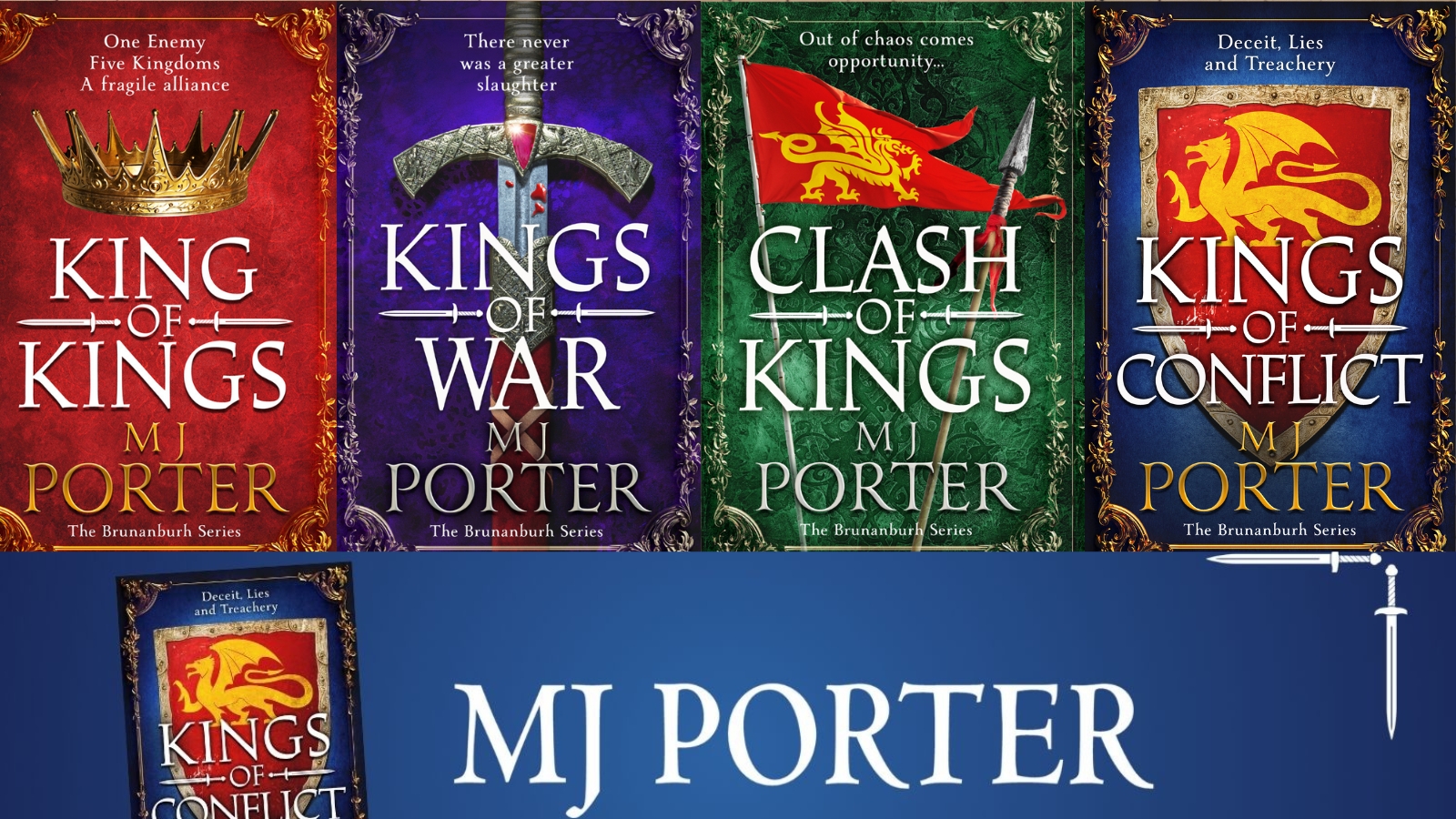
Image showing the four covers for The Brunanburh series.

I’m delighted to welcome Carolyn Hughes and her new book, Fortune’s Wheel, to the blog #HistoricalFiction #HistoricalRomance #MedievalEngland #BlogTour #TheCoffeePotBookClub

I’m delighted to welcome Carolyn Hughes and her new book, Fortune’s Wheel. The First Meonbridge Chronicle, to the blog with a trailer.

Soundcloud Link:

Blurb

How do you recover from the havoc wrought by history’s cruellest plague?

It’s June 1349. In Meonbridge, a Hampshire manor, many have lost their lives to the Black Death, among them Alice atte Wode’s beloved husband and Eleanor Titherige’s widowed father. Even the family of the manor’s lord and his wife, Margaret de Bohun, has not entirely escaped.

But, now the plague has passed, the people of Meonbridge must work together to rebuild their lives. However, tensions mount between the de Bohuns and their tenants, as the workers realise their new scarceness means they can demand higher wages and dictate their own lives.

When the tensions deepen into violence and disorder, and the men – lord and villagers alike – seem unable to find any resolution, the women – Alice, Eleanor and Margaret – must step forward to find a way out of the conflict that is tearing Meonbridge apart.

Buy Link

Universal Link:

This title/series is available to read on #KindleUnlimited

Audible Links

Meet the Author

Carolyn Hughes has lived much of her life in Hampshire. With a first degree in Classics and English, she started working life as a computer programmer, then a very new profession. But it was technical authoring that later proved her vocation, word-smithing for many different clients, including banks, an international hotel group and medical instruments manufacturers.

Although she wrote creatively on and off for most of her adult life, it was not until her children flew the nest that writing historical fiction took centre stage. But why historical fiction? Serendipity!

Seeking inspiration for what to write for her Creative Writing Masters, she discovered the handwritten draft, begun in her twenties, of a novel, set in 14th century rural England… Intrigued by the period and setting, she realised that, by writing a novel set in the period, she could learn more about the medieval past and interpret it, which seemed like a thrilling thing to do. A few days later, the first Meonbridge Chronicle, Fortune’s Wheel, was under way.

Six published books later (with more to come), Carolyn does now think of herself as an Historical Novelist. And she wouldn’t have it any other way…

Connect with the Author

Website: Bluesky: BookBub:

Follow Fortune’s Wheel blog tour with The Coffee Pot Book Club