Rome, AD 52. The Julio-Claudian dynasty is in its death throes. Over the next twenty years, chaos descends as Claudius then Nero are killed. The whole empire bucks and heaves with conspiracy, rebellion and civil war.
Out of the ashes and discord, a new imperial family emerges: the Flavians. Vespasian is crowned emperor, with his sons, Titus and Domitian, next in line.
Domitian, still only a teenager, has known only fear, death and treachery for as long as he has been alive. Suspicious of the senate as a breeding ground for treachery, and fiercely protective of his surviving family members, he uses a network of spies to stay one step ahead of any would-be conspirators.
When Titus unexpectedly falls gravely ill, the throne beckons for Domitian, something he never wanted or prepared for. As in all his darkest moments, Domitian’s childhood guardian, Nerva, is the man he turns to with his fears, and his secrets…
My Review
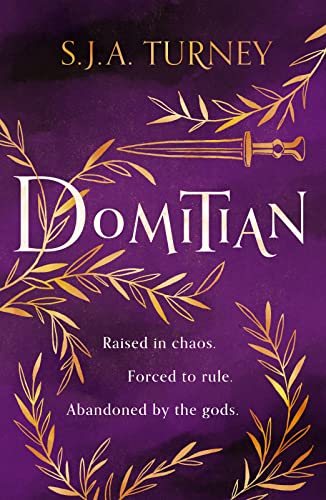
Domitian by S J A Turney is an engrossing story of political shenanigans in first-century AD Rome.
I’m not hugely well-read on Roman history, but through reading Turney’s books, I’ve come to appreciate just what a rich tapestry there is to weave tales of corruption, war and politics. And cor, doesn’t Domitian have it all? The narrative starts during the reign of Nero, and takes us through the year of the four emperors, when Vespasian comes out on top, through the brief rule of his son, and then onto Domitian. It’s not quite as whistlestop as it sounds, but the viewpoint Turney adopts, through the eyes of Nerva, allows the reader to stand back and watch it all happen, perhaps, like me, with an increasingly open mouth of disbelief.
This isn’t a fast read, as perhaps others of Turney’s more martial Roman stories might be, but it is absorbing. There isn’t a cast of thousands, but there are still many men who rise and fall (not so many women, but they are still included in the story), and events that we all might know more about, such as the eruption of Vesuvius and the continuing invasion of Britannia under Agricola (I see what you did there Mr Turney:)).
This is a story of politics, spies and corruption; of men who don’t want to fall into the same traps as those who went before. It is a fabulous story, and I highly, highly recommend it.
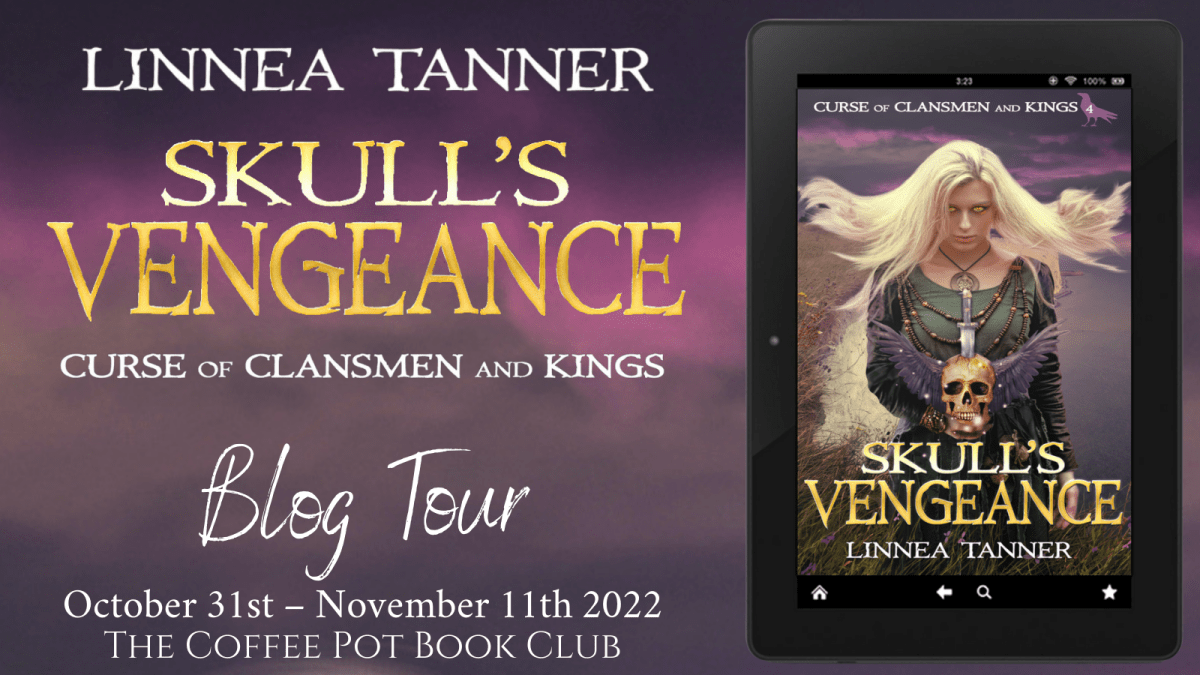
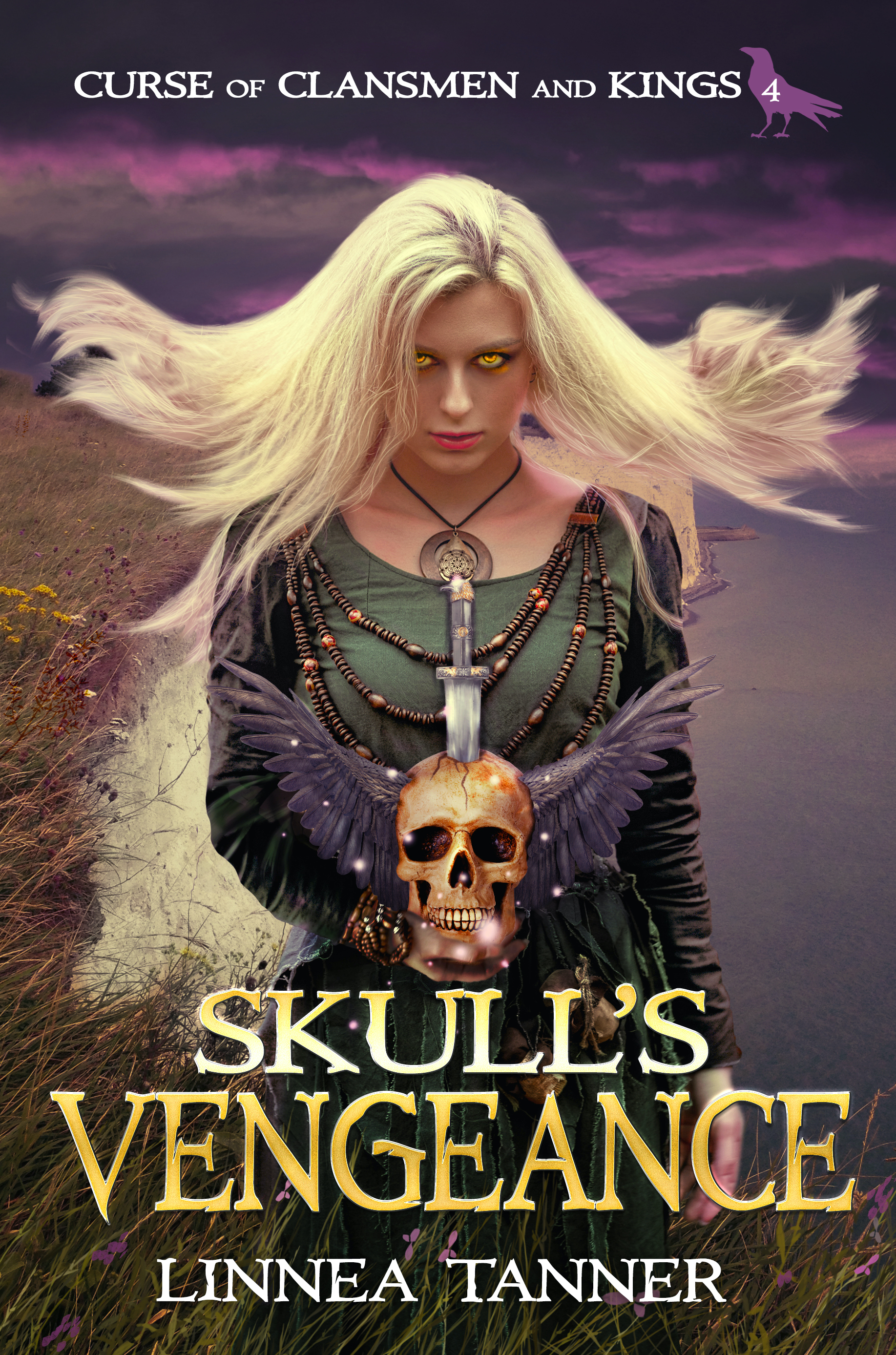
I’m delighted to have the opportunity to grill Linnea Tanner about her new book, Skull’s Vengeance.
Thank you, MJ, for hosting my blog tour of Skull’s Vengeance (Curse of Clansmen and Kings, Book 4) and for giving me the opportunity to discuss some of the resources I used to research the history and mythology of Celts in Roman Britain.
Is there a book that first inspired your passion for the era of Roman Britain?
Although the setting of the book is toward the end of the era of Roman Britain, I was first inspired about the time period with Marion Zimmer Bradley’s novel, The Mists of Avalon. The novel explored pagan beliefs and rituals of the Celts which were being replaced by the Christian religion. This novel introduced me to the concept of a “sovereignty goddess” who confers sovereignty on a mortal king in a ritual union. The key element of their sacred marriage—his kingship—is the consummation between the king and the Goddess of the territory he is to rule over. There is a scene in The Mists of Avalon in which Arthur sleeps with his sister, Morgaine—a priestess of the Goddess—as part of the ritual to confer his kingship.
Do you have non-fiction book recommendations for people who might just be discovering this period in time?
Several books about ancient Celts have been written by Professor Barry Cunliffe that describe the rise and fall of the Celtic civilization spanning from Ireland, across northern Europe, and as far as Turkey. Two of his books that I keep on my bookshelf are: The Ancient Celts and Britain Begins.
Is there a resource that you wouldn’t be without when you’re writing your books?
I often refer to Joseph Campbell’s The Hero with a Thousand Faces for elements of the hero’s journey. Also, I keep reference books such as a thesaurus and dictionary handy. Other resources include The Chicago Guide to Grammar, Usage, and Punctuation and The Elements of Style by William Strunk, Jr. and E.B. White.
How did you go about researching the more fantastical elements of your stories?
I use a variety of resources including Greek, Roman, and medieval historical accounts; various books about Celtic mythology; and archaeological books. Some of my favourite books include: The Celtic Heroic Age edited by John T. Koch in collaboration with John Carey; The History of the Kingsof Britain by Geoffrey of Monmouth; The Religion of the Ancient Celts by J. A. MacCulloch; and The Druids by Peter Berresford Ellis.
Who are your favourite authors who write similar stories?
My favourite authors are Marion Zimmer Bradley and Diana L. Paxon for the Roman Britain time period. However, I’ve recently enjoyed reading novels set in the Saxon/Viking Middle Ages. One author I follow is Eric Schumacher and his character-driven, action-packed Viking series: Olaf’s Saga and Hakon’s Saga.
Do you have a favourite place to visit in Britain?
Oh…this is like trying to choose your favourite child. I’ve had the opportunity to explore London, Hadrian’s Wall, Bath, Stonehenge, Salisbury, Canterbury, and Wales. However, I keep returning to Dover and exploring the grounds around the historical castle in which there is a well-preserved Roman lighthouse.
Dover Castle Roman Lighthouse
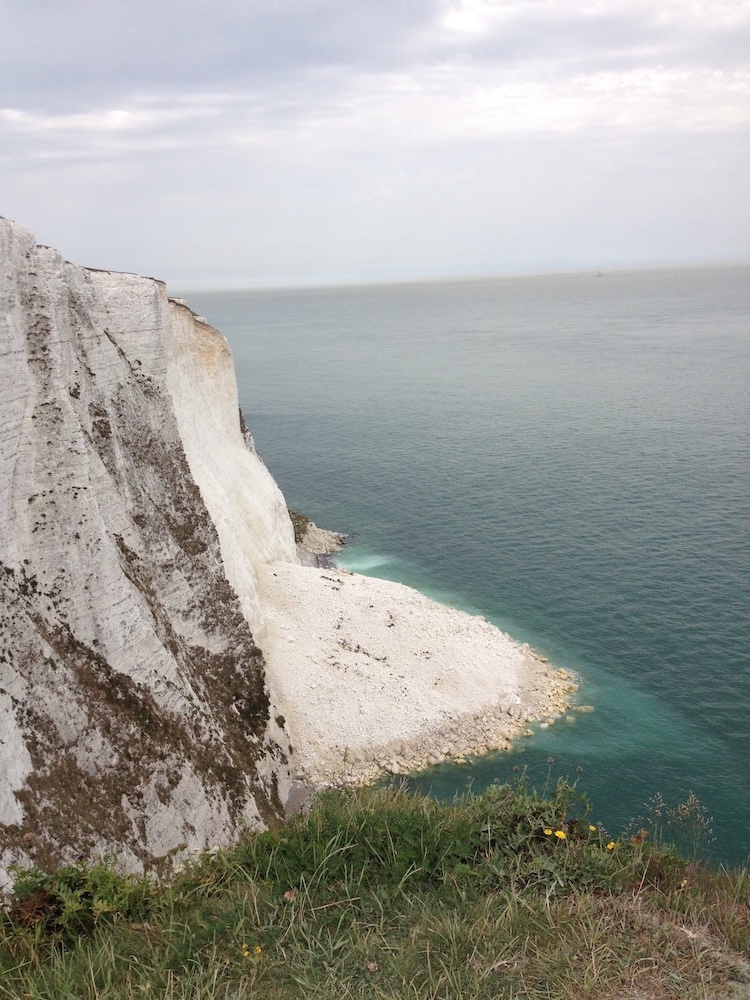
One of my biggest thrills was to hike eleven miles from Deal to Dover in 2012. Right before our hike, a large wall of the Dover Cliffs collapsed into the sea of which I took a photo.
Collapsed Wall White Cliffs
Five years after that, my husband and I brought our granddaughter with us to hike the trails around Dover. Some of the scenes in Skull’s Vengeance take place on the hilltop overlooking the city.
Hiking Dover Cliffs
Thank you so much for sharing such great answers. Marion Zimmer Bradley was definitely an influence for me as well, as was Patricia Kenneally Morrison:)
Here’s the blurb:
A Celtic warrior queen must do the impossible—defeat her sorcerer half-brother and claim the throne. But to do so, she must learn how to strike vengeance from her father’s skull.
AS FORETOLD BY HER FATHER in a vision, Catrin has become a battle-hardened warrior after her trials in the Roman legion and gladiatorial games. She must return to Britannia and pull the cursed dagger out of the serpent’s stone to fulfill her destiny. Only then can she unleash the vengeance from the ancient druids to destroy her evil half-brother, the powerful sorcerer, King Marrock. Always two steps ahead and seemingly unstoppable, Marrock can summon destructive natural forces to crush any rival trying to stop him and has charged his deadliest assassin to bring back Catrin’s head.
To have the slightest chance of beating Marrock, Catrin must forge alliances with former enemies, but she needs someone she can trust. Her only option is to seek military aid from Marcellus—her secret Roman husband. They rekindle their burning passion, but he is playing a deadly game in the political firestorm of the Julio-Claudian dynasty to support Catrin’s cause.
Ultimately, in order to defeat Marrock, Catrin must align herself with a dark druidess and learn how to summon forces from skulls to exact vengeance. But can she and Marcellus outmaneuver political enemies from Rome and Britannia in their quest to vanquish Marrock?
Trigger warnings:
Sex, Slave trafficking and abuse, Violence, Childbirth
Acclaim for other books in the Curse of Clansmen and Kings series:
“[An] epic tale of love, betrayal and political intrigue.” —InD’tale Magazine
“The requisite fantasy elements of magic and mystery abound…Tanner also does an admirable job weaving in the politics and mythology of a bygone people.” —Kirkus
“Part fantasy, part historical fiction, Linnea Tanner has woven together a wonderful tale of romance, intrigue, mystery, and legend to create an entertaining and complex story.” —The International Review of Books
“[A] captivating tale of triangles; love, lust and espionage; friend, foe, and spies; barbarians, civilized Rome and spiritual-supernatural beings.” —2019 Pencraft Book of the Year Award
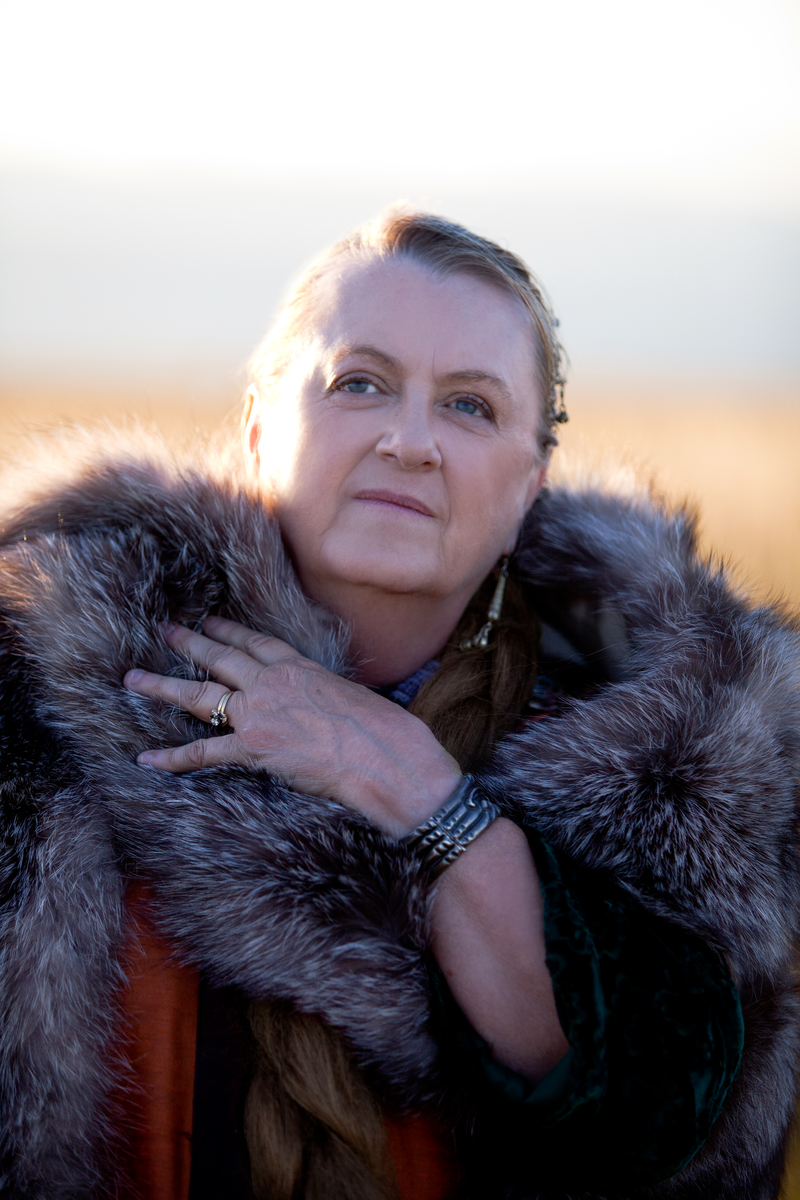
Award-winning author, Linnea Tanner, weaves Celtic tales of love, magical adventure, and political intrigue in Ancient Rome and Britannia. Since childhood, she has passionately read about ancient civilizations and mythology. Of particular interest are the enigmatic Celts, who were reputed as fierce warriors and mystical druids.
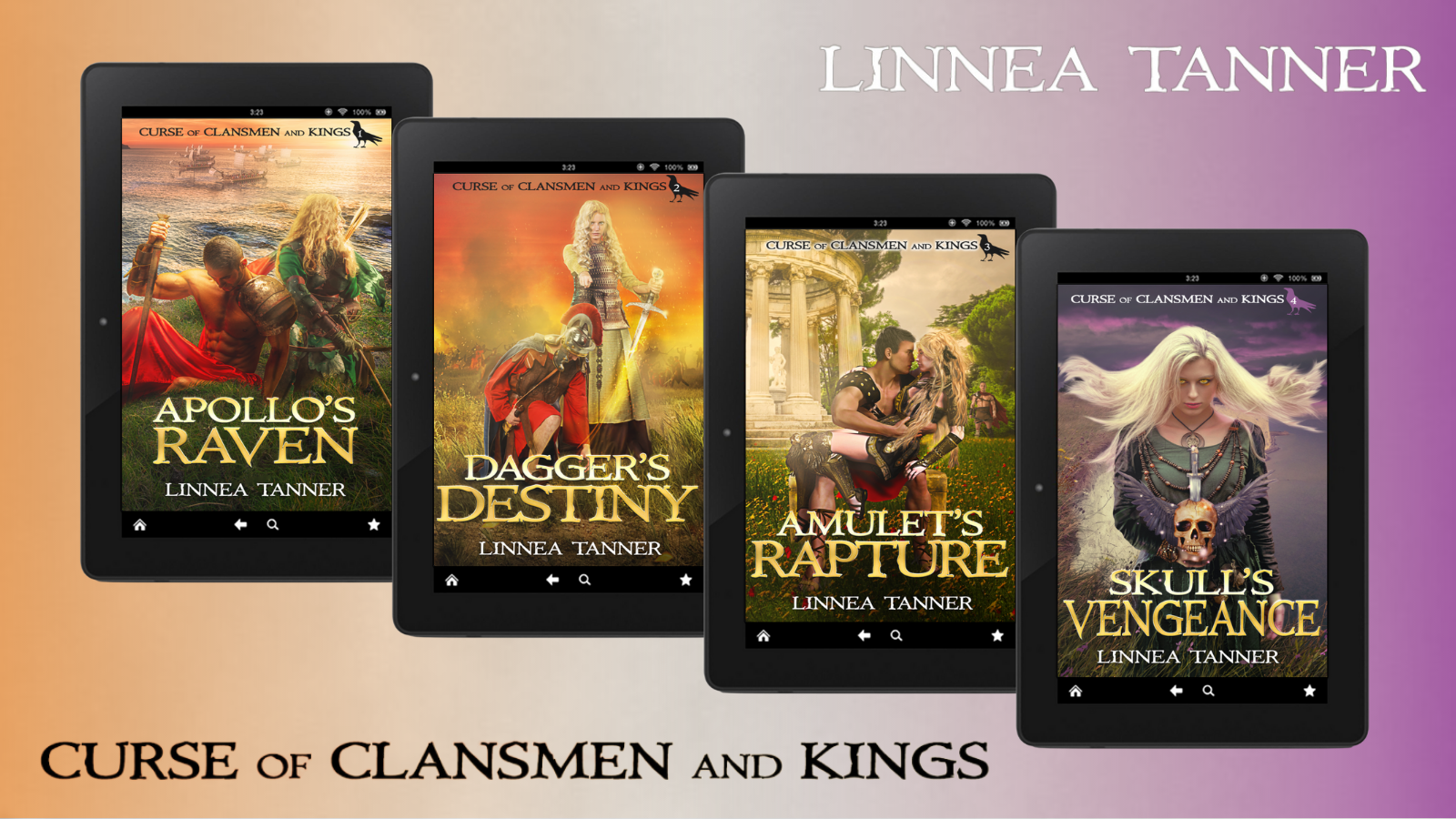
Linnea has extensively researched ancient and medieval history, mythology, and archaeology and has traveled to sites described within each of her books in the Curse of Clansmen and Kings series. Books released in her series includeApollo’s Raven (Book 1), Dagger’s Destiny (Book 2), Amulet’s Rapture (Book 3), and Skull’s Vengeance (Book 4).
A Colorado native, Linnea attended the University of Colorado and earned both her bachelor’s and master’s degrees in chemistry. She lives in Fort Collins with her husband and has two children and six grandchildren.
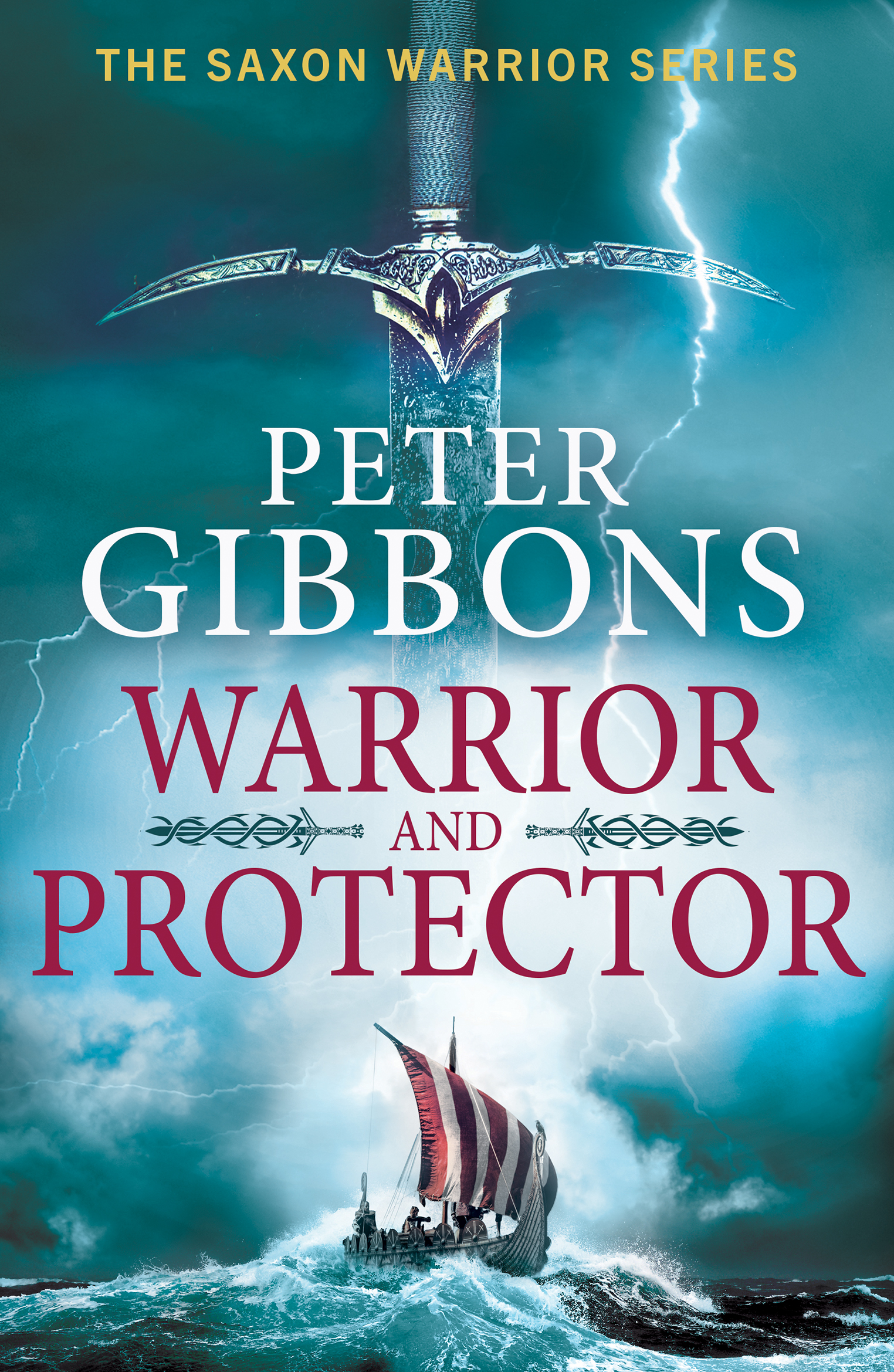
The start of a brand NEW series – an unputdownable fast paced adventure, filled with unforgettable characters.
989 AD.
Alfred the Great’s dream of a united England has been forged by his daughter Aethelfaed and grandson, King Aethelstan.
The Vikings have been expelled from York following the death of Erik Bloodaxe, and for two generations there has been peace between Saxon and Dane.
A new Viking warlord Olaf Tryggvason seeks revenge for Bloodaxe’s death and the slaughter that followed, and has set his sights on a fresh assault on England’s shores. With Skarde Wartooth they set sail for Saxon lands, hungry for glory, conquest and vengeance.
Beornoth, a brutal and battle-hardened Saxon Thegn, is called to arms to fight and protect the Saxon people from the savage Norse invaders. On a personal crusade, he joins the army of Byrthnoth, Lord of the east Saxons in a desperate fight against the bloodthirsty Vikings.
Beornoth must lay his own demons to bed, survive vicious attacks and find redemption for his tragic past.
If you like Bernard Cornwell, Simon Scarrow, Conn Iggulden, and David Gemmell you will love this epic Saxon adventure packed with battles, Vikings, and adventure.
Warrior and Protector takes the reader to England in the late 980s.
While England may have been largely peaceful and free from attacks from the Viking raiders for the last thirty years, Beornoth, once a respected thegn, is tormented by his own failings as a husband, warrior and father. Only the return of his despised enemy can rouse him from his drunken stupor. And luckily for Beornoth, but not for the English, the Viking raiders are about to make an unwelcome return to the eastern shores of England. Beornoth is forced to face his enemy and his past and, in the process, make a few new enemies as well.
This tale of England in the 980s resounds with the fierceness of battle-hardened men, both the English and the Viking raiders, and the concluding battle is portrayed in fierce and bloody detail.
I’m looking forward to following this series that will take readers to one of the best-known battles in Saxon England.
Meet the Author
Peter Gibbons is a financial advisor and author of the highly acclaimed Viking Blood and Blade trilogy. He comes to Boldwood with his new Saxon Warrior series, set around the 900 AD Viking invasion during the reign of King Athelred the Unready. The first title of the new series, Warrior and Protector, will be published in October 2022. He originates from Liverpool and now lives with his family in County Kildare.





 MJ Porter