
I’m delighted to welcome Janet Wertman and her new book, Nothing Proved, to the blog with a guest post.
Guest Post
Thank you for having me on your blog to talk about my historical research, though I feel a little guilty given how much more information I have available to me than you do! The Tudor Era really marks the beginning of careful documentation of the historical record – and it’s all carefully indexed. The touch of a button opens the records of the Privy Council, writings of ambassadors, details of state trials. I can examine floorplans of castles and paintings of gardens long gone, I can watch videos of hawking parties and court dances, listen to period music played on antique instruments. But that much bounty can actually be overwhelming, so I focus my research in predictable thematic waves to get the narrative where it needs to be.
As my very first step with a new story, I start with books, or rather, I have always started with books and I am working on a way to do so again. I lost some amazing volumes in the January fires – things like The Social History of Lighting, Lady Hoby’s Diary, Conyers Read’s two-volume biography of William Cecil, and a host of other biographies, all of which told slightly different versions of the history. That’s the toughest part about researching: the inconsistent reports, the unreliable biographers. Of course, that can also be a bit of a hall pass for an author!
Anyway, once I have an idea what my story will be, I start to assemble dates into a detailed timeline, cherry-picking the ones I intend to use or need to keep in mind, and jotting down notes. From that, I outline the actual novel, date-stamped to keep me honest. Then the writing, which sends me down mid-course rabbit holes for scene-level information: the where, the why, the time of day – and an understanding of the relevant political context: that’s where letters come in. Any letter will have something to recommend it, but ambassadors’ letters are usually a goldmine. When I was writing The Boy King, I happened upon one relating how Edward VI plucked a dead falcon as a warning to his Council…yes I used that. Did I know that a similar rumor once surrounded Charles V? Yes, but again, the source gave me a hall pass…
Beyond that comes the truly granular part of the research, taking me back to books and websites and everything in between. The descriptions of Elizabeth’s clothes and dresses were helped along by Queen Elizabeth’s Wardrobe Unlock’d, an amazing resource that assembles inventories of the Wardrobe of the Robes, descriptions of the royal artificers, the different fashion styles and fads, and so much more. Descriptions of small household furnishings were invented with reference to the New Year’s Gift Exchanges 1559-1603, another rabbit hole to mine. Of course, sometimes the warrens are empty. Back in The Path to Somerset, I needed to show Henry closeted at Oatlands after learning about Catherine Howard’s infidelities. I wanted to find the period equivalent of him sitting in his bathrobe eating ice cream from the tub. It was easy enough to find the sumptuary laws that justified a silk night robe with a black jennet lining…but apparently he would have been scooping whale blubber and that would have required too much explanation to use. Instead, I had to simply give him empty wine goblets and a tray of half-eaten food.
I will say, for the early part of Nothing Proved, I run into a bit of your problem (and the problem of any other writer of Saxon England): few sources that mention my main character, and none that really show her interacting with her closest friends…so my initial task was to cross-reference the official records of Elizabeth’s doings with those of the other people in her orbit and come up with the intersections that the story required. I knew that Robert Dudley was keeper of Somerset House while it was in her use, I knew that William Cecil began to work for her just a month after a significant wedding they both would have attended, and so I was able to capture the depth of their respective relationships. In the end, big and small all come together. That is the beauty of research done right.
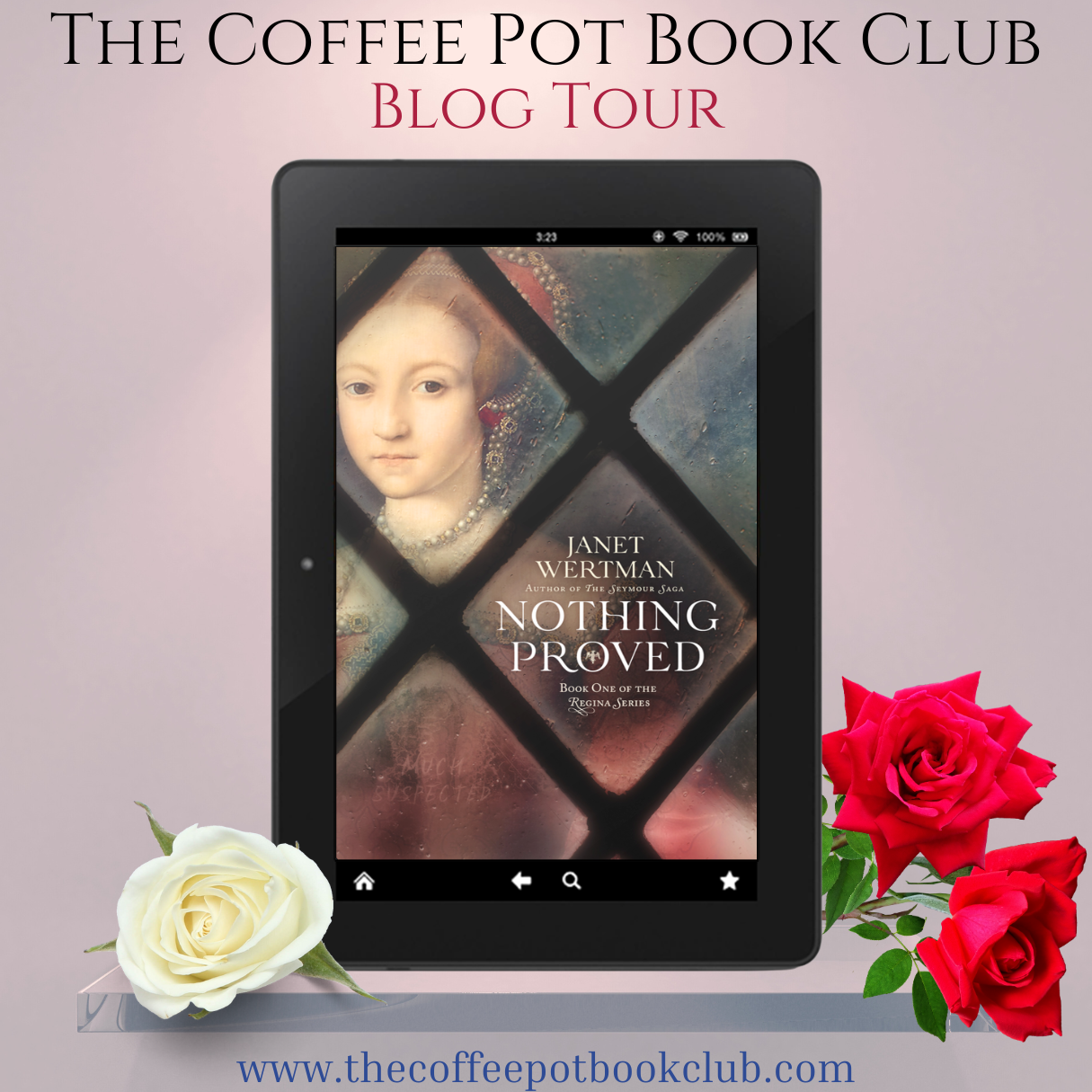
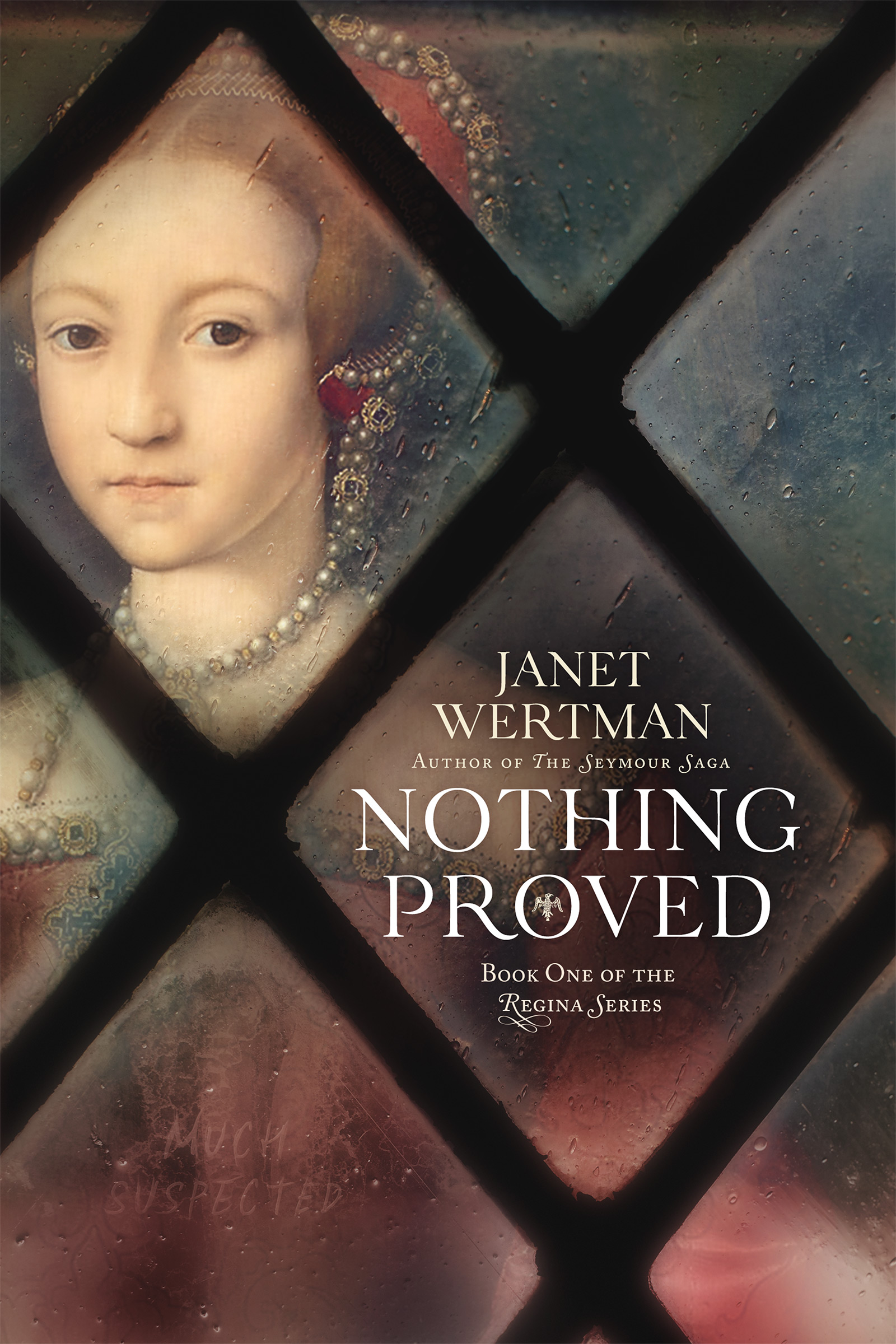
Here’s the Blurb
Danger lined her path, but destiny led her to glory…
Elizabeth Tudor learned resilience young. Declared illegitimate after the execution of her mother Anne Boleyn, she bore her precarious position with unshakable grace. But upon the death of her father, King Henry VIII, the vulnerable fourteen-year-old must learn to navigate a world of shifting loyalties, power plays, and betrayal.
After narrowly escaping entanglement in Thomas Seymour’s treason, Elizabeth rebuilds her reputation as the perfect Protestant princess – which puts her in mortal danger when her half-sister Mary becomes Queen and imposes Catholicism on a reluctant land. Elizabeth escapes execution, clawing her way from a Tower cell to exoneration. But even a semblance of favor comes with attempts to exclude her from the throne or steal her rights to it through a forced marriage.
Elizabeth must outwit her enemies time and again to prove herself worthy of power. The making of one of history’s most iconic monarchs is a gripping tale of survival, fortune, and triumph.
Buy Link
Meet the Author
By day, Janet Wertman is a freelance grantwriter for impactful nonprofits. By night, she writes critically acclaimed, character-driven historical fiction – indulging a passion for the Tudor era she had harbored since she was eight years old and her parents let her stay up late to watch The Six Wives of Henry VIII and Elizabeth R.
Her Seymour Saga trilogy (Jane the Quene, The Path to Somerset, The Boy King) took her deep into one of the era’s central families – and now her follow-up Regina series explores Elizabeth’s journey from bastard to icon.
Janet also runs a blog (www.janetwertman.com) where she posts interesting takes on the Tudors and what it’s like to write about them.

Connect with the Author






 MJ Porter