
I’m delighted to welcome Deborah Swift and her new book, Last Train to Freedom, to the blog #WW2 #TransSiberian #Russia #Japan #WomensFiction #Spies #BlogTour #TheCoffeePotBookClub

I’m delighted to welcome Deborah Swift and her new book, Last Train to Freedom, to the blog with Researching Last Train to Freedom and the Sugihara Story.

Researching Last Train to Freedom and the Sugihara Story

Last Train to Freedom is set in WW2 during the Soviet occupation of Lithuania, and with the threat of the Nazis over the border. The parallels to today’s political situation in Ukraine could not be clearer.

The book tells the story of Jewish refugees fleeing from Nazi and Soviet oppression. Because of the current situation, although I was fascinated by the Trans-Siberian Express, I was not about to go and take the journey myself. My initial research was largely based around websites such as the Holocaust Encyclopedia and then books and papers found via JStor and other trustworthy academic websites.

The main story is about how Japanese Consul Sugihara enabled the escape of thousands of Jews by giving them visas – against the wishes of his government. One man held the fate of so many lives in his hands. The best overview I found of events was In Search of Sugihara by Ellel Levine.
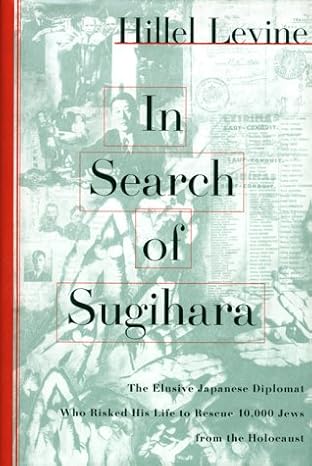
Pic of book In Search of Sugihara

Sughara’s wife Yukiko wrote a memoir about the events called No Visa (Rokusen-nin no Inochi) which is widely available, and tells the inside story of her husband’s frantic signing of visas before the consulate was shut down by the Soviets. Being aware that applicants were in life-threatening danger, Sugihara ignored his superiors’ orders and, from July 18 to August 28, 1940, he issued over 2100 life-saving transit visas.

‘My husband and I talked about the visas before he issued them. We understood that both the Japanese and German governments disagreed with our ideas, but we went ahead anyhow.’

Sugihara spoke to Soviet officials who agreed to let the Jews travel through the country via the Trans-Siberian Railway. I used detailed maps of the journey and researched each of the stops along the way to get a sense of where events might take place along the journey. Finding out about Russian trains of the 1940’s was quite a journey in itself – how did the doors open? What were the carriages like?
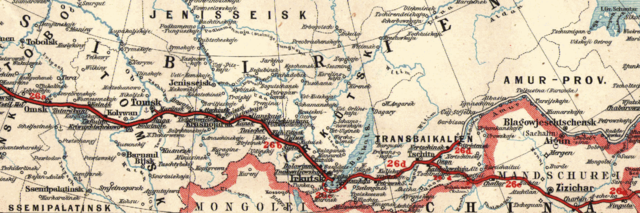
Pic of map of Trans-Siberian Railway

I gleaned much of the information from trawling through memoirs looking for telling detail. The escape on the Trans-Siberian Express was recorded by many in their memoirs, most notably I Have My Mother’s Eyes (A Holocaust Memoir Across Generations by Barbara Ruth Bluman, Light One Candle: A Survivor’s Tale from Lithuania to Jerusalem by Solly Ganor and One More Border: The True Story of One Family’s Escape from War-Torn Europe by William Kaplan. There are also several recordings on YouTube which tell the story, for example this one about the Lermer family.

The story takes place in three geographical locations – Lithuania, Moscow, and Japan, and all needed research, not to mention the journey across 6000 miles of Siberian wilderness! About half way through I wondered, have I bitten off more than I can chew here? But by then I was hooked on the story and just ploughed on, my huge collection of books and papers growing all the time.
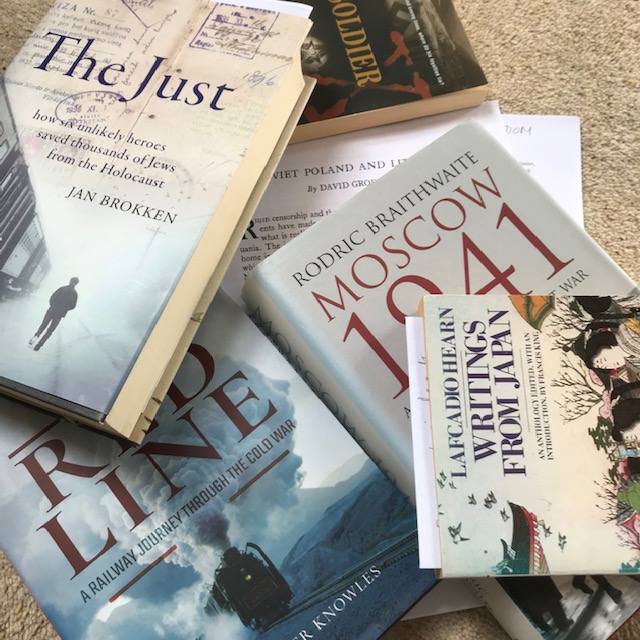
I used many other books to give me a sense of the culture and background, especially to grasp an idea of the Russian mindset, and also the culture of Japan for when my fictional refugees eventually arrive in Kobe.

Trains, trains, trains! I watched an awful lot of old steam train videos to get a sense of how steam was built up to power the engine, what sort of noise it might make and how it might behave in snow. I became a train buff for about six months, visiting the National Railway Museum to get a sense of the sheer weight and size of these old trains.

I hope that anyone reading the book will feel, as I did when researching, that they have really been through the middle of Siberia, and I hope they will enjoy the journey.

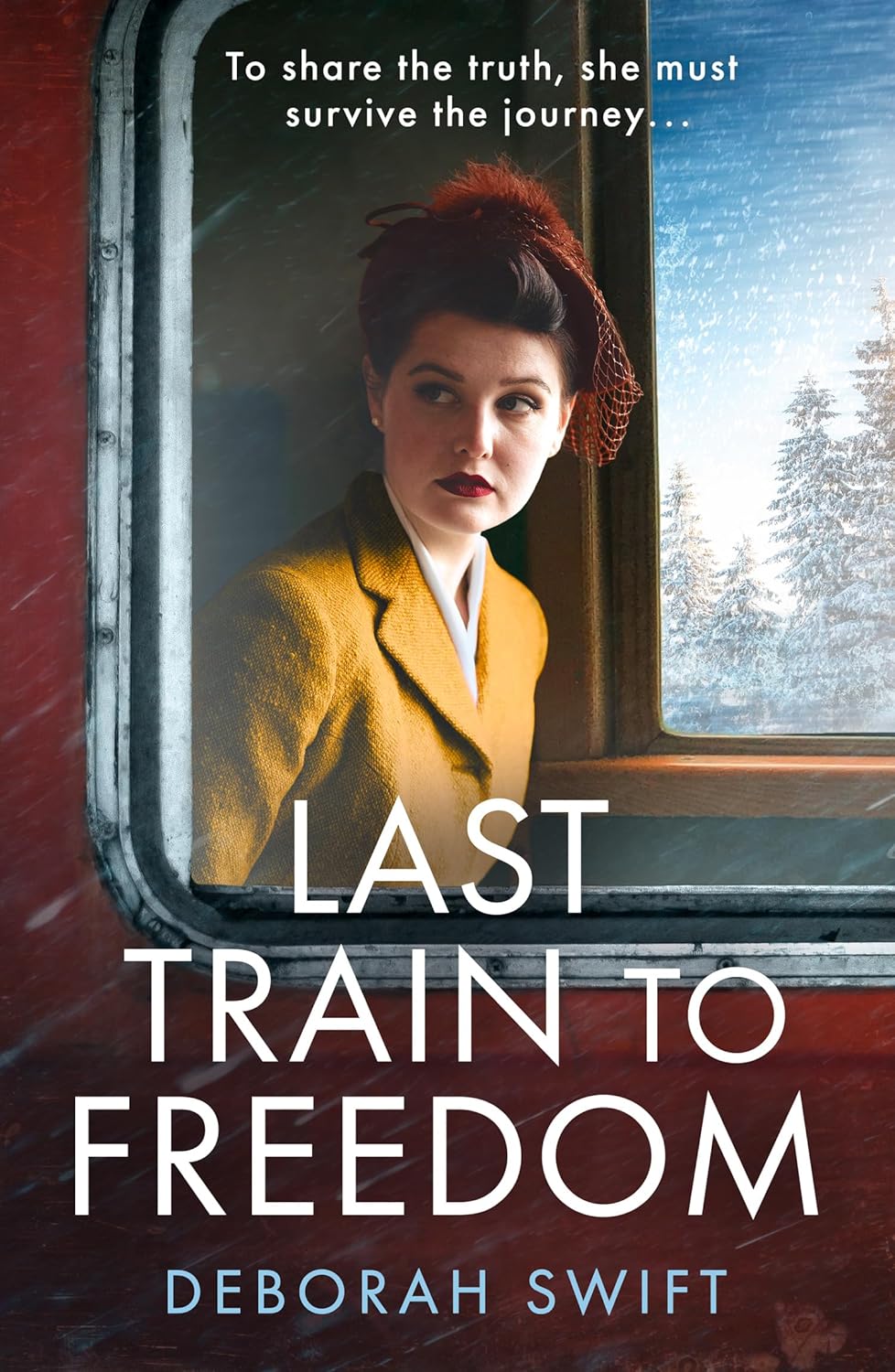
Last Train to Freedom is out in ebook, paperback and audio.

Here’s the Blurb

‘Taut, compelling and beautifully written – I loved it!’ ~ DAISY WOOD

‘Tense and thought-provoking’ ~ CATHERINE LAW

1940. As Soviet forces storm Lithuania, Zofia and her brother Jacek must flee to survive.

A lifeline appears when Japanese consul Sugihara offers them visas on one condition: they must deliver a parcel to Tokyo. Inside lies intelligence on Nazi atrocities, evidence so explosive that Nazi and Soviet agents will stop at nothing to possess it.

Pursued across Siberia on the Trans-Siberian Express, Zofia faces danger at every turn, racing to expose the truth as Japan edges closer to allying with the Nazis. With the fate of countless lives hanging in the balance, can she complete her mission before time runs out?

‘Such an interesting and original book…. Informative, full of suspense and thrills.’

~ Netgalley Review
Buy Link

Universal Link:

Meet the Author

Deborah Swift is the English author of twenty historical novels, including Millennium Award winner Past Encounters, and The Poison Keeper the novel based around the life of the legendary poisoner Giulia Tofana. The Poison Keeper won the Wishing Shelf Readers Award for Book of the Decade. Recently she has completed a secret agent series set in WW2, the first in the series being The Silk Code.

Deborah used to work as a set and costume designer for theatre and TV and enjoys the research aspect of creating historical fiction, something she loved doing as a scenographer. She likes to write about extraordinary characters set against a background of real historical events. Deborah lives in England on the edge of the Lake District, an area made famous by the Romantic Poets such as Wordsworth and Coleridge.
Connect with the Author
Follow the Last Train to Freedom blog tour with The Coffee Pot Book Club

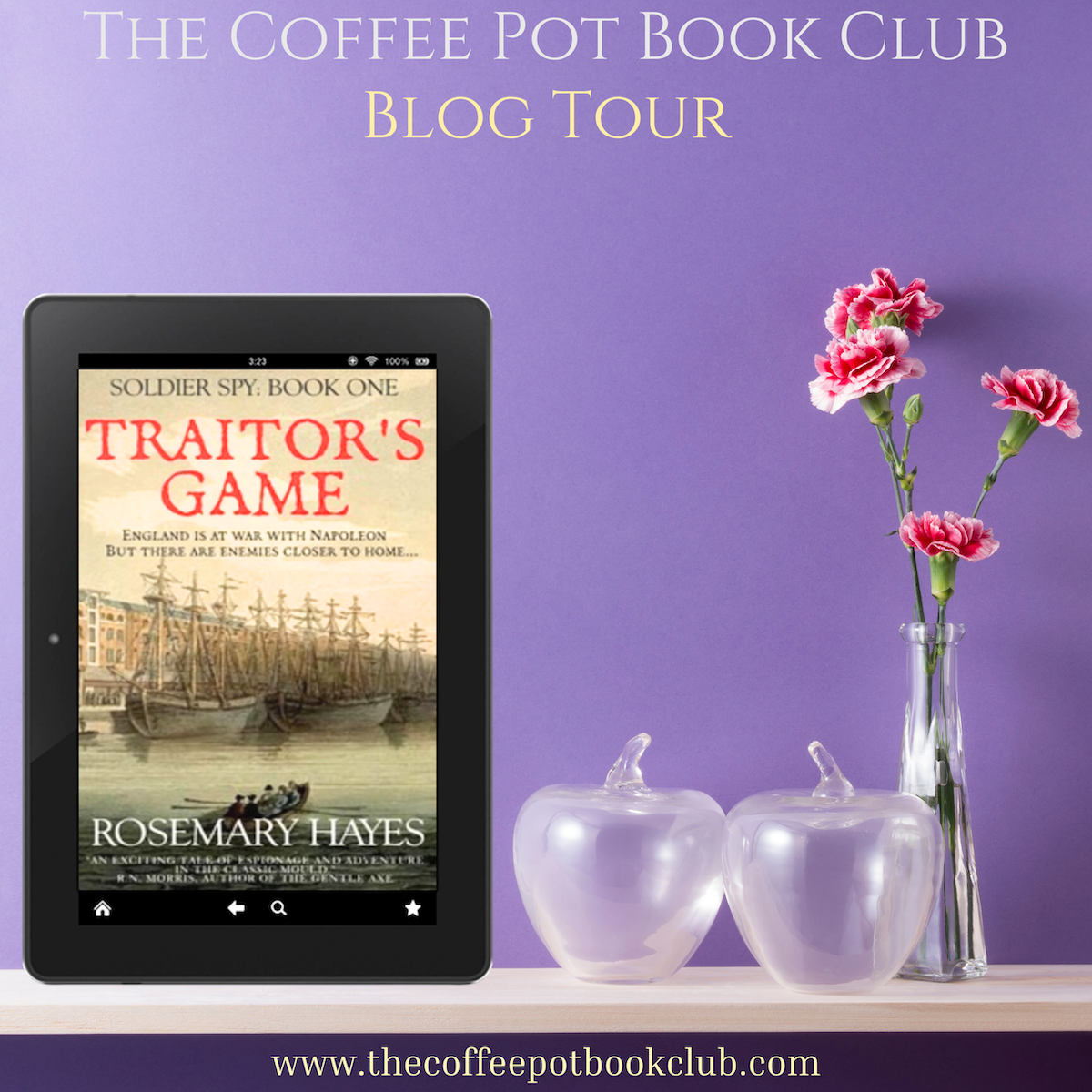
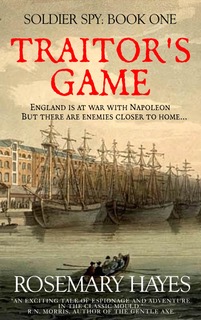
I’m delighted to welcome Rosemary Hayes and her book, Traitor’s Game, to the blog #HistoricalFiction #Spies #NapoleonicWars #BlogTour #TheCoffeePotBookClub

I’m delighted to welcome Rosemary Hayes and her book, Traitor’s Game, book 1, Soldier Spy series, to the blog with some background and research.

Background and Research

When I was asked to write a series of novellas set during the Napoleonic Wars, I knew I would find it a daunting task. The wars took place from about 1800 to 1815 and were a continuation of the French Revolutionary wars, which ran from 1792 to 1799. Together these conflicts represented 23 years of nearly uninterrupted war in Europe. I say nearly uninterrupted because there was a short period of peace when the Treaty of Amiens (March 27, 1802) was signed by Britain, France, Spain and the Netherlands.  However, it only achieved peace in Europe for a mere 14 months.

The Napoleonic Wars spanned so many years, were fought at sea and on land in so many different countries and involved so many combatants that it would have been impossible to cover the full extent of them in three short historical novellas, so I chose to concentrate on a short timeframe – from 1808-1811. 

I decided not to describe battles in any detail. I’m not an historian and I felt that the complexities of regiments, formations and tactics should not be described by an amateur. So I chose to concentrate more on the human story of my main protagonists.

What particularly interested me was the secret war against Napoleon. That underbelly of every war where agents pass information to their handlers through secret channels, where things are not always what they seem, where the most unlikely people turn out to be working for the enemy. So, the work of spies is the main focus of my stories.

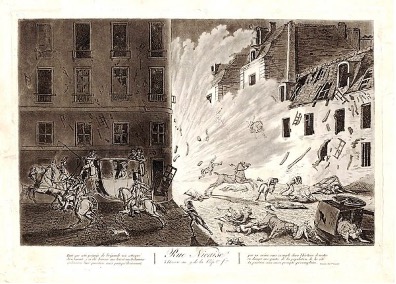
There was a network of Royalist spies in France collaborating with the British Government and which organised uprisings against the Republic which were brutally suppressed by the Minister of Police, Joseph Fouché. There were several attempts to assassinate Napoleon, one of which very nearly succeeded.  It was the world’s first car bomb (or cart bomb). Britain was closely involved in the plot, which was almost certainly controlled from London.

Although there was high level espionage, there were also many ordinary French citizens, including fishing families, shopkeepers and others who wished to undermine Napoleon’s rule. They were working for the British and provided shelter for British spies – and girls and women often dressed as men to avoid detection. There was a respected French priest (with a beautiful mistress) who was an agent for the British – and a schoolmaster on the Normandy coast who passed on French naval signals to the British so that their ships would be let through as French.

Then there were those who regularly crossed the Channel, legally, spying for their country’s enemies in plain sight. And, of course, there were double agents, too, one of whom is the mysterious traitor mentioned in my story.

Spies were active in every theatre of war but this first story of my trilogy is set only in France and England. Inevitably, both smugglers and fishermen (often one and the same) were involved in helping spies. At one point there was a spying headquarters in Jersey and one Jersey fisherman made nearly 200 trips over to France delivering spies, letters and money; he was eventually caught and executed but never revealed the names of his contacts.

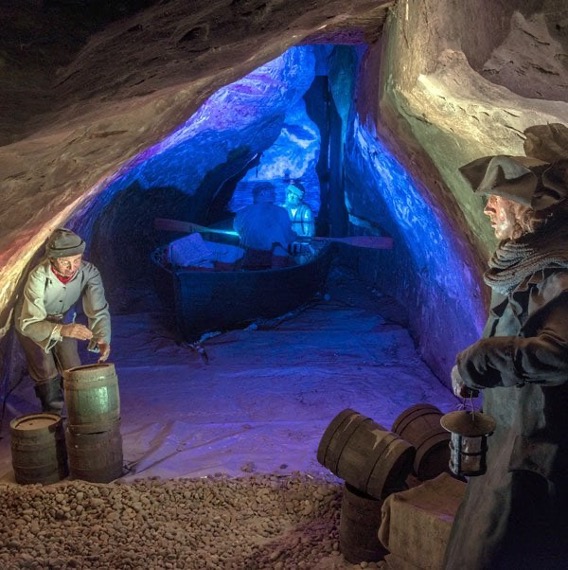
Smuggling had always taken place along the South coast of England, too, and it was rife during the Napoleonic wars when contraband was taken both ways across the Channel as were spies and escaped prisoners of war. Hastings had a long tradition of smuggling and many of the fishing families augmented their incomes with smuggling activities. As part of my research I visited St Clement’s Caves, a large network of caves in Hastings where contraband was concealed and from where boats set off across to France.

St Clements Caves in Hastings

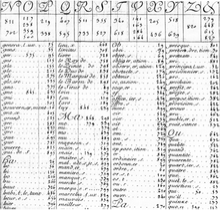
The Alien Office, based in London, was the first comprehensive British secret service in the modern sense, and therefore the forerunner of not only the Special Operations Executive (S.O.E.) but also of MI5 and MI6. Although ostensibly part of the Home Office, the wider remit of The Alien Office included the domestic and external surveillance of foreign people of interest. John Reeves (one of the real people who appears in my story) was head of the Alien Office from 1803-1814 and had a network of agents who sent information back to their handlers. Messages were often written in code and/or in special inks to try and ensure that their contents would not be revealed should they be intercepted. Each intelligence agency had its own ciphers and ink composition.

Major George Scovell was one of Wellington’s staff who successfully cracked a number of French codes. He had no background in intelligence and was a self-taught code breaker. He established himself as Wellington’s cipher expert when he cracked the Army of Portugal code in two days. He also broke enough of the Great Paris Cipher to provide Wellington with valuable information that facilitated the British victory at Vitoria.

My main protagonist, Captain Will Fraser, is sent home from the Peninsular War in disgrace.  I have imagined that Will was wrongly accused of insubordination and cowardice. In this first story we don’t learn much about the circumstances of his dismissal; details of this come out in a later book, but I am careful not to say that he was cashiered.

It was extremely rare for an officer to be cashiered from the military in the 19th century and would only happen following imprisonment and a trial. If found guilty he could be publicly humiliated which could involve a parade-ground ceremony in front of assembled troops with the destruction of his symbols of status. His epaulettes would be ripped off his shoulders, his badges and insignia stripped, his sword broken, his cap knocked away and his medals torn off and dashed to the ground. Italso meant that the amount he had paid for his commission was lost, as he could not sell it on.

So that is the background to the first book in the Soldier Spy stories, Traitor’s Game, and in it we meet Will Fraser, bitter, disgraced and desperate to clear his name. In London he seeks out his brother, Jack, only to find that Jack has vanished and, in order to track him down, Will reluctantly becomes  entangled in the murky world of espionage.

For information on the spies and their networks, among other sources, I consulted Tim Clayton’s excellent and extensively researched book ‘This Dark Business – The Secret War Against Napoleon. And, of course, Tom Williams’ series – the James Burke books. I also crawled around the caves in Hastings and visited Portugal where I saw the site of Napoleon’s headquarters and that of Wellington’s, staring at each other across the River Douro.

Blurb

‘Right from page one you know you are in the hands of a talented storyteller… An exciting tale of espionage and adventure in the classic mould.’

~ R.N. Morris, author of The Gentle Axe

1808.

Captain Will Fraser has just returned from the Front in the Peninsular War. He is disgraced and penniless, the victim of a conspiracy led by a jealous and influential officer. Fraser has been falsely accused of insubordination and cowardice and dismissed from his regiment.

Fraser and Duncan Armstrong, his wounded Sergeant, arrive in London to seek out Will’s brother, Jack, who works for King George’s Government.

But Jack has disappeared. He vanished from his lodgings a week ago and no one has seen him since. Friends and colleagues are baffled by his disappearance as is the young woman, Clara, who claims to be his wife.

Then Will is viciously attacked, seemingly mistaken for his brother, and only just escapes with his life. When news of this reaches Jack’s colleagues in Government, Will is recruited to find his brother and he and Armstrong set out to follow a trail littered with half-truths and misinformation.

For their task is not quite what it seems.

Will closely resembles his brother and it becomes evident that he is being used as a decoy to flush out Jack’s enemies. These are enemies of the State, for Jack Fraser is a spy and his colleagues believe he has uncovered evidence which will lead to the identity of a French spymaster embedded in the British Government.

Will’s search leads him to France but in this murky world of espionage, nothing is straightforward.

The soldier turned spy must unmask a traitor, before it’s too late.

Buy Link

Universal Link:

This title is available to read on #KindleUnlimited

Meet the Author

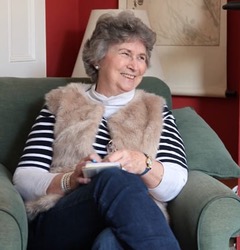
Rosemary Hayes has written over fifty books for children and young adults. She writes in different genres, from edgy teenage fiction (The Mark), historical fiction (The Blue Eyed Aborigine and Forgotten Footprints), middle grade fantasy (Loose Connections, The Stonekeeper’s Child and Break Out)  to chapter books for early readers and texts for picture books. Many of her books have won or been shortlisted for awards and several have been translated into different languages.

Rosemary has travelled widely but now lives in South Cambridgeshire. She has a background in publishing, having worked for Cambridge University Press before setting up her own company Anglia Young Books which she ran for some years. She has been a reader for a well-known authors’ advisory service and runs creative writing workshops for both children and adults.

Rosemary has now turned her hand to adult fiction and her historical novel ‘The King’s Command’ is about the terror and tragedy suffered by a French Huguenot family during the reign of Louis XIV.

And Traitor’s Gamethe first book in the Soldier Spy trilogy, set during the Napoleonic Wars, has recently been published.

Connect with the Author

Website:

Follow the Traitor’s Game blog tour with The Coffee Pot Book Club