


I’m delighted to welcome Katherine Mezzacappa and her book, The Ballad of Mary Kearney, to the blog with an excerpt.
Excerpt
The Revd. Samuels Regrets Much but Tells Only his Diary
20th June 1766
I have this day done myself much harm, more than at other times, and the good Lord knows that I do not use His gifts as I should, but in truth I am much tried.
If I survive what I have done today, I must take this as a lesson and mend my ways.
The little bog-trotter called today with a message from Viscount Kilkeel, which he delivered to Meg as I had said I did not wish to be disturbed. She knows well enough that my company is the decanter and not the preparation of next Sunday’s sermon but as a good wife and obedient to me in all things she says nothing. But this time she taps the study door, and waits so that I may go through the pretence of putting by the claret, opening my books and dipping my quill in the inkstand.
The note, which I hope has not been read by those of the servants who can (which means the Chittleboroughs and that Swiss valet), bids me to receive one of his housemaids and please to instruct her in what is necessary that she should read, write and know her numbers as a good Christian child. Would that I were not the third son I am, and my father a plain English squire in ever reducing circumstances, for he did sire many without the wherewithal to provide elegantly for them. Thus my scholarship was hard-won, long years a servitor waiting at the Tufts’ table. The only living being on this island to know the extent of my humiliations is my poor Meg. Often has she asked me in trembling accents to give her leave to run a little school. Other parsons’ wives do this profitably and wisely, she says. But I have never wished my wife to serve anyone for that to me is too near what I was obliged to do to pay my way. And then comes this missive dashed off by his Lordship that I should letter some hoyden that he drops his breeches for now that there is no Lady Mitchelstown to tail!
So after our meal comes this child, scrubbed to the point of decency, I must say, dropping eyes and curtseys and ‘if it please you, sir’ and all coy manners. “No!” I hurl at her, “it pleases me not, but I must do as I am bid.” Meg comes at the noise but I shoo her away, though I know she stood trembling behind the door throughout. But I did wrong. I visited on that child all my rage and frustration. She merely stood in my path though she did not choose to be there. Does he tup her? I know not. It is none of my business to know. If he does, I should pity her, for no man of her class will want her after, and she shall be consigned to the Magdalen or given up for worse. I do not know how much native wit she might have that would permit her to learn from me, for in truth I gave her no opportunity, railing at her as I did. Nor can she have missed the reek of the claret. If he have ruined her she is sure to tell him all of this. His Lordship may be laughing at my expense even now. And yet, perhaps I have no justification for thinking ill of her. There was none of that tawdry pride of the fallen, none of the base cunning of those who think they have the upper hand for a brief time and so must make much of it. Nay, she cowered before me and took the blows I gave with tears but no protestations. Could she know that as she felt the sting of that crop that it was myself I really wished to punish? If she dissembled she did it so well—no, I believe she did not.
Bless my Meg for coming in as she did. I took myself to the yard and put my head under the pump. The fresh air and sunlight worked on my rage and self loathing, and with the shock of that cold water I found I could no longer contain myself but spewed all I held within over the cobbles. I took the pail and washed it away, and by my exertion, the expulsion of what was poisoning me, and copious draughts of that spring water, I came more or less to myself again, and so am face to face with my foolishness. The realisation that I cannot even hold my drink is itself merely another confirmation of the fact that I am not a gentleman and should not pass for such. And my actions in drink today were those of a lunatic. To think that I was so proud to have obtained this living.
My hope lies now only in poor Meg and her good offices with this child. Later, I went into the parlour and asked her as gently as I was able how she had found her pupil. She needed some encouragement, but I got out of her that the girl was biddable, quick in her wits once her tears were dried, and most desirous of coming here again. And the poor lady’s eyes I saw fill with tears of happiness when I heard myself say to her: “If it pleases you to instruct this girl, then let us consider also your little school.” She deserves some joy after so many years of disappointment that no child of our own ever came to stand at her knee. It seems it may take so little, if today I have really learned to be less proud.
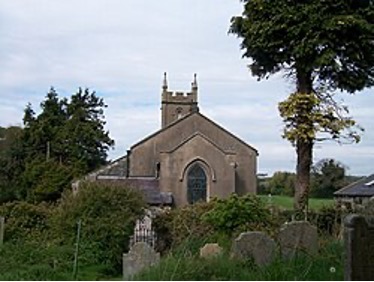
Maghera Church of Ireland church from the old cemetery
Image: Eric Jones. Wikimedia Commons
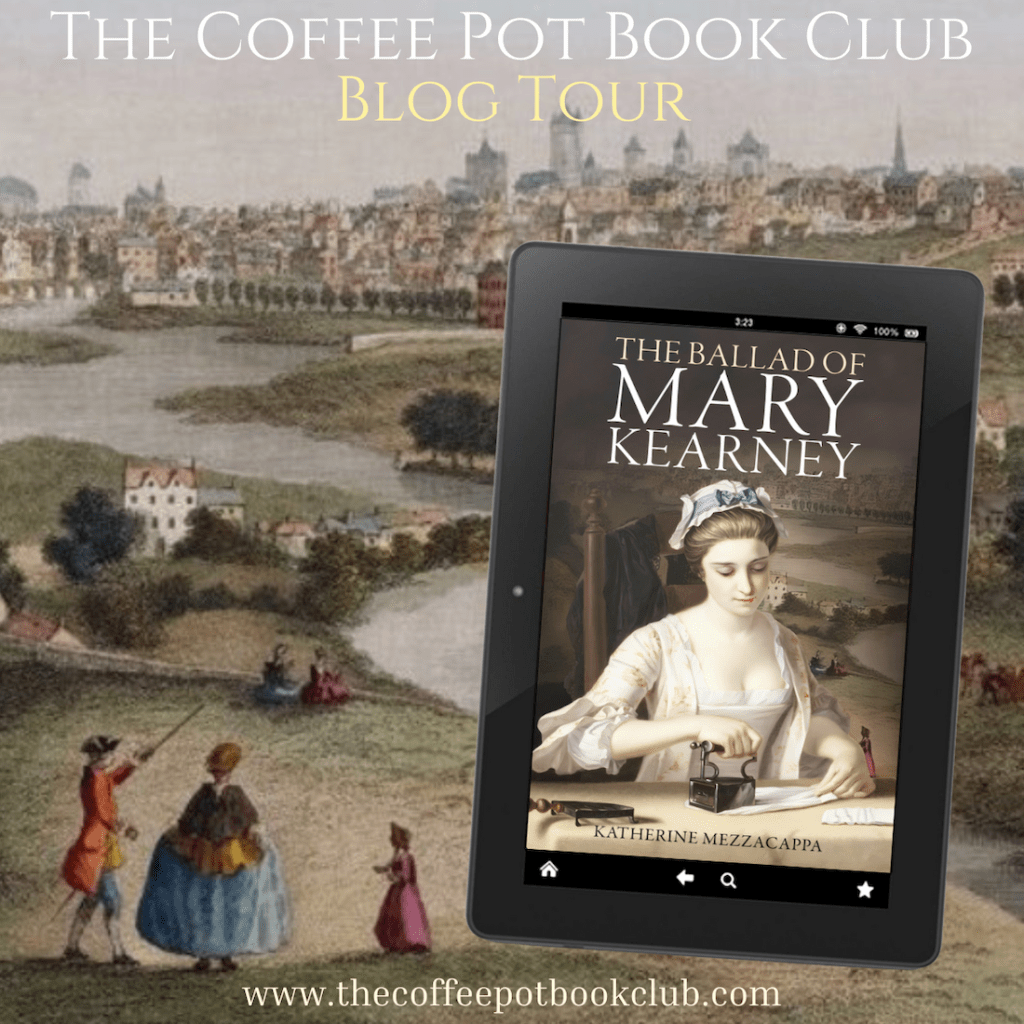
Here’s the Blurb
‘I am dead, my Mary; the man who loved you body and soul lies in some dishonorable grave.’ In County Down, Ireland, in 1767, a nobleman secretly marries his servant, in defiance of law, class, and religion. Can their love survive tumultuous times?
‘Honest and intriguing, this gripping saga will transport and inspire you, and it just might break your heart. Highly recommended.’ Historical Novel Society
‘Mezzacappa brings nuance and a great depth of historical knowledge to the cross-class romance between a servant and a nobleman.’ Publishers Weekly.
The Ballad of Mary Kearney is a compelling must-read for anyone interested in Irish history, told through the means of an enduring but ultimately tragic love.
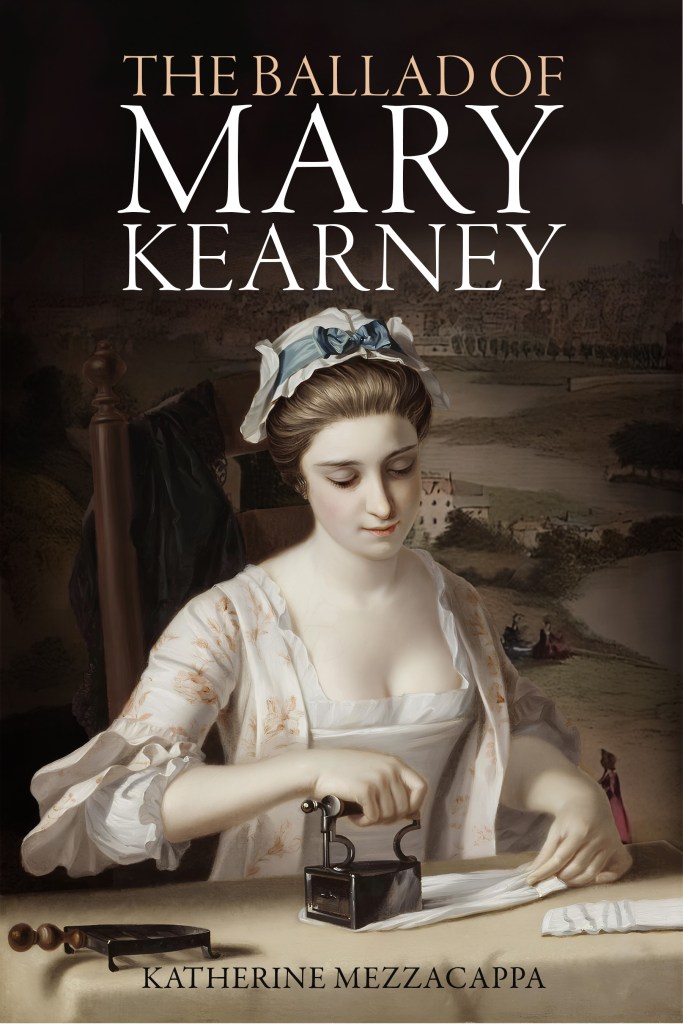
Buy Link
Meet the Author
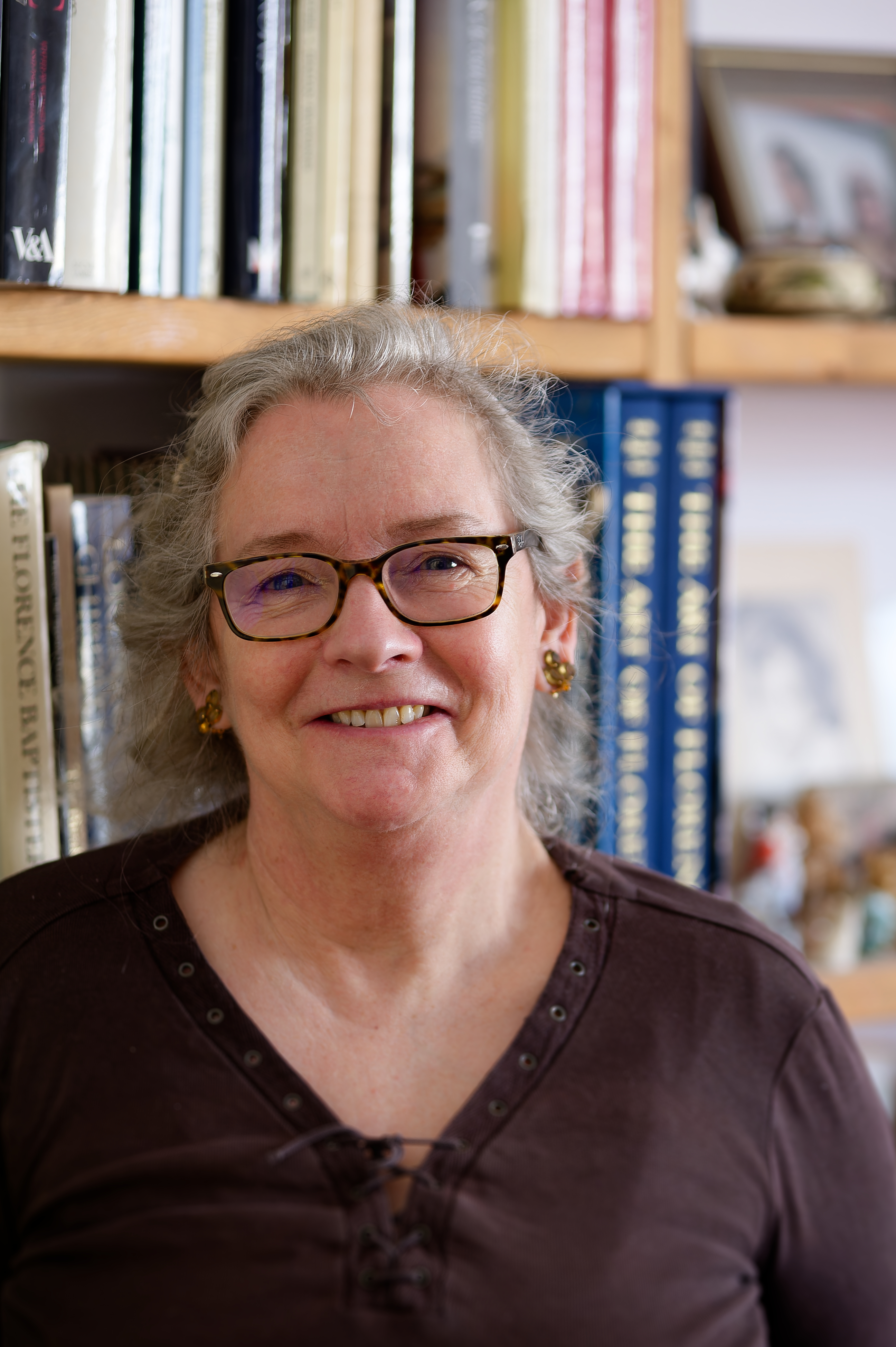
Katherine Mezzacappa is Irish but currently lives in Carrara, between the Apuan Alps and the Tyrrhenian Sea. She wrote The Ballad of Mary Kearney (Histria) and The Maiden of Florence (Fairlight) under her own name, as well as four historical novels (2020-2023) with Zaffre, writing as Katie Hutton. She also has three contemporary novels with Romaunce Books, under the pen name Kate Zarrelli.
Katherine’s short fiction has been published in journals worldwide. She has in addition published academically in the field of 19th century ephemeral illustrated fiction, and in management theory. She has been awarded competitive residencies by the Irish Writers Centre, the Danish Centre for Writers and Translators and (to come) the Latvian Writers House.
Katherine also works as a manuscript assessor and as a reader and judge for an international short story competition. She has in the past been a management consultant, translator, museum curator, library assistant, lecturer in History of Art, sewing machinist and geriatric care assistant. In her spare time she volunteers with a second-hand book charity of which she is a founder member. She is a member of the Society of Authors, the Historical Novel Society, the Irish Writers Centre, the Irish Writers Union, Irish PEN / PEN na hÉireann and the Romantic Novelists Association, and reviews for the Historical Novel Review. She has a first degree in History of Art from UEA, an M.Litt. in Eng. Lit. from Durham and a Masters in Creative Writing from Canterbury Christ Church. She is represented by Annette Green Authors’ Agency.
Connect with the Author














 MJ Porter