


I’m delighted to welcome Debra Borhert and her new book, Her Own War, Book 3 in the Château de Verzat Series, to the blog with the historical aspect of the novel.
Historical Aspect of the Novel: Enslavement in Eighteenth-Century France by Debora Borchert
“I survived enslavement. I know where they look.” — Aurélia, Her Own War
In the first book in my Château de Verzat series, the brother-sister protagonists flee France aboard a slaver. As I further researched the slave trade, I knew I would not be able to adequately convey the horrors of their voyage. Consequently, that story lives only in my mind.
Yet, the male protagonist, Henri, falls in love with a formerly enslaved woman, Aurélia, who was forced onto the same ship. In America, they cannot marry, and people treat Aurélia as an enslaved woman. Eager for her freedom, Henri brings Aurélia to France, after the new government abolished enslavement. The August 1793 decree for the abolition of slavery ended all slave-trade activity across all French territories in 1794.
In the second book, Her Own Revolution, Henri, Aurélia, and their son, Charles, depart America and arrive in France in late 1796, where Henri believes Aurélia and their son will be safe.
Although slavery was illegal in France, people, like Thomas Jefferson, brought their “property” to France, and France respected his and others’ rights to own enslaved people.
The irony of these laws caused me to wonder about the formerly enslaved, and whether people of color had rights in France in 1796. They did not. In my work as a historical fiction writer, I attempt to focus light on historic injustices.
For research, I traveled to Nantes, which was the largest slave-trading port in France from 1707-1793. The city has created a Memorial to the Abolition of Slavery, dedicated to the thirteen million Africans who were deported during the transatlantic slave trade.
The Memorial’s underground gallery was created to enable visitors to imagine what it might feel like to exist in the hold of an 18th century ship. Sounds of flapping sails, splashing waves, creaking ropes and wood, clanking chains and shackles, human groans and cries, echo in the shadows.
At that moment I knew my character Aurélia would be mute, caused by the trauma she had endured. I also knew she would not be safe in France, for, although Henri did not know it, I knew she had no rights.
The third book, Her Own War, opens with a hailstorm that threatens the vineyard, and is followed by a declaration that all noble émigrés must leave France or face the guillotine. Henri, a noble émigré, must leave, and, as Aurélia is pregnant, she is unable to travel with him. He must leave her under the protection of the four hundred families who live on the estate. However, no one, not even Henri, could have protected her from history.
During the eighteenth century the recapture of freed, formerly enslaved people was terrifyingly common, and many were enslaved in the sex trade. France had a robust demimonde, a polite name for the business of prostitution, catering to tastes for the exotic. These facts threatened Aurélia’s safety. But, as Aurélia had survived enslavement, she proved to be a courageous character who risks her life to save the lives of her children.
As Napoleon Bonaparte gathers power at the end of Her Own War, I know the plot of the next book of in the series will be affected by his re-establishment of slavery in1802, which revived slave-trade activity for another fifteen years.
Having learned that even today human beings are enslaved, I chose to bring light to the historical facts of the 18th century, sadly reflected in the crimes against humanity in this century.

Bust of an African Woman by Charles-Henri-Joseph Cordier. Courtesy The Walters Art Museum, Creative Commons License.
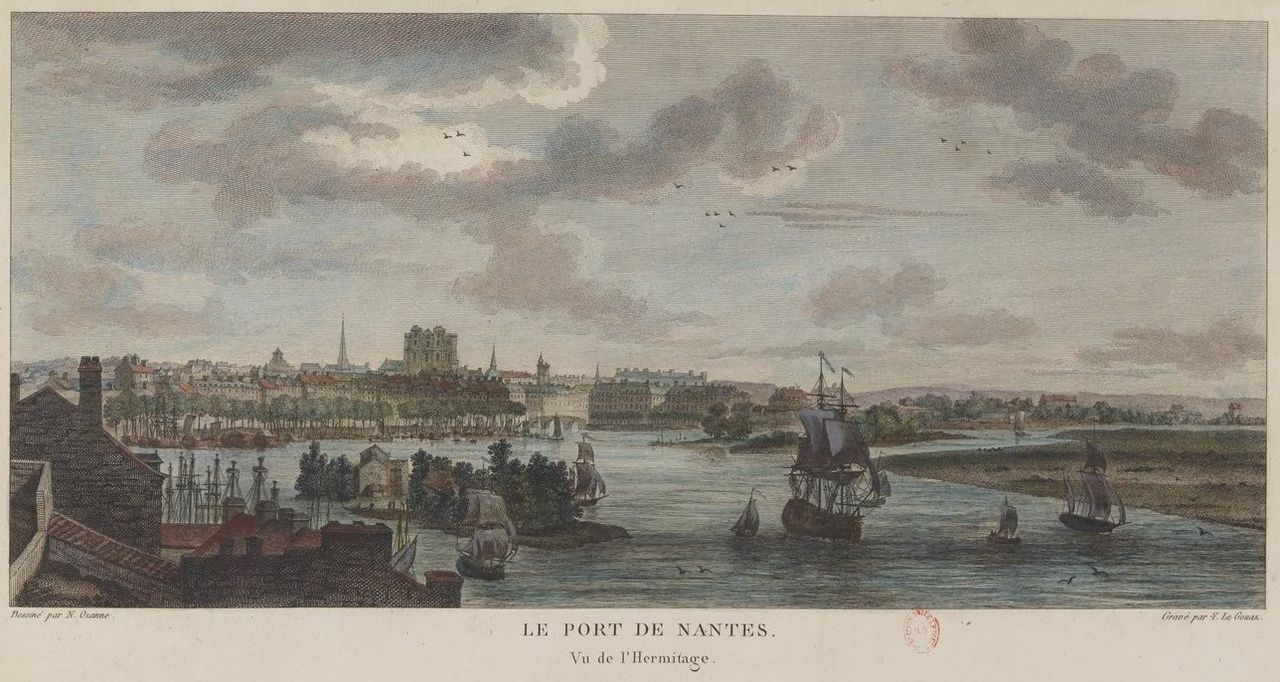
Le Port de Nantes, by Nicolas Ozanne, Courtesy Wiki Creative Commons

Blurb
As Napoleon Rises from the Ashes of The French Revolution, One Woman Dares to Spy Against Him
Sentenced to eight months in an insane asylum for the crime of impersonating a man, Geneviève LaGarde fears giving birth in a filthy cell will mean certain death for her and her unborn child. Desperate for her release, her husband, Louis, trades his freedom for hers and must join Bonaparte’s army in Egypt.
As Geneviève wages her own war against the tyrannical general, she not only risks her own life but also those of her children and the four hundred families who depend on the Château de Verzat estate. Knowing her desperate actions could cause the government to confiscate the entire vineyard, she sacrifices everything to save her husband and protect the people who become her family.
A captivating tale of the power of love, hope, and courage, and the strength of community.



Reviews
“Fans of historical fiction will find this novel a most captivating read.” —Kirkus Reviews
“For fans of Stephanie Dray’s The Women of Chateau Lafayette.” —Publishers Weekly BookLife Editor’s Pick “A compelling story of love, war, and fierce family loyalty. While the narrative stays true to the social mores of the French Revolutionary era, Borchert gives her readers powerful and active female characters who often cunningly use conventional gender expectations to conceal their real motives and actions. Fans of historical fiction will find this novel a most captivating read.” —Kirkus Reviews
Buy Link
This title will be on #KindleUnlimited for the first 90 days
Meet the Author
Debra Borchert has had many careers: clothing designer, actress, TV show host, spokesperson for high-tech companies, marketing and public relations professional, and technical writer for Fortune 100 companies. Her work has appeared in The New York Times, San Francisco Chronicle, The Christian Science Monitor, and The Writer, among others. Her short stories have been published in anthologies and independently.
A graduate of the Fashion Institute of Technology, she weaves her knowledge of textiles and clothing design throughout her historical French fiction. She has been honored with a Historical Novel Society Editors’ Choice, Publishers Weekly BookLife Editor’s Pick, and many other five-star reviews.

Connect with the Author

 MJ Porter