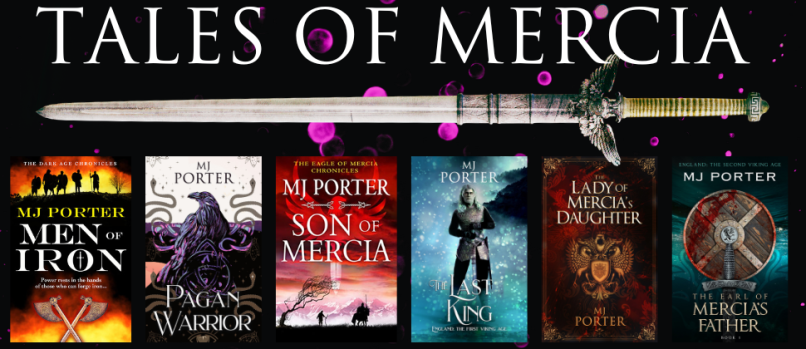

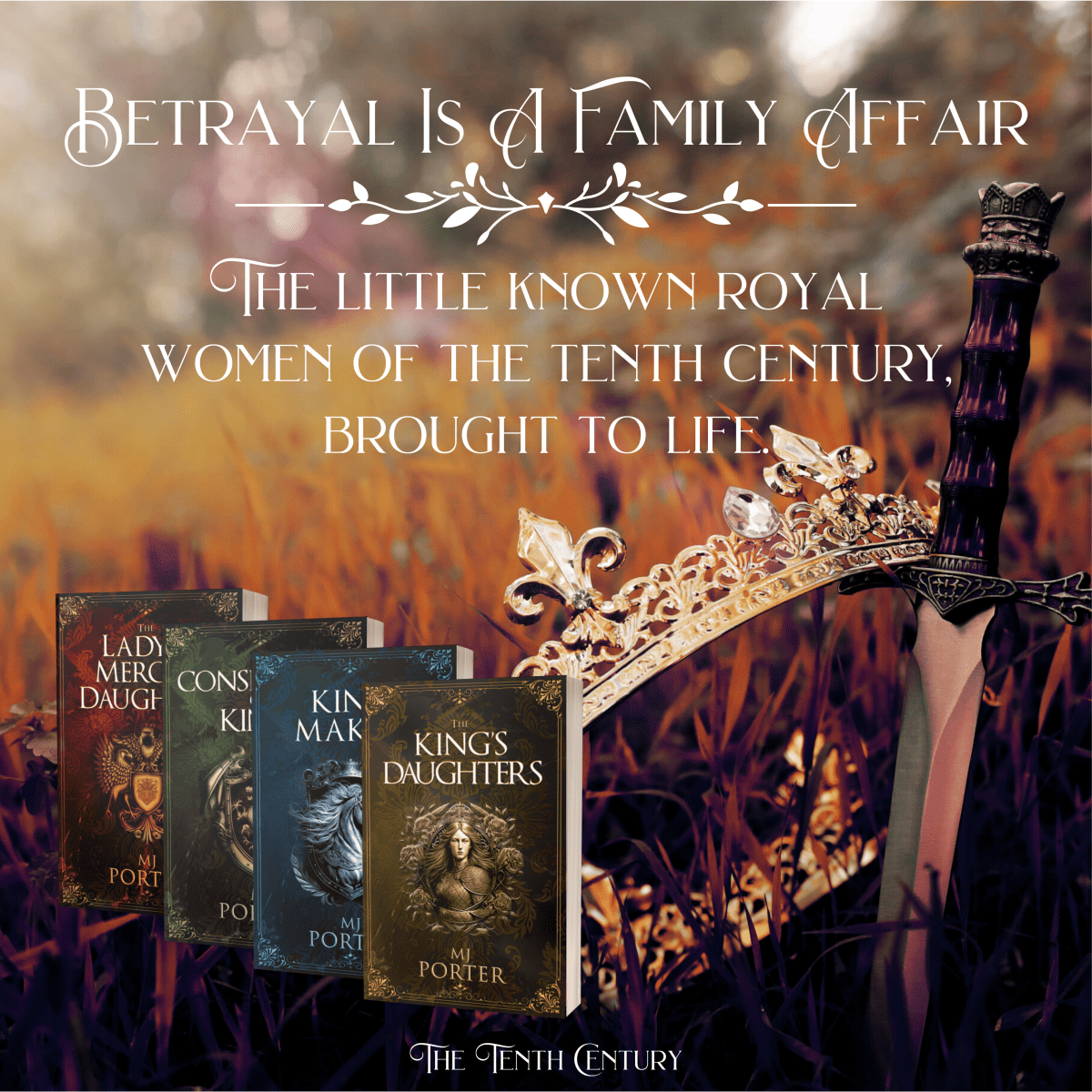
Quite by chance, I’ve found my stories taking me time and time again to the tenth century in Early England, and Britain as a whole. The Earls of Mercia series begins there. The Brunanburh Series takes place in the heart of the century. But what about the royal women of the era?
I’ve written about the sixth century, seventh, ninth and eleventh centuries, and I’ve even written about the tenth century. But not from the perspective of the women who were close to the throne. And goodness me, what a lot of women there were, if you just know where to look.
The Tenth Century Royal Women series started with a single novel, The Lady of Mercia’s Daughter. The story of Lady Æthelflæd, The Lady of Mercia, is one of the more ‘well-known’ women of the time period. People know of her marriage to Lord Æthelred, of the fact that her father was King Alfred, and also because of Bernard Cornwell’s Saxon books, where she’s one of Uhtred’s allies and lovers. But what of the only child she birthed?
Lady Ælfwynn appears only once in the Anglo-Saxon Chronicle. And then, seemingly not at all. Anywhere. (She might appear in a later charter, but it’s not possible to say with any certainty). And what happened to her after the death of her mother, and her appearance in the Anglo-Saxon Chronicle, either six months, or eighteen months later (there is some confusion with the dating in the source material) fascinated me.
Like her mother, she was a woman at a time perceived as a ‘man’s world.’ Why not explore a few possibilities.
And so I did, in both The Lady of Mercia’s Daughter and A Conspiracy of Kings.
And this research led me to other ‘lost’ women of the tenth century. Lady Ælfwynn had female cousins, many, many female cousins.
Her uncle, King Edward of Wessex, married three times and fathered either eight or nine daughters from those marriages (I’ve opted for eight). All of these women were close to the throne, and all of them were almost entirely ignored in the (male-dominated) sources of the period.
And, watching over these eight daughters was King Edward’s third wife, Queen Eadgifu. I imagine she was younger, or the same age as Edward’s eldest daughters, and had the advantage of living for many, many years after her husband’s death.
Of all of the women I’ve so far discovered in the tenth century (excluding Queen Elfrida), Lady Eadgifu is perhaps the most well represented in the surviving source material, although her day to day activities must be somewhat inferred from events taking place in the wider world.
Lady Ælfwynn, Queen Eadgifu, Lady Eadgifu (yes, confusing), Lady Eadflæd, Lady Eadgyth and Lady Ælfgifu and the other sisters as well, are the perfect vehicles for discovering just what ‘options’ were available to the royal women of the tenth century.
The Tenth Century Royal Women books are interconnected, but other than the books about Lady Ælfwynn, are not direct sequels to each other. But I do love a character from another book to crop up in a new one, and I hope my readers will too.
The Tenth Century Royal Women Series
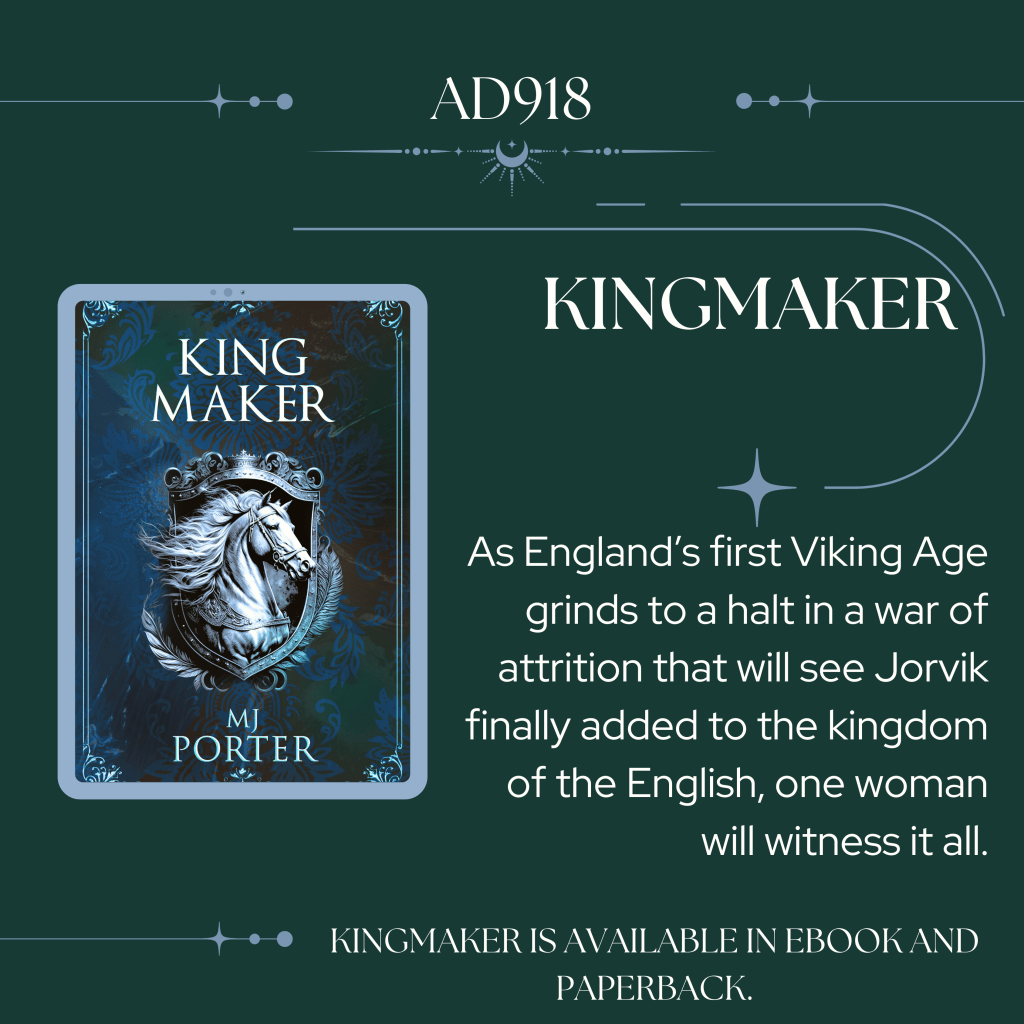
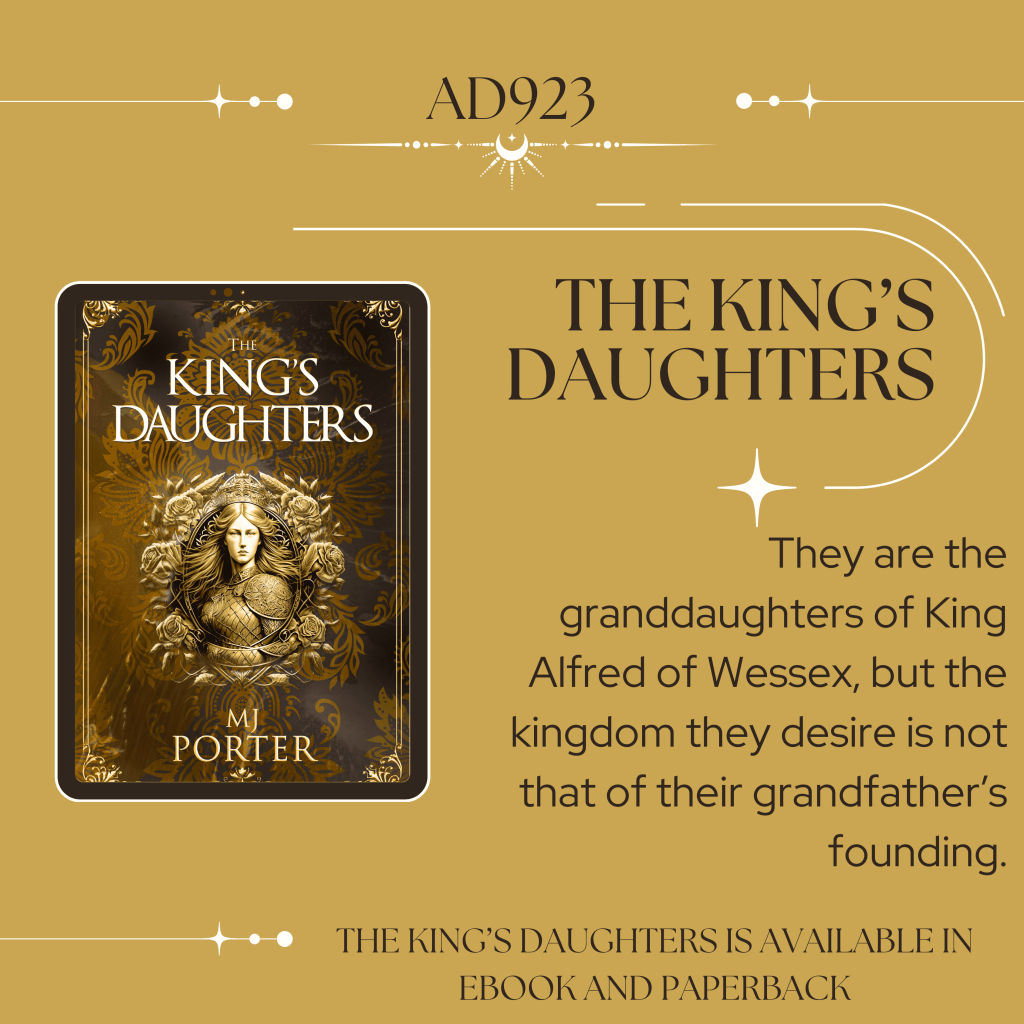
Offering a retelling of the lives of the women who leap from the tenth century – Lady Ælfwynn, the daughter of Lady Æthelflæd; Lady Eadgifu, third wife to a king, and mother to two more, and the daughters of King Edward (and hence, the granddaughters of King Alfred).
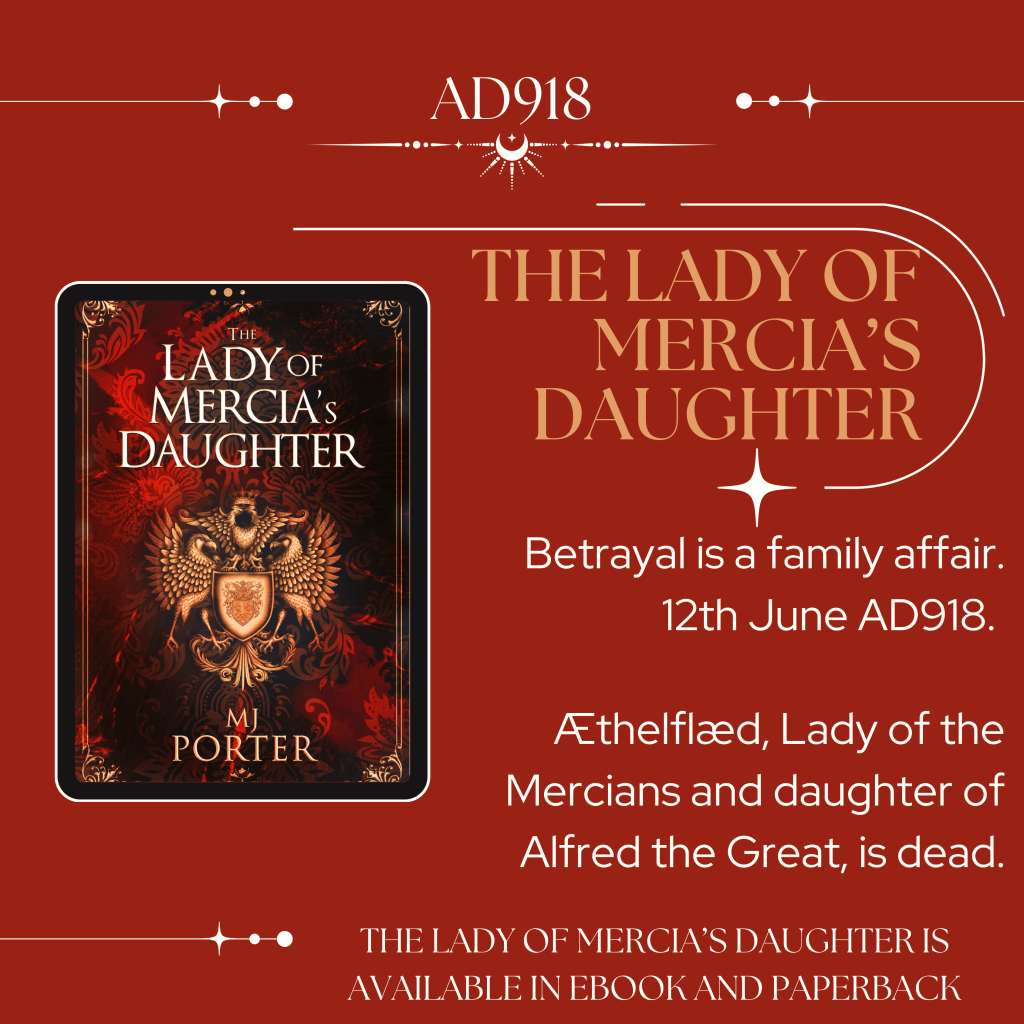
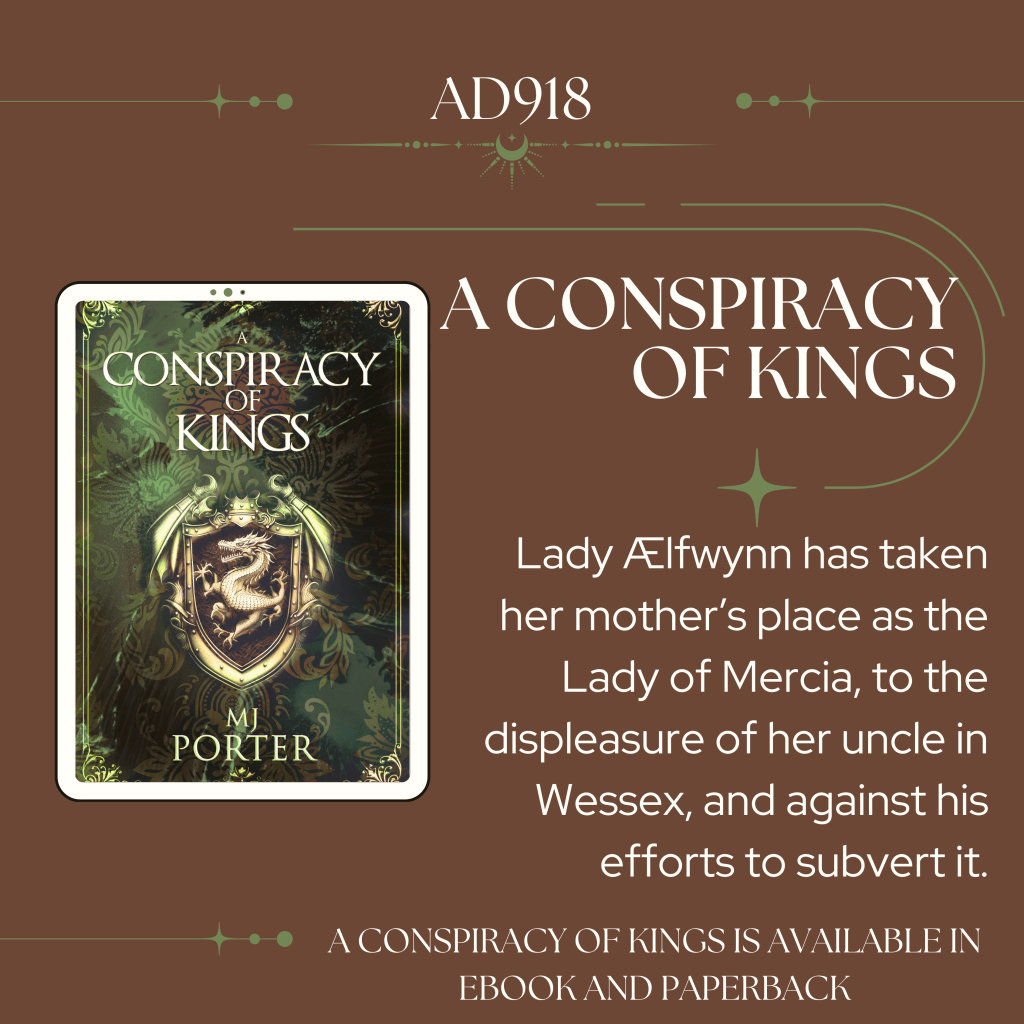
Also available as The Lady of Mercia’s Daughter Duology
Read about the historical Lady Æthelflæd, and about her daughter, Lady Ælfwynn on the blog.
Also available as Kingmaker and The King’s Daughters Duology
Read about Lady Eadgifu and the royal daughters of Edward the Elder on the blog.
You can read about all these women in my non-fiction title, The Royal Women Who Made England.
(Some Amazon affiliate links are active on this page).























 MJ Porter