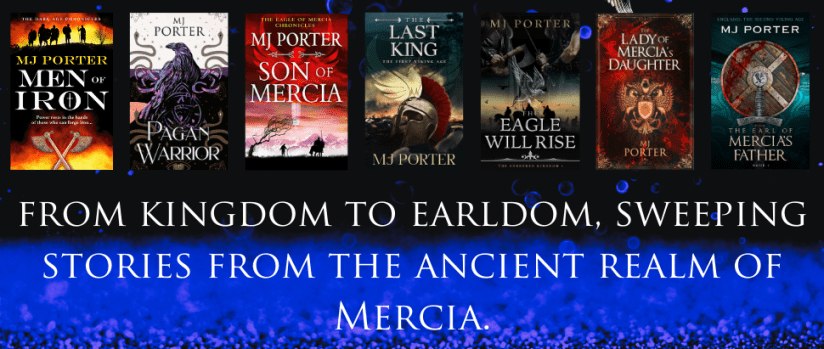

The scope for telling Elfrida’s (Ælfthryth) story was too good to resist, especially with the initial ‘alleged’ love match between her and King Edgar. She was England’s first historically attested crowned queen of England (the term ‘queen’ is somewhat contentious, and while other women ‘might’ claim it, Elfrida is acknowledged as the one no one can argue about), she was mother to King Æthelred II (from the Earls of Mercia story), and so much more beside. Check out both trilogies to read my fictional account of her life, while I share the historical details of her life in my non-fiction title, The Royal Women Who Made England.

An introduction to Lady Elfrida (contains spoilers)
There is a surprising concurrence of named and known women in the tenth century. The early years of Queen Elfrida, England’s first acknowledged crowned queen, find the ‘old guard’ from previous reigns, mixing with the ‘new guard’ – a delightful mix – it must be thought – of those experienced women trying to teach the younger, less experienced women, how to make their way at the royal court, perhaps with some unease from all involved, about who was replacing who, or not replacing.
Lady Elfrida, or Ælfthryth (I find it easier to name her as Elfrida) was the first of these women to catch my eye. Her story, which can be interpreted as a love story if you consult the ‘right’ sources, fascinated me. The wife of a king, mother of another king, and in time, grandmother, posthumously, to two more. But, it was her possible interactions with her husband’s paternal grandmother, the ageing but long-lived Lady Eadgifu, and maternal grandmother, Lady Wynflæd, as well as probable unease with her second husband’s cast-off second wife, that really sparked my imagination. I could well imagine the conversations they might share, and the dismay they might feel around one another. Lady Elfrida replaced a wife who was not crowned as queen, and also replaced a grandmother who had never been crowned as queen but had long held a position of influence for over forty years at the Wessex court.
Equally, Elfrida’s husband had been surrounded by women from his earliest days. His mother had died, perhaps birthing him, but he had two grandmothers, a step-mother, a foster-mother and his (slightly) older brother’s wife, who would have been instrumental in his life, not to mention his first two wives. As such, it was the personal interactions of the women that called to me, and the tragedy and triumphs of their lives, and, I confess, an image of Dame Maggie Smith holding sway in Downton Abbey that drew me to tell Elfrida’s story, and then to continue my research into the royal women of the tenth century.
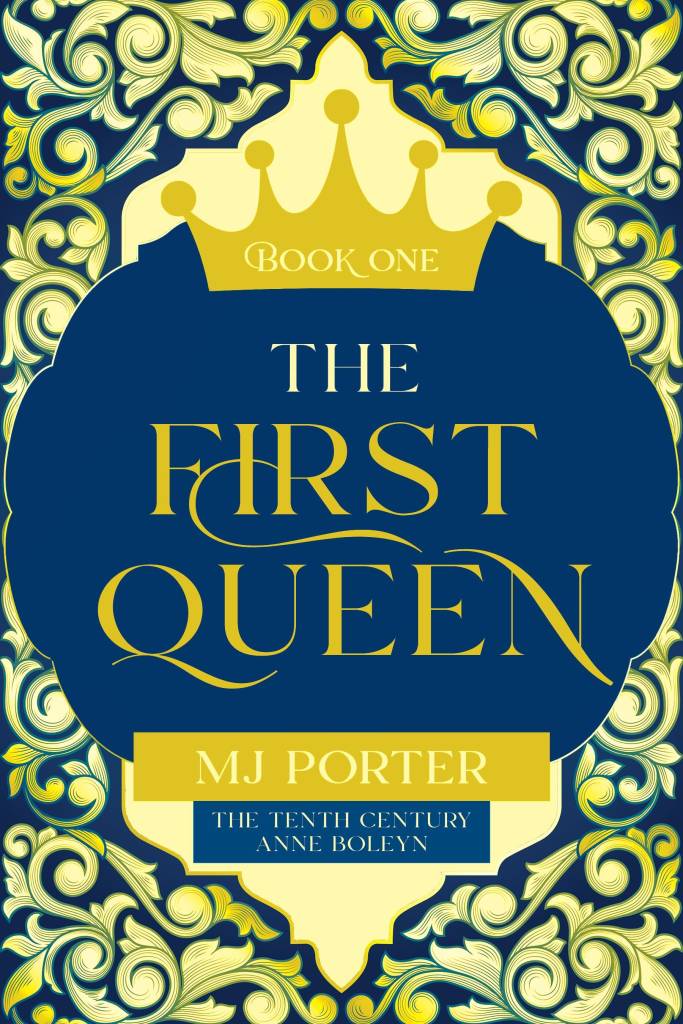
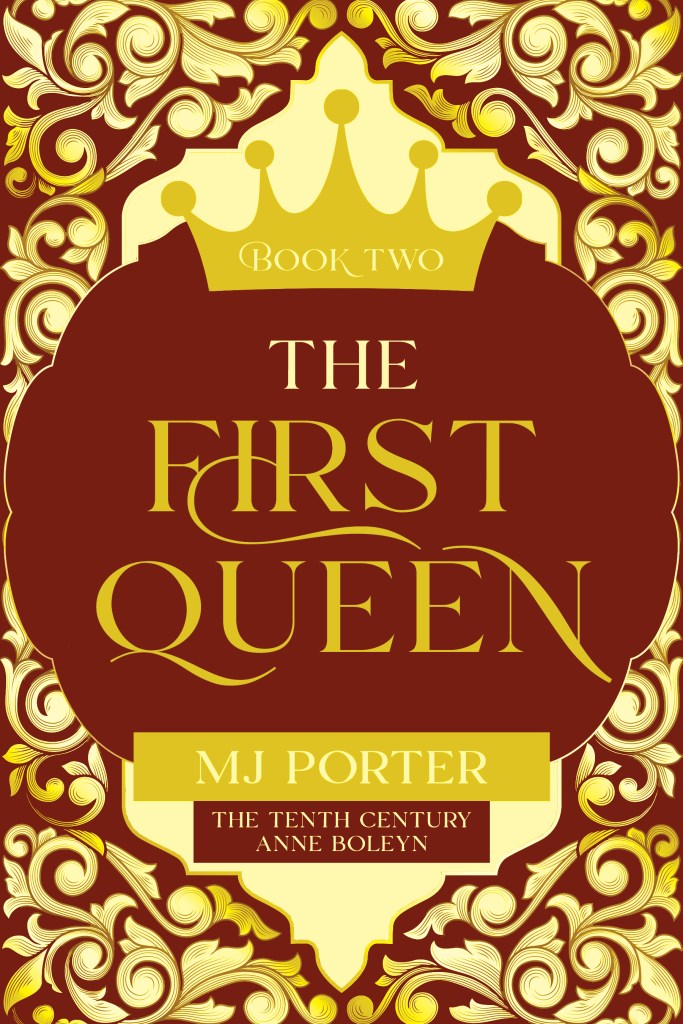
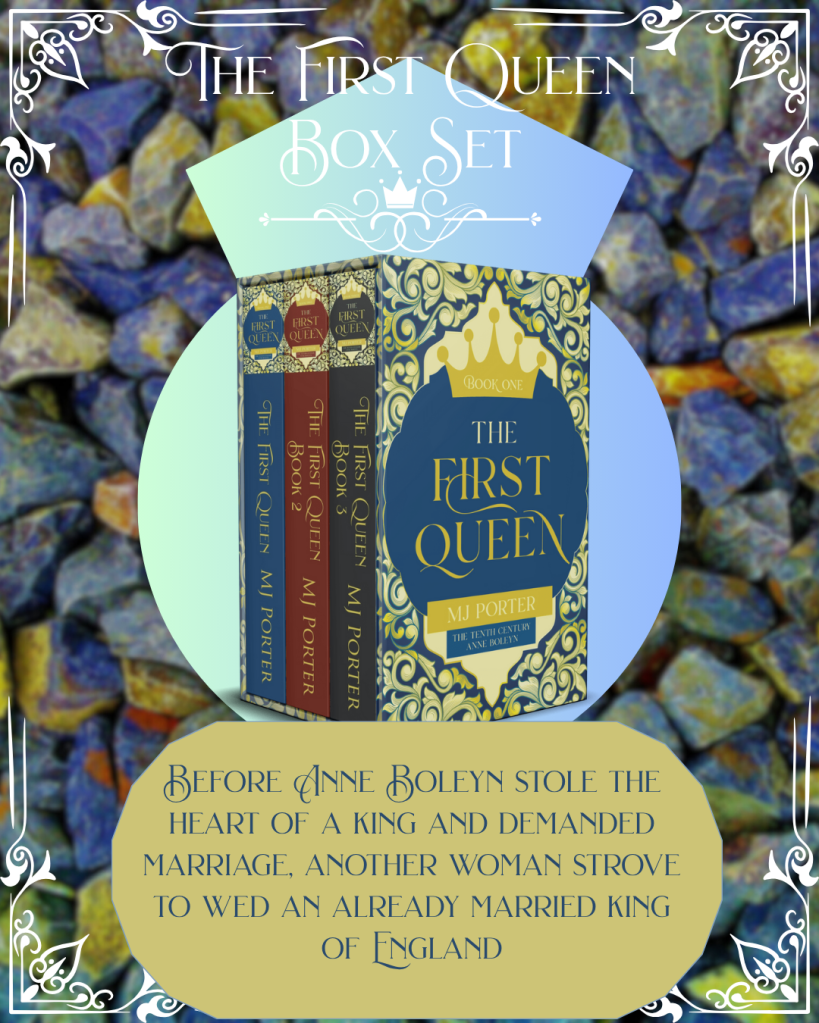
The First Queen Trilogy
Before Anne Boleyn stole the heart of a king and demanded marriage, another woman strove to wed an already married king of England. This is the story of Elfrida, who would become the first crowned Queen of England.
England is united under Edgar, but twenty years of uncertainty and a dwindling royal nursery have left the royal family vulnerable to extinction.
Edgar, a king at only 15 years old, has an acknowledged daughter and wife, but the dying ealdorman, Æthelwald, has commanded his wife to seek out the king, now in his early twenties. True to her husband’s wishes, Elfrida pursues the king, nervous of her husband’s intentions but trusting them all the same. When the king tries to make her his concubine, Elfrida refuses and withdraws from the court, only to find herself dreaming of the king, desiring his touch and presence.
When the king seeks her out again, she willingly follows him back to his court. She finds herself plunged into a world of politics and self-interest where her future happiness rests not only on the king loving her but also on the goodwill of others, with much to play for at the king’s court.
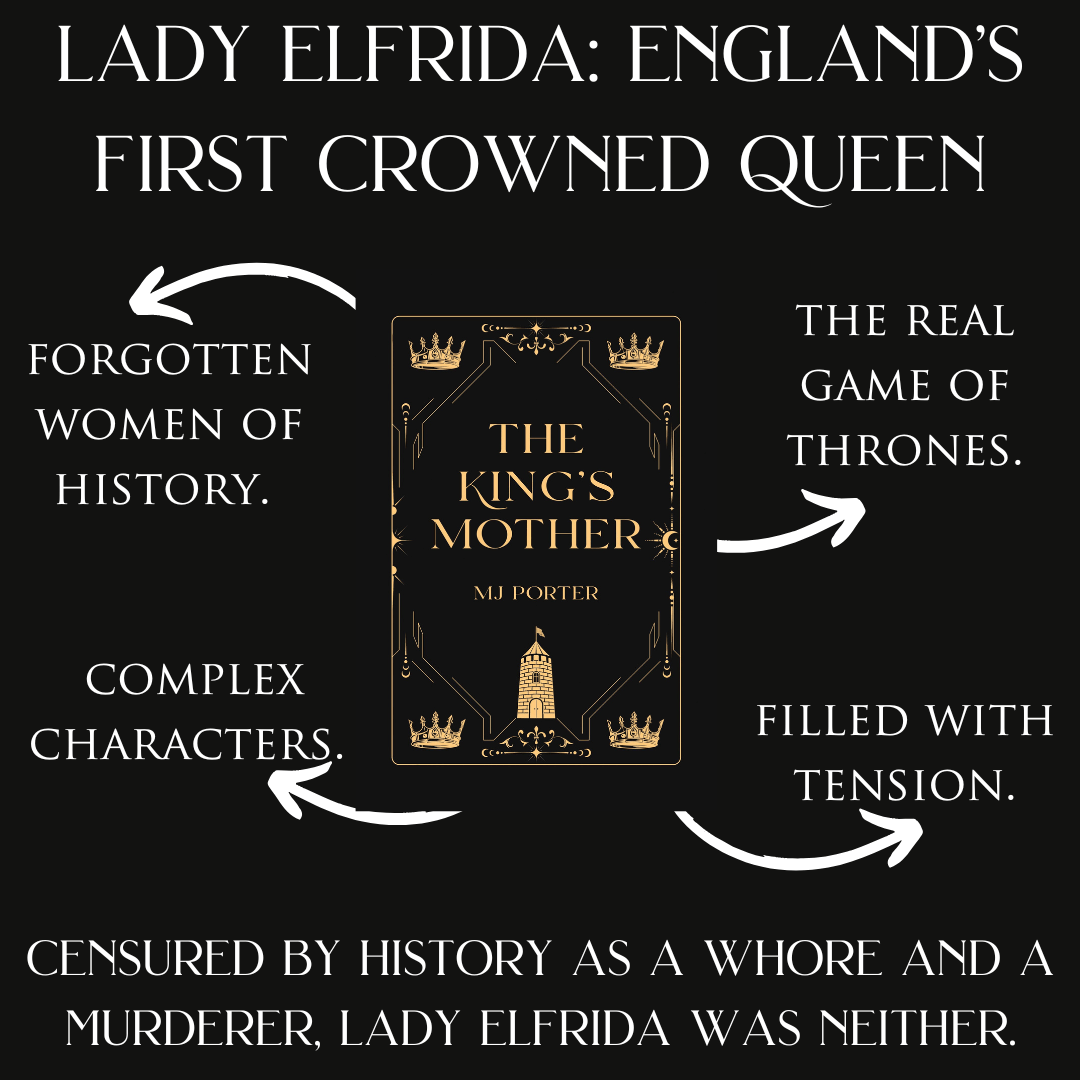
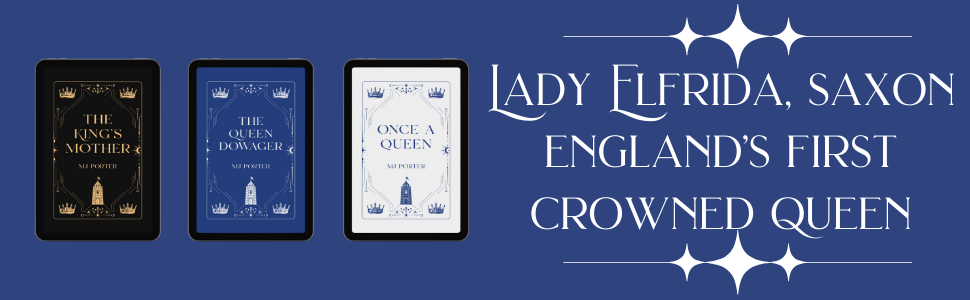
The King’s Mother Trilogy
The King’s Mother is the incredibly gripping story of Saxon England’s first crowned queen who’s been censured by history as a whore and a murderer but was neither.
The widowed Lady Elfrida has achieved the impossible in tenth-century England. She’s ensured her twelve-year-old son has become king, despite the gruesome murder of his predecessor and half-brother, Edward. While many blame the king’s mother for the boy’s death, she looks to two rival noblemen as the real perpetrators.
Even with the reappearance of an unwelcome enemy on England’s shores, Viking warriors, who attack and threaten the safety and security of England, and specifically, the young king, the two noblemen are far from resigned to Lady Elfrida’s power.
As her son takes the final steps to become king in actions and name, she’s increasingly isolated by the deaths of allies and the scheming ways of others, including the king. Resentful of her continuing influence, Lady Elfrida faces banishment from the royal court with fierce determination and acquiescence.
You can read about all these women in my non-fiction title, The Royal Women Who Made England.
























 MJ Porter