
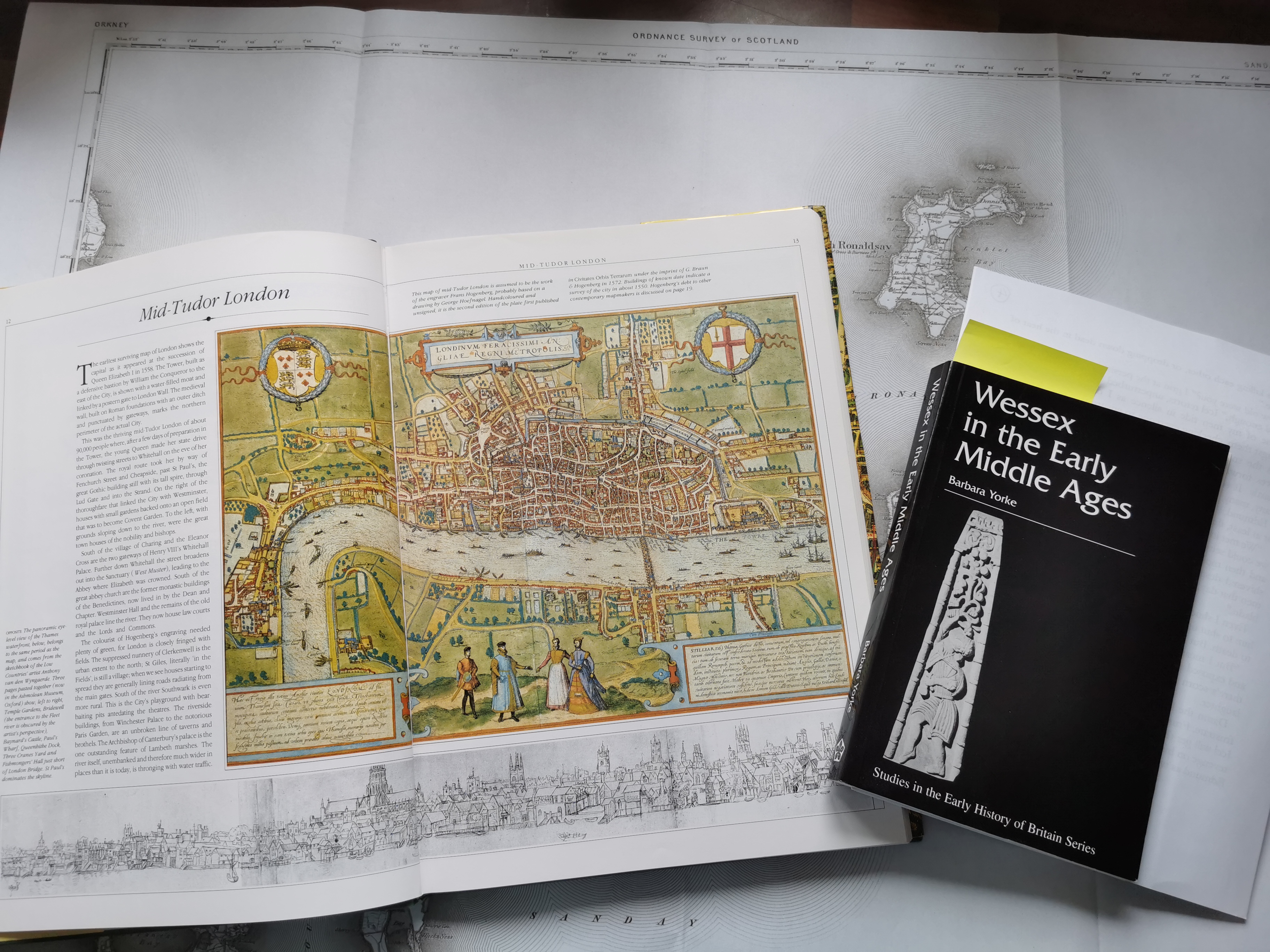
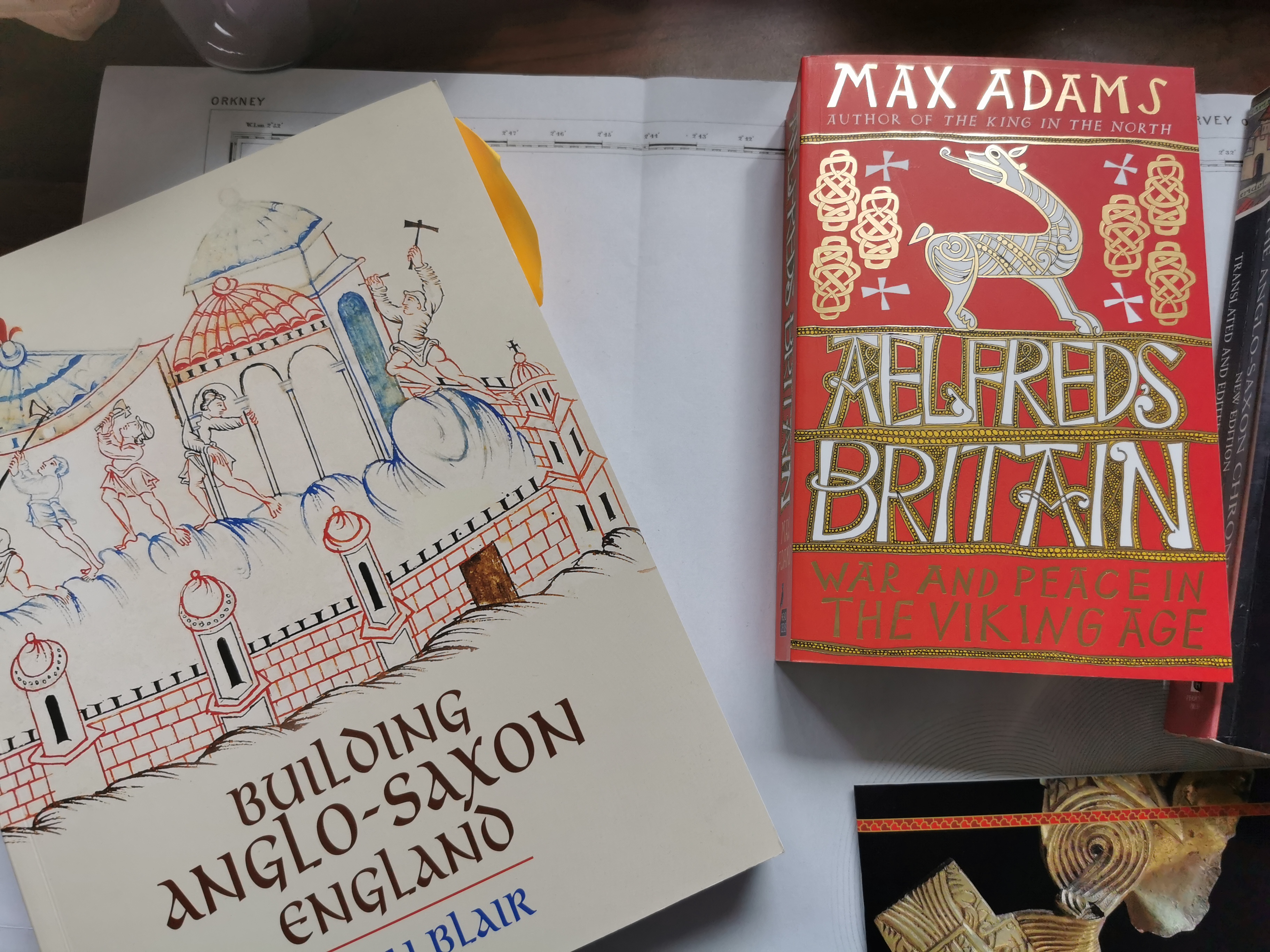
I’ve been studying Saxon England for too many years to count, and sometimes I find it difficult to remember where I learnt everything, but below is a bit of guide to books and resources which might help. I would say, as there’s no modern book for the entire period, it can feel quite difficult to get an ‘in.’ Start with a general book for the period – not easy to find, I appreciate, and then work from there depending on what fascinates you. I started by reading the monographs about the individual kings, and the one about Elfrida.
Where to start?
For those keen to research this period themselves, I would recommend the following books and resources. You might need to be patient, and I advise checking Abebooks, Ebay and other second hand book shops for copies, or consulting a library. I would say, as a rule of thumb, that the more expensive the book – the more academic the contents may prove to be – or the older the book. (I’m aware that many of these titles include the word ‘Anglo-Saxon.’ The move away from the term is new and far from universally applied.)
PRIMARY SOURCES
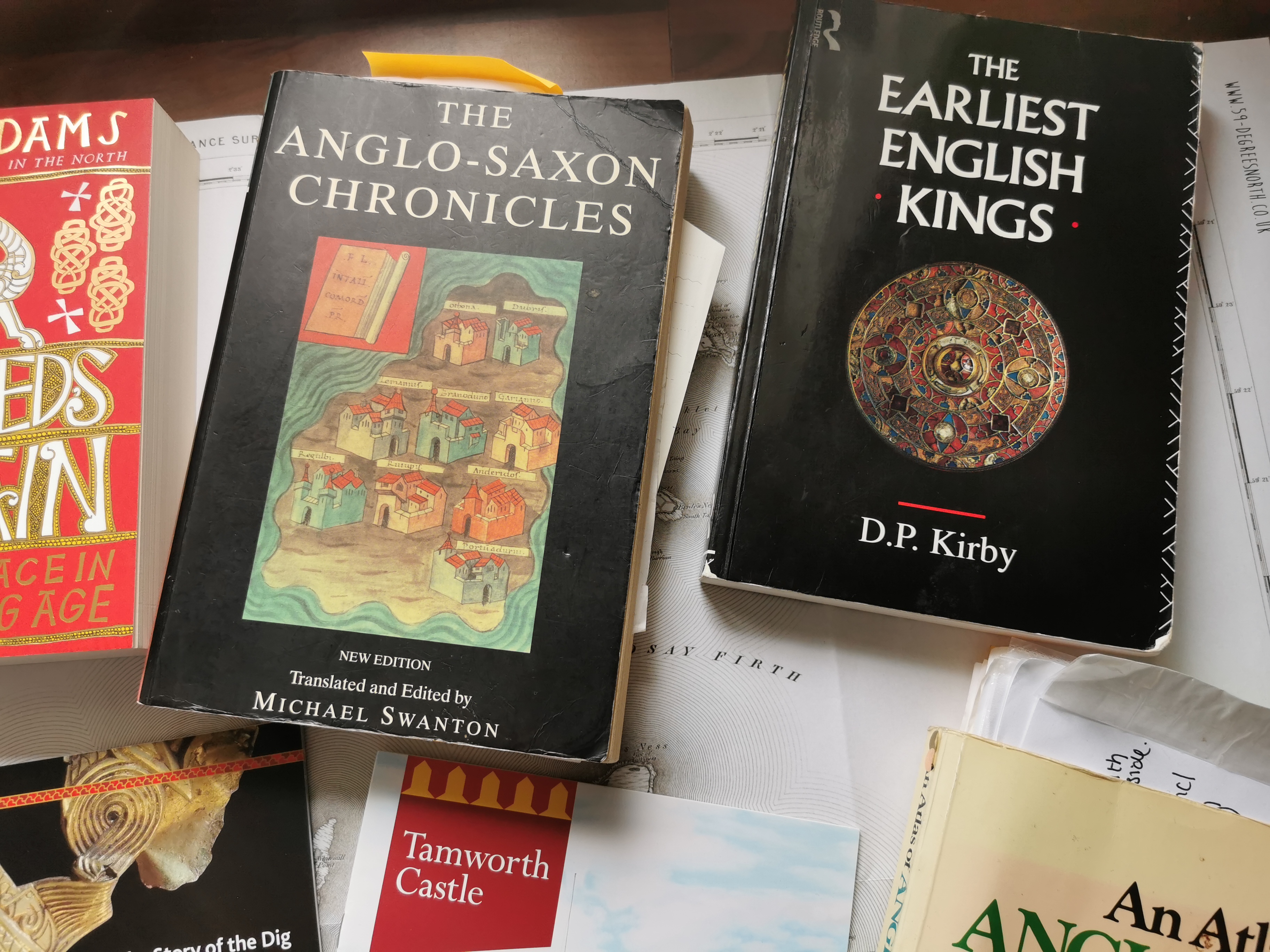
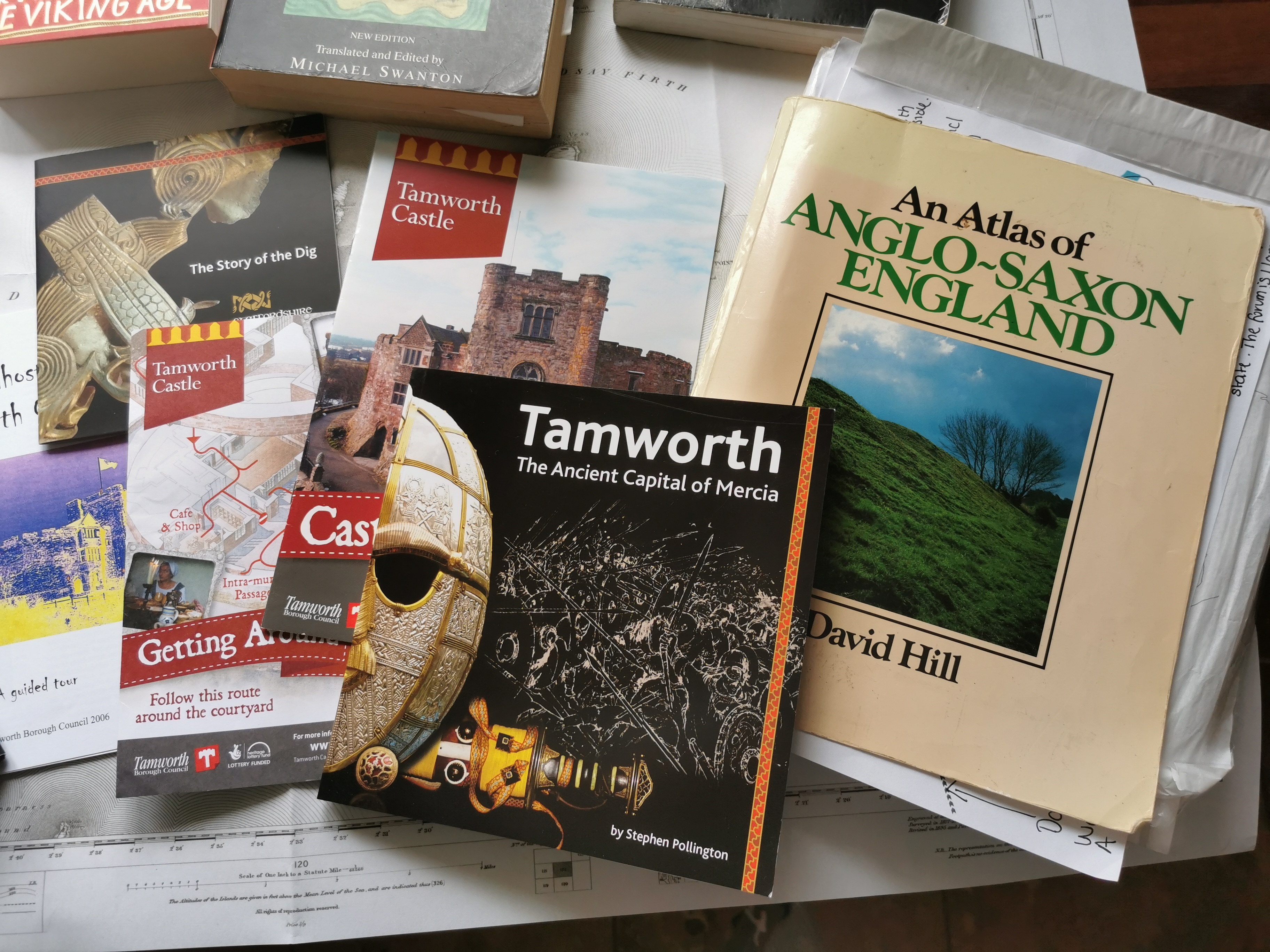
The Anglo-Saxon Chronicles – translated and edited by Michael Swanton
English Historical Documents Vol 1 500-1042 – Dorothy Whitelock (a very expensive resource – perhaps best found in a library or online)
English Historical Documents Vol 2 1042-1189 – David C Douglas (as above. I was lucky to find some reasonably inexpensive copies but it took years)
An Atlas of Anglo-Saxon England – David Hill (It took me years but I eventually found a copy on Abebooks that didn’t break the bank)
The Life of King Edward who rests at Westminster – Frank Barlow
The Electronic Sawyer – online catalogue of Anglo-Saxon Charters – an amazing resource once you feel confident to explore the primary sources. Used to be part of the KEMBLE online resource. I’ve now found KEMBLE once more. It’s host by Cambridge University.
The Prospography of Anglo Saxon England – known as PASE by all those ‘in the know.’ This is a huge and fabulous resource.
http://kepn.nottingham.ac.uk Key to English place names
SECONDARY SOURCES – used while writing The Eagle of Mercia Chronicles (the ninth century)

SECONDARY SOURCES – for the final century of Saxon England
After Alfred, Anglo-Saxon Chronicles and Chroniclers 900-1150 by Pauline Stafford, an absolute must to understand one of the most important sources for the period.
The Death of Anglo-Saxon England by N J Higham
The Earls of Mercia: Lordship and power in Late Anglo-Saxon England by Stephen Baxter (I have finally treated myself to a copy of this invaluable resource, which I blame for, well, all of this:))
The Diplomas of King Æthelred the Unready 978-1016 by Simon Keynes (if you can get a first edition do so, as the reprint doesn’t include the tables which is very frustrating).
Æthelred the Unready by Levi Roach
Æthelred the Unready, the ill-counselled king by Ann Williams
Cnut, England’s Viking King by M K Lawson
The Reign of Cnut: King of England, Denmark and Norway by Alexander Rumble
Cnut the Great by Timothy Bolton
Queen Emma and Queen Edith by Pauline Stafford
Edward the Confessor by Frank Barlow
Edward the Confessor by Tom Licence
Godwins: The Rise and Fall of a Noble Dynasty by Frank Barlow
Harold The Last Anglo Saxon King by Ian W Walker
Conquered: The Last Children of Anglo-Saxon England by Eleanor Parker
I will add more to this. This started as a feature for The Earls of Mercia series, but I’m going to expand it.
























 MJ Porter